

 By
By Young volunteers across Europe are shifting pro-life advocacy to one-on-one conversations on university campuses and in the public square, aiming for long-term cultural change.

Jan 24, 2026 / 06:00 am (CNA).
As European Union institutions and national governments increasingly advance policies expanding access to abortion, some observers have questioned whether the pro-life movement in Europe still exists or whether it has largely retreated from public life.
While large-scale demonstrations have become less common in some countries, pro-life advocates say a quieter, more grassroots movement is taking shape across the continent, driven largely by young people and focused less on political pressure and more on cultural engagement.
One organization at the center of this effort is ProLife Europe, a cross-border pro-life organization founded in 2019 and headquartered in Weißenhorn, Germany.
Operating on a far smaller budget than many U.S.-based pro-life organizations and funded primarily by individual donors, ProLife Europe has expanded rapidly across Germany, Austria, Switzerland, the Netherlands, Portugal, Lithuania, and Poland.
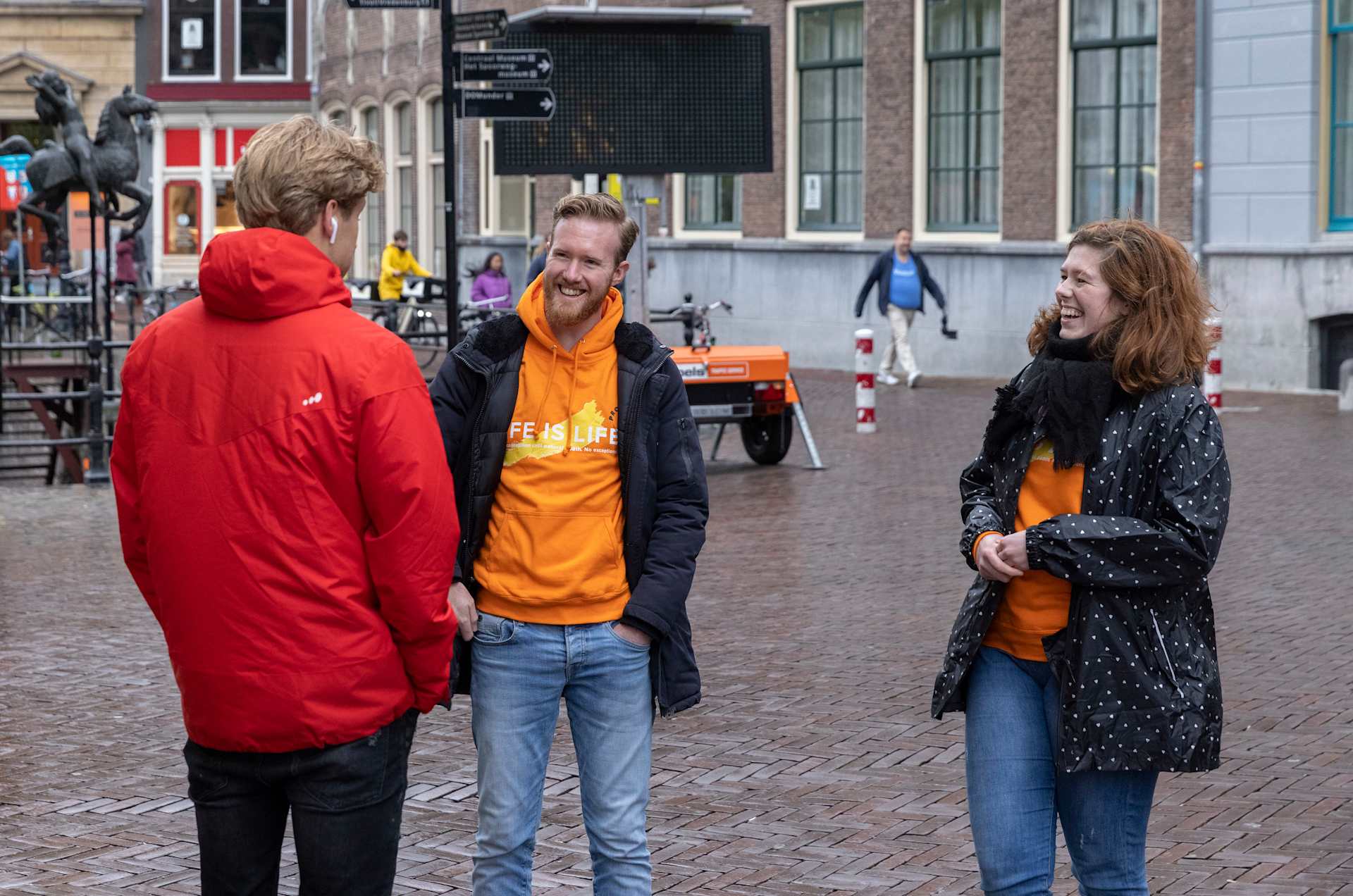
The organization focuses on training young people to engage in calm, one-on-one conversations about abortion, human dignity, and the value of life, particularly in university settings and public spaces where pro-life views are often marginalized.
A response to fragmentation and polarization
While many European countries already have local pro-life initiatives, the founders of ProLife Europe said they saw a need for something more coordinated and culturally focused. They point to what they describe as the “widespread misinformation, polarization, and social fragmentation surrounding abortion” and sought to build a professional, internationally-oriented student network capable of engaging the issue at a deeper cultural level.
The organization officially launched in March 2019 shortly before the COVID-19 pandemic, which severely limited public gatherings and campus activity across Europe.
Despite those constraints, ProLife Europe adapted through online training and internal formation.
Leaders say interest among young people grew during this period, reinforcing their belief that many young Europeans are searching for new ways to think and speak about abortion beyond entrenched ideological positions.
By 2024, ProLife Europe had established 54 groups, trained 4,192 students, and conducted 285 outreaches.
A cultural, not political strategy
“Our focus is not on large demonstrations or political pressure,” said Maria Czernin, president of ProLife Europe. “It is on dialogue, meeting people where they are, and planting seeds.”
While the organization does not ignore political realities, Czernin said its work begins at a deeper level. “Laws follow culture, and without a cultural foundation, political victories remain fragile and reversible,” she explained.

Volunteers therefore prioritize personal encounters, often inviting passersby into respectful conversations that begin with open-ended questions — such as when human life begins or how society defines human dignity. Czernin explained that the aim is not to “win” arguments but to reopen moral reflection in a climate where abortion is frequently treated as unquestionable.
Addressing common misconceptions
According to its leaders, many conversations begin with assumptions that are rarely examined by most people.
“The most common misconception is that abortion is a woman’s right,” said Lucia Bardini, regional coordinator for southern Germany, Austria, and Switzerland. She noted that no such right has ever been declared by the United Nations.
Bardini added that abortion is often framed as a women-only issue, even though many of those involved in performing or enabling abortions are men, including physicians, hospital administrators, and partners of pregnant women.
Among male students, she said another recurring assumption is that they have no role in abortion decisions. “This relieves them of the responsibility that comes with being future fathers,” Bardini explained.
<!!– Dummy serializer, no content –>
She also noted that some students view abortion as the only viable option when pursuing a university degree, particularly when academic demands, financial pressure, or time constraints seem incompatible with parenthood, an assumption she said overlooks available forms of support and alternative paths forward.
Responding without alienation
Asked how pro-life advocates can address the belief that abortion is a settled right without alienating people, Pedro Líbano Monteiro, regional coordinator for Portugal, discussed the importance of respectful questioning.
“Many rights that once seemed ‘settled’ in history were later questioned when society recognized that they involved the harm of others,” Monteiro noted.
He mentioned that conversations should begin by asking who is affected and whether the dignity of all involved is being considered. “Being pro-life is not about condemning women or ignoring hardship,” he said, but about recognizing that “both lives matter” and that society should offer better solutions than abortion, including practical support and solidarity.
Rather than accusations, Monteiro said, asking questions invites openness. Laws and social norms may change, he added, but the moral reality of human life does not.
A quiet but growing presence
While ProLife Europe does not claim to represent the entirety of Europe’s pro-life movement, its leaders see their work as part of a broader shift toward long-term cultural engagement in a highly secularized continent. “Our work is slow,” Czernin acknowledged. “But cultural change always is.”
Benjamin Famula, regional coordinator for northern Germany, said the pro-life movement’s future depends on a greater willingness to engage openly with difficult questions.
“We need more people from all walks of life who are aware of the abortion crisis not to look away but to speak out,” Famula said, adding that young people must have the courage to address these issues wherever they can.
He noted that pro-life views are often dismissed as marginal or extremist, a perception he said discourages active engagement and allows misconceptions to persist unchallenged. Famula also called for stronger leadership in public debate, urging advocates to move beyond a purely defensive posture and to highlight the social and economic pressures faced by women in crisis pregnancy situations.
For ProLife Europe’s leaders, the aim is neither immediate political change nor public visibility but something more incremental: reopening moral reflection in a culture where abortion is often treated as beyond question, one conversation at a time.
If you value the news and views Catholic World Report provides, please consider donating to support our efforts. Your contribution will help us continue to make CWR available to all readers worldwide for free, without a subscription. Thank you for your generosity!
Click here for more information on donating to CWR. Click here to sign up for our newsletter.

“. . .its leaders see their work as part of a broader shift toward long-term cultural engagement in a highly secularized continent”.
Yes.
Maybe things become clearer when you’re operating in a truly hostile environment.
It was the UK, not the Continent but several years ago after Mass I went up to a British lady who was offering prolife literature to thank her for her witness. She was truly surprised to not receive hostile remarks. She said she usually was either ignored by the public or verbally abused.