

 By
By The pope continued his catechesis series on the documents of the Second Vatican Council at Wednesday’s general audience.
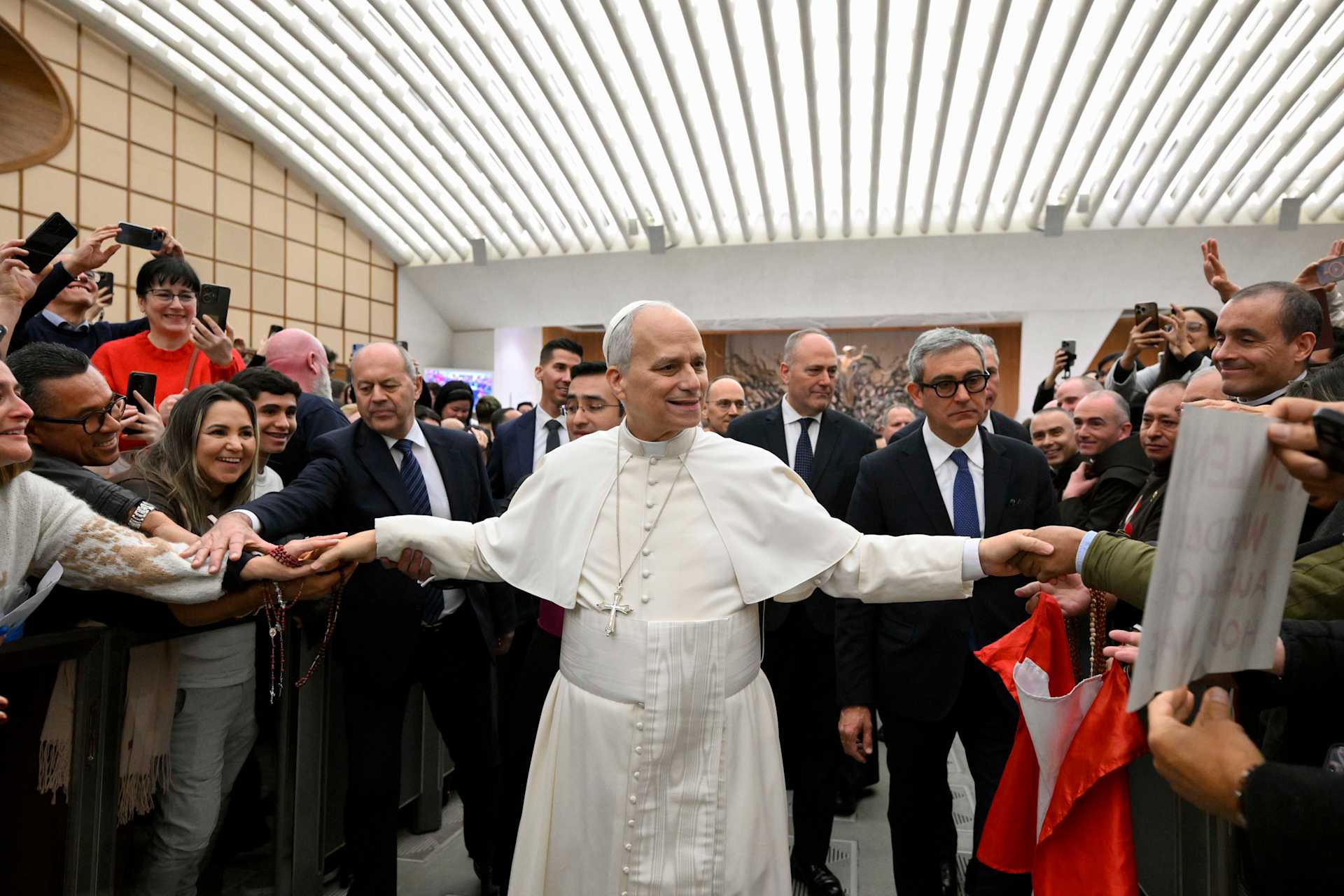
Jan 21, 2026 / 08:05 am (CNA).
Pope Leo XIV said Wednesday that the grandeur of the Incarnation cannot be reduced to viewing Jesus as a mere messenger of “intellectual truths,” but must be received as God’s full embrace of the human condition — including Christ’s “true and integral humanity.”
Speaking at his general audience on Jan. 21 in the Paul VI Hall, the pope said that divine revelation is not primarily a set of abstract ideas but a living encounter in which God gives himself to humanity and invites a relationship of communion.
“We have seen that God reveals himself in a dialogue of covenant,” the pope said, “a relational knowledge, which not only communicates ideas, but shares a history and calls for communion in reciprocity.”
Continuing a catechesis cycle on Dei Verbum, the Second Vatican Council’s Dogmatic Constitution on Divine Revelation, Leo XIV emphasized that believers come to know God by entering into Jesus’ own relationship with the Father through the action of the Holy Spirit.
Wednesday’s talk was part of a longer series on the documents of Vatican II which the pope began earlier this month.
“Jesus reveals the Father to us by involving us in his own relationship with Him,” he said.
The pontiff highlighted that in Christ, God not only discloses who he is, but also reveals who we are. “In Christ, God has communicated himself to us,” he said, and “he has manifested to us our true identity as his children.”
Leo XIV underlined that the integrity of Christ’s humanity is essential to understanding revelation: “God’s truth is not fully revealed where it takes something away from the human,” he said, adding that “the integrity of Jesus’ humanity does not diminish the fullness of the divine gift.”
The pope also stressed that salvation is not limited to the paschal mystery understood in isolation, but is bound up with Christ’s whole person and presence: the Lord “who becomes incarnate, is born, heals, teaches, suffers, dies, rises again and remains among us.”
Pointing to the believer’s confidence grounded in Christ, Leo XIV said that following Jesus “to the very end” leads to the certainty that nothing can separate humanity from God’s love, echoing St. Paul’s assurance: “If God is for us, who is against us?”
This story was first published by ACI Prensa, the Spanish-language sister service of EWTN News. It has been translated and adapted by EWTN News English.
If you value the news and views Catholic World Report provides, please consider donating to support our efforts. Your contribution will help us continue to make CWR available to all readers worldwide for free, without a subscription. Thank you for your generosity!
Click here for more information on donating to CWR. Click here to sign up for our newsletter.


As Servant Leader, Jesus touched the hearts and minds of many. The Prince of Peace continues to inspire leaders and followers to serve one another as they humbly march to their cherished destination.