


Chicago, Ill., Aug 21, 2024 / 18:40 pm (CNA).
Kristen Day, executive director of Democrats for Life of America, denounced the presence of Planned Parenthood’s “abortion van” offering free abortions, vasectomies, and emergency contraceptives just outside the Democratic National Convention.
Then she immediately urged her organization and its allies to roll up their sleeves.
On Monday, the group announced a new diaper drive initiative for local needy and migrant families. So far, it has raised over $4,000.
“The response has been amazing,” she told the National Catholic Register on Wednesday. “I just feel so blessed to be in this position where we can really help needy families in the community.”
Day’s group, a political advocacy nonprofit committed to electing anti-abortion Democrats, was scheduled to make its first drop-off Wednesday night at a local pregnancy center, the Chicago Life Center, on the South Side.
“We’re so excited to help and provide these diapers,” she said, “because that’s what real Democrats do. They help people.”
Day concedes that her idea of what a “real” Democrat is isn’t shared by very many of the delegates and politicians inside Chicago’s United Center and McCormick Place this week. Yet, she thinks that’s all the more reason to work to get her message of life across to her fellow Democrats.
‘The party has left pro-life Democrats’
Day and her colleagues are in Chicago, she said, to meet delegates and Democratic Party activists, to listen and to let them know that a pro-abortion Democratic Party doesn’t speak for them.
“The party has left pro-life Democrats,” she said. “We don’t want to leave. We love our party, and we want it to be strong and inclusive. We want to give diapers to people in need. We are the real Democrats.”
In response to Democrats for Life’s diaper drive, Day has received a deluge of stories from women across the country who have been harmed by abortion in the past. They expressed shock and horror that abortion has been celebrated as a positive moral good so far at the DNC. She said many thanked her for speaking out.
“One woman was 77-years old,” Day said. “She had an abortion decades ago, and she’s still suffering. The celebration of abortion at the DNC is just so deeply disturbing. It’s unbelievable how far the party has fallen.”
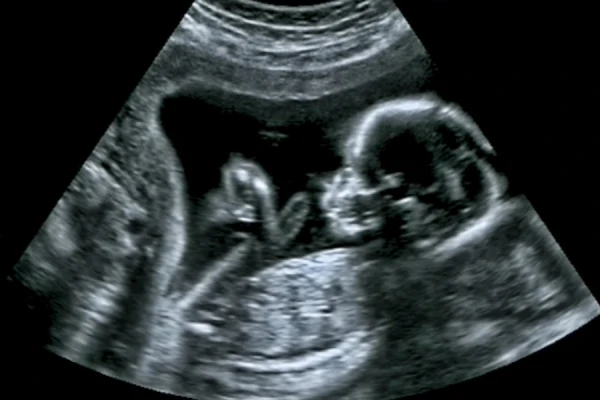
One moment from Tuesday’s convention proceedings struck Day as particularly troubling. Kate Cox, a pro-abortion activist from Texas chosen to speak on behalf of the Texas delegation during the convention roll call, recounted her experience of having to leave the state of Texas to have an abortion after her unborn child had been diagnosed with Trisomy 18, a condition that has a low chance of survival.
“One thing we are overlooking here with these tragic stories is that some of these cases where women are being paraded out to show that abortion is a moral good,” said Day, who has worked for decades to expand the pro-life influence within the Democratic Party.
“So I think we need to do a better job educating people and listening to pro-life doctors who have been saving mothers and babies for decades. And we should not exploit women for political reasons,” Day said.
Day told the Register that she will attend the final two nights of the convention and is open to more discussions with current party members.
“So we’re still fighting for our party to do the right thing,” she said.
If you value the news and views Catholic World Report provides, please consider donating to support our efforts. Your contribution will help us continue to make CWR available to all readers worldwide for free, without a subscription. Thank you for your generosity!
Click here for more information on donating to CWR. Click here to sign up for our newsletter.


Communio’s Pope Benedict XVI said the same thing of the Concilium faction within the Church, “I did not leave them, they left me” (The Ratzinger Report, 1985).
And now in the Synod on Synodality we have another version of Continental Drift, where (with regard to Fiducia Supplicans) the entire continent of Africa is patronized as an outlier or “special case.”
God bless her for the good works she does but most of us figured out the Democrat Party had left us back in Jimmy Carter’s admin. Or at the very least when Robert Casey was cancelled by his party.
I don’t particularly like describing myself as GOP but I don’t know any other viable option at this point.
She’s fighting a lost cause.
Many of the wealthiest or “most-educated” groups in the U.S., including the entertainment world (Hollywood, Broadway, music, movies, television, etc.), the literary world (authors of best-sellers) the education system (public schools and universities and their teachers, professors, and administrators), and the legal/political systems (lawyers, political candidates, etc.) have jumped on the Democratic abortion-rights bandwagon and are willing not only to speak in favor of abortion, but donate millions of dollars to various pro-abortion organizations that the Democratic Party supports.
There are entertainment professionals who are pro-life, but they have to be oh, so careful, or they will find themselves blacklisted and without work.
As for those organizations who are still pro-life, many of these organizations (e.g., Catholic and Evangelical Protestant churches and organizations) have lost the trust of the public because of financial and sexual sins committed by the leaders of these organizations. Even smaller offenses (e.g., losing one’s temper in public, divorce, a “white lie” that becomes public) are promoted as scandalous and unacceptable by the news media and often result in disillusionment and departure by those who once followed these leaders.
I wish the pro-life Democrats luck but think they would be better off joining the Republican Party (which STILL has plenty of pro-abortion adherents!) and working to create more compassion, especially when it comes to financial policies, among their fellow Republicans.