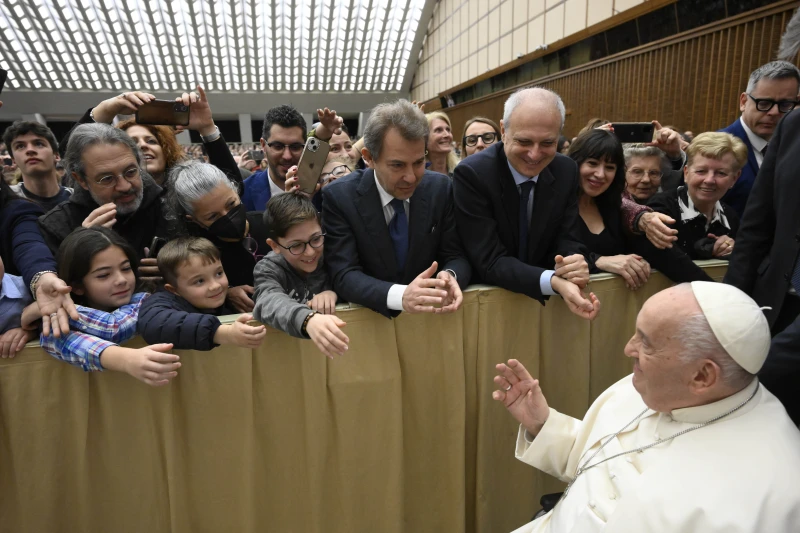
Pope Francis greets staff and families of RAI, Italy’s national public broadcasting company, March 23, 2024. / Credit: Vatican Media
Vatican City, Mar 23, 2024 / 13:53 pm (CNA).
Pope Francis on Saturday spoke on the important role public broadcasting plays in the transmission of information, serving the common good, and as an instrument to fight the spread of “fake news.”
“Your work is intended above all to be a response to the needs of the citizens, in a spirit of universal openness, with action capable of extending throughout the territory without becoming localist, respecting and promoting the dignity of each person,” the pope said in a Saturday morning address to the managers, journalists, and staff of RAI, Italy’s national public broadcasting company.
The 87-year-old pontiff seemed to be in good spirits as he delivered the nearly 10-minute-long address. In the last month, the pope has relied on aides to deliver his Wednesday general audience and speeches as he recovered from lingering flu symptoms.
“Once upon a time the popes used the gestatorial chair,” he said, alluding to the ceremonial throne on which a pope would be borne aloft. “Today things have moved on and I use this, which is very practical,” the pope quipped, pointing to the wheelchair that he has used since 2022 to move around.
During this address, the pope emphasized that the media’s mission of service to the public good is underscored by “seeking and promoting the truth.” Francis pointed to the imperative of combating the spread of viral misinformation, or “fake news,” and “the devious plans of those who seek to influence public opinion in an ideological manner, lying and disintegrating the social fabric.”
“It means serving the right of citizens to correct information, transmitted without prejudice, without rushing to conclusions but taking the necessary time to understand and to reflect, countering cognitive pollution, cognitive pollution, because information too must be ‘ecological,’ that is, human,” the pope continued.
For the pope this duty also requires broadcasters to let a plurality of voices be heard, to foster dialogue, and to be “an instrument for growth in knowledge, to cause people to reflect and not alienate.”
“The entire media system,” the pope continued, “at a global level, needs to be provoked and stimulated to come out of itself and to question itself, to look farther, beyond.”
The pope also made a general appeal to all public broadcasters, calling on them to not chase ratings but to create high-quality content that “may help each and every person to be uplifted, to reflect, to be moved, to smile and even to weep with emotion, to find meaning in life, a prospect of good, a meaning that is not that of yielding to the worst.”
If you value the news and views Catholic World Report provides, please consider donating to support our efforts. Your contribution will help us continue to make CWR available to all readers worldwide for free, without a subscription. Thank you for your generosity!
Click here for more information on donating to CWR. Click here to sign up for our newsletter.
A member of New South Wales Forensic Police is seen at Christ the Good Shepherd Church in the Sydney suburb of Wakeley, Australia, on April 16, 2024. Hundreds clashed with police in western Sydney on April 15 after Bishop Mar Mari Emmanuel was s… […]
Cardinal Malcolm Ranjith outside his residence in Colombo, Sri Lanka on Jan. 13, 2015, arrives to greet Vatican Secretary of State Cardinal Pietro Parolin. / Catholic News Agency
Manila, Philippines, Sep 9, 2021 / 09:00 am (CNA).
The Archbishop … […]
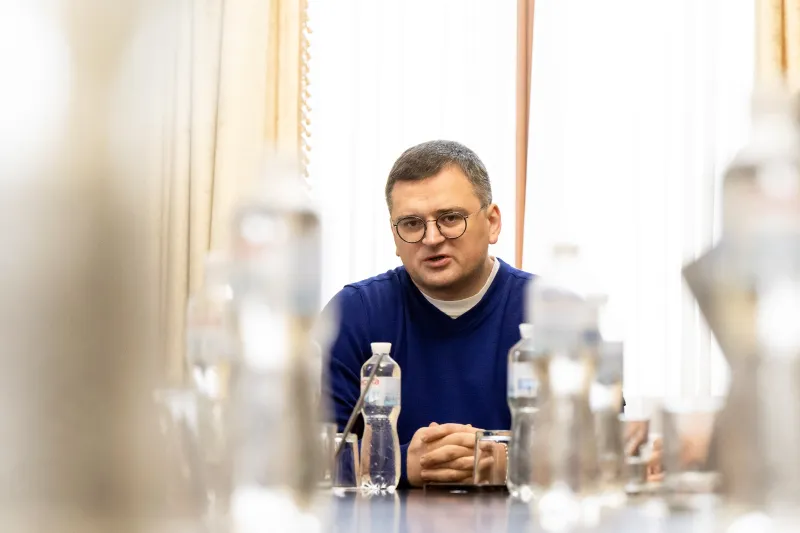
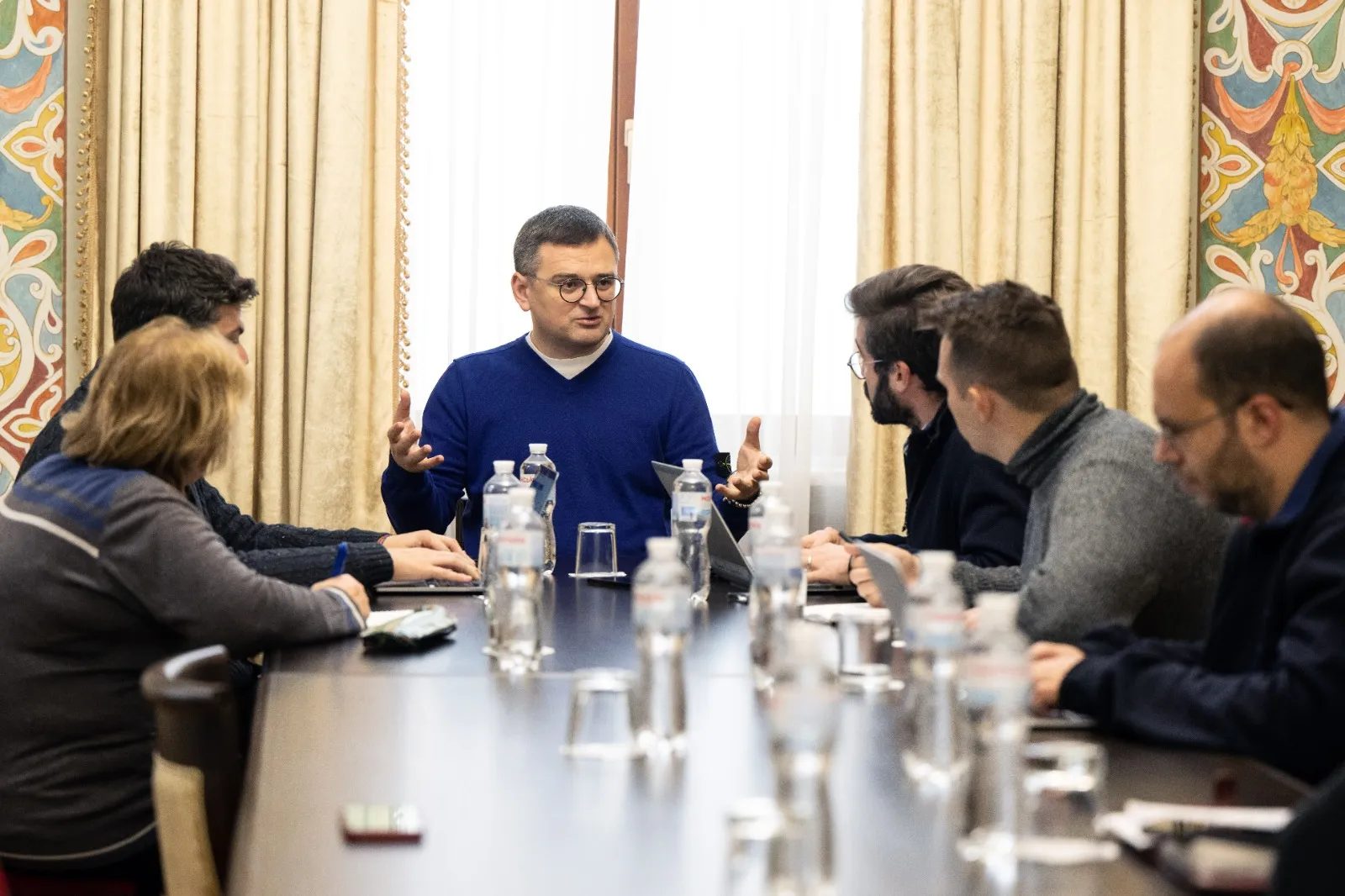
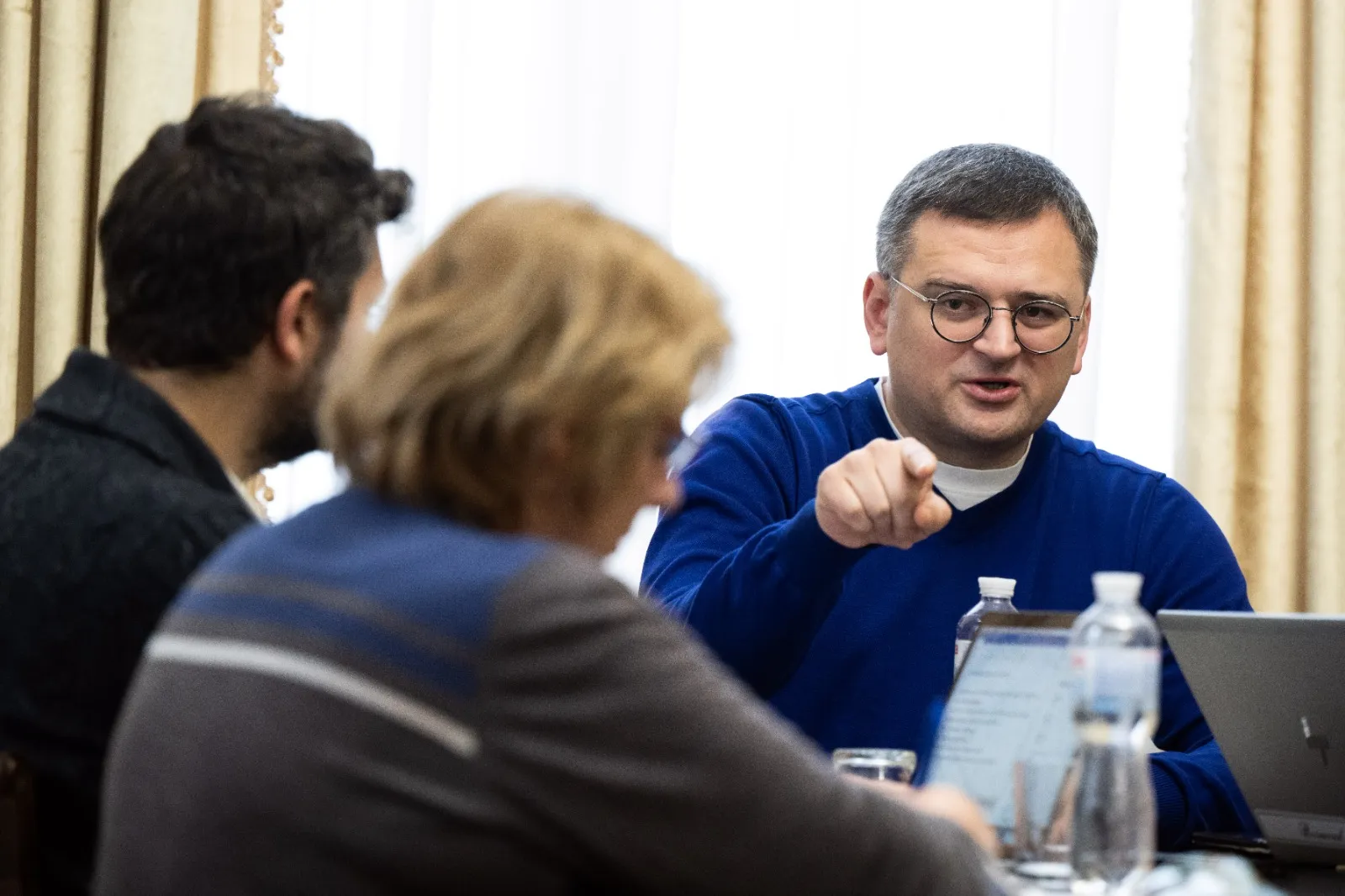
Ukraine’s Minister of Foreign Affairs, Dmytro Kuleba, speaking to journalists, Dec. 9, 2022 / Marcin Mazur
Kyiv, Ukraine, Dec 10, 2022 / 00:00 am (CNA).
Every effort for peace in Ukraine coming from Pope Francis and the Holy See is welcome, Ukraine’s Foreign Minister said Friday, whether it is helping to mediate for the exchange of prisoners or in assisting migrants and refugees.
However, the time for broad negotiations after the Russian aggression has not come yet, Dmytro Kuleba told a small delegation of journalists visiting Ukraine on Dec. 9 that his country has requirements for any such mediation to eventually take place.
The interview lasted about 40 minutes, and the questions dealt with Holy See-Ukraine relations, Holy See efforts for peace, and how Ukraine would welcome this effort.
Though appreciating Pope Francis’ constant mention of the Ukrainian situation and expressing an open invitation to the pope to visit the country, Kuleba also told CNA that some of the pope’s words have been “painful” for Ukrainians.
Ukraine’s Minister of Foreign Affairs, Dmytro Kuleba, speaking to journalists, Dec. 9, 2022. Marcin Mazur
Pope Francis has often stressed that the Holy See is available to facilitate broad negotiations. Kuleba told journalists that “the protocolar response would be that a negotiation would be more than welcome,” but “the sad truth is that the time for this broad mediation hasn’t come yet and the reason for that is President [Vladimir] Putin.”
If you want peace, Kuleba said, “you do not send 100 missiles every week to destroy infrastructure. You do not send one wave of your soldiers after another into the Donbas. You don’t do all these things when you seek a peaceful solution.”
And so, he concluded, “the day for a big mediation will come, but we are not there yet, to our deepest regret.”
Kuleba told CNA that mediation should have some requirements, as any other commitment the Holy See would undertake. He said he also tackled this issue in the last meeting with the Vatican’s Secretary for Relations with States, Archbishop Paul Richard Gallagher.
Gallagher, whose role is equivalent to that of a foreign minister, spoke with his Ukrainian counterpart on Dec. 2 in Lodz, during the OSCE Ministerial Council.
I met with Secretary for Relations with States of the Holy See Mons. Paul R. Gallagher. I briefed Archbishop on Ukraine’s efforts to alleviate the global food crisis through our #GrainFromUkraine program and details of President @ZelenskyyUa’s Peace formula. pic.twitter.com/SNAc3iGbq4
Kuleba said he told Gallagher that the Vatican could choose which aspect to help with.
The Vatican might help with negotiating an exchange of prisoners, for instance, or the “return of thousands of kids kidnapped from Russia,” or also participating “in the implementation of the peace formula.”
However, Kuleba added that “picking an issue is the first step, while the second step is how you address the issue,” adding that “mistakes” needed to be avoided.
Among such “mistakes,” according to Kuleba, are the notion of a brotherhood between Ukrainian, Russian, and Belarusian people.
“We are not brothers and if you insist on the concept you are misled,” the Ukrainian minister told journalists since Russians “came to Kyiv to rape, to violate all the laws of God on the land of Ukraine.”
Kuleba also said hat one cannot be “neutral in public comments” and should “always remember that Russia is the aggressor and Ukraine is the victim of the aggression.”
Any attempt at making both sides somehow evenly responsible created “a completely wrong message,” the minister warned.
In his Oct. 2 Angelus, Pope Francis appealed to Russia’s President Vladmir Putin to stop the war, and to Ukraine’s President Volodymyr Zelenskyy to be seriously open to the pope’s proposal.
Kuleba explained why he was somewhat critical of such appeals by Pope Francis: While saying President Putin should stop the war made “perfect sense,” calling on President Zelenskyy to be open to serious peace proposals made it sound like Zelenskyy was “not open to peace.”
In other words, Kuleba added, the pope’s words wrongly “create the impression that both sides are guilty: one is guilty because of the attack, and the other is guilty because [it is] not open to peace proposals.”
Ukraine’s Foreign minister called on journalists to be pay attention when writing about a “serious peace proposal” being “based on the territorial integrity of Ukraine”, including Crimea.
“Every time you write or read or say that Ukraine insists on the restoration of Crimea, you send a message that Crimea is a special case. But for us and international law, there is no difference between [the towns of] Sebastopol and Kherson, Yalta and Donetsk.”
Speaking about the role religion can play in helping to reconstruct the country, the Ukrainian foreign minister said that the “Russian aggression caused big fractures” among religions. He also pointed to differences in viewpoints between Muslims in Russia and in Ukraine, and Russian and Ukrainian Jews.
Kuleba said that the “first and foremost expectation from confessions is to console people, to help them spiritually.” Most people turned to God “only in times of hardship,” he added.
“When everything is fine, you forget about God. Now, there is a higher demand for spiritual help, to be consoled by the Church.”
Kuleba also spoke to CNA about sanctions imposed on Dec.1 against some Orthodox clerics and moves to legislate against Russian influence through religious means.
Ukraine’s Minister of Foreign Affairs, Dmytro Kuleba, speaking to journalists, Dec. 9, 2022. Marcin Mazur
The Ukrainian government will draw up a law banning churches affiliated with Russia under moves described by President Volodymyr Zelenskiy as necessary to prevent Moscow being able to “weaken Ukraine from within,” according to Reuters.
Ukraine’s National Security and Defence Council told the government to draft the law following a series of raids on parishes that Kyiv said might be taking orders from Moscow.
Such moves, Kuleba told CNA, were motivated by “unacceptable” behavior by some clerics, such as the blessing of Russian soldiers for success on the battlefield.
Kuleba, however, praised the role of the churches, especially the presence of chaplains on the front.
Speaking about Pope Francis’ position on the Ukrainian issue, Kuleba said that he saw improvements.
“The truth,” he said, “is that this war shattered many foundations of the global political order.”
A big disappointment, he added, was what Pope Francis had said about NATO “barking” at the gates of Russia.
Kuleba stressed that he understood how and why the pope used the expression, but he noted that this argument was forged in Russia, so even mentioning served to legitimize it.
While it was “painful that the pope said something like that, I have to commend the pope for understanding”, Kuleba added, saying he was grateful to the pontiff for not sticking to “concepts that do not work and do not meet the reality check.”
Ukraine’s foreign minister said he was moved by the public prayer of Pope Francis for Ukraine on Dec. 8 in Rome. “[The] pope’s compassion means a lot to us and goes directly to the heart of Ukrainians,” Kuleba said.
He added that “obviously, we are waiting for his visit. He has many followers in Ukraine”, not only from the Roman Catholic and Greek Catholic communities: “The visit of the pope will be welcomed by a bigger part of Ukrainian society. So we are looking forward to welcoming him.”
We all know what we this guy means by “fake news” and so do the press flacks he’s addressing. They are happy to oblige. He just wants to remind them that there is a big election in the US this year, so they will need to be especially vigilant. The Vatican and the media are on the same page.
YES, to the media “…serving the right of citizens to correct information,” but also this:
“…the Church’s Pastors have the duty to act in conformity with their apostolic mission, insisting that THE RIGHT OF THE FAITHFUL [italics] to receive Catholic doctrine in its purity and integrity must always be respected” (Veritatis Splendor, n. 113).
The Good News is healing and empowering. The humble public broadcasters are yet to do justice to their enormous potential in rendering quality service to humankind.




And, how about a deepfake news?
Which are involving him and more about and around him in it.
He is completely enveloped by things of this world. Peron is smiling.
We all know what we this guy means by “fake news” and so do the press flacks he’s addressing. They are happy to oblige. He just wants to remind them that there is a big election in the US this year, so they will need to be especially vigilant. The Vatican and the media are on the same page.
YES, to the media “…serving the right of citizens to correct information,” but also this:
“…the Church’s Pastors have the duty to act in conformity with their apostolic mission, insisting that THE RIGHT OF THE FAITHFUL [italics] to receive Catholic doctrine in its purity and integrity must always be respected” (Veritatis Splendor, n. 113).
Like the fake news that the Covid jabs harmed and killed a number of people?
The Good News is healing and empowering. The humble public broadcasters are yet to do justice to their enormous potential in rendering quality service to humankind.