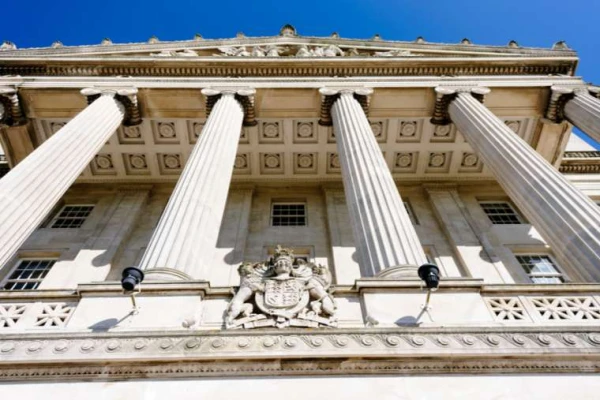
CNA Staff, Apr 23, 2020 / 11:24 am (CNA).- The bishops of Northern Ireland wrote to members of the region’s legislature Wednesday urging them to debate the abortion regulations imposed by the British government and to formulate new, pro-life regulations.
“We take this opportunity to encourage you to debate these Regulations as a matter of urgency,” the bishops of Northern Ireland wrote April 22 to members of the legislative assembly. “Insofar as they exceed the requirements of the Northern Ireland Act 2019, we urge you to take steps to formulate new Regulations that will reflect more fully the will of a significant majority of the people in this jurisdiction to protect the lives of mothers and their unborn children.”
The Abortion (Northern Ireland) Regulations 2020, which came into force March 31, allow elective abortions up to 12 weeks of pregnancy; abortions up to 24 weeks in cases of risk to the mother’s physical or mental health; and abortion without time limit in cases of severe fetal impairment or fetal fetal abnormality.
The bishops recalled their “responsibility to do all we can to promote a culture of care and respect for life in our society. This includes a responsibility to inform the conscience of all members of the Catholic Church and people of good will regarding the fundamental moral values at stake in the issue of abortion.”
They said their opposition to the regulations “is rooted in the Catholic Church’s teaching concerning the dignity of every human life, regardless of age, ability, gender or background.”
The Northern Ireland (Executive Formation etc) Act 2019, which mandated new abortion regulations in the region, is “an unjust law,” the bishops said, “which was imposed without the consent of the people of Northern Ireland.”
The bishops added they are “morally obliged, wherever possible, to do all we can to save the lives of unborn children, which could be lost through abortion, and to protect mothers from the pressures they might experience at the time of an unplanned pregnancy. We trust that you recognise this to be an obligation we all share as concerned citizens and public representatives.”
“As the Catholic Bishops of Northern Ireland we are eager to enter into dialogue with MLAs from across the political parties in an attempt to explore, where possible, how new Regulations can be formulated, which express the will of most people in our society to support and protect the lives of mothers and their unborn children,” the bishops wrote.
The Northern Ireland Executive is a power-sharing body that includes both unionists and Irish nationalists.
The largest party in the assembly, by one member, is the Democratic Unionist Party, which have emerged as a leading pro-life party in the region. However, the unionist party has had links to the Free Presbyterian Church of Ulster, an ecclesial community particularly hostile to the Catholic Church.
The next largest party is Sinn Féin, an Irish nationalist party that has historically enjoyed significant Catholic support. It supported the liberalization of abortion laws in Northern Ireland imposed by the British parliament, and its party members endorsed the repeal of the Republic of Ireland’s Eighth Amendment, which protected unborn children.
The remaining parties in the assembly allow their MLAs a conscience vote on abortion.
Jim Allister, the Traditional Unionist Voice’s sole MLA and a member of the opposition, said on the regulations’ coming into force that “From today, what should be the safest place for an unborn, namely its mother’s womb, can become on a whim one of the most dangerous places.”
And the leader of the Green Party in Northern Ireland, Clare Bailey, has welcomed the new regulations, saying that “access to abortion is a positive move.”
First Minister Arlene Foster, who is also leader of the DUP, said earlier this month that “I don’t believe abortion on demand should be available in Northern Ireland,” calling it “a very retrograde step for our society.”
“Instead of supporting people who find themselves in crisis pregnancies, we’re not even having any discussion around that and how we can support people in those circumstances, how we can provide perinatal care,” she added.
In contrast, Michelle O’Neill, deputy First Minister and vice president of Sinn Féin, urged that women in Northern Ireland be allowed to perform medical abortions at home.
At-home medical abortions were discussed by the region’s executive April 6, which reportedly led to a row between the DUP and Sinn Féin.
The pro-life group the Society for the Protection of Unborn Children have placed billboards in the region that urge the repeal of the regulations, and note that “Abortion kills babies”.
The poster campaign is set to expand after the Advertising Standards Authority, a regulator, rejected complaints about the billboards.
The ASA affirmed that the advertisements comply with freedem of speech defenses in the Human Rights Act 1998.
Liam Gibson, SPUC’s Northern Ireland Political Officer, said that “We intend to extend the initiative and continue to build support for the restoration of the right to life of all unborn children.”
Previously, abortion was legally permitted in the region only if the mother’s life was at risk or if there was risk of long term or permanent, serious damage to her mental or physical health.
Northern Irish women had been able to procure free National Health Service abortions in England, Scotland, and Wales since November 2017. They are allowed to travel to the rest of the UK to procure abortions during the coronavirus outbreak.
Though in England, Wales, and Scotland, two medical professionals must certify in all cases that there were lawful grounds for abortion, in Northern Ireland under the new regulations only one medical professional is needed for certification in elective abortions or in cases of immediate necessity where there is a risk to the life of the mother.
The lower threshold in Northern Ireland was adopted at least in part because “it is likely that there will be a more significant number of people raising conscientious objections than in other parts of the UK.”
Consientious objection is allowed for direct participation in abortion, but not for ancillary, administrative, or managerial tasks associated with the procedure, because that “would have consequences on a practical level and would therefore undermine the effective provision of abortion services in Northern Ireland.”
Buffer zones have not been set up around locations where abortions are procured, barring protest in the locations’ immediate vicinity. The government has decided to wait and see what the situation will be, keeping the matter under review so it can “respond to any challenges as needed at the time.”
Northern Ireland rejected the Abortion Act 1967, which legalized abortion in England, Wales, and Scotland; and bills to legalize abortion in cases of fatal fetal abnormality, rape, or incest failed in the Northern Ireland Assembly in 2016.
John Hayes, the Conservative MP for South Holland and The Deepings, said ahead of the regulations’ introduction that the process was “overriding devolution.”
“It seems likely this will be interpreted as the UK Government imposing its will on a reluctant part of the Kingdom which is doubtless disdainfully regarded by Whitehall’s liberal elite as antediluvian,” he wrote earlier this month.
The amendment to the NI EF Act obliging the government to provide for legal abortion in Northern Ireland was introduced by Stella Creasy, a Labour MP who represents a London constituency.
In October 2019, the High Court in Belfast had ruled that the region’s ban on the abortion of unborn children with fatal abnormalities violated the UK’s human rights commitments.
 […]
[…]




As it stands during this pontificate we’re left with concern. Will this be to further witness to Apostolic tradition on faith and morals? Or will it be to coerce, however amicably, to transfer focus from proselytism to evangelism, both terms misconstrued in meaning by His Holiness?
Proselytism in its original form means conversion. A term much used by the early Fathers. During time, particularly now with governmental statutes to protect a right to privacy – examples of violation of that right would be found in federal health care facilities by over aggressive ministers seeking to convert patients. As such proselytism acquired a prejudiced interpretation as pressuring persons who resist conversion. The law is a good one. The interpretation is misplaced.
Pope Francis’ interpretation misconstrues proselytism as an abrogation of a right to privacy. As invasive of privacy and an immoral disrespect of conscience. Although the singular feature of evangelization, a word he promotes, and proselytizing – is in fact to convert. Both preach the Gospel for that reason. Inferred from this is His Holiness’ aversion for conversion.
That is the rationale since 2013 to lower the barriers as Francis perceives them of restrictive rules for reception of the sacraments. To make the Church more open to embrace the ‘wounded’ as he perceives his policy. Although it’s been argued endlessly by prominent, credentialed theologians, hierarchy that dismissing ‘rules’ radically changes Christ’s revelation and mission. If the Spanish bishops have no trepidation of this pontifical visit, I do on the grounds as explained.
It takes courage to answer a call. With fearless minds and confidence in their wrists, seminarians need to be prepared to impart mercy and divine blessings to all by bending low to uplift the lowly, the poor, the sick, the weak, the victims of injustice, violation, and exploitation.