No Picture
News Briefs

U.S. bishops kick off National Marriage Week

February 6, 2018 CNA Daily News 0

Washington D.C., Feb 6, 2018 / 03:26 pm (CNA/EWTN News).- This year’s National Marriage Week USA kicks off on Wednesday, Feb. 7, and will continue until Feb. 14, St. Valentine’s Day.

In a letter to the United States Conference of Catholic … […]

No Picture
News Briefs

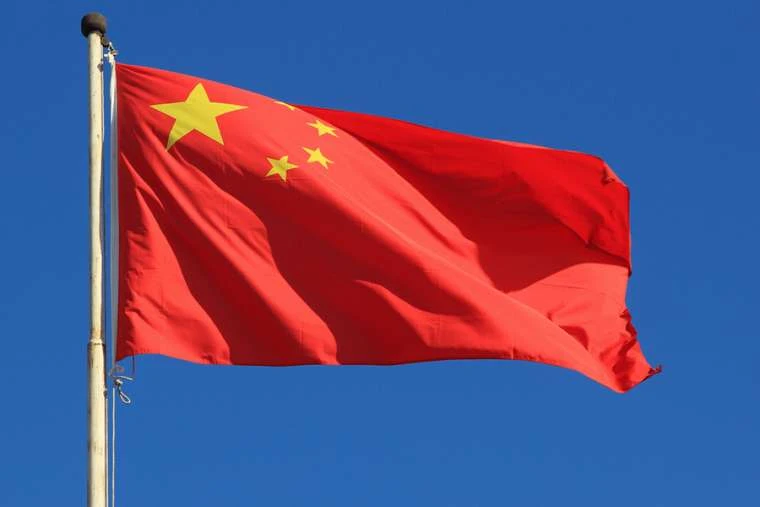
Communist-backed Chinese paper weighs in on possible Vatican-Beijing deal

February 6, 2018 CNA Daily News 1

Beijing, China, Feb 6, 2018 / 02:01 pm (CNA/EWTN News).- A Chinese newspaper with close ties to the nation’s communist party has added its voice to the discussion of a possible agreement with the Vatican on the appointment of bishops.

The Global Times, a Chinese daily, published a Feb. 5 editorial advocating a possible Chinese agreement with the Vatican, and considering the possible implications for Taiwan of a Vatican agreement with the People’s Republic of China.

Published under the auspices of The People’s Daily, flagship of the largest newspaper group in China and an official newspaper of the Chinese Communist Party, the Global Times focuses on international issues, reporting from a communist perspective.

The editorial also said any agreement between the Vatican and Beijing would deal “a heavy blow” to the Democratic Progressive Party in Taiwan, since the Vatican is the nation’s “only ally” in Europe.

The Vatican is currently the only European state that maintains relations with Taiwan, also known as the Republic of China.

Mainland China broke ties with the Vatican in 1951 after communists overthrew the country’s nationalist government.

In 1957, the People’s Republic of China established the Chinese Patriotic Catholic Association to oversee Catholics in the country. Because the CPCA has appointed bishops independently of the pope, in collaboration with the Chinese government, relations with the Catholic Church have been difficult, with many churches closed and priests imprisoned. Chinese Catholics are only officially allowed to practice their faith in state-sanctioned churches.

Since the 1980s the Vatican and Beijing have loosely cooperated in episcopal appointments, however, the government has also named bishops without Vatican approval.

The result has led to a complicated and tense relationship between the patriotic association and the “underground Church,” which includes priests and bishops who are not recognized by the government.

Recently, reports have suggested that a Vatican-Beijing agreement on the appointment of bishops is “imminent” and could be announced in the next few months.

Some have voiced concern that should the Vatican establish official ties with Beijing, they would break relations with Taiwan, leaving them without a European ally. The Holy See is currently one of just 20 countries with full diplomatic relations with Taiwan.

CNA contacted the Taiwanese embassy to the Holy See for comment on the possible deal, however, they were not available for comment.

In their editorial, the Global Times said the question regarding Taiwan “isn’t Beijing’s top concern” when dealing with the Vatican, since the mainland “has many tools to pressure Taiwan.”

However, the communist newspaper said a deal between China and the Vatican would be “tremendously beneficial to Catholics.”

“As a result of changes in secular political patterns, disputes are inevitable in the history of religion, and may evolve into religious splits in many circumstances,” the paper said, noting that the Holy See was able to reach a consensus with Vietnam on bishop appointments, so an agreement with China on the issue “would reflect Catholics’ ability to adapt to changes.”

The paper said Beijing has been “patient” in negotiations with the Vatican and has “stuck to principle” while also managing differences. And despite what the paper called a “difficult process,” it said most non-Catholics in China “have never been strongly against the Vatican. The Chinese public generally respects each Pope.”

“Beijing and the Vatican will establish diplomatic relations sooner or later. We believe Beijing’s diplomats can manage the negotiations well, taking account of the national interest and the religious beliefs of Catholics.”

Pope Francis, the paper said, has a positive image with the Chinese public, and “it is expected he will push China-Vatican ties forward and solve related problems with his wisdom.”

In a separate Feb. 6 analysis , The Global Times cited the possibility that the Vatican and China could use the Vatican’s agreement with Vietnam on bishop appointments as an example for how to shape their own deal.

Implemented by Cardinal Pietro Parolin, now Secretary of State, in 1996, the Vietnam model requires bishop candidates to be approved by the Vatican and Vietnam, with the Holy See proposing three bishops to the Hanoi government, and Hanoi making the final choice.

This approach has long been considered a model for a Vatican-Beijing deal, and as the possibility of an agreement takes clearer shape, the theory seems more likely.

According to the Global Times, Yan Kejia, director of the Institute of Religious Studies at the Shanghai Academy of Social Sciences, said it’s too early to tell what exactly the deal between China and the Vatican will look like, but a “special mechanism” ought to be put into place to help avoid confusion and the possible breach of the agreement in the future.


[…]

No Picture
News Briefs

Holy See to participate in Olympic opening ceremony, IOC strategy session

February 6, 2018 CNA Daily News 0

Vatican City, Feb 6, 2018 / 01:00 pm (CNA/EWTN News).- A delegation from the Holy See is in South Korea this week to participate in the opening of the Winter Olympic games, and for the first time, to observe a key strategic meeting ahead of opening ceremony.

Msgr. Melchor Sánchez de Toca, Undersecretary of the Pontifical Council for Culture, will be the Holy See’s official representative at the event. He will be accompanied by Stefano Calvigioni of the Italian Olympic Committee, who helps coordinate between his own organization, the International Olympic Committee (IOC) and the Vatican.

Opening Feb. 9 in Pyeongchang, South Korea, this year’s games will last until Feb. 25. The main skiing, snowboarding and sliding events will take place in Pyeongchang, which is part of South Korea’s Gangwon province, and sits near the border with North Korea.

Other events such as skating, hockey and curling events will take place in the city of Gangneung, about an hour’s drive from Pyeongchang.

In addition to representing the Holy See at the opening ceremony, Sánchez de Toca is also participating as an observer in the Feb. 5-7 IOC Olympic Session, marking the first time they’ve been invited to attend the meeting.

The Holy See has been present at the Olympics before, having attended the opening ceremony in Rio de Janeiro, Brazil in 2016. However, the invite to the Olympic Session marks a first for the Vatican.

In comments to CNA, Sánchez de Toca said the Holy See received the invitation from Thomas Bach, president of the IOC, and that the invite, particularly to attend the Olympic Session, “is important,” especially since the Holy See has no Olympic committee of its own.

The IOC session is a large, general meeting in which all members of the IOC, the National Olympic Committees (NOC), the presidents of Federations of Olympic sports and other organizations meet to discuss major themes on the agenda for the Olympics. Candidate cities for future Olympic events are also chosen in the session, and numerous strategic projects are approved.

Sánchez de Toca told CNA that the Holy See is present as a sovereign entity, but as representatives of the Holy Father, they bring “the voice of the conscience and morals, which ultimately come from the message of Christ and of the Gospel.”

Referring specifically to ongoing tensions between North and South Korea over the former’s nuclear programs, he said the Holy See backs any efforts for reconciliation that have been made and that will be made during the games.

After a year ripe with heightened nuclear tensions, this year’s Winter Olympics carries a significant weight, since North Korea will have 22 athletes participating in the games.

The two Koreas have endured years of diplomatic freeze over the North’s nuclear programs, and fears over a possible nuclear war have been especially acute in recent months.

However, the two Koreas have agreed to march under a unified flag at the opening ceremonies for the Games, and the two have even gone so far as to form a unified women’s hockey team, with 12 North Korean players joining South Korea’s team.

In addition to their athletes and Vice Sports Minister Won Kil U, North Korea is expected to send some 230 spectators, plus 140 more artists, journalists and taekwondo experts. The last time North Korea sent a large delegation to the South was for the 2014 Asian Games in Incheon, west of Seoul.

Some experts on the region have argued that the North is planning to use increased ties with the South as a means of weakening U.S.-led sanctions against the country.

“North Korea is projecting this idea that the sanctions regime against North Korea is very artificial and also an obstacle against the improvement of inter Korean relations,” Go Myong-hyun, an analyst at the Asan Institute for Policy Studies in Seoul, told VOA News.

In his comments to CNA, Msgr. Sánchez de Toca said “we support the small gestures of peace which are able to invite the delegates of other countries to continue negotiations for peace.”

He voiced hope that the Holy See will be able to participate in future Olympic events, saying the eventual goal is to “establish some time of permanent relationship between the Holy See and the IOC.”


[…]

No Picture
News Briefs

Vatican official praises China for witness to Catholic social teaching

February 6, 2018 CNA Daily News 0

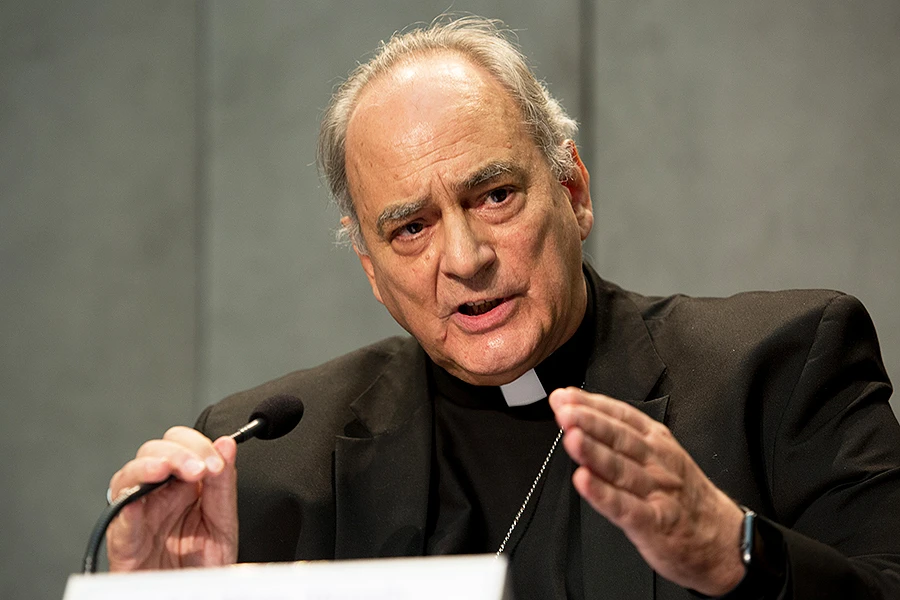
Vatican City, Feb 6, 2018 / 12:45 pm (CNA/EWTN News).- The chancellor of the Pontifical Academy of Social Sciences has said that China is exercising global moral leadership in the principles of Catholic social teaching and defense of human dignity.

Bishop Marcelo Sanchez Sorondo, an Argentinian, is chancellor of the Pontifical Academy of Sciences and the Pontifical Academy of Social Sciences. In an interview with Vatican Insider, he recently said that “at this moment, those who best realize the social doctrine of the Church are the Chinese.”

Sorondo told Vatican Insider that he had recently visited China, where he says he found that “they [the Chinese] seek the common good, subordinate things to the general good.”

“I found an extraordinary China; what people do not know is that the central Chinese principle is ‘work, work, work.’ …As Paul said: ‘he who does not work, who does not eat.’ You do not have shantytowns, you do not have drugs, young people do not have drugs. There is a positive national consciousness, they want to show that they have changed, they already accept private property,” he said of his trip.

The bishop said that the People’s Republic of China has “defended the dignity of the human person,” and, in the area of climate change, is “assuming a moral leadership that others have abandoned.”

Sorondo criticized the United States, where, he said, the economy dominates politics. “How is it possible that oil multinationals manage Trump,” he asked.

“Liberal thought has liquidated the concept of the common good, they do not even want to take it into account, it affirms that it is an empty idea, without any interest.” On the other hand, he said, the Chinese propose work and the common good.  

The bishop said that “China is evolving very well,” adding that “you can not think that the China of today is the China [during the pontificate of] John Paul II or the Russia of the Cold War.”

In October 2017, the US Congressional-Executive Commission on China criticized the country’s human rights practices.

The commission condemned “the Chinese government and Communist Party’s continued efforts to silence dissent, criminalize activities of human rights lawyers, control civil society, suppress religious activity, and restrict the operations of foreign media outlets, businesses, and nongovernmental organizations (NGOs) over the past 12 months”

“Nothing good happens in the dark,” Congressman Chris Smith (R-NJ) said in an October statement on China. “That is why the Administration should shine a light on the Chinese government’s failures to abide by universal standards, shine a light on the cases of tortured and abused political prisoners, shine a light on China’s unfair trade practices and still coercive population control policies.”


[…]

No Picture
News Briefs

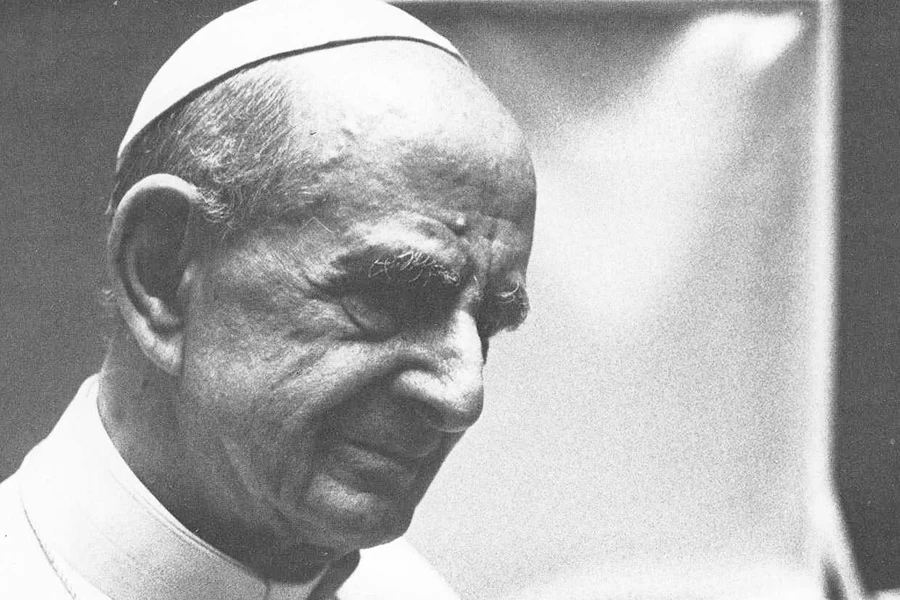
Vatican congregation approves miracle, opening door to Paul VI’s canonization

February 6, 2018 CNA Daily News 0

Vatican City, Feb 6, 2018 / 10:15 am (CNA/EWTN News).- On Tuesday the Congregation for the Causes of Saints approved the second miracle needed for the canonization of Blessed Pope Paul VI, allowing his canonization to take place, possibly later this year.

According to Vatican Insider, the Congregation for the Causes of Saints approved the miracle by a unanimous vote Feb. 6. The next step is for Pope Francis to also give his approval, with an official decree from the Vatican. Then the date for the canonization can be set.

The miracle attributed to the cause of Paul VI is the healing of an unborn child in the fifth month of pregnancy. The case was brought forward in 2014 for study.

The mother, originally from the province of Verona, Italy, had an illness that risked her own life and the life of her unborn child, and was advised to have an abortion.

A few days after the beatification of Paul VI on Oct. 19, 2014, she went to pray to him at the Shrine of Holy Mary of Grace in the town of Brescia. The baby girl was later born in good health, and remains in good health today.

The healing was first ruled as medically inexplicable by the medical council of the congregation last year, while the congregation’s consulting theologians agreed that the healing occurred through the late pope’s intercession.

Today’s meeting with cardinals was the final step before Cardinal Angelo Amato, head of the congregation, will take the miracle to Pope Francis, who has the final say in its approval.

After the Pope issues a decree approving it, the date of the canonization will be announced during a consistory. According to Vatican Insider, the canonization may take place in October of this year, during the Synod of Bishops on the youth.

The miracle for Paul VI’s canonization echoes that of his beatification. That first miracle took place in the 1990s in California. A then-unborn child was found to have a serious health problem that posed a high risk of brain damage. Physicians advised that the child be aborted, but the mother entrusted her pregnancy to Paul VI.

The child was born without problems and is now a healthy adolescent. He is considered to be completely healed.

Pope Paul’s cause for canonization was opened in 1993. In December 2012, Pope Benedict XVI recognized the “heroic virtue” of Paul VI, giving him the title “venerable.” He was beatified in Rome on Oct. 19, 2014.

Paul VI was born Giovanni Montini in 1897 in the town of Concesio in the Lombardy region of Italy. He was ordained a priest at the age of 22. He served as Archbishop of Milan before his election as Pope in 1963. He died in 1978.

As pope, he oversaw much of the Second Vatican Council, which had been opened by Pope St. John XXIII. He also promulgated a new Roman Missal in 1969.

Paul VI published the encyclical Humanae Vitae in 1968, which reaffirmed the Church’s teaching against contraception and reaffirmed the merits of priestly celibacy.


[…]

No Picture
News Briefs

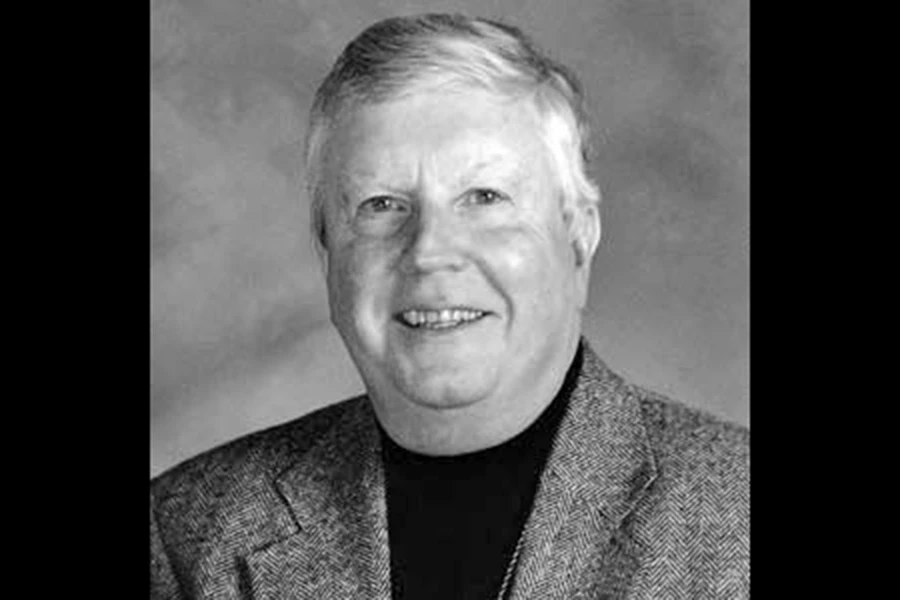
Germain Grisez had ‘a lively sense of Providence,’ long-time friend says

February 6, 2018 CNA Daily News 0

Washington D.C., Feb 6, 2018 / 09:55 am (CNA/EWTN News).- A longtime friend of distinguished theologian Germain Grisez will celebrate the scholar’s funeral Tuesday, at St. Anthony Shrine Roman Catholic Church in Emmitsburg, Md. Grisez died Feb. 1, at the age of 88.

Grisez was professor emeritus at the Mount St. Mary’s University in Emmitsburg, and the author of dozens of books and articles. He was widely regarded as an astute and original ethicist and moral theologian, and a vocal defender of Pope Paul VI’s Humanae Vitae.

Father Peter Ryan, SJ, a professor at Sacred Heart Major Seminary, met Grisez after his brother, Bill Ryan, was taught by the scholar at Georgetown University. The men developed a friendship while Fr. Ryan was studying theology in Rome, and the friendship became a relationship of scholarly collaboration.  

 “The Lord saw fit to give me many years of friendship and close collaboration with Germain,” Ryan said. “It’s been a real blessing.”

When their friendship began, Grisez asked Ryan to review draft chapters of “Living a Christian Life,” the second volume of his landmark work of moral theology, “The Way of the Lord Jesus,” which includes three printed volumes.  The volumes also appear on Grisez’s website along with hundreds of pages of a fourth volume and many of his other works.  

After the second volume was published, Ryan continued to collaborate with Grisez; the pair published articles together and consulted with one another regularly about individual projects.  

In fact, Ryan told CNA that he will continue to work on a theology text—a book on eschatology—that he and Grisez began together. “It will be very much inspired by his thought,” Ryan said.

Ryan said that Grisez’s scholarship was rooted in his deep spirituality.

“He was very interested in having us see that morality is not about extrinsically ‘laying down the law,’ but is rather the implication of loving persons, wanting all that is good for persons, desiring their true fulfillment,” he told CNA.

For Grisez, morality is best understood as “striving for what is truly good for you and others,” Ryan said. “It’s beautiful to live that way—and not always easy!”

Ryan told CNA that Grisez wrote a good deal about personal vocation–that idea that “God has a unique, unfolding plan for everyone’s life.” Following the Lord’s plan means “always seeking God’s Kingdom first, or living out what Grisez calls ‘evangelical life.’”

For motivation to live that way in the face of difficulties, Ryan cited Romans 8:18, “I consider that the sufferings of this present time are as nothing compared with the glory to be revealed for us.”
 
“I think Germain really tried to live that,” he said.

Ryan said his “mentor and collaborator,” was “a remarkable man, a very firm believer. He had a strong and unswervingly orthodox faith, which he defended with great lucidity. And he was loyal.  He loved his family and was a faithful friend.”

“I think he had a lively sense of Providence.’

He also, said Ryan, loved to work.

“He was a workhorse. He was 20 years older than me, and he would be working as if he were 20 years younger. I would think, ‘if he can do it, I should be doing it.’”

Ryan said the witness of Grisez’s life helped him know how to preach at his friend’s funeral.

“He was very concerned that we need to be prepared for death, and to live with confidence that the Lord really will destroy sin and death, and that we will be able to live with Him in great joy.  He knew that the definitive Kingdom that God is preparing is real and very much worth devoting one’s entire life to,” he said.

Ryan also told CNA that he would not be starting from a blank slate as he prepared the funeral homily.  Grisez, Ryan said, had some “thoughts sketched out about what it would be good to talk about—and he was thorough!”


[…]

No Picture
News Briefs

This Lent, revive your enthusiasm for the faith, Pope says

February 6, 2018 CNA Daily News 0

Vatican City, Feb 6, 2018 / 05:29 am (CNA/EWTN News).- In his message for the upcoming Lenten season, Pope Francis urged people to renew their enthusiasm for the faith, using this season of prayer, fasting and almsgiving as an opportunity to stoke the flame of charity in their heart.

“Above all, I urge the members of the Church to take up the Lenten journey with enthusiasm, sustained by almsgiving, fasting and prayer,” the Pope said in his message, published Feb. 6.

“If, at times, the flame of charity seems to die in our own hearts, know that this is never the case in the heart of God! He constantly gives us a chance to begin loving anew.”

At the Easter Vigil, we will light the Easter candle, he said, explaining how it symbolizes a “new fire,” and will “slowly overcome the darkness and illuminate the liturgical assembly.”

“May the light of Christ rising in glory dispel the darkness of our hearts and minds,” he continued. “By listening to God’s word and drawing nourishment from the table of the Eucharist, may our hearts be ever more ardent in faith, hope and love.”

Written on the Solemnity of All Saints, the Pope’s message for Lent is on the theme: “Because of the increase of iniquity, the love of many will grow cold (Matt. 24:12).”

In the message, he warned against both cold hearts and “false prophets,” which he said tempt us to be led and enslaved by our emotions, or by a desire for wealth. “How many of God’s children are mesmerized by momentary pleasures, mistaking them for true happiness!” he wrote.

This is the core of Pope Francis’ Lenten message: to draw attention to the fact that there are many experiences which “whittle away all of [our] enthusiasm and zeal” for the faith, Cardinal Peter Turkson told CNA Feb. 6.

Head of the Dicastery for Promoting Integral Human Development, he said that living as a disciple of Jesus has a lot of challenges, and therefore Francis’ message highlights the need to re-kindle the fire of our faith.

“Love can become cold because there are very many things which prevent it from sustaining the warmth of enthusiasm that it had,” Turkson explained. Therefore, this message invites us, through prayer, fasting and almsgiving, to re-inspire our love of God and neighbor.

“And this is crucial because all the good works that we decide to do… are all animated by a sense of love,” he continued.

Seeing the problems in the world and within ourselves, the solution is to turn to the Church, Pope Francis said, because along with the truth, she “offers us in the Lenten season the soothing remedy of prayer, almsgiving and fasting.”

One of the biggest obstacles to charity, he continued, is the evil of greed of money, which is what almsgiving helps to counteract.

“How I would like almsgiving to become a genuine style of life for each of us!” the Pope said. “How I would like us, as Christians, to follow the example of the Apostles and see in the sharing of our possessions a tangible witness of the communion that is ours in the Church!”

Almsgiving is very fitting during Lent, he continued, but added that he hopes that “even in our daily encounters with those who beg for our assistance, we would see such requests as coming from God himself.”

Almsgiving, along with prayer and fasting, are intended as instruments to fight both sin within ourselves and its effect on the world. For from greed, follows “the rejection of God and his peace,” he said. We begin to prefer “our own desolation rather than the comfort found in his word and the sacraments.”

Greed also may lead us to violence, he noted, pointing to how we lash out, in particular, at those we think threaten the “certainties” of our lives, such as the unborn child, the elderly and infirm, the immigrant, or even just the neighbor “who does not live up to our expectations.”

Almsgiving is a way of setting us free from greed, acknowledging that “what I possess is never mine alone.”

In fasting, too, we are given the opportunity to grow, he said, both by experiencing the hunger that many people around the world experience daily, and by expressing our own “spiritual hunger and thirst for life in God.”

“Fasting wakes us up. It makes us more attentive to God and our neighbor. It revives our desire to obey God, who alone is capable of satisfying our hunger,” he said.

He explained that devoting more time to prayer also helps us to root out vice from our hearts and to find consolation in God, who is our Father and who “wants us to live life well.”

“Lent summons us, and enables us, to come back to the Lord wholeheartedly and in every aspect of our life,” the Pope said. “With this message, I would like again this year to help the entire Church experience this time of grace anew, with joy and in truth.”

He also said that the Church would again be celebrating the “24 Hours for the Lord” initiative, which is a day for the whole Church to focus on the celebration of the sacrament of reconciliation, within the context of Eucharistic adoration.

This year, it will take place March 9-10, he said, inspired by the words of Psalm 130:4, “With you is forgiveness.” In each diocese, at least one church will remain open for twenty-four consecutive hours, he said, offering opportunities for adoration and sacramental confession.

Led by Pope Francis, “24 Hours for the Lord” is a worldwide initiative which points to confession as a primary way to experience God’s merciful embrace. It was launched in 2014 under the auspices of the Pontifical Council for the Promotion of the New Evangelization.

[…]

No Picture
News Briefs

Neocatechumenal Way: Kiko Argüello announces successor to Carmen Hernandez

February 5, 2018 CNA Daily News 2

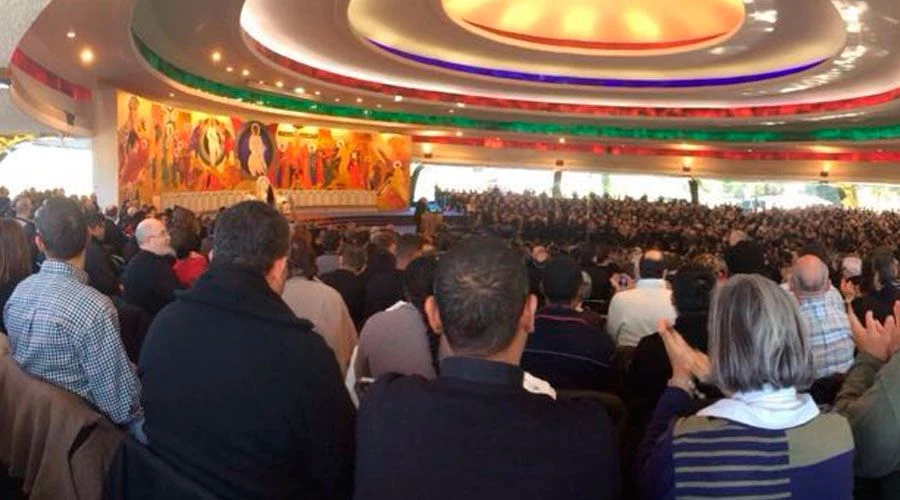
Rome, Italy, Feb 6, 2018 / 12:00 am (CNA).- During an international retreat of the Neocatechumenal Way held in Porto San Giorgio, Italy, Kiko Argüello announced Feb. 2 that Maria Ascensión Romero will be a new international member of the movement, replacing Carmen Hernandez, who died July 19, 2016. Argüello and Hernandez were the ecclesial movement’s co-founders.

Romero joins Fr.Mario Pezzi and Argüello to make up the international team, which according to the the movement’s statutes is to be comprised of three members. Romero was an itinerant missionary for years in Saint Petersburg, Russia.

The Neocatechumenal Way was founded in 1964 in Spain. It draws its inspiration from the practices of the early Catholic Church, providing “post-baptismal” Christian formation in some 40,000 small, parish-based communities.  The movement is present all over the world, and says it has an estimated membership of more than 1 million people.

Since the Neocatechumenal Way was founded, the group has sometimes been cautioned by the Vatican for inserting various novel practices into the Masses it organizes. These include practices such as lay preaching, standing during the Eucharistic Prayer, the reception of Holy Communion while sitting, and the passing of the Most Precious Blood from person to person.

This article was originally published by our sister agency, ACI Prensa. It has been translated and adapted by CNA.

[…]