No Picture
News Briefs

What the ‘Great Firewall’ might signal for Vatican-China deal
March 23, 2018 CNA Daily News 1

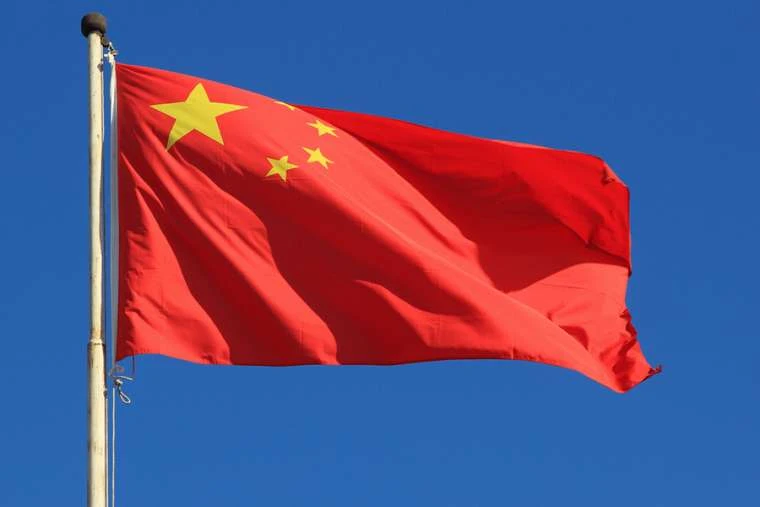
Washington D.C., Mar 23, 2018 / 09:47 pm (CNA/EWTN News).- As the Chinese government tightens control over religious groups in the country, experts caution that the country seems positioned to further restrict religious freedom, following the model of government-run social media.

While introducing more restrictive rules on religious practice, President Xi Jinping’s repeatedly stated goal has been the “Sinicization” of religions, or to diffuse “religious theories with Chinese character” into the five official religions supervised by the government, including the Chinese Catholic Patriotic Association.

On March 22, China instituted a major change in its religious oversight by abolishing the State Administration for Religious Affairs and shifting direct control to the Chinese Communist Party’s United Front Work Department (UFWD). As a result, the Chinese Catholic Patriotic Association will now be under the day-to-day direct supervision of the Chinese Communist Party (CCP). This is similar to another bureaucratic change in China earlier this week, that gave the CCP direct control of movies, television, books, and radio.

“They are folding the state into the party … It is one thing when the party does that with regards to the media, but there is something particularly ironic now in the sense that you have a department of an avowedly Marxist atheist communist party that is going to be managing religious affairs,” said Freedom House’s Senior Research Analyst for East Asia, Sarah Cook.

“Now the Bishops’ Conference is even less explicitly autonomous and more clearly directly managed by an atheist communist party department,” said Cook. This change could result in more pressure for religious entities in China to make clear that their first and foremost allegiance is to the party and not to their religion.

The UFWD is the CCP’s “soft power” instrument for “winning the hearts and minds” for China’s political goals at home and abroad, according to the Financial Times. It seeks to manage groups outside of the CCP, including Hong Kong, Taiwan, Tibet, Xinjian, ethnic minorities, and religious groups.

The UFWD is “basically trying to make sure that these entities are also in some way following the party line even though they are not part of the communist party itself,” explained Cook.

China has long been known for its strict control of information, through means including internet access restriction and the creation of alternative social media platforms that are completely controlled by government surveillance and censorship.

So while Twitter is inaccessible in China – blocked along with Google, Facebook, and YouTube by “the Great Firewall” – one can express himself in 140 characters or fewer on the Chinese website “Sina Weibo” instead, as long as the message is not critical of President Xi Jinping.

Critics fear this model could increasingly be adopted in the realm of religion as well.

The Vatican has been in negotiations with Xi’s regime on the appointment of bishops. Some speculate an agreement will resemble the Vatican’s deal with Vietnam, in which the Holy See picks bishops from a selection of candidates proposed by the episcopal conference, which, as of this week, is more directly controlled by the CCP.

As the Vatican considers the possibility of a deal with the Chinese regime, China-watchers are warning technology companies that engaging directly with the Chinese government could lead to their complicity with censorship and surveillance, or lead to the arrest of Chinese citizens.

One early example of this was Yahoo, which provided sensitive information about writers to the Chinese authorities. More recently, Apple removed VPN software that helped Chinese citizens circumvent its Great Firewall from its China App Store.

Formerly, technology “companies had good faith that by going in there [China] they really were helping to provide these open platforms for communication … It would be very difficult to make that argument right now,” explained Shanthi Kalathil, the director of the International Forum for Democracy Studies at a panel on PEN America’s new report on social media censorship on March 19.

“All of the trends are pointing in a negative direction. The intent of the Chinese government is clear that anybody that does go in will absolutely not have the space to provide what these companies may profess to be providing on paper. We know enough now about both the censorship machine as well as Xi Jinping’s intentions – I think that’s been made quite clear,” continued Kalathil, referring to the increase in censorship, surveillance, and punishment of Chinese social media users in the past three years.

China has increasingly used its control of domestic social media alternatives to criminalize internet users who express dissenting opinions.

In China, people talk about how “it used to be that we afraid that our account would be closed or our posts would be deleted. Now we are afraid that we are just going to be taken away. Some are sentenced to administration detention for a few days, but there are a good number of people who have been sentenced to very long prison terms,” Cook said at the panel.

The trends in freedom of religion are similarly pointing in a negative direction under Xi Jinping.

An analysis published by a Chinese Communist Party think tank scholar in 2012 identified both religion and “internet freedom” as future threats to China’s rise. The years that followed saw crackdowns on both freedom of the internet and religious freedom.

No member of the Chinese Communist Party is allowed to practice a religion. In March, the same parliamentary meeting that gave Xi Jinping lifelong rule also granted the atheist Communist party direct oversight of the Chinese Catholic Patriotic Association.

According to the latest reports, a deal between the Vatican and Beijing could be signed as early as next week.


[…]

No Picture
News Briefs

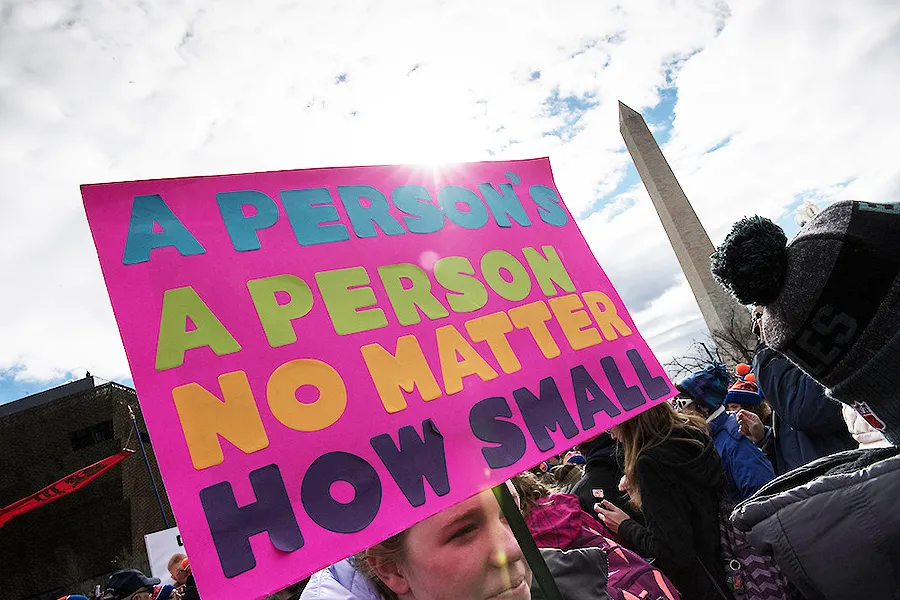
California high school student planning pro-life walkout

March 23, 2018 CNA Daily News 0

Sacramento, Calif., Mar 23, 2018 / 01:56 pm (CNA/EWTN News).- Students at a public school in California are organizing a pro-life walkout, similar to the recent walkouts over gun control, in honor of unborn babies who have been aborted.

The pro-life walkout will take place at Rocklin High School in Rocklin, Calif., a Sacramento suburb, April 11.

The walkout, similar to the recent walkouts over gun control in honor of the Parkland shooting victims in Florida, and will last 17 minutes. The event will be promoted by students with #life.

The organizer of the walkout, Rocklin High student Brandon Gillespie, said he hopes the event will “honor all the lives of the millions of aborted babies every year,” according to local news.

“We encourage students across the country to participate in a stand for #life,” Gillespie said in a March 22 Tweet.

Gillespie noted that he was inspired by his history teacher, Julianne Benzel, to jumpstart the pro-life walkout.

Benzel recently highlighted the nationwide walkouts over gun control in her classroom and asked her students to consider what the limits might be over protests on school grounds and if there was a double-standard.

“If schools, not only just our school and our administration, but across the country are going to allow one group of students to get up during class and walk out to protest one issue, would they still give the same courtesy to another group of students who wanted to protest… abortion?’ Benzel told Fox & Friends.

“If you’re going to allow students to get up and walk out without penalty, then you’re going to have to allow any group of students that wants to protest,” Benzel continued.

Soon after her classroom discussion, Benzel was placed on paid administrative leave after a few students and one parent filed a complaint to the school against her.

District spokesperson Diana Capra said that Benzel was “not penalized or placed on leave because of her viewpoints,” but her leave was “due to complaints from parents and students involving the teacher’s communication regarding…the student-led remembrance activities.”

Despite the controversy, Rocklin students are moving forward with their pro-life walkout in a few weeks and have encouraged other students around the nation to join the walkout for life.

Gillespie met with Rocklin High School’s principal the morning of March 23, but has yet to announce any updates to the walkout’s status since then.

<blockquote class=”twitter-tweet” data-lang=”en”><p lang=”en” dir=”ltr”>I just got done with the meeting with my principal. I will be updating the status of the <a href=”https://twitter.com/hashtag/life?src=hash&amp;ref_src=twsrc%5Etfw”>#life</a> walkoout soon.</p>&mdash; Brandon Gillespie (@bgillie13) <a href=”https://twitter.com/bgillie13/status/977198964771450880?ref_src=twsrc%5Etfw”>March 23, 2018</a></blockquote>
<script async src=”https://platform.twitter.com/widgets.js” charset=”utf-8″></script>

[…]

No Picture
News Briefs

In South Sudan, ‘the body of Christ is bleeding,’ bishop says

March 23, 2018 CNA Daily News 1

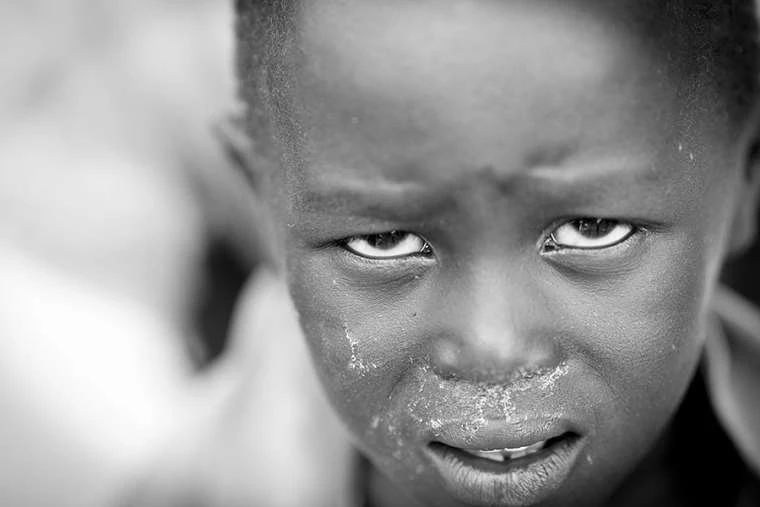
Vatican City, Mar 23, 2018 / 12:43 pm (CNA/EWTN News).- On Friday an ecumenical delegation from South Sudan met privately with Pope Francis and again invited him to visit the war-torn nation, which they said is in desperate need of hope as the situation becomes more dire.

“We are here as an ecumenical body…we came as Christians to show that the body of Christ is bleeding,” Bishop Paride Tabani told CNA March 23.

The people, he said, “[need] hope. They need healing, they are crying for peace, which cannot be brought by arms, but by love, by a sense of compassion, a spirit of love and forgiveness which God has shown to us, especially now.”

“We would like that this Easter would also be a resurrection of people from their suffering.”

Tabani, Bishop Emeritus of Torit in South Sudan, was part of a 9-person delegation from the Council of Churches of South Sudan (SSCC) who met the pope in a private March 23 audience at the Vatican.

Members of the delegation included bishops and leaders of different Christian denominations in South Sudan, including Catholics, Anglicans and Presbyterians, among others. They updated Pope Francis on several joint initiatives of the council to provide humanitarian aid and prompt international leaders to intervene in finding a solution to the conflict.

In a March 23 press briefing after the meeting, Rev. James Oyet Latansio, secretary of the SSCC, described the meeting as “familiar,” and said they sat and talked with each other about a variety of issues.

South Sudan has been plagued by civil war for more than four years. The conflict has split the young nation on several fronts, dividing those loyal to its President Salva Kiir and those loyal to former vice president Reik Machar. The conflict has also bred various divisions of militia and opposition groups.

Discussion at the Vatican meeting focused largely on the humanitarian crisis and the situation of the more than 2 million South Sudanese refugees who have fled to surrounding countries, as well as the need to fill the post of deceased bishops, some whose dioceses have been vacant for years.

They also touched on when a possible papal trip might take place. Francis had intended to visit the war-torn nation last year alongside the Archbishop of Canterbury, Justin Welby. However, the trip was postponed due to security concerns.

According to the delegation, the pope expressed a strong desire to go, but gave no specific date.

In his comments to CNA, Bishop Tabani said the pope “is willing to go, but there have been negative reports and even in the Vatican…they told him the situation is not so good.”

According to Tabani, the situation on the ground is so desperate that people are nearly begging the pope to come as a sign of hope and consolation. He said that during their meeting, he reminded Francis how St. John Paul II in 1993 visited Khartoum in the midst of a violent genocide.

“That gave hope to the people, and then people became very courageous,” Tabani said, adding that with more than 2 million people are living as refugees, now is the time for another papal visit.

“People are dying from hunger, the economic situation is really bad…the people are eager to have consolation, and they are asking ‘when will the Pope come?’” he said, explaining that in the meeting, Pope Francis told the delegation that “my heart is bleeding for the people in South Sudan,” and asked them to pray that the conditions would change, allowing him to come.

More than 2 million civilians have fled the country in the four years since violence broke out. Neighboring Uganda has so far taken in more than 1 million refugees from South Sudan, leaving resources strained.

In comments to CNA, Archbishop John Baptist Odama of Guru, Uganda, who was also part of the ecumenical delegation that met the Pope, said the situation is out of control. Many people had to flee with nothing but the clothes on their backs, and the majority of refugees, who face a worsening humanitarian crisis, are women, children and elderly.

“You have the youth who don’t have enough food, they don’t have enough medical support. What they get is the minimum. Some have died of malaria, some have died from other things like cholera, and then they don’t have the facilities to prepare the children for the future, education,” he said.

Odama, whose diocese is home to some two million refugees, said the Ugandan government is willing to help and has pitched in with some NGOs, but lacks the resources to sustain the increasing influx of refugees while also supporting their own citizens who live in poverty.

In northern Uganda near the West Nile area, there are more than 300,000 people living in one camp, he said, explaining that this area “is the most difficult, because the government of Uganda has found itself in a certain level that it cannot afford, because its resources are also limited.”

“So to care for its own citizens and at the same time for refugees, it becomes very heavy. This is where the biggest challenge is.”

Both Bishop Tabani and Archbishop Odama voiced gratitude to Pope Francis for holding the Feb. 23 day of prayer and fasting for peace in South Sudan, the Democratic Republic of Congo and Syria.

They also asked that the pope appoint more bishops, because many bishops have died and none have been re-appointed. Tabani, who retired early to launch a project aimed at providing education to refugees and promoting peaceful coexistence, said his successor died five years ago and has not been replaced.

Tabini said that upon hearing their requests, Pope Francis did not immediately make any promises or guarantees. “He just listened,” the bishop said, adding that “it’s good to be a good listener…this is what I like.”


[…]

No Picture
News Briefs

Cardinal Tong says opposing Vatican-China deal is ‘unreasonable’

March 23, 2018 CNA Daily News 1

Vatican City, Mar 23, 2018 / 05:00 am (CNA/EWTN News).- Cardinal John Tong Hon has voiced support for a proposed deal on the appointment of bishops between the Vatican and China, saying he believes the Chinese government has generally become more tolerant, and an accord would help bring further openness and unity to the Church.

Tong is the Bishop Emeritus of Hong Kong, and spoke at a March 22-23 conference titled “Christianity in the Chinese Society: Impact, Interaction and Inculturation” taking place at Rome’s Pontifical Gregorian University.

Tong is one of two Chinese cardinals, the other being his predecessor, Cardinal Joseph Zen. While Zen has consistently been an outspoken critic of the proposed deal, Hon holds a different opinion.

In an interview with a small number of journalists, one of which was CNA, Hon said opposition to the accord is “unreasonable,” because the deal aims at unity. He called the agreement “far-sighted” and said at times, sacrifice is necessary in order for Catholics to become “members of one family.”

The deal – which would allegedly follow the model of the Vatican’s agreement with Vietnam, allowing the Holy See to pick bishops from a selection of candidates proposed by the government – is rumored to be “imminent.”

In a recent blog post, Cardinal Zen indicated that the agreement could be signed as early as March 23 (tomorrow) or March 27. If the deal is reached, Zen said he would “retire in silence” and would “hide and pray,” but that he would not oppose the pope.

In his interview with journalists, Cardinal Hon said he didn’t want to speculate about when the deal might come, but said he was “optimistic” it would eventually happen.

Below are excerpts of Cardinal Hon’s conversation with journalists:

Q: This conference is addressing the presence of Christianity in China. From your perspective, what is the current situation for Christians there? Some say there is persecution and an increase in restrictions for religions, but others say the situation has improved. What is your take?

I am a Hong Kong citizen. Hong Kong belongs to one country, is a part of China, yet Hong Kong, after 1997, is one country run under two systems, meaning Hong Kong still continues to be a capitalistic administration, and China is under the socialist system for 50 years. So we are doing the same things as before. Regarding China, I am also a foreigner, so that means I’m not an insider. I can offer my impression with a limited knowledge of China…In a general picture I think China has already greatly improved, so sometimes you find this tightening in this part or that part, but China is huge. You cannot use this to describe…If we have a very far-sighted vision about China, I think China is [becoming] more civilized, closer to the outside world. And then I think the general situation, in the present, is better. Those would be my remarks.

Q: So your perception is that China is more open to religion, is more tolerant?

In the future also it should be, not the other way. Because the people can come out from China, now most of the people like to come to Hong Kong or outside of China for a week, so their eyes are opened after seeing the outside world. So they of course have higher expectations. And also the officials, knowing, they are not stupid, they know the expectations of most of the common people, and although on one hand they want to exercise their authority over the common people, but at the same time they have to compromise. So from time to time, sometimes [there’s] a tightening, but other times [there’s] a loosening policy. But in the long run China will be more and wider open, there is no other way. If I were the officials, I would do similar things. So I am optimistic.

Q: In your opening remarks you spoke about the importance of dialogue and communication between Chinese authorities and Christianity. This reminded me of your remarks in February about a deal between the Vatican and China on the appointment of bishops and allowing the Church to be registered in China. You said you were optimistic if it followed the Vietnamese model. Some say it won’t follow this model. Are you still optimistic?

Yes, I’m still optimistic, because I always, this is my belief, whatever is reasonable can last for a long time. Whatever is unreasonable will fade out or has to be changed. You can see from the whole of human history, even the history of China. Even Mao, Mao was so cruel, so strong, but finally…and also the cultural revolution created a lot of chaotic situations in China, but finally those situations have been changed. So there is no other way.

Q: So in this case ‘reasonable’ would be the deal, and ‘unreasonable’ would be against it?

Yes.

Q: A lot has been said in the media about your predecessor, Cardinal Zen, who has spoken out a lot against this deal. What is your opinion about this and what it says about the current dynamics in China?

This is a free world, everybody can express their own opinion. Everyone can use their own mind, their wisdom, to discern. So when you open your eyes and also open your ears, you can hear many, many different voices. So this is a free world. What can you say? We, as persons, we respect everybody as a person. So different opinions, up to your own wisdom to discern. That’s my [opinion], which I received from my teacher, it’s the lesson I learned.

Q: How is Pope Francis received in China? In the West he’s very popular even among non-Catholics. Is it the same in China?

Yes. Generally speaking, he’s loved by Catholics and non-Catholics.

Q: What’s the appeal?

He’s a humble person. The first thing is that he is really humble, and a humble person will be loved by many people. If you are proud you get a lot of enemies. This is also biblical teaching by our Lord Jesus. So we have to be humble. Jesus humbled himself and came down to earth and finally received crucifixion, suffering. So humility is important, that’s one thing. And second, he has a far-sighted vision. He’s not only seeing [now], but how to achieve the reign of God. The reign of God is to make humanity whole, to be one family, and we are all brothers and sisters, the whole world. Also through the negotiations promoted and advocated by the Second Vatican Council…Sometimes we can lose something so we can achieve friendship and set an example for all others and all other people, so finally we become friends, and then eventually we become all members of one family. At that time the reign of God will be implemented on earth…I was trained here 50 years ago at the Urbanianum. At that time the Second Vatican Council was being held, and I witnessed the grand closing ceremony. And right away I was ordained a priest with more than 60 classmates by Pope Paul VI. So that is what we were taught, and we have also what we were taught to believe in. So if you don’t believe that, that it’s only looking for [certain] things, that’s your business, that’s not my faith. And finally, we have to pray for the Church in China.

Q: People have been talking about a deal with China for years, and now it seems that is pretty sure…

I don’t want to make any guess, it’s up to God’s will.

Q: But if it does happen, is there something about Francis’ pontificate or diplomatic style that would allow the deal to happen? Is there something about the way he does diplomacy that would make the deal more likely than in the past?

If there’s any breakthrough, it’s God’s will, I don’t want to make any speculation. I’m not a prophet, I only follow our dogmatic teaching in the Church, and also the teaching of the constitutions issued by the Second Vatican Council. What I have learned in teaching in seminary, we pray for the Church in China, but I don’t want to make any speculations…during the year, almost three years ago, during the year of divine mercy, the Church in China, particularly, during that period, was also very happy to respond to the appeal made by the Holy Father. So it shows that they are very positive about the Holy Father because they follow the instructions given by the Holy Father.

[…]