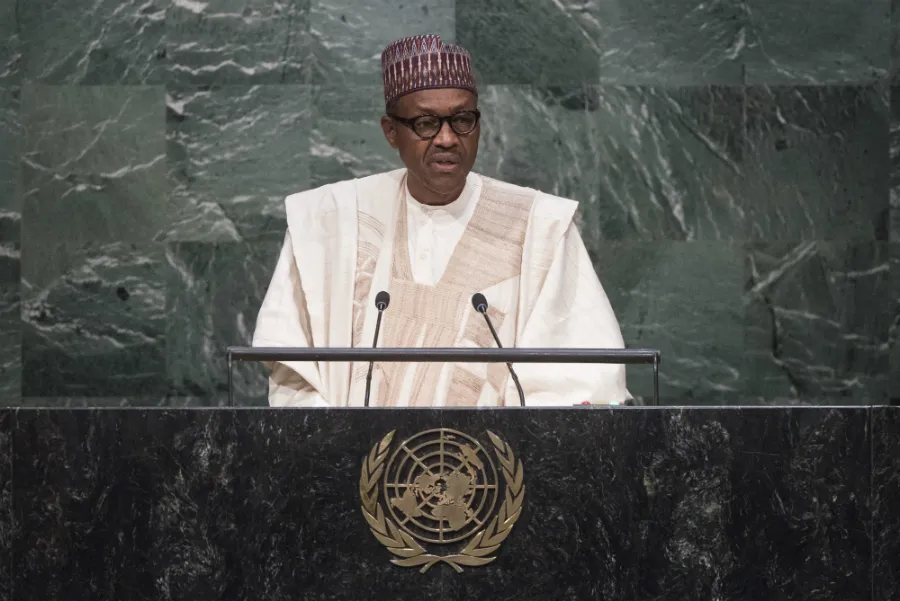
Sokoto, Nigeria, Sep 14, 2018 / 03:58 pm (CNA/EWTN News).- In the face of Nigeria’s upcoming general election, the country’s bishops have encouraged politicians and residents to participate in a just voting process.
The Nigerian bishops’ conference met in Sokoto Sept. 6-14, where they discuss the general election which is to be held in February 2019. Their concluding communique called for a respectful electoral process and emphasized its importance to the country’s success.
“We demand that the choice of the electorate, once made, be respected by all. Although elections are not enough to enthrone good governance, they are an important stage in that project,” read the statement.
“Unless we get our electoral process right, elections in Nigeria will only become expensive cosmetic exercises that legitimise corruption and ineptitude.”
The statement challenged citizens to ensure they are equipped with voter cards and to reject illegal voting practices, namely buying and selling votes. The bishops wrote that the voters should be wary of political inducements and not be swayed by the pressures of politicians.
“It is the right of Nigerians to fully participate in the electoral process without intimidation and violence” the bishops said.
The bishops urged politicians to reflect on the purpose of public office and its service to the people. Emphasizing the importance of law, the statement also asked lawmakers to construct just laws, remove unfair regulations, and uphold the equal rights of all citizens.
“We continually encourage the legislators to enact good laws and abrogate bad ones, so as to ensure order, safety, good conduct and safeguard the Common good,” wrote the bishops.
“We also enjoin the judiciary not to allow itself to be used as an instrument of subjugation, oppression, discrimination and injustice…We note that the rule of law connotes equality of all under the law; seeks the protection of fundamental rights of citizens; and guards against abuse of power.”
The Nigerian bishops advocated for the government’s aid in releasing the captives of the radical Islamist group Boko Haram.
“We advise the Federal Government to ensure the safe release of the remaining Chibok girls and all other persons in captivity.”
The path toward an ideal Nigeria must overcome ethnic and religious boundaries, the bishops said.
“We desire that mutual understanding and peaceful coexistence becomes a model for the adherents of all religions in the country,” the statement read. “This would enable us to collectively build the great Nigeria of our dreams.”
The bishops emphasized the power of prayer and encouraged all members of the Church to participate in continuous prayer for the upcoming election.
“Our Lord Jesus Christ demonstrated the power of prayer during his earthly life. He prayed incessantly, especially, at very decisive and significant moments of his life.”
“Following his footsteps, we direct that our Church at various levels continue to pray, especially as we approach the election year.”
If you value the news and views Catholic World Report provides, please consider donating to support our efforts. Your contribution will help us continue to make CWR available to all readers worldwide for free, without a subscription. Thank you for your generosity!
Click here for more information on donating to CWR. Click here to sign up for our newsletter.

Palestinian President Mahmoud Abbas called Pope Leo XIV on Monday, July 21, 2025, to discuss the ongoing conflict in Gaza and the West Bank. / Credit: A Katz/Shutterstock
Rome Newsroom, Jul 21, 2025 / 11:47 am (CNA).
Pope Leo XIV spoke on the p… […]
Alfred Magero, Matthew Njogu, and Edward Chaleh Nkamanyi are three Catholic fathers from Africa who recently shared insights about being a present dad, protecting their families amid threats to the African family, and being a model of family values for their children with ACI Africa, CNA’s news partner in Africa. / Credit: Photos courtesy of ACI Africa
ACI Africa, Jun 17, 2024 / 12:37 pm (CNA).
On the occasion of Father’s Day 2024, a day focused on the celebration of fatherhood, four Catholic men from different African countries recently shared their experiences of impacting the lives of their children.
The Catholic fathers — who hail from Cameroon, Kenya, and Nigeria — talk about the importance of “being present,” of protecting their families amid threats to the African family, and of being a model of family values for their children, who they believe someday will become parents as well.
Tony Nnachetta, 68: Fatherhood is a full-time enterprise
Tony Nnachetta shares a moment with Pope Francis. The married father of four is a parishioner in the Catholic Archdiocese of Onitsha. Credit: Photo courtesy of ACI Africa
Tony Nnachetta is a married father of four who attends the Church of the Assumption Parish in Nigeria’s Archdiocese of Lagos. Nnachettahas been a parishioner there for 40 years, and he was wed there 38 years ago. A member of the Grand Knights of St. Mulumba, he originally hails from the Archdiocese of Onitsha.
I got married to my friend after we dated for four years. I was looking forward to fatherhood and I was mentally prepared for it. Here are the lessons I have learned along my fatherhood journey.
First, being a father means you watch your children grow and become independent. You watch them get to a point in their lives where they can engage in a debate with you and even disagree with you.
Fatherhood is a long process. You would be fortunate to go through the entire process and maybe see your children’s children. I have seen mine achieve excellence in school and even leave home and go across the world as they sought to become independent.
Wherever your children go, what is important for them is what they take away from home — what they take from mommy and daddy. I have always told mine to “remember the child of who you are.” This means that they are not allowed to break the Christian values in our family.
I taught them to always stand for the truth and never to flow with the tide. We have encouraged them to always say what they mean. These days, they have jokingly turned around the statement and they tell me, “Remember the dad of who you are,” and we laugh about it.
You can’t always be there to take the bullet for them, but you can support them through prayers. Our family relies a lot on the intercession of the saints. We call ourselves a family of Jesuits because the school my children went to is under the patronage of St. Ignatius of Loyola.
Fatherhood is a full-time engagement. It is not like you can be a father in the morning and take a break in the evening. You worry about your children even when they are grown and have left your home. They preoccupy you everywhere. You wonder whether they are warm and if they have had their meal. But all this brings a father immense joy.
Young fathers in Africa are overburdened by poverty. Because of poverty they don’t have a way to help their families. Others are scared to enter the marriage institution. Poverty has made young men weak and helpless. Some are leaving their young families and going to faraway places outside the continent to make a living.
Poverty is eroding family values because some fathers do what they do, including stealing, for their children to survive. In doing so, they are setting a bad example for their children …
It is important for our leaders to confront this situation. They must accept that they have let us down.
Matthew Njogu, 75: Tips on being a present dad
Matthew Njogu is the moderator of the Catholic Men Association at St. Austin’s Msongari Parish of Kenya’s Archdiocese of Nairobi. His children are now adults. Credit: Photo courtesy of ACI Africa
Fathers need to be present in the lives of their children. For a long time, it was assumed that it was the mother’s responsibility to take care of the young children; fathers kept off. But being absent in the lives of your children hurts your relationship with them. They end up growing up without you having any impact on their lives.
Unfortunately, some fathers assume that fatherhood ends at providing material things… They don’t pay attention to their children’s growth milestones. And when they eventually try to establish a connection, they find that the children are already all grown without knowing anything about their fathers.
Simple things like dropping your children off at school help you connect with them. While stuck in traffic on the way to school, you can talk about things that will help you understand your child and for him to know you.
Always try as much as possible to have dinner with your children and help them with schoolwork. And always try to make up for the time you don’t spend with them.
Edward Chaleh Nkamanyi, 53: Raising a Christ-like family
Edward Chaleh Nkamanyia runs a medical college in Doula, Cameroon. He is a father of two, though he tells ACI Africa that he is “a father of many” as he takes care of several orphans and other vulnerable children. Credit: Photo courtesy of ACI Africa
Nkamanyi runs a medical college in Doula, Cameroon. He is a father of two children ages 16 and 20. He tells ACI Africa that he is “a father of many,” as he takes care of several orphans and other vulnerable children. Here are his insights into nurturing a Christ-like family.
It is the joy of every responsible young man to be called “daddy” or “papa.” Having a Christ-like family is the greatest gift for a father; a family like that of Joseph, Mary, and Jesus.
My appeal for Catholic fathers is to hold their families firmly, to provide for them, and to protect them from all dangers in the contemporary society, where values are being eroded.
I don’t believe that being a father is a challenging task. God already gave us the innate potential to be fathers. I believe that God can’t give you a role that you can’t perform.
It is unfortunate that many young men are choosing to be absentee fathers. From what I have seen, many children raised by a single parent end up adopting wayward behaviors.
Alfred Magero, 48: Being a present dad in a low-income setting
Alfred Magero belongs to the Catholic Men’s Association group of St. Joseph the Worker Kangemi Catholic Parish of in the Nairobi Archdiocese. The father of three has been married for 29 years. Credit: Photo courtesy of ACI Africa
Magero belongs to the Catholic Men’s Association group of St. Joseph the Worker Kangemi Parish of the Archdiocese of Nairobi. The father of three has been married for 29 years and shares his experience and that of other Catholic dads raising their children in a low-income neighborhood.
I am raising my children to become God-fearing adults. This is not an easy task in the community in which we live, where there is a lot of poverty, drunkenness, and other characteristics typical of a low-income [neighborhood].
Many fathers rarely interact with their children since their main focus is to provide for their families. They leave for work before their children wake up and come back at night when the children have already gone to bed.
The young men and boys we are raising are experiencing a different environment from ours when we were growing up. With the whole world brought to them on the palm of their hand by a simple tap on the phone, this generation is dangerously exposed. They need us, their fathers, to constantly give them direction. They need us to be their role models.
They need us to constantly remind them that they are in Africa and that they should not adopt alien cultures, especially those bound to destroy the family.
As fathers, we must remind our young ones to uphold African values that kept the family unit and the society glued together. Africans knew the importance of loving and caring for each other. Unfortunately, this value is being eroded, and in its place, now we have individualism. Older men in families would educate young men to be responsible adults. Unfortunately, we no longer have this kind of education.
Altar of the Child Jesus and the relic of the manger in the Church of Saint Catherine (Basilica of the Nativity) in Bethlehem. / Credit: Magdala Center
CNA Staff, Dec 2, 2023 / 07:00 am (CNA).
The Magdala Tourist Center, located in the biblical… […]
Leave a Reply