No Picture
News Briefs

House committee moves to protect religious adoption agencies

July 12, 2018 CNA Daily News 0

Washington D.C., Jul 12, 2018 / 04:45 pm (CNA).- The House Appropriations Committee moved to protect the conscience rights and religious freedom of faith-based adoption agencies on Wednesday.

The committee adopted an amendment to an upcoming funding bill that would preserve federal funding for agencies who do not want to place children with same-sex couples.

The amendment was introduced by Rep. Robert Aderholt (R-AL). In a statement published on his website, Aderholt said that the opioid epidemic has caused the number of foster care cases to “skyrocket,” and that religious charities are needed to assist with this crisis.

However, “several states and localities across the country are not allowing religious organizations, such as Catholic Charities and Bethany Christian services, to operate child welfare agencies,” due to their refusal to place children with same-sex couples, in accord with their religious beliefs.

Alderholt said this amendment will aim to prevent religious discrimination against those agencies. The amendment mandates that the Department of Health and Human Services withhold 15 percent of federal funds for child welfare services in states that do not allow religiously-based child welfare agencies to operate in accordance with their beliefs.

Faith-based agencies in several states have had to shut down their adoption divisions because they did not want to violate their religious beliefs.

Catholic Charities of the Boston archdiocese ceased handling adoptions in Massachusetts in 2006, a little less than two years after the state legalized same-sex marriage. Catholic Charities in California followed suit later that year. In 2011, Catholic Charities of Illinois also stopped handling adoption cases.

In Illinois, about 2,000 children were displaced when Catholic Charities shut down, forcing other agencies to take on their cases.

The city of Philadelphia is being sued by several foster mothers after it stopped working with Catholic Social Services to place foster children. While Catholic Social Services would not place children with a same-sex couple, no same-sex couple ever made a complaint about the agency before its relationship with the city was severed.

Rep. Nancy Pelosi (D-CA) accused Republicans of pushing a “bigoted, anti-LGBTQ agenda” that could result in children being without homes.

In a statement released July 11, she pledged to fight the “disgusting, deeply immoral and profoundly offensive effort,” and said there was “no place for bigotry.”

This, says Heritage Foundation Research Assistant Melanie Israel, is falsehood.

“The other side is falsely saying that this prevents LGBT couples from adopting. That’s not true,” said Israel. “They are still welcome to foster and adopt from a plethora of agencies, in particular the state-run agencies, and even some faith-based agencies. Not all faith-based agencies take issue with placing children outside of a home with a married mom and dad.”

Faith-based agencies can play a supportive role for a child’s birth-mother as well, said Israel. These women, and families that are seeking to foster and adopt, “deserve the chance to be able to work with an agency that’s going to share their faith, and their values.”

“For many birth-moms, the decision to give a child up for adoption, it’s a very loving decision, it’s a very brave decision, but it’s also very scary,” she told CNA.

A faith-based agency could provide assistance to her spiritual needs in addition to anything else that would arise during the adoption process, and could provide assurance that the child would go to a family with a similar set of values, Israel added.


[…]

Analysis

Amazon.va?

July 12, 2018 Peter M.J. Stravinskas 12

Germany probably doesn’t have that much concern about the ecclesial mess of Latin America but believes it can use their predicament to move the Church […]

No Picture
News Briefs

Venezuelan bishops say country is going in ‘suicidal’ direction under Maduro

July 12, 2018 CNA Daily News 1

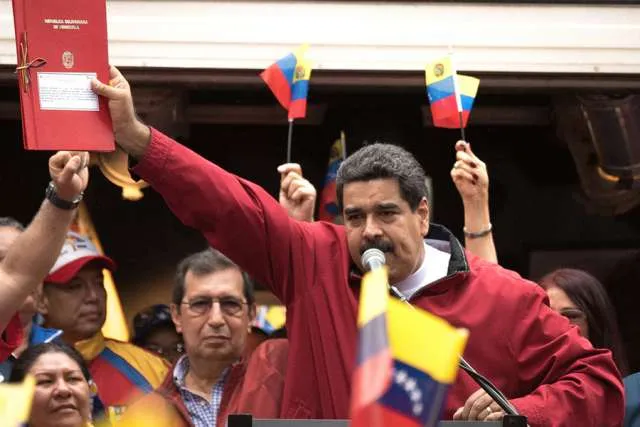
Caracas, Venezuela, Jul 12, 2018 / 01:37 pm (CNA/EWTN News).- The bishops of Venezuela issued Wednesday a scathing critique of the country’s political leadership, calling for greater respect for basic needs and rights.

Since Nicolas Maduro succeeded Hugo Chávez as president of Venezuela in 2013, the country has been marred by violence and social upheaval.

“Attitudes of arrogance, authoritarianism and abuse of power, as well as the constant violation of human rights, are accumulating on their actors a rejection that future generations will claim,” the bishops said in a July 11 statement at the close of their plenary assembly.

“It is suicidal to continue stubbornly insisting on a path of self-destruction that will turn against its promoters,” they said, stressing that the Church does not endorse acts of revenge or retaliation, “but neither does it promote impunity for crimes that threaten life and fundamental rights.”

The United Nation’s human rights office said in June that Venezuelan security forces carried out more than 500 extra-judicial killings amid purported crime-fighting efforts between July 2015 and March 2017. The report highlighted the failure of authorities to hold accountable perpetrators of serious human rights violations which include killings, the use of excessive force against demonstrators, arbitrary detentions, ill-treatment, and torture.

The bishops’ statement, “Do not be afraid, I am with you,” offers an overview of the political and humanitarian crisis plaguing the country and their reaction as pastors.

The bishops said the future of the nation is at stake, and the situation is becoming “increasingly more serious.”

Citing “monstrous hyperinflation” as a key reason for much of the country’s crisis, the bishops noted that the quality of life for the majority of Venezuelans, which was “already extremely precarious, is deteriorating day by day.”

Added to shortages in food, healthcare supplies, public services such as water and electricity, which were already a cause for serious concern, are problems with personal safety, employment, the circulation and sale of cash, and problems with public transport.

With most methods of public transport disappearing from the streets, citizens have created their own means getting around, packing themselves into overflowing truck beds or holding onto cage-looking structures on the back of large lorries, causing an increase in traffic accidents and deaths.

Poor economic policies, including strict price controls, coupled with high inflation rates, have resulted in a severe lack of basic necessities such as toilet paper, milk, flour, diapers and medicines.

Venezuela’s socialist government is widely blamed for the crisis. Since 2003, price controls on some 160 products, including cooking oil, soap and flour, have meant that while they are affordable, they fly off store shelves only to be resold on the black market at much higher rates.

In  2017, Maduro announced plans to re-write the country’s constitution, a decision that was widely opposed by citizens and the Church. Millions of people turned out to protest in the lead-up to a July 30, 2017, nation-wide election which approved a constitutional assembly to reform the country’s 1999 constitution.

In their statement, Venezuela’s bishops pointed to the ongoing political crisis the country is facing, saying the primary cause for their woes is the national government, “for putting its political project over any other consideration, including the humanitarian.”

They also criticized the government for “erroneous” financial policies, for its “contempt for productive activity and for private property and for its constant attitude of placing obstacles in the way of those who want to resolve some aspect of the current problem.”

The government is playing the victim in both internal and external ways, they said, explaining that this is “nothing more than the confession of their own inability to manage the country. One cannot pretend to resolve the situation of a failed economy with emergency measures such as food bags and bonuses.”

Elections held in May, which many Venezuelans, including the bishops, protested as illegitimate, has only cemented the current government’s hold on power, rather than leading to legal and democratic presidential elections, they said, noting that the boycott by high numbers of the population is a “silent message of rejection” toward a regime that seeks to impose “a totalitarian ideology.”

Calling Venezuela’s National Constituent Assembly “illegitimate,” the bishops said the entity violates “the most sacred rights of the Venezuelan people: the fundamental freedom to elect their own leaders in a fair electoral competition” without manipulation or favoritism.

Bishops said they live under a “de facto regime” which does not live by the constitution, and stressed the need for national leadership which puts people and ethics at the center, rather than power, control, or the pursuit of “petty interests.”

They also pointed to the growing Venezuelan diaspora throughout the world, mostly in neighboring Latin American countries, who risk trafficking and often struggle to integrate into their new countries. The Unied Nations Refugee Agency recently estimated that 5,000 Venezuelans emigrate daily.

Noting the high numbers of youth who have left, bishops said their absence is a loss of “human talent” for the country and of hope for the future.

However, the bishops stressed that  “God guides his people from slavery to freedom, but he also educates them, through trials and hardship, so that it reaches the necessary maturity as a nation.”

They urged citizens to pray, saying no prayer or sacrifice is useless, even if the result is not immediately seen.

In the midst of the crisis, the Church, they said, has en evangelic task of looking after the interests of the people.

They stressed that the Church is not a substitute for political leaders, and does not wish to “dominate the social panorama, nor to become a factor of government or opposition.”

“However, it encourages the duly educated and aware laity of their citizens’ rights and obligations to make their voices heart and to actively intervene in the political arena, so that the high principles and values that the Christian faith transmits to us can also be lived in the scope of the public and translate into works of common good.”

The bishops invited members of civil society to look for creative solutions to the crisis, urging citizens not to grow accustomed to living in “humiliating” conditions, and to be active in using every means possible to return power to the people.

Addressing the Venezuelan armed forces, bishops urged them to be faithful to their oath before God and homeland to “defend the constitution and democracy, and not to be carried away by political and ideological bias.”

They also advocated for greater solidarity on the part of parishes and ecclesial institutions in keeping with the Church’s social doctrine, despite the difficulties. The Church community, they said, is called “to promote a structural change in favor of the transformation of our society.”

“We must never be discouraged in front of the challenges of an uncertain and difficult present,” they said. “On the contrary, we place our trust in God, who gives us the strength to bear witness and to do good, and we strengthen the demands in favor of justice and freedom.”

[…]

No Picture
News Briefs

Australian state hesitates to require priests to break seal of confession

July 12, 2018 CNA Daily News 0

Melbourne, Australia, Jul 12, 2018 / 10:37 am (CNA/EWTN News).- The Australian state of Victoria has said a recommendation by the royal commission that it pass a law requiring priests to break the confessional seal to report cases of child sex abuse requires further consideration.

Victoria attorney general Martin Pakula said July 11 that the government needs to further consider 24 of the 317 recommendations made to the state by the Royal Commission into Institutional Responses to Child Sexual Abuse.

Pakula said the state government accepted 128 recommendations, and another 165 in principle, according to The Guardian.

He told ABC radio that the proposal to require the breaking of the seal of confession “needs a degree of national agreement.”

The Australian Capital Territory, South Australia, and Tasmania have already adopted laws making it illegal for priests to fail to report the confession of a child sex abuse crime.

In South Australia, priests who fail to report child sex abuse which they learned of while hearing a confession will face a AUD 10,000 fine ($7,400) beginning Oct. 1.

Like Victoria, New South Wales is subjecting that recommendation to further consideration, though it accepted 336 of the royal commission’s recommendations.

The New South Wales government said last month that “whether or how the offence will apply to members of the clergy where the information about an offence was gathered through religious confessions is a complex issue that has been referred to the Council of Attorney’s-General for national consideration.”

The Catholic Church in Australia has vehemently opposed the imposition of laws mandating reporting from the confessional. Many priests have said they would go to jail before violating the seal.

The Code of Canon Law states that “The sacramental seal is inviolable; therefore it is absolutely forbidden for a confessor to betray in any way a penitent in words or in any manner and for any reason.” A priest who intentionally violates the seal incurs an automatic excommunication.

The Catechism of the Catholic Church teaches that “every priest who hears confessions is bound under severe penalties to keep absolute secrecy regarding the sins that his penitents have confessed to him,” due to the “delicacy and greatness of this ministry and the respect due to persons.”

Archbishop Christopher Prowse of Canberra-Goulburn has said that “Priests are bound by a sacred vow to maintain the seal of confession. Without that vow, who would be willing to unburden themselves of their sins?”

“The government threatens religious freedom by appointing itself an expert on religious practices and by attempting to change the sacrament of confession while delivering no improvement in the safety of children,” he said. “Sadly, breaking the seal of confession won’t prevent abuse and it won’t help our ongoing efforts to improve the safety of children in Catholic institutions.”

Archbishop Anthony Fisher of Sydney has said that “priests will, we know, suffer punishment, even martyrdom, rather than break the seal of Confession,” which he called “a privileged encounter between penitent and God.”

Clerics are not the only critics of the new legislation. Andrew Wall, a member of the Australian Capital Territory Legislative Assembly, said forcing priests to break the seal of confession oversteps an individual’s “freedom of association, freedom of expression and freedom of religious rights.”

[…]

No Picture
News Briefs

Funeral Mass scheduled for Monterey bishop

July 12, 2018 CNA Daily News 0

Monterey, Calif., Jul 12, 2018 / 10:15 am (CNA/EWTN News).- A funeral Mass will be celebrated July 19 for Bishop Richard John Garcia, the late Bishop of Monterey, California, who died July 11 from complications related to Alzheimer’s disease. Garcia was 71.

Garcia was ordained a priest in 1973 in the Archdiocese of San Francisco, was a seminary professor and directed Hispanic ministry, and, in 1998, became an auxiliary bishop in the Diocese of Sacramento. The bishop was appointed to lead the coastal California Diocese of Monterey in 2006.

He was a board member of Catholic Relief Services and the Catholic Legal Immigration Network, and involved in several committees of the United States Conference of Catholic Bishops.

He was diagnosed with Alzheimer’s disease in April.

His episcopal motto was “En El Vivimos”- “In Him We Live.”  

In a 2017 pastoral letter, Garcia encouraged Eucharistic adoration in the parishes of his diocese, writing that “The Eucharist is a multifaceted, precious jewel in the Sacramental Life of our Church. We cherish and reverence this celebration of our salvation — a perpetual memorial of Christ’s Death and Resurrection.”

In 2007, he wrote “In my life…I have encountered God’s ‘grace upon grace’ even though I did not always fully comprehend or appreciate God’s never being far from me.”

[…]

No Picture
News Briefs

The deep roots of Portugal’s Marian devotion

July 12, 2018 CNA Daily News 1

Lisbon, Portugal, Jul 12, 2018 / 03:01 am (CNA/EWTN News).- When the Virgin Mary appeared to three shepherd children in Fatima in 1917, Portugal had already acclaimed Mary as their reigning Queen for hundreds of years. After the coronation of Our Lady of the Immaculate Conception as “Queen of Portugal” by King João IV in 1646, no Portuguese monarch ever wore a crown again.

The history of exceptional Marian devotion near Fatima dates back even further.

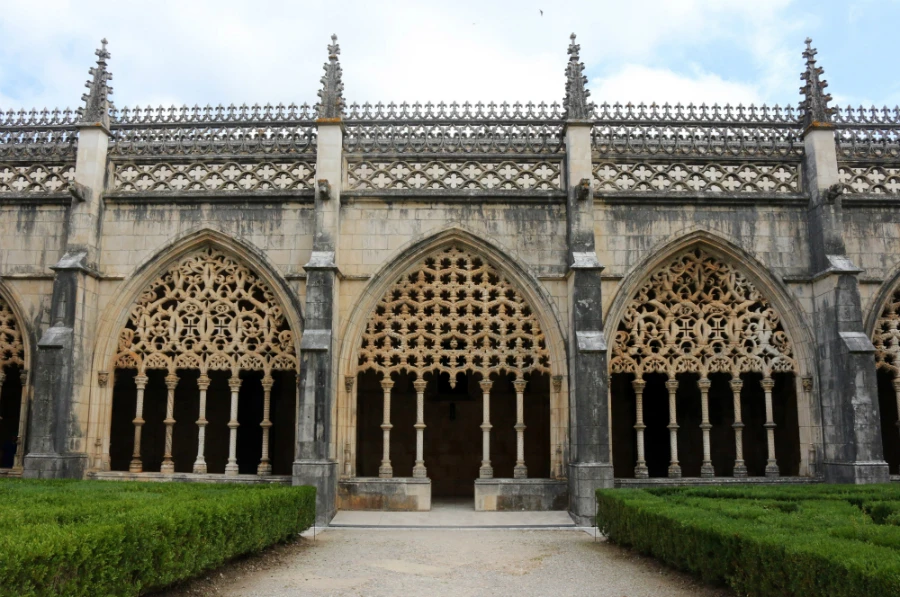
Fourteen miles from the Fatima Shrine is the Batalha Monastery, where several dozen Dominican friars were commissioned in 1388 to pray a perpetual rosary in thanksgiving for the Virgin Mary’s protection of Portugal.

The gothic monastery in Batalha was built in dedication to Our Lady of Victory in gratitude for an answered prayer. In 1385 King Joao I made a vow to the Virgin Mary that he would build a great monastery if she would deliver him victory in a battle against the Spanish.

The Dominican community remained in the monastery until 1834, when all religious orders were driven out of Portugal. Today it continues to function as both the local parish and a tourist attraction.

In nearby Alcobaca, a Cistercian monastery has stood in honor of Mary for over 800 years. The king of Portugal endowed the monastery to Saint Bernard of Clairvaux in 1153, shortly before the Cistercian founder’s death. The gothic church was completed in 1223.

Benedict XVI has described Saint Bernard of Clairvaux as “a Doctor of Mariology” because “he understood her essential role in the Church, presenting her as the perfect model of the monastic life and of every other form of the Christian life.”

An altarpiece in the Alcobaca Monastery, added in 1705, depicts the death of Saint Bernard under the protection of Mary. The walls in the monastery’s King’s Hall are decorated with 16th century blue and white rococo tile scenes depicting the history of the Cistercian order. An ornate oval baroque reliquary chapel containing 71 terracotta reliquary busts from floor to ceiling can be found in the sacristy. Napoleon’s troops plundered the monastery in 1811, shortly before the Cistercians, like Batalha’s Dominicans, were forced to leave Portugal.

Fewer than 10 miles from Alcobaca is the beachside town of Nazaré, named for a statue of the Virgin Mary brought from Nazareth by a monk in the 8th century, according to the local tradition.

Before Nazaré became a world-famous surfing destination with 80-foot waves, it was a popular medieval pilgrimage site. In 1182, a Portuguese knight was hunting a deer near the coast. When his horse nearly ran over one of Nazaré’s steep cliffs, he called out “Our Lady, Help Me!” and his horse stopped just at the cliff’s precipice next to the small grotto with the Nazareth statue.

In thanksgiving for his life, the knight had a small chapel built around the statue, which went on to receive so many visitors that a larger church dedicated to Our Lady of Nazaré was built near the cliffs by the King of Portugal in 1377 to house the statue and its pilgrims.

Despite the centuries-long tradition of Marian devotion in Portugal, when Our Lady of Fatima appeared in 1917, Catholics were not thriving in the country.

When the monarchy was abolished in 1910, the revolutionaries attempted to root out Catholicism and its Marian queen along with it, seizing all of the Church’s property and assets. A popular illustration of the 1910 revolution includes an image of armed men marching out priests at gunpoint.

Anticlericalism peaked in the years leading up to the Fatima apparitions, causing the pope to speak out about the persecution of the Church under the First Portuguese Republic.

In 1911, Saint Pius X issued an encyclical, Iamdudum, decrying the secularization occuring in Portugal.

“We have seen, arising out of an obstinate determination to secularize every civil organization and to leave no trace of religion in the acts of common life, the deletion of the feast days of the Church from the number of public festivals, the abolition of religious oaths, the hasty establishment of the law of divorce and religious instruction banished from the public schools,” wrote the pope.

St. Pius X’s successor, Benedict XV, would go on to write a letter to his secretary of state for all the world’s bishops on May 5, 1917 asking for prayers to the Virgin Mary for peace amid the ongoing devastation of World War I throughout Europe. In this letter, the pope made permanent an additional title for Mary in the Litany of Loreto: “Regina pacis,” or “Queen of peace.”

When Mary appeared in Portugal as Our Lady of the Rosary nine days later, she instructed, “Pray the Rosary every day, in order to obtain peace for the world and the end of the war.” The Portuguese tradition of the perpetual rosary, dating back more than 500 years, would continue.

[…]