No Picture
News Briefs

Holy See hopes UN migration agreement will defend human dignity
July 16, 2018 CNA Daily News 0

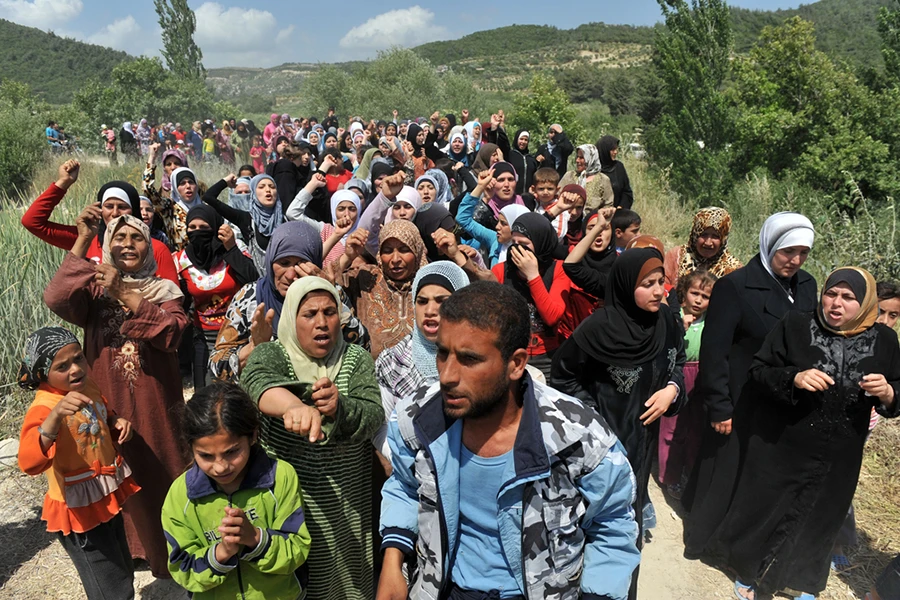
New York City, N.Y., Jul 17, 2018 / 12:00 am (CNA/EWTN News).- The Vatican’s representative at the United Nations expressed hope that a new UN agreement on best practices for international migration will guarantee respect for the human dignity of all migrants.

Archbishop Bernardito Auza, the Holy See’s Permanent Observer to the UN, spoke July 13 at the concluding session of intergovernmental negotiations on migration, the culmination of a nearly two-year process.

“This first-ever comprehensive framework on migration will serve as the international reference point for best practices and international cooperation in the global management of migration, not only for Governments, but also for non-governmental entities among which are the faith-based organizations, who are truly the hands and feet on the ground to assist migrants in difficulty,” said Auza.

The agreement —  the Global Compact for Safe, Orderly and Regular Migration — details 23 international objectives, including the eradication of human trafficking and “use of migration detention only as a measure of last resort.”

Since 2000, more than 60,000 people have died in their attempt to migrate, according to the International Organization of Migration’s research on migrant deaths and disappearances.

The Vatican representative told the UN that “Pope Francis encapsulates these shared responsibilities and solidarity in four verbs: to welcome, to protect, to promote and to integrate.”

“This Global Compact will make it more difficult for anyone — States, civil society or anyone of us — to be unaware of the challenges that people on the move face and to fail to meet our shared responsibilities towards them, in particular toward those most in need of our solidarity,” continued Auza.

Auza quoted Pope Francis’ Mass for Migrants homily on July 6. “Before the challenges of contemporary movements of migration, the only reasonable response is one of solidarity and mercy . . . A just policy is one at the service of the person, of every person involved; a policy that provides for solutions that can ensure security, respect for the rights and dignity of all; a policy concerned for the good of one’s own country, while taking into account that of others in an ever more interconnected world.”

The archbishop added that the Catholic Church “will continue to commit itself fully to the benefit of migrants, always respecting their rights and human dignity.”

The global compact on migration will be formally adopted at a UN meeting in Marrakech, Morocco on Dec. 10-11. Following a decision by the Trump administration, the United States withdrew from the negotiations in December 2017.

“The Holy See nurtures the hope that the Global Compact will not only be a matter of good migration management, but truly be, as is its ultimate purpose, a significant step forward in the service of the person, not only of every migrant, but for all of humanity,” concluded the archbishop.

[…]

No Picture
News Briefs

Overturning ‘Roe’ no ‘magic bullet,’ NY archdiocese lawyer says

July 16, 2018 CNA Daily News 2

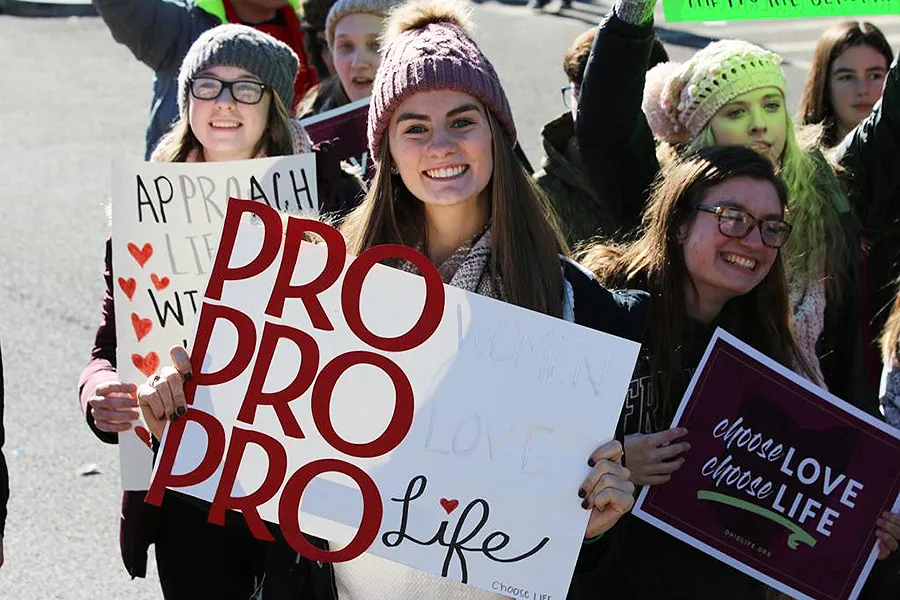
New York City, N.Y., Jul 16, 2018 / 07:00 pm (CNA/EWTN News).- The Director of Public Policy for the Archdiocese of New York has said that overturning the Roe vs. Wade Supreme Court decision should not be the seen as the final objective for pro-life advocates in the United States.

In a blog post written before President Donald Trump nominated Judge Brett Kavanaugh to fill a Supreme Court vacancy, Mechmann warned that during the confirmation process for any nominee, “the rhetoric will be heated and likely ugly, and may even include a large dose of religious intolerance.”

Mechmann’s post explained that the advance of secularism and moral relativism have detached judicial decisions from the principles of natural law. Without this foundation, Mechmann argued, judicial interpretation lacks a “moral and legal compass” to guide decisions.

The result is that the judicial process and the Supreme Court are increasingly accepted as politically tainted, something the framers of the Constitution never intended, he said.

If confirmed by the Senate, Judge Kavanaugh is expected to join the more conservative wing of the Supreme Court. He is widely considered to be an “originalist,” interpreting the Constitution according to its plain-text reading and the intentions and understanding of the founding fathers themselves.

This standard is then applied when “originalist” judges evaluate whether legislation conforms to the Constitution.

Originalist thinkers are often seen to oppose so-called “living” readings of the Constitution, in which legal rights and principles are inferred to exist in the light of modern values, even if they are not contained in the text itself.

In the context of abortion, the decision Roe v. Wade rested on the Court’s inference of a “right to privacy” for women seeking abortions, something which is explicitly not found in the Bill of Rights. The subsequent decision Planned Parenthood v. Casey, delivered in 1992, affirmed the right to privacy and the legal protection it affords abortion. That decision was co-authored by Justice Anthony Kennedy, who last month announced his retirement from the Supreme Court, creating the current vacancy. If confirmed, Judge Kavanaugh could create what many have predicted to be a 5-4 majority on the Court in favor of overturning Roe v. Wade.

But Mechmann, a Harvard educated lawyer who previously worked in the United States’ Attorney’s Office for the Eastern District of New York, noted that an originalist majority did not necessarily mean Roe would be overturned.

Roe, said Mechmann, did not just “emerge fully formed from the brow of Justice Blackmun” [author of the decision]. Rather, it was “the result of decades of prior decisions, reaching back to the 1920’s.” Consequently, overturning Roe would involve repudiating a deeply embedded body of legal argument, he said. Such a dramatic step would “set off a political explosion that would undermine the legitimacy of the Court in the eyes of a large number of Americans.”

Such a “political explosion” might already have begun,  as abortion advocates react to the nomination of Judge Kavanaugh. Terry McAuliffe, the former Governor of Virginia, said July 9 that Kavanaugh’s nomination “will threaten the lives of millions of Americans for decades to come.”

Even if a “pro-life” appointee were confirmed, Roe v. Wade is not certain to be overturned, Mechmann argued. Several of the more conservative Supreme Court Justices often prefer to make decisions on narrowly defined questions relevant to particular cases. Mechmann noted this tendency in past decisions from Chief Justice John G. Roberts, and Justices Alito and Gorsuch, and suggested there could be a succession of such rulings which chip away at legal protections for abortion, but stop short of a single dramatic reversal.

The strength of expectation around a possible reversal of Roe v. Wade has led many to assume it would result in abortion becoming illegal overnight, yet this is not the case, Mechmann said. In the event that the Supreme Court reversed itself and removed the inferred constitutional protection for abortion, the issue would again be subject to state-by-state legislation. This, Mechmann pointed out, would yield very mixed results.

“A number of states already have laws on the books that would essentially permit abortion on demand for some, if not all of pregnancy. New York’s statute, for example, permits abortion on demand prior to 24 weeks of pregnancy. According to one expert on abortion law, if Roe and Casey were overruled, only eleven states would have laws that would completely outlaw abortion, and over 80% of Americans would live in states where the situation would be essentially unchanged — abortion would still be legal for all nine months of pregnancy for virtually any reason and with little effective regulation.”

As many as twelve states already recognize a Constitutional right to abortion.

A Supreme Court majority willing to overturn Roe v. Wade is not, Mechmann warns, “a magic bullet that will make all things new.” While it would be a significant victory for pro-life advocates, their work would need to continue at the state level. This would involve political and legislative efforts to protect the unborn state-by-state, and, just as important, include cultural efforts.

“We have to work harder to create a social infrastructure that would replace the culture of contraception and abortion and promote a vision of women’s health that truly respects her fertility and genuine freedom. We still have a lot of work to do.”


[…]

No Picture
News Briefs

Tenn. bishops speak out against executions

July 16, 2018 CNA Daily News 1

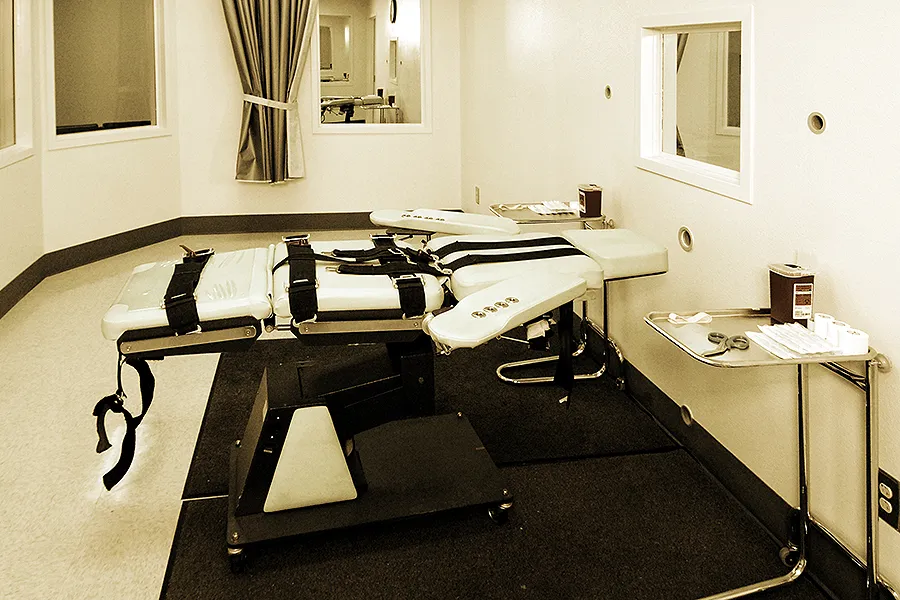
Nashville, Tenn., Jul 16, 2018 / 05:10 pm (CNA/EWTN News).- The bishops of Tennessee issued a letter to the state’s governor Friday, encouraging him to halt upcoming executions expected to use a controversial three-drug lethal injection. 

“It is within your power to establish your legacy as a governor of Tennessee who did not preside over an execution on your watch,” the bishops wrote July 13 to Governor Bill Haslam. “We urge you to use your authority as governor to put an end to the fast-track executions planned for later this year.”

The bishops emphasized the value of all human life, even that of those convicted of horrendous crimes, offering themselves a resource to the governor for any questions regarding Catholic teaching on the subject.

The letter was signed by Bishop Mark Spalding of Nashville, Bishop Richard Stika of Knoxville, and Bishop Martin Holley of Memphis. The request came ahead of the pending execution of Billy Irick, who is scheduled to die August 9 by lethal injection.

Irick was convicted of the rape and murder of Paula Dyer, a seven-year-old girl. His execution would be the first in Tennessee since 2009, and the first to use the three-drug combination of midazolam, vecuronium bromide, and potassium chloride (or, for legal reasons, slight variations of those drugs).

The bishops’ letter follows a July 9 lawsuit contending that the use of the three-drug cocktail constitutes “cruel and unusual punishment.” Tennessee currently has 62 men and one woman on death row, more than 30 of whom are party to the lawsuit. 

Tennessee transitioned to the three-drug cocktail in January when pentobarbital, the previous drug used in lethal injection, was no longer available. In a request to the Tennessee Supreme Court, state Attorney General Herbert Slater unsuccessfully sought to fast-track eight executions before some of the drugs expired on June 1. 

Concerns have been expressed about the new drugs’ effectiveness. In an email to state officials, a consultant charged with acquiring the new drugs highlighted midazolam’s weak analgesic effects, according to the Nashville Scene

“Here is my concern with Midazolam,” the consultant wrote in an email last September. “Being a benzodiazepine, it does not elicit strong analgesic effects. The subjects may be able to feel pain from the administration of the second and third drugs. Potassium chloride, especially.”

Midazolam has been cited as a cause in previous botched executions. In 2014, Clayton Lockett was administered the three drugs and declared unconscious in Oklahoma. He was then found to be able to speak and attempted to raise himself off his stretcher. Lockett died of a heart attack 43 minutes into the execution. 

Currently, state supplies of two of the three drugs have now expired, leading Tennessee to seek compounded drugs, custom-made by pharmacies, as substitutes.

However, experts have warned against the dangers of compounded drugs, adding to previous concerns about midazolam. In June, lawyers for death row inmates in Tennessee pointed to the execution of Ricky Gray in Virginia last year. 

“Blood found on his lips indicated that blood entered Gray’s lungs while he was still breathing,” wrote the attorneys, noting the compounded drugs used in the execution may have caused a similar experience to “drowning or a sarin gas attack.”

Speaking beyond specific concerns with lethal injections, the Tennessee bishops wrote that capital punishment contributes to the erosion the dignity of the human person. The Tennesee bishops’ efforts echo Saint John Paul II’s stance against capital punishment, which in 1999 helped persuade Missuori Governor Mel Carnahan to commute the sentence of Darrell Mease to life in prison. 

“It is simply not necessary as the only means to protect society while still providing a just punishment for those who break civil laws,” the bishops wrote. “Rather than serving as a path to justice, the death penalty contributes to the growing disrespect for human life.”

[…]

No Picture
News Briefs

In Nicaragua, paramilitaries attack bishop and besiege church

July 16, 2018 CNA Daily News 0

Managua, Nicaragua, Jul 16, 2018 / 03:19 pm (CNA/EWTN News).- This weekend, paramilitaries in Nicaragua attacked a car carrying the Bishop of Esteli, and in a separate incident pro-government forces besieged students in a parish church, killing two.

Protests against president Daniel Ortega which began April 18 have resulted in more than 300 deaths, according to local human rights groups. The country’s bishops have mediated on-again, off-again peace talks between the government and opposition groups.

Bishop Juan Abelardo Mata Guevara of Esteli was attacked in his car at a police checkpoint in Nindiri, about 15 miles southeast of Managua, July 15. He was returning from saying Mass. The paramilitaries damaged the car’s tires and windows, and fired on the vehicle.

Together with his driver, Bishop Mata took shelter in a house which was surrounded by Ortega’s supporters, who verbally harassed him for 90 minutes.

He was able to leave the house through the intervention of the Archdiocese of Managua, which intervened with the government to send general commissioner Ramon Avellan to guarantee the bishop’s physical safety. Bishop Mata returned to Esteli by cover of dark.

Bishop Mata is among the mediators and witnesses in the national dialogue between the government and the opposition.

Also on Sunday, Cardinal Leopoldo José Brenes Solorzano of Managua lamented that “police and paramilitaries” had entered a rectory and carried off “various belongings of the parish and of Fr. Jairo Velasquez”, who was unharmed. In his statement, the cardinal reiterated a call for the government and police to desist from “the attacks against the population” and to respect “the churches and rectories and personal articles of priests, which are used in humanitarian work.”

In Managua, around 150 student protesters who took refuge in Divine Mercy parish July 13 were able to leave the following day, after an intervention by the country’s bishops.

The parish is near the National Autonomous University of Nicaragua, where the students had been protesting during a national strike. They were attacked by the paramilitaries, and sought shelter in the church building, where they were besieged. Two student protesters died in the church from fire by the paramilitaries.

The students were transferred July 14 to Managua’s Immaculate Conception Cathedral, where they received medical care.

Fr. Raul Zamora, pastor of Divine Mercy parish, and his vicar, Fr. Erick Alvarado, announced July 16 their appreciation for those who have helped to clean up the church, and said that the church will be closed through July 19. On July 20, a penitential Mass will be said “where we will implore the Mercy of God and the gift of conversion for our Nicaragua.” Normal Mass times and perpetual adoration will resume July 21.

The Nicaraguan bishops have announced a day of prayer and fasting July 20 in reparation for desecrations carried out in recent months.

In a July 14 statement, the bishops’ conference said that since it began mediation between the government and the opposition in April, “we have witnessed the government’s lack of political will to dialogue sincerely and to seek real processes that would lead us to a true democracy.”

They said Ortega’s government has refused “to address the central themes of the agenda of democratization” and to dismantle the paramilitaries.

They denounced the repression by police and paramilitaries, whose attacks “are juridically and morally condemnable” and which have the objective “of sowing terror in the people who have manifested themselves peacefully.”

Barricades and roadblocks are now found throughout Nicaragua, and clashes frequently turn lethal. Bishops and priests across the country have worked to separate protesters and security forces, and have been threatened and shot.

Nicaragua’s crisis began after Ortega announced social security and pension reforms. The changes were soon abandoned in the face of widespread, vocal opposition, but protests only intensified after more than 40 protestors were killed by security forces initially.

Anti-government protesters have been attacked by “combined forces” made up of regular police, riot police, paramilitaries, and pro-government vigilantes.

The Nicaraguan government has suggested that protestors are killing their own supporters so as to destabilize Ortega’s administration.

The Church in Nicaragua was quick to acknowledge the protestors’ complaints.

The pension reforms which triggered the unrest were modest, but protests quickly turned to Ortega’s authoritarian bent.

Ortega has been president of Nicaragua since 2007, and oversaw the abolition of presidential term limits in 2014.

The Church has suggested that elections, which are not scheduled until 2021, be held in 2019, but Ortega has ruled this out.

Ortega was a leader in the Sandinista National Liberation Front, which had ousted the Somoza dictatorship in 1979 and fought US-backed right-wing counterrevolutionaries during the 1980s. Ortega was also leader of Nicaragua from 1979 to 1990.

[…]

No Picture
News Briefs

Federal appeals court sides with Texas bishops in privacy case

July 16, 2018 CNA Daily News 0

Austin, Texas, Jul 16, 2018 / 01:45 pm (CNA/EWTN News).- A federal court of appeals sided with the Texas Catholic bishops in a July 15 ruling blocking a request from abortion groups to access the bishops’ private communications regarding abortion.

“Hitting churches with subpoenas to win the culture wars was a bad idea from the start,” said Eric Rassbach, vice president and senior counsel at Becket, which represents the Texas Conference of Catholic Bishops.

“We are glad that the Fifth Circuit recognized the deep problems with allowing lawyers to use the power of the court system to probe the private religious discussions of religious groups,” he continued. “That is especially so here, where the plaintiffs oppose the Texas Catholic bishops’ right to participate equally in public discourse.”

Whole Woman’s Health, a chain of Texas abortion facilities, filed suit against the State of Texas two years ago over a law that requires aborted fetal remains to be either buried or cremated. Previously, the remains were treated as medical waste and thrown into a landfill.

Although the bishops are not party to the lawsuit, Whole Woman’s Health attempted to acquire various communications from the Texas Conference of Catholic Bishops concerning abortion. These included private email and internal communications between bishops.

The bishops had previously offered to bury aborted fetal remains for free in Catholic cemeteries in Texas.

A trial court initially ruled that the bishops must hand over the emails and other documents. The bishops then requested emergency protection from the Fifth Circuit Court of Appeals, which last month granted temporary protection and ordered additional briefs to be submitted by June 25.

The July 15 decision permanently blocks the order for the bishops to hand over the documents.

In his concurring opinion, Circuit Judge James Ho stressed the importance of religious liberty.

“The First Amendment expressly guarantees the free exercise of religion—including the right of the Bishops to express their profound objection to the moral tragedy of abortion, by offering free burial services for fetal remains,” he said. “By contrast, nothing in the text or original understanding of the Constitution prevents a state from requiring the proper burial of fetal remains.”

The Texas bishops have emphasized the importance of being able to deliberate privately and freely.

“Children are not disposable,” said Bishop Edward J. Burns from the Diocese of Dallas, comparing the lawsuit to the policy of separating undocumented children from their parents at the U.S. border.

“We believe that life is sacred from the moment of conception. We also believe that we have a right to discuss in private how to address this issue and uphold the dignity of every human life, and that while upholding the sacredness of life may seem at odds with some people, our religious liberties and religious rights should not be eroded.”


[…]