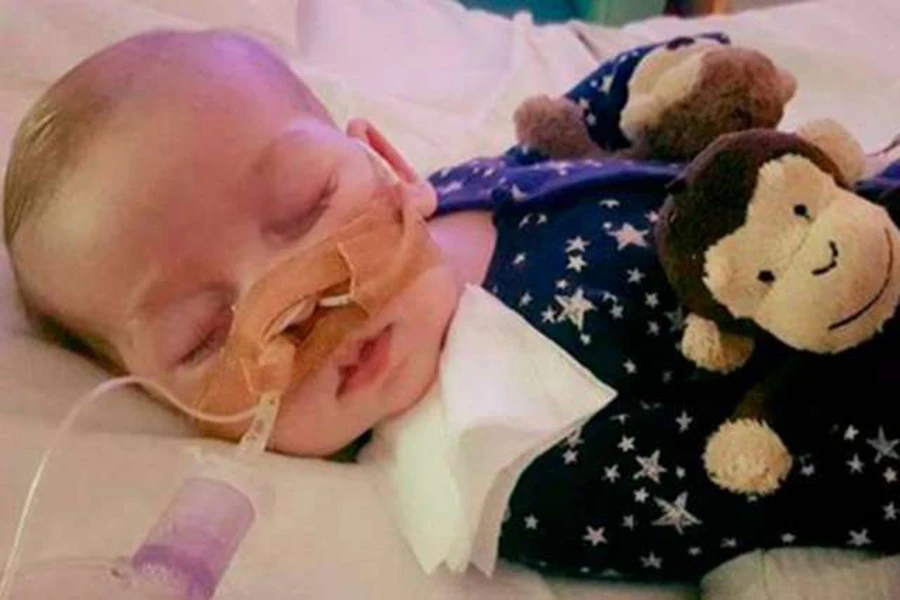
Washington D.C., Jul 19, 2017 / 04:41 pm (CNA/EWTN News).- Amid the Gard family’s legal battle in the U.K. to pursue experimental treatment for their infant son, the U.S. House of Representatives passed legislation granting them permanent residency in the states.
“We just passed amendment that grants permanent resident status to #CharlieGard and family so Charlie can get the medical treatment he needs,” Rep. Jeff Fortenberry (R-Neb.) said in a July 18 tweet.
The amendment was passed after Republican congressmen Trent Franks and Brad Wenstrup proposed legislation in favor of an additional treatment for Charlie, who suffers from a rare mitochondrial disease which paralyzes muscles and causes brain damage.
“Congressman Bradwenstrup and I have proposed legislation to grant lawful permanent status in the U.S. to Charlie Gard and his family, so they can at least pursue their best hope for Charlie,” Rep. Franks told Fox News July 11.
Charlie Gard has made headlines over the past few months as U.K. courts denied his parents the right to transfer him to other hospitals for treatment. The Gard family appealed to the EU court and was denied a hearing.
Claiming that prolonging Charlie’s life would cause unnecessary suffering, British judges had ruled that London’s Great Ormond Hospital could remove life support without the consent of the parents. The hospital granted Charlie an extension on life support so his parents may have a few more moments with him.
During the extension, a team of seven medical experts told the hospital that unpublished data on an experimental drug suggest a treatment which may improve the condition of Charlie’s brain. One of the experts is a neurologist and a researcher located at the Bambino Gesu Hospital in Rome – a Vatican hospital who’s request to transfer Charlie to their facility was also recently denied.
Additionally, a U.S. specialist in mitochondrial diseases speculated in a video last Thursday that the experimental treatment, nucleoside therapy, has a success rate of at least 10 percent and a potential high of 56 percent.
Since experts have submitted new data that advocates for Charlie’s possible recovery, the Great Ormond Hospital has asked the courts to reopen the baby’s case that Charlie be transferred to the U.S. for nucleoside therapy, which his parents have successfully fundraised over $1 million for.
Charlie was diagnosed with Mitochondrial Depletion Syndrome – a fatal disease which progressively weakens the muscles and causes brain damage. The genetic disease is very rare, and Charlie is thought to be only one out of 16 people in the world diagnosed with the disease.
Despite Charlie’s low potential for survival, his parents have received U.S. and Vatican support for their right to fight for his life.
A statement was issued July 2 on behalf of Pope Francis, saying that the pontiff “prays for them, wishing that their desire to accompany and care for their own child to the end will be respected.”
If you value the news and views Catholic World Report provides, please consider donating to support our efforts. Your contribution will help us continue to make CWR available to all readers worldwide for free, without a subscription. Thank you for your generosity!
Click here for more information on donating to CWR. Click here to sign up for our newsletter.
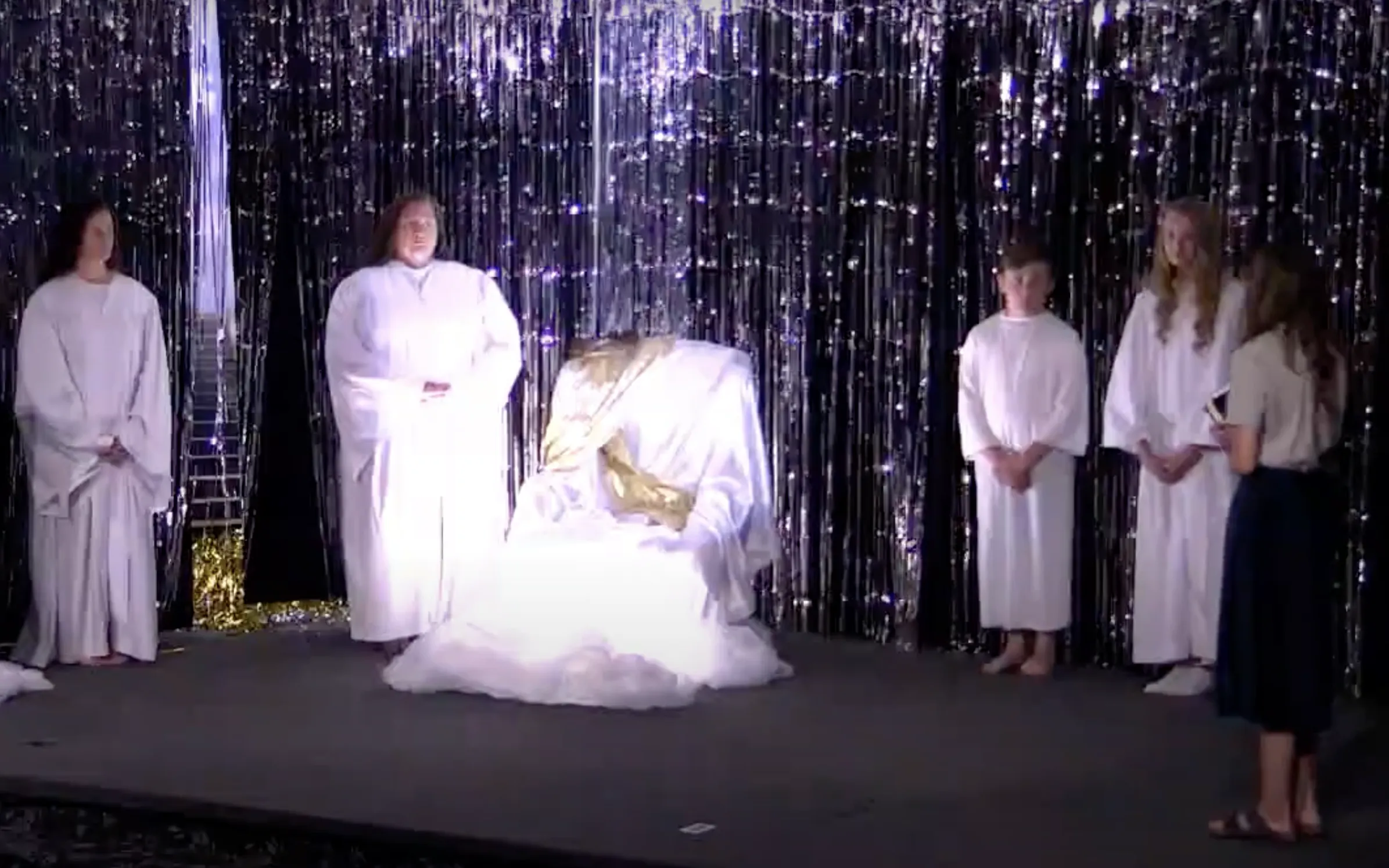
A scene from the trailer promoting Liberty University’s campus ministry production of “Scaremare.” / Scaremare on YouTube
Washington, D.C. Newsroom, Oct 29, 2022 / 10:55 am (CNA).
This October some churches and ministries in the United States are once again hosting Christian versions of haunted houses, and nonbelievers and believers alike are lining up for some rather existential spine-tingling for the first time since the pandemic.
Popular among evangelical Protestant churches in the South, these “judgment houses” typically stage dramatic representations depicting what happens after people die, leaving visitors to ponder whether they themselves are headed for heaven or hell, and presumably, to act accordingly.
Is this a good way to save souls? Some Catholics experts in evangelization who spoke to CNA have reservations.
A different way to evangelize
The late Jerry Falwell, the Baptist televangelist, and founder of Liberty University, in Lynchburg, Virginia, is credited with hosting the first judgment house in 1972, “Scaremare.”
Scaremare is still going strong in Lynchburg, where the university’s campus ministry stages a production every year around Halloween that draws people from all over the region attracted by the lure of “fun-house rooms and scenes of death in order to confront people with the question ‘What happens after I die?’”
The performance does not disappoint those looking for the sort of adrenaline surge a horror movie produces. As many as 4,000 visitors a night witness gruesome death scenes including a massacre at a movie theater and a camper who is mauled by a wild animal.
According to Josh Coldren, the director of the 2022 production of Scaremare, the scenes are intended to make people think about their fears and their mortality.
“We talk about how everyone faces death, but how there is hope beyond our fears and hope beyond death, and that hope is in Jesus Christ,” Coldren told CNA.
According to Scaremare’s website, over 26,000 people who visited over the years “have made decisions for Christ over the past two decades. Ironically, this House of Death points to the Way of Life!”
While judgment houses can function as memento mori, efficacious reminders of the inevitability of death, some judgment houses, also known as “Hell Houses,” have become controversial for taking the idea to an extreme. Graphic scenes such as abortions, extramarital sex, and drug use are sometimes depicted along with the consequence of these actions as the sinners are shown condemned to spend eternity in hell.
Scaremare doesn’t get into these issues or talk about hell at all, Coldren told CNA.
“We don’t have a scene of hell, and we stay away from demons. We believe those things are real, we just make sure we stay away from them,” Coldren said.
Tom Hudgins, is the owner of Judgement House, a company based in Seminole, Florida, that provides scripts to churches to stage dramas. Before COVID, he told CNA, they helped as many as 350 churches at a time hold Judgement Houses. They are slowly getting back to business, he said, and about 50 participating churches are listed on their website.
Hudgins explained to CNA that, unlike more extreme Hell House productions, his scripts never talk about social issues. Small groups of visitors walk through scenes meant to encourage self-reflection. Each production begins with death, by a car crash or cancer, for example, and then the audience sees what happens after death.
“They see what hell would be like, but they also see what heaven will be like, and everyone can make their own decisions,” Hudgins said.
A scene from a production of a Judgement House script. Decaturville Pentecostal Church YouTube
Bonnie Gilliland, the dramatic director at Morningside Baptist Church in Tallahassee, Florida, is staging a play with the help of Judgement House this October. She told CNA that the productions are a way of sharing the Gospel.
“We include a lot of scripture, it’s very biblically based,” she said.
Gilliland explained that this year’s production isn’t just for nonbelievers – it’s meant to give the regular churchgoer a wake-up call.
“The current drama gives people an opportunity to understand and examine whether they have a relationship with Jesus Christ because it’s more than just going to church, it’s about accepting Jesus as your savior and receiving the gift of eternal life,” Gilliland said.
Kelly Armstrong, the director of the judgment house at New Harmony Baptist Church in Albertville, Alabama, told CNA that past productions have depicted scenes of car wrecks, overdoses, and abuse.
Visitors see “how people make decisions that affect their eternity,” he said. “It brings our church together, and makes people think.”
Catholic criticism of “hell houses”
Judgment houses have not found favor among Catholic churches in the United States, and two experts in evangelization and pastoral care told CNA that they don’t think talking about hell attracts people to the Church.
Sherry Weddell is the founder of the Catherine of Siena Institute, an apostolate that helps evangelize Catholic parishes to turn pew-sitters into “intentional missionary disciples.” She told CNA that she advises any Catholics considering introducing hell-related themes to their Halloween decorations or celebrations, to rethink that idea.
“If you live in an area that has a significant number of young adults, especially parents of young children, or in an area that is highly secularized like urban areas of the East or West coasts, many will find it offensive or off-putting. And there is a real chance that sensitive and young children could be upset by it which would fuel their parents’ unhappiness with the sponsoring Catholic community,” Weddell explained.
“You could upset people who might otherwise have been open to attending an Advent or Christmas event at your parish or just open to a friendship with a Catholic like you.
“Instead of building or strengthening bridges of trust, you could be shattering or weakening whatever trust may already exist. There are creative, positive, child and parent-friendly alternatives such as “trunk-or-treating,” costume parties, and community of light events that foster both long-standing relationships and fun,” Weddell said.
Monsignor Stephen Rossetti, the chief exorcist for the Archdiocese of Washington, and a psychologist and researcher at the Catholic University of America, told CNA that the threat of hell isn’t effective in this day and age.
“People today are not convinced or influenced by threats of hell. The Church just really stopped doing that because it just doesn’t work. You know, you can do all the hellfire and damnation sermons you want, but people just kind of yawn, “ Rossetti said.
“We’re trying to emphasize God’s love and God’s mercy, which I think is much more to the point, frankly. And also more of a message that’s needed in our day. And I think that started with Pope John XXIII at Vatican II. He said, today what the message needs to be is of God’s mercy and compassion and God’s love.
“This is what attracts people, and this is sort of the core of our message. God loves us and God has saved us out of his love and compassion in Jesus,” he said.
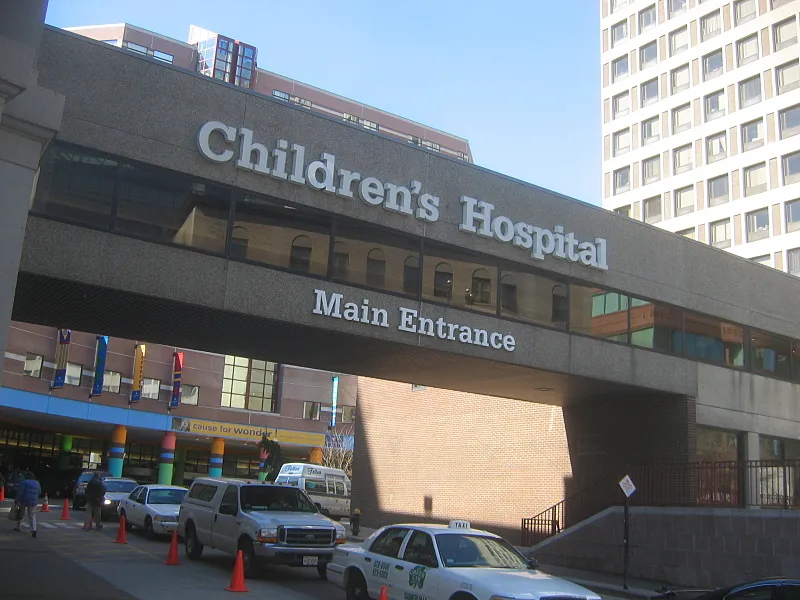
Boston Children’s Hospital / JosephBarillari|Wikipedia|CC BY-SA 3.0
Washington, D.C. Newsroom, Aug 19, 2022 / 16:56 pm (CNA).
After over a week of intense backlash, Boston Children’s Hospital removed language from their website that said the hospital’s youth gender program offered irreversible, sterilizing genital surgeries for patients as young as 17.
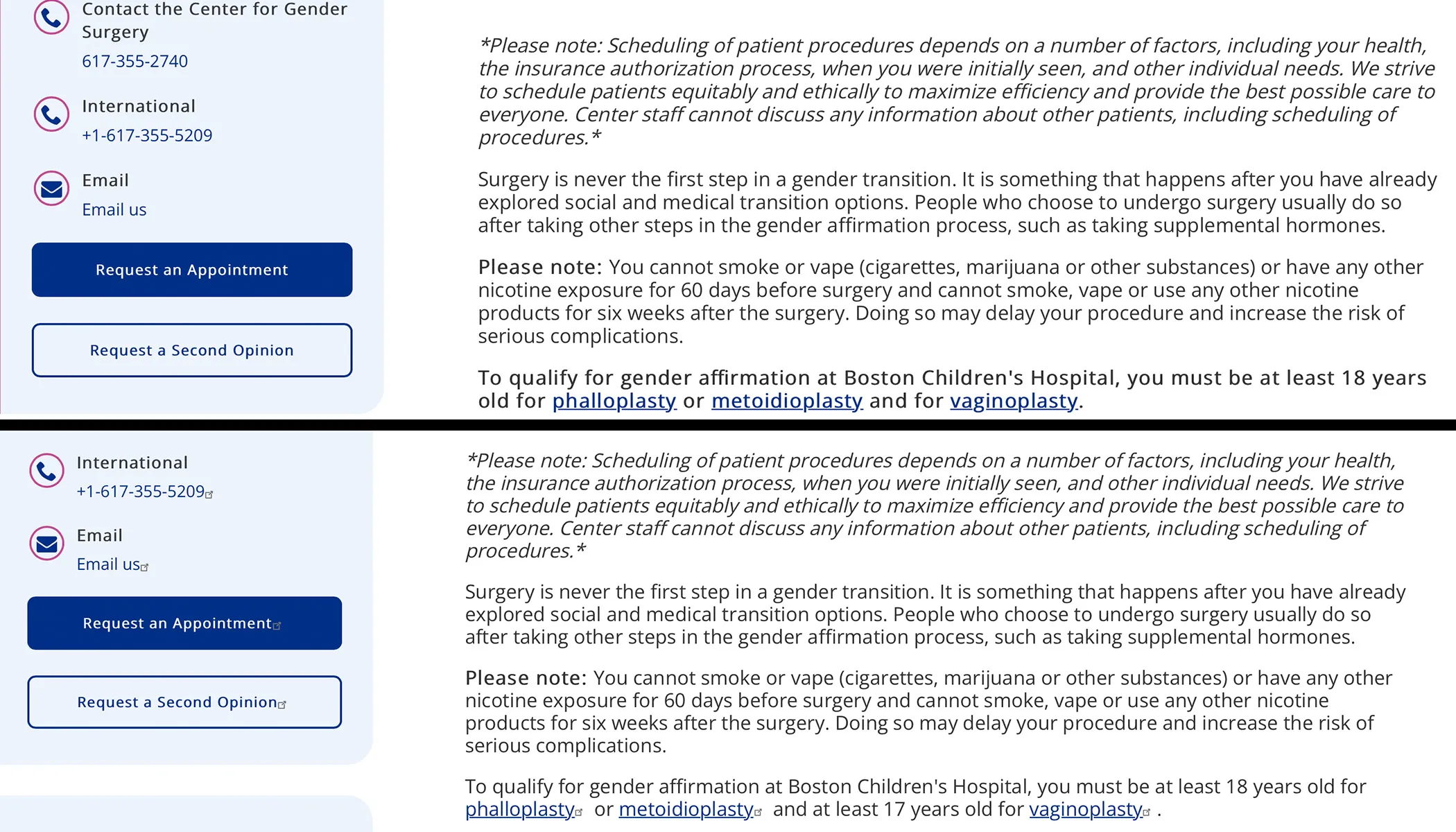
Until August 12, the hospital stated that to qualify for a vaginoplasty, patients must be “at least 17 years old.”
But after the hospital’s own videos describing these gender procedures went viral on social media, Boston Children’s removed the reference to 17-year-olds and updated their website to say patients must be 18 years of age to qualify.
The hospital also removed its entire playlist of videos featuring Boston surgeons describing the procedures on YouTube.
In one of these videos, a hospital social worker confirmed that genital surgeries at the hospital “are started at age 17 for very few…for where it’s really appropriate.”
The top photo shows Boston Children’s Hospital’s website after it was altered to say that one must be 18 for vaginoplasty. The bottom photo shows the website before the backlash — when it said one need only be 17 for vaginoplasty. Screenshot from Boston Children’s Hospital website
Hospital “trying to cover up” surgeries on minors
Chris Elston, widely known as “Billboard Chris,” is one activist and father of two who helped highlight Boston Children’s gender program on Twitter in the first place.
Elston, who travels across North America taking a stand against transgender ideology and how it harms children, told CNA Friday that the website reversal proves the hospital is “trying to cover up that they performed genital surgeries on minors.”
“Why are they hiding their videos, changing their website, and lying to the media?” he asked.
Elston noted Boston Children’s adherence to the World Professional Association for Transgender Health (WPATH) guidelines on gender surgeries for children, which the hospital admits on its website.
“The new WPATH Standards of Care call for womb removal and castration of 17-year-olds,” Elston said, pointing to the association’s updates on how early sex-change surgeries can be performed on minors.
WPATH’s new guidelines state that hospitals can begin offering “most genital surgeries starting at age 17, including womb and testicle removal.”
Hospital and media “condemn attacks” on gender program
On Aug. 16, Boston Children’s issued a public statement denying that the gender program provides genital surgeries for 17-year-olds and condemned the backlash the hospital has received since the videos went viral.
Citing “hostile” threats based on “misinformation,” the hospital wrote, “We condemn these attacks in the strongest possible terms, and we reject the false narrative upon which they have been based.”
President and CEO of the hospital, Kevin Churchwell, sent an email to the entire hospital staff on Friday referring to the outcry as “false claims” and “hateful commentary.”
Massachusetts Attorney General Rachael S. Rollins issued a press release Aug. 17 saying her administration was investigating “alleged threats” made to the hospital’s gender program, classifying them as “hate crimes.”
“I will not sit idly by and allow hate-based criminal activity to continue in our District,” Rollins said.
Boston Children’s Hospital did not respond to CNA’s request for comment at the time of publishing.




There is hope.