No Picture
News Briefs

Pope Leo XIV to meet cardinals at consistory to approve canonizations

May 21, 2025 Catholic News Agency 1
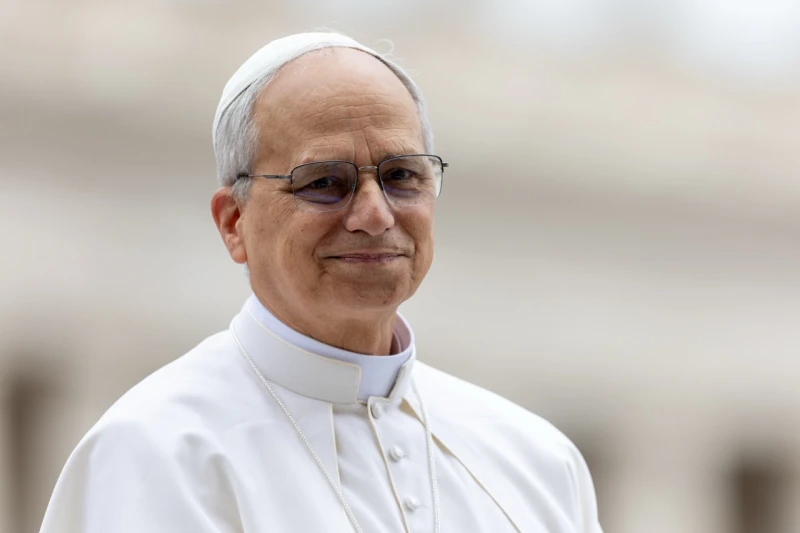
Pope Leo XIV smiles during his first general audience in St. Peter’s Square on May 21, 2025. / Credit: Daniel Ibanez/CNA

Vatican City, May 21, 2025 / 10:46 am (CNA).

Pope Leo XIV will hold a meeting of cardinals on June 13 to give the final approval to the canonizations of several beatified men and women.

The ordinary public consistory, as it is called, will be the first of Leo’s pontificate. Pope Francis had called for the consistory in late February, when he was in the hospital, but the date was never set.

At the consistory, cardinals will vote to approve the canonizations of five beatified men and women whose causes were advanced earlier this year by Pope Francis. The vote of the cardinals marks the final step in the canonization process and allows a date for the Mass of canonization to be set.

Among the almost-canonized saints expected to be discussed on June 13 is Blessed Bartolo Longo (also known as Bartholomew Longo).

Longo, an Italian layman and lawyer, was a former Satanist “priest” who returned to the practice of the Catholic faith through the influence of Mary and the rosary.

The canonization of the Venezuelan “doctor of the poor,” José Gregorio Hernández, is also expected be voted on at the June 13 consistory, along with Pietro To Rot, the first blessed from Papua New Guinea; Vincenza Maria Poloni, the founder of the Sisters of Mercy of Verona; and Ignazio Maloyan, a bishop martyred in the Armenian genocide in 1915. 

The consistory will take place in the consistory hall in the Vatican’s Apostolic Palace with all of the cardinals resident or otherwise present in Rome. It usually begins with a short time of prayer.

The Vatican also announced Wednesday a slew of liturgies to be celebrated by Pope Leo XIV in June, including a Mass at the Archbasilica of St. John Lateran followed by a Eucharistic procession through Rome to the Basilica of St. Mary Major for the solemnity of Corpus Christi on June 22.

Here is the full list of public Masses Pope Leo will celebrate during the month of June:

  • June 1: Mass in St. Peter’s Square for the Jubilee of Families, Children, Grandparents, and the Elderly

  • June 8: Mass in St. Peter’s Square for the solemnity of Pentecost and the Jubilee of Movements, Associations, and New Communities 

  • June 9: Mass in St. Peter’s Basilica for the memorial of the Blessed Virgin Mary, Mother of the Church, and the Jubilee of the Holy See

  • June 15: Mass in St. Peter’s Square for the solemnity of the Holy Trinity and the Jubilee of Sports

  • June 22: Mass in the Archbasilica of St. John Lateran and procession to the Basilica of St. Mary Major with Eucharistic benediction for the solemnity of the Most Holy Body and Blood of Christ

  • June 27: Mass in St. Peter’s Square for the solemnity of the Most Sacred Heart of Jesus and the Jubilee of Priests

  • June 29: Mass in St. Peter’s Basilica for the solemnity of Sts. Peter and Paul, with the blessing of the palliums for the new metropolitan archbishops

[…]

No Picture
News Briefs

Pope Leo XIV appeals for end to hostilities in Gaza in first general audience

May 21, 2025 Catholic News Agency 7
At his first general audience in St. Peter’s Square on May 21, 2025, Pope Leo XIV appeals for peace and the entry of humanitarian aid into Gaza, where, he said, children and elderly are suffering. / Credit: Daniel Ibanez/CNA

Vatican City, May 21, 2025 / 08:05 am (CNA).

Pope Leo XIV in the first general audience of his pontificate on Wednesday appealed for an end to hostilities in Gaza and for the entrance of humanitarian aid into the Gaza Strip.

Speaking before tens of thousands of attendees on an overcast day in St. Peter’s Square, the new pope ended his remarks by calling the situation in the Gaza Strip “increasingly worrying and painful.”

“I renew my heartfelt appeal to allow the entry of decent humanitarian aid and to end the hostilities whose heartbreaking price is paid by children, the elderly, and the sick,” he added.

The pope’s appeal comes as the numbers of dead and injured in the Gaza Strip continue to rise under Israel’s attacks. According to reports, while some humanitarian aid has been allowed to enter Gaza, it has not yet been released for distribution.

One month to the day since Francis’ death, Pope Leo also recalled with gratitude the “beloved Pope Francis, who just a month ago returned to the house of the Father.”

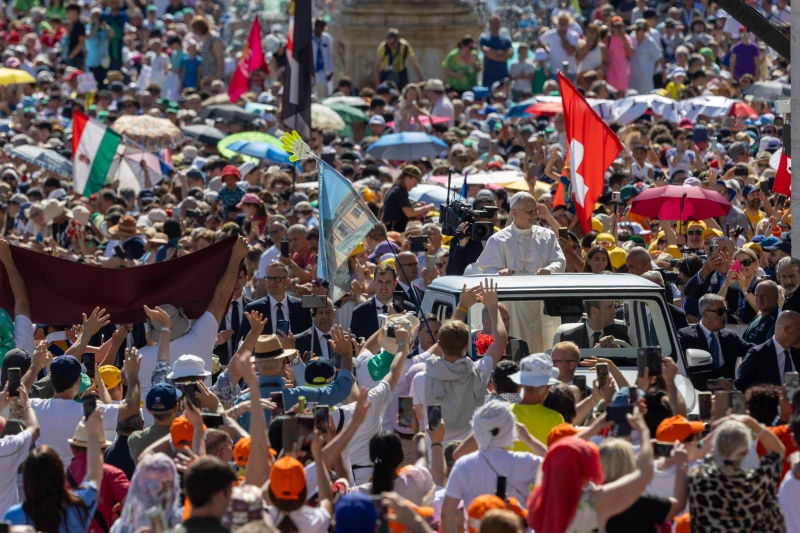
Leo closely followed his written remarks, only adding the comment on Gaza, during the May 21 public audience, which he began by taking a turn around the square in the popemobile to cheers, banners, and waving flags. Some people stood on their chairs to try to catch a glimpse of the new pope, who paused often to bless babies of all ages held out to him in outstretched arms.

Pope Leo XIV pauses to bless a baby during his trip around St. Peter's Square in the popemobile before the start of his first general audience on May 21, 2025. Credit: Vatican Media
Pope Leo XIV pauses to bless a baby during his trip around St. Peter’s Square in the popemobile before the start of his first general audience on May 21, 2025. Credit: Vatican Media

The inaugural catechesis of the first U.S.-born pope picked up the theme begun by Francis for the 2025 Jubilee Year: “Jesus Christ our hope.”

Reflecting on the Parable of the Sower, Leo noted the unusual behavior of the sower in the story, who “does not care where the seed falls. He throws the seeds even where it is unlikely they will bear fruit: on the path, on the rocks, among the thorns.”

“The way in which this ‘wasteful’ sower throws the seed is an image of the way God loves us,” he said, echoing a part of his first message from the loggia of St. Peter’s Basilica after his election on May 8, that God “loves us all unconditionally.”

“First and foremost in this parable Jesus tells us that God throws the seed of his Word on all kinds of soil, that is, in any situation of ours,” Leo underlined. 

He continued: “God is confident and hopes that sooner or later the seed will blossom. This is how he loves us: he does not wait for us to become the best soil, but he always generously gives us his word. Perhaps by seeing that he trusts us, the desire to be better soil will be kindled in us. This is hope, founded on the rock of God’s generosity and mercy.”

The theme of personal transformation was also repeated later in the catechesis, when Leo said, “Jesus is the Word, he is the Seed. And the seed, to bear fruit, must die. Thus, this parable tells us that God is ready to ‘waste away’ for us and that Jesus is willing to die in order to transform our life.”

Chuma Asuzu, who is Nigerian-born and living in Canada, is happy to have attended Pope Leo XIV's general audience on May 21, 2025 with his wife and children. Credit: Kristina Millare/CNA
Chuma Asuzu, who is Nigerian-born and living in Canada, is happy to have attended Pope Leo XIV’s general audience on May 21, 2025 with his wife and children. Credit: Kristina Millare/CNA

Husband and father Chuma Asuzu from Canada came to the square early in the morning with his family to attend the pope’s first general audience.

“It was good and I think it was interesting how he explained the seeds and how it’s the word of God,” Asuzu shared with CNA. “I really appreciate it.”

“He made the point to drive around a lot because it was his first audience and he looked emotional at the beginning,” he added.

Instead of taking an example from literature or philosophy, as Pope Francis often did, Pope Leo used Vincent Van Gogh’s painting, “The Sower at Sunset,” to prompt a meditation on hope.

Vincent Van Gogh's "The Sower at Sunset". Public Domain.
Vincent Van Gogh’s “The Sower at Sunset”. Public Domain.

“That image of the sower in the blazing sun also speaks to me of the farmer’s toil,” he said. “And it strikes me that, behind the sower, Van Gogh depicted the grain already ripe. It seems to me an image of hope: one way or another, the seed has borne fruit. We are not sure how, but it has.”

“At the center of the scene, however, is not the sower, who stands to the side; instead, the whole painting is dominated by the image of the sun, perhaps to remind us that it is God who moves history, even if he sometimes seems absent or distant,” the pope noted. “It is the sun that warms the clods of earth and makes the seed ripen.”

The pontiff’s final thought was to remind those present to ask the Lord for the grace to welcome the seed of his Word: “And if we realize we are not a fruitful soil, let us not be discouraged, but let us ask him to work on us more to make us become a better terrain.”

Leo closed the audience in the customary way, singing the “Our Father” prayer in Latin and then giving his apostolic blessing.

Among the pilgrims present on Wednesday was Father Rolmart Verano, who is leading a group of jubilee pilgrims from the Diocese of Surigao, Philippines.

“I never thought that one day I will come here [to Rome],” he told CNA. “It is one of my wildest dreams that came true!”

Father Rolmart Verano, from the Diocese of Surigao, Philippines, tells CNA at the general audience on May 21, 2025, that it was a dream come true for him to travel to Rome and see the pope. Credit: Kristina Millare/CNA

“The striking point of Pope Leo XIV’s general audience is when he said that the Word of God should take root in each one of our hearts,” he said. “It should serve as a guide for our daily lives no matter that it be ordinary or difficult circumstances.”

As one of 40 members of a pilgrim group from the Diocese of Mumbai, India, Sandesh Almeida said he was immediately impressed by the kindness shown by the new pontiff at the audience. 

“Peace is a good message from him,” he said. “Now with India and Pakistan … we should go for peace and the pope is mostly focusing on peace.”

[…]

The Dispatch

FULL TEXT: Pope Leo XIV’s homily at inaugural Mass beginning his Petrine ministry

May 18, 2025 Catholic News Agency 11
Pope Leo XIV acknowledged divisions among the faithful with a call for fraternal communion and unity in the homily at his inaugural Mass in St. Peter’s Square on May 18, 2025. / Credit: Daniel Ibanez/CNA

Rome Newsroom, May 18, 2025 / 10:00 am (CNA).

Pope Leo XIV delivered this homily at the Mass for the Initiation of the Petrine Ministry in St. Peter’s Square on Sunday, May 18, after being elected the 266th successor of St. Peter on May 8.

Dear Brother Cardinals,

Brother Bishops and Priests,

Distinguished Authorities and Members of the Diplomatic Corps,

Greetings to the pilgrims who came on the occasion of the Jubilee of the Confraternities!

Brothers and Sisters, I greet all of you with a heart full of gratitude at the beginning of the ministry that has been entrusted to me. Saint Augustine wrote: “Lord, you have made us for yourself, and our heart is restless until it rests in you” (Confessions, I: 1,1).

In these days, we have experienced intense emotions. The death of Pope Francis filled our hearts with sadness. In those difficult hours, we felt like the crowds that the Gospel says were “like sheep without a shepherd” (Mt 9:36). Yet on Easter Sunday, we received his final blessing and, in the light of the resurrection, we experienced the days that followed in the certainty that the Lord never abandons his people, but gathers them when they are scattered and guards them “as a shepherd guards his flock” (Jer 31:10).

In this spirit of faith, the College of Cardinals met for the conclave. Coming from different backgrounds and experiences, we placed in God’s hands our desire to elect the new Successor of Peter, the Bishop of Rome, a shepherd capable of preserving the rich heritage of the Christian faith and, at the same time, looking to the future, in order to confront the questions, concerns, and challenges of today’s world. Accompanied by your prayers, we could feel the working of the Holy Spirit, who was able to bring us into harmony, like musical instruments, so that our heartstrings could vibrate in a single melody.

I was chosen, without any merit of my own, and now, with fear and trembling, I come to you as a brother, who desires to be the servant of your faith and your joy, walking with you on the path of God’s love, for he wants us all to be united in one family.

Love and unity: these are the two dimensions of the mission entrusted to Peter by Jesus.

We see this in today’s Gospel, which takes us to the Sea of Galilee, where Jesus began the mission he received from the Father: to be a “fisher” of humanity in order to draw it up from the waters of evil and death. Walking along the shore, he had called Peter and the other first disciples to be, like him, “fishers of men.” Now, after the resurrection, it is up to them to carry on this mission, to cast their nets again and again, to bring the hope of the Gospel into the “waters” of the world, to sail the seas of life so that all may experience God’s embrace.

How can Peter carry out this task? The Gospel tells us that it is possible only because his own life was touched by the infinite and unconditional love of God, even in the hour of his failure and denial. For this reason, when Jesus addresses Peter, the Gospel uses the Greek verb agapáo, which refers to the love that God has for us, to the offering of himself without reserve and without calculation. Whereas the verb used in Peter’s response describes the love of friendship that we have for one another.

Consequently, when Jesus asks Peter, “Simon, son of John, do you love me more than these?” (Jn 21:16), he is referring to the love of the Father. It is as if Jesus said to him, “Only if you have known and experienced this love of God, which never fails, will you be able to feed my lambs. Only in the love of God the Father will you be able to love your brothers and sisters with that same ‘more’, that is, by offering your life for your brothers and sisters.”

Peter is thus entrusted with the task of “loving more” and giving his life for the flock. The ministry of Peter is distinguished precisely by this self-sacrificing love, because the Church of Rome presides in charity and its true authority is the charity of Christ. It is never a question of capturing others by force, by religious propaganda or by means of power. Instead, it is always and only a question of loving as Jesus did.

The Apostle Peter himself tells us that Jesus “is the stone that was rejected by you, the builders, and has become the cornerstone” (Acts 4:11). Moreover, if the rock is Christ, Peter must shepherd the flock without ever yielding to the temptation to be an autocrat, lording it over those entrusted to him (cf. 1 Pet 5:3). On the contrary, he is called to serve the faith of his brothers and sisters, and to walk alongside them, for all of us are “living stones” (1 Pet 2:5), called through our baptism to build God’s house in fraternal communion, in the harmony of the Spirit, in the coexistence of diversity. In the words of Saint Augustine: “The Church consists of all those who are in harmony with their brothers and sisters and who love their neighbor” (Serm. 359,9).

Brothers and sisters, I would like that our first great desire be for a united Church, a sign of unity and communion, which becomes a leaven for a reconciled world.

In this our time, we still see too much discord, too many wounds caused by hatred, violence, prejudice, the fear of difference, and an economic paradigm that exploits the Earth’s resources and marginalizes the poorest. For our part, we want to be a small leaven of unity, communion, and fraternity within the world. We want to say to the world, with humility and joy: Look to Christ! Come closer to him! Welcome his word that enlightens and consoles! Listen to his offer of love and become his one family: in the one Christ, we are one. This is the path to follow together, among ourselves but also with our sister Christian churches, with those who follow other religious paths, with those who are searching for God, with all women and men of good will, in order to build a new world where peace reigns!

This is the missionary spirit that must animate us; not closing ourselves off in our small groups, nor feeling superior to the world. We are called to offer God’s love to everyone, in order to achieve that unity which does not cancel out differences but values the personal history of each person and the social and religious culture of every people.

Brothers and sisters, this is the hour for love! The heart of the Gospel is the love of God that makes us brothers and sisters. With my predecessor Leo XIII, we can ask ourselves today: If this criterion “were to prevail in the world, would not every conflict cease and peace return?” (Rerum Novarum, 21).

With the light and the strength of the Holy Spirit, let us build a Church founded on God’s love, a sign of unity, a missionary Church that opens its arms to the world, proclaims the word, allows itself to be made “restless” by history, and becomes a leaven of harmony for humanity.

Together, as one people, as brothers and sisters, let us walk towards God and love one another.

[…]