No Picture
News Briefs

Catholic school superintendent: ‘Our kids need to go back to school’ 
August 1, 2020 CNA Daily News 8

Denver Newsroom, Aug 1, 2020 / 09:00 am (CNA).- Bishops and school superintendents across the US are emphasizing the importance of in-person education for the coming fall term, and are seeking to reassure parents that schools are taking the precautions necessary to keep children safe.

In Florida, where Governor Rick Scott has issued an order mandating that schools must reopen in person in the fall, superintendents say they are doing everything they can to prepare to welcome students in safely while also offering remote learning for those who need it.

Chris Pastura, superintendent of schools in the St. Petersburg diocese, told CNA in an interview July 31 that he and other leaders in the diocese believe strongly it is important for students to come back in person.

“Our kids are loved every day, they’re in a community, they’re in a faith community, they’re celebrating the sacraments— I think our kids need that environment. Our kids need to go back to school.”

“COVID is not the only dangerous thing in our society. Lack of community, loneliness, and all those kinds of things affect kids. And I think it’s important for our kids to be back in school.”

Florida has become a center of the US coronavirus outbreak of late, with infections on the rise over the past few months.

From a pro-life standpoint, Pastura said, the schools in his diocese will be doing comprehensive testing for their employees, and other measures such as social distancing in the classroom to protect the students.

On Monday, the Diocese of St. Petersburg sent a letter to the parents of its nearly 13,000 students asking them to sign a waiver of liability, choosing to accept the risk that their children may be sickened by coronavirus at school.

Several other dioceses in Florida and a number of others across the country are asking parents of students returning to class in-person to sign similar waivers.

Pastura said for the most part, parents are accustomed to signing waivers for almost any activity their child does. The diocese had in spring drafted a waiver for summer camps, and early in the summer began to consider adapting it for the school year, as well.

All schools are giving the option of coming back in person, or doing online learning for students in high-risk medical categories, or who may have high-risk people in their households, Pastura said. 

The idea, he said, was to create a “statement of understanding” for parents, make them aware that a child could contract coronavirus despite the school’s best efforts.

“Since this is just such uncharted territory, we thought it was important for people to first realize that we are doing all kinds of plans to make sure that our students and our employees are safe, and we’re trying to make sure we do this the right way.”

However, Pastura said, the school cannot possibly know what children are being exposed to outside the seven hours a day they spend at school.

“The release from liability— is it overly cautious? Maybe,” he said.

“But we do live in a very litigious society, and we just thought it to be prudent…providing families with a very clear statement, I think that’s the responsible thing to do, I think it’s the fair thing to do.”

Being asked to sign a waiver for any activity can raise red flags for people, Pastura said, and because there is so much uncertainty around coronavirus, it is understandable that parents may not understand the importance of the waiver.

Pastura said he and his Catholic school colleagues at other dioceses across Florida speak regularly about their reopening plans. He said he hopes that parents will trust those in authority over the state’s Catholic schools, and recognize that those authorities are creating reopening plans with students’ best interests at heart.

“There’s a lot that goes into these decisions, and sometimes we just have to have some faith in one another. Even if we don’t agree with someone’s decision, maybe we can accept that it was made in good confidence based on the information available.”

The superintendent of schools for the Pensacola-Tallahassee diocese has also spoken out about the importance of opening Catholic schools in person.

“We feel that their spiritual growth is vital to them. We’re educating the whole child, and spiritually is a big part of that,” superintendent Mike Juhas told EWTN News Nightly.

Elsewhere, the bishops of California said this week that Catholic schools in California are taking appropriate measures against the threat of coronavirus and authorities should issue waivers to rules that bar the schools from reopening for “vital” in-person education, citing the low risk of coronavirus infection among children.

Initially, the nation’s largest Catholic archdiocese of Los Angeles, with 74,000 students attending its schools, announced on June 15 that schools would be reopening for in-person learning in the fall in Los Angeles, Ventura, and Santa Barbara.

However, California governor Gavin Newsom said on July 17 that schools in the state where coronavirus cases were high would remain closed for in-person learning.

Meanwhile, in Texas where COVID-19 cases have soared in the summer, the state is granting religious private schools the freedom to decide for themselves how to reopen in the fall.

In a July 29 joint op-ed, the archbishops of New York Boston and Los Angeles exhorted Congress and President Trump to adopt a federal scholarship tax credit modeled after successful state-level credits in order to assist private schools. Such a program would now be possible following the Supreme Court’s landmark June ruling in Espinoza v. Montana Department of Revenue, they said.

The bishops argued that Catholic schools— many of which are facing closure amid the pandemic— are worth saving because of their savings to taxpayers and their success in creating successful and well-formed citizens.

“Students and families for generations have benefited from Catholic schools, which have benefited America as a whole. This is now in serious jeopardy, as another sad legacy of the coronavirus pandemic,” Cardinal Timothy Dolan, Cardinal Seán O’Malley, and Archbishop José Gómez wrote.

“Urgent action by President Donald Trump and Congress to meet the needs of Catholic and other school families will preserve this important education option for generations to come and prevent added financial burdens on our government school systems.”


[…]

No Picture
News Briefs

Catholic retreat center converts to coronavirus quarantine site

August 1, 2020 CNA Daily News 2

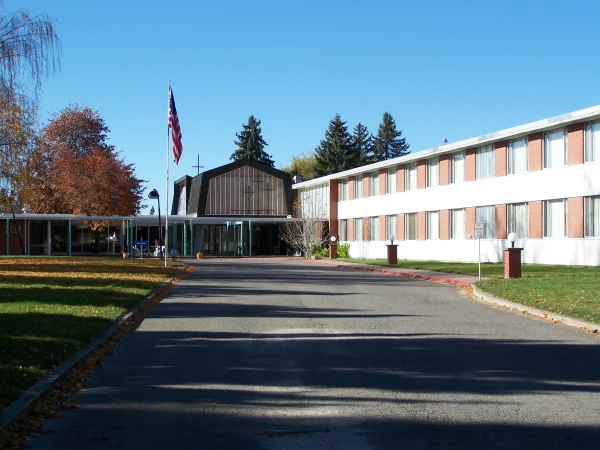
Denver Newsroom, Aug 1, 2020 / 06:01 am (CNA).- In Washington state, one of the first coronavirus hotspots in the United States, an empty Catholic retreat center will temporarily transform into a quarantine facility for coronavirus patients, the Diocese of Spokane has announced.

In February, the cancelations were already piling up from individuals and retreat groups scheduled to visit the Immaculate Heart Retreat Center, located just south of Spokane.

Prospective retreatants, fearful of the novel coronavirus, which was just beginning to be detected in the United States, were fearful of coming together with people from other households and potentially contracting the virus.

“We were looking at a significant loss of revenue,” Michael Pallardy, development officer for the IHRC, told CNA.

The retreat center officially closed its doors in March, and as of June, it became clear that the center would likely have to cancel all of its retreats and events for the rest of the calendar year. While Deacon John Ruscheinsky, director of IHRC, and his team strategized about the future of the center in light of the coronavirus pandemic, he received an unexpected offer from Dr. Bob Lutz, Clinical Director of the Spokane Regional Health District.

Lutz proposed that in partnership with Catholic Charities of Eastern Washington and the IHRC, the retreat center could temporarily be used as a quarantine facility for those with COVID-19. “So Deacon John Mashinsky went to Bishop Daly and told the Bishop what was proposed and asked the Bishop, what do you think?” Pallardy said. “And the Bishop gave him his blessing and said, ‘Please proceed, see if this possibly can happen.’”

“I wish to thank all parties involved for the professional manner in which they have addressed this temporary transition of IHRC from retreat center to a quarantine facility,” Bishop Daly said in a statement announcing the change. “Please join me in prayer for its success. May Our Lady of Lourdes guide our efforts in helping others in need.”

The quarantine facility, which is set to open by the end of August at the latest, will serve “individuals who are actually diagnosed with COVID-19 symptoms, or those who had tested positive, but weren’t showing symptoms yet. They also said that we would be helping the most needy and vulnerable of our society, so those individuals who are living on the street, who have no place to go who become ill and therefore become a carrier (of COVID-19),” Pallardy said.

Immaculate Heart Retreat Center, which has been open for more than 60 years, has 64 dormitory rooms in the main building, kitchen and dining facilities, and normally serves more than 7,000 retreatants in an average year. The plan is to separate the symptomatic patients and asymptomatic patients in the center, Pallardy noted.

He added that it seemed “obvious” to allow the retreat center to be used for this purpose, because “part of our mission is to help. Immaculate Heart is a place where people come for hope, peace and healing, and how best can we help those who are suffering with this illness, but to help them heal and in a prayerful place and a peaceful place?”

Pallardy said the work has already begun to transform the retreat center into the quarantine site – additional security cameras, air conditioning, and other updates are being made, and the health district and Catholic Charities staff are moving in while the retreat center staff are working from home. The contract with the Spokane Regional Health District states that the retreat center will be used as a quarantine site until the end of December, at which point the agreement will go to a month-to-month basis depending on the needs of the community, Pallardy said.

“Nobody knows what the fall or winter is going to be like with COVID and what pressures it’s going to put on our community,” he said. Pallardy said the facility could host families with children who are quarantining together, and would be open to people of all religions. He added that the retreat center, though serving a different purpose, will still be considered a ministry operating under the direction of Bishop Daly and the Diocese of Spokane.

Ultimately, Pallardy said the plan was providential in that it allowed the retreat center to continue operating for future use and it allowed the center to be used to help those most immediately in need. “To help our community and help the most vulnerable during this pandemic to heal is a godsend.”

[…]

No Picture
News Briefs

After AOC decries statue, Hawaiian Catholic says St Damien of Molokai ‘gave his life’ serving lepers

July 31, 2020 CNA Daily News 11

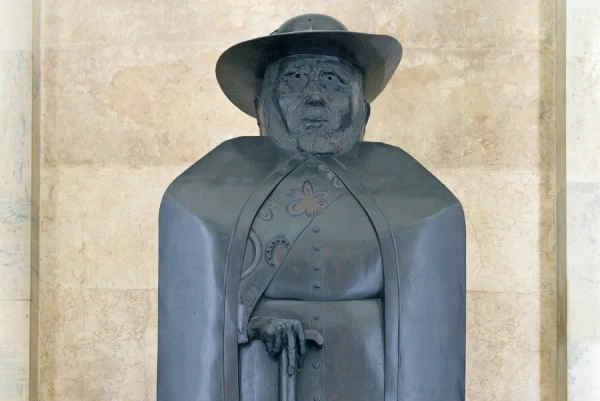
Washington, D.C. Newsroom, Jul 31, 2020 / 01:28 pm (CNA).- A Hawaiian Catholic catechist said that St. Damien of Molokai is a “hero” to the Hawaiian people, after a prominent congresswoman claimed the statue honoring him in the U.S. Capitol is part of colonialism and “patriarchy and white supremacist culture.”

 
St. Damien “gave his life” serving the isolated leper colony at Kalaupapa peninsula on the Hawaiian island of Molokai, said Dallas Carter, a native Hawaiian and a catechist for the diocese of Honolulu, in an interview with CNA.
 
“Any Hawaiian here who is aware of their history–which most Hawaiians are–would absolutely, Catholic or not, defend the legacy of Damien as a man who was embraced by the people, and who is a hero to us because of his love for the Hawaiian people,” Carter said.
 
“We did not judge him by the color of his skin. We judged him by the love that he had for our people,” Carter told CNA.
 
In an Instagram story on Thursday, Rep. Alexandria Ocasio-Cortez (D-N.Y.) asked why there were not more statues honoring women historical figures, at the U.S. Capitol’s National Statuary Hall Collection. The collection includes statues honoring historical figures from all 50 states.
 
“Even when we select figures to tell the stories of colonized places, it is the colonizers and settlers whose stories are told – and virtually no one else,” Ocasio-Cortez posted, with a picture of Fr. Damien’s U.S. Capitol statue in the background.
 
In 1969, Hawaii chose to honor St. Damien alongside Kamehameha I in the National Statuary Hall Collection in the US capitol.
 
Ocasio-Cortez noted on Thursday that Hawaii’s statue was of Fr. Damien and not of “Queen Lili’uokalani of Hawaii, the only Queen Regnant of Hawaii,” implying that it was an example of “colonizers” being honored instead of historical figures who are native to states.
 
“This isn’t to litigate each and every individual statue,” she said, arguing that “patterns” among the “totality” of the statues in the Capitol reveal they honor “virtually all men, all white, and mostly both.”
 
“This is what patriarchy and white supremacist culture looks like!” Ocasio-Cortez said. “It’s not radical or crazy to understand the influence white supremacist culture has historically had in our overall culture & how it impacts the present day.”
 
Ocasio-Cortez’s office told CNA that “it’s the patterns that have emerged among all of the statues in the Capitol: virtually all white men. Each individual could be worthy, moral people. But the deliberate erasure of women and people of color from our history is a result of the influence of patriarchy and white supremacy.”
 
St. Damien of Molokai was a religious priest of the Congregation of the Sacred Hearts of Jesus and Mary who spent the last 16 years of his life caring for lepers in the Hawaiian Kingdom.
 
He was born Jozef De Veuster in Belgium in 1840, and he entered the Picpus Fathers in 1859, taking the name Damien. He was sent to the mission in Hawaii in 1864, and was ordained a priest that May.
 
Shortly after that, the Hawaiian government and King Kamehameha V passed a law mandating that lepers quarantine themselves in an isolated colony on the island of Molokai. The local bishop asked for volunteers to minister to the leper colony, and Fr. Damien presented himself, beginning his work there in 1873.
 
Carter noted that the Hawaiian government of the time “did not know how to deal with leprosy,” and that “no one wanted to deal with Kalaupapa [colony].”
 
Damien himself was afraid to go and minister to the lepers, Carter said, but “over a period of time—his journal is very clear, and the writings of the Hawaiian people in that town are very clear—that he fell in love with the people.”
 
Eventually, Damien was given an ultimatum by his religious superior to either leave the colony or remain there permanently. He chose to stay.
 
The priest served the colony for the rest of his life, attending to both spiritual and temporal needs of the lepers. By 1884 he had contracted leprosy, and he continued to minister until his death in 1889.
 
St. Damien is beloved by native Hawaiians, Carter said, and then-princess Lili’uokalani—who Cortez implied should be given a statue instead of Damien—made Fr. Damien a Knight Commander of the Royal Order of Kalākaua in 1881, for his “efforts in alleviating the distresses and mitigating the sorrows of the unfortunate.”
 
Damien is also the only priest-saint in the Hawaiian martyrology “that spoke the native Hawaiian language,” Carter said. “He loved the Hawaiian people, he embraced our culture,” he said, and in turn “he was part of our kingdom. he was one of us.”
 
The priest was canonized Oct. 11, 2009 by Pope Benedict XVI, who said that “his missionary activity, which gave him such joy, reached its peak in charity.”
 
On the occasion of the canonization, U.S. president Barack Obama expressed his “deep admiration for the life of Blessed Damien De Veuster.”
 
“Fr. Damien has also earned a special place in the hearts of Hawaiians. I recall many stories from my youth about his tireless work there to care for those suffering from leprosy who had been cast out,” Obama, who was born on the Hawaiian island of Oahu, said.
 
“Following in the steps of Jesus’ ministry to the lepers, Fr. Damien challenged the stigmatizing effects of disease, giving voice to the voiceless and, ultimately, sacrificing his own life to bring dignity to so many.”

[…]

No Picture
News Briefs

LA archdiocese says don’t sing Haas hymns

July 31, 2020 CNA Daily News 5

CNA Staff, Jul 31, 2020 / 10:15 am (CNA).- The largest Catholic archdiocese in the United States has requested that its parishes and schools stop playing music composed by David Haas following the recent allegations of sexual misconduct. 

“… […]

No Picture
News Briefs

US bishops urge Trump to reinstate DACA

July 30, 2020 CNA Daily News 2

CNA Staff, Jul 30, 2020 / 03:30 pm (CNA).- Leading U.S. Catholic bishops on Thursday criticized the Trump administration’s decision to consider ending DACA.

The Department of Homeland Security had announced on Wednesday that it would still consi… […]

No Picture
News Briefs

San Francisco to name street after first Black firefighter, a Catholic convert

July 30, 2020 CNA Daily News 1

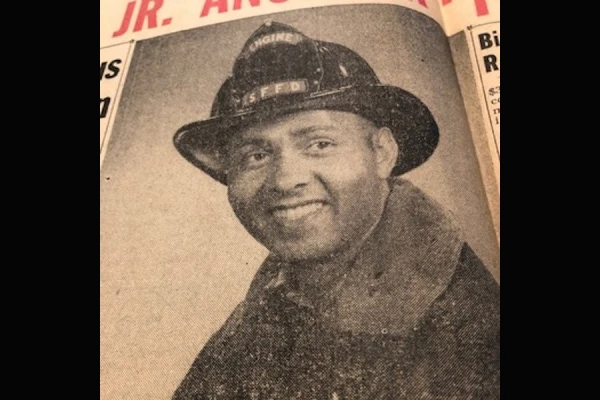
San Francisco, Calif., Jul 30, 2020 / 11:04 am (CNA).- San Francisco’s first Black firefighter, a Catholic convert whose faith helped him endure years of racial abuse within the department, will have a city street named after him.

The Board of Supervisors voted unanimously June 14 to name a portion of Willow Street between Buchanan and Laguna after Earl Gage Jr.  The street runs through the Western Addition neighborhood of the city where the Gage family — longtime St. Emydius parishioners — lived.

“He was a man who kept his strong faith,” his daughter Blondell Chism told Catholic San Francisco July 24.  “No matter what happened, all was good and he was blessed.”

Gage converted to Catholicism to marry his Catholic wife, also named Blondell.

While the Department of Public Works readies the new street sign for an as-yet-unscheduled installation date, San Francisco Supervisor Dean Preston has commissioned a mural of Gage to accompany it.

Gage was hired by the San Francisco Fire Department in 1955 at age 28 and was the sole Black firefighter for the next 12 years. He retired in 1983 and died in 2017 at age 90.

His hire was a progressive move for the times and not embraced by all members of the department, said Sherman Tillman, president of the Black Firefighters Association.

There were the fellow firefighters who refused to sleep on any mattress Gage had occupied in the communal firehouse, he said.
His mattress was urinated on so repeatedly that the young firefighter took to carrying his own with him from station to station.

“When you think about the discrimination he saw toward himself you’d think a person would be disillusioned and hateful toward the people who did those things,” said Tillman, a longtime parishioner of Star of the Sea Parish on Geary Blvd. “He wasn’t.”

Threats to his safety eventually led Gage away from field work and to a role as the SFFD’s director of community services. There he helped create a new training course for the firefighter’s exam after seeing it was a hurdle for many aspiring firefighters. He was also part of a federal court consent degree that pushed for diversity in the predominantly white, male department.

Tillman called Gage a “man of God who tried to see the best in people despite their flaws.”

It was at his funeral that Tillman decided to petition the city to recognize his character and place in history — a mission that took three years to bring to fruition. Coincidence or not, the sign was approved just weeks after the killing of George Floyd in May by a Minneapolis police officer who kneeled on the 46-year-old Black man’s neck for 8 minutes and 46 seconds during an arrest for allegedly passing a counterfiet $20 bill.

Tillman said racial diversity in the SFFD is still aspirational almost 70 years after Gage became the city’s first Black firefighter.

“Right now we are at 156 (Black firefighters) in San Francisco, down from 193,” he said. “We haven’t been this low since the early 1990s.”

The SFFD has approximately 1,500 members.

As civil servants, Black firefighters receive the same pay as other local firefighters of their rank, said Tillman. But few African Americans are appointed to higher ranking positions all around the country.

“There is a handful of people in the fire department who want to hold on to the power,” he said, not just in San Francisco but in all big city fire departments.

At one time there were 16 African American fire chiefs, said Tillman. Now there are six. With anticipated retirements in the next three years there will only be only one.

Blondell Gage said her father wanted to be just another firefighter who happened to be black, not a “Black firefighter.”

He did not consider himself an activist, she said, nor was he in favor of protests.

“I think that being said, he stood his ground for 12 years and kept pushing,” she said.


Reprinted with permission from Catholic San Francisco.

[…]