


Pope Francis at Sunday Angelus: ‘Only in God do we find the light of life’
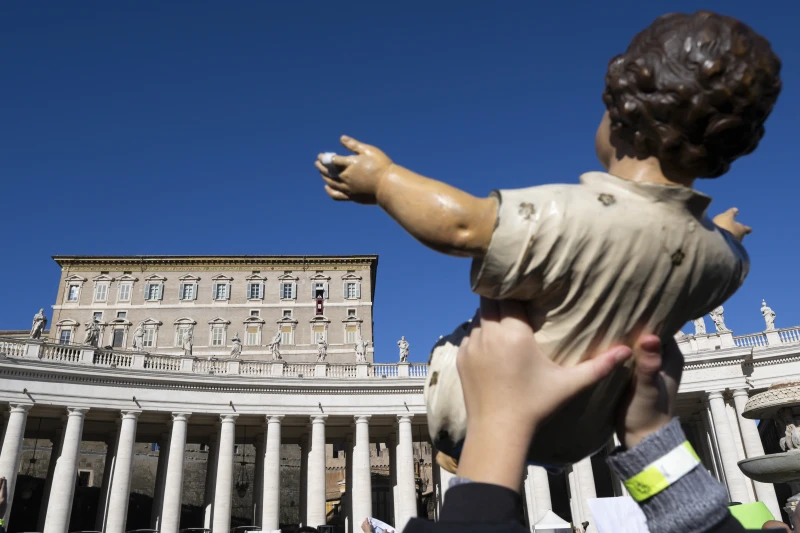 A member of the crowd in St. Peter’s Square holds up a baby Jesus figure for a blessing by Pope Francis at his Sunday Angelus Dec. 17, 2023. / Credit: Vatican Media
Rome Newsroom, Dec 17, 2023 / 12:00 pm (CNA).
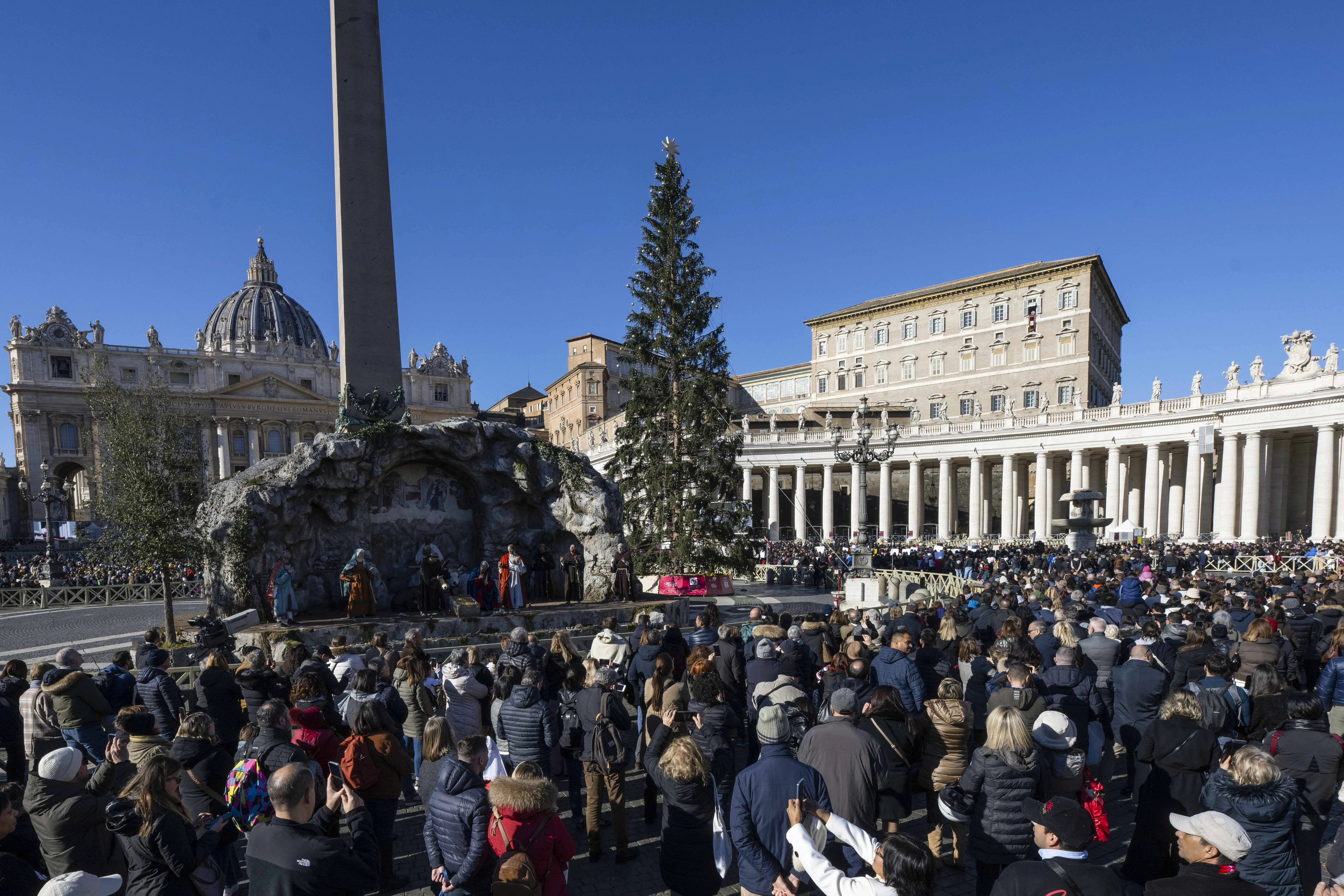
Pope Francis reflected on St. John the Baptist as a luminous figure who testifies to the light and teaches us that “only in God do we find the light of life” during his Angelus address Dec. 17 on the third Sunday of Advent, or Gaudete Sunday.
Observing this as the first lesson that we can learn from John the Baptist, the Holy Father told pilgrims gathered in St. Peter’s Square at the Vatican that the second is that “through service, consistency, humility, witness of life” we “can be a lamp that shines and helps others find the way on which to meet Jesus.”
Today’s message built upon the Holy Father’s Angelus message from the previous Sunday, where he highlighted John’s ministry as a voice that “is linked to the genuineness of his experience and the clarity of his heart.”
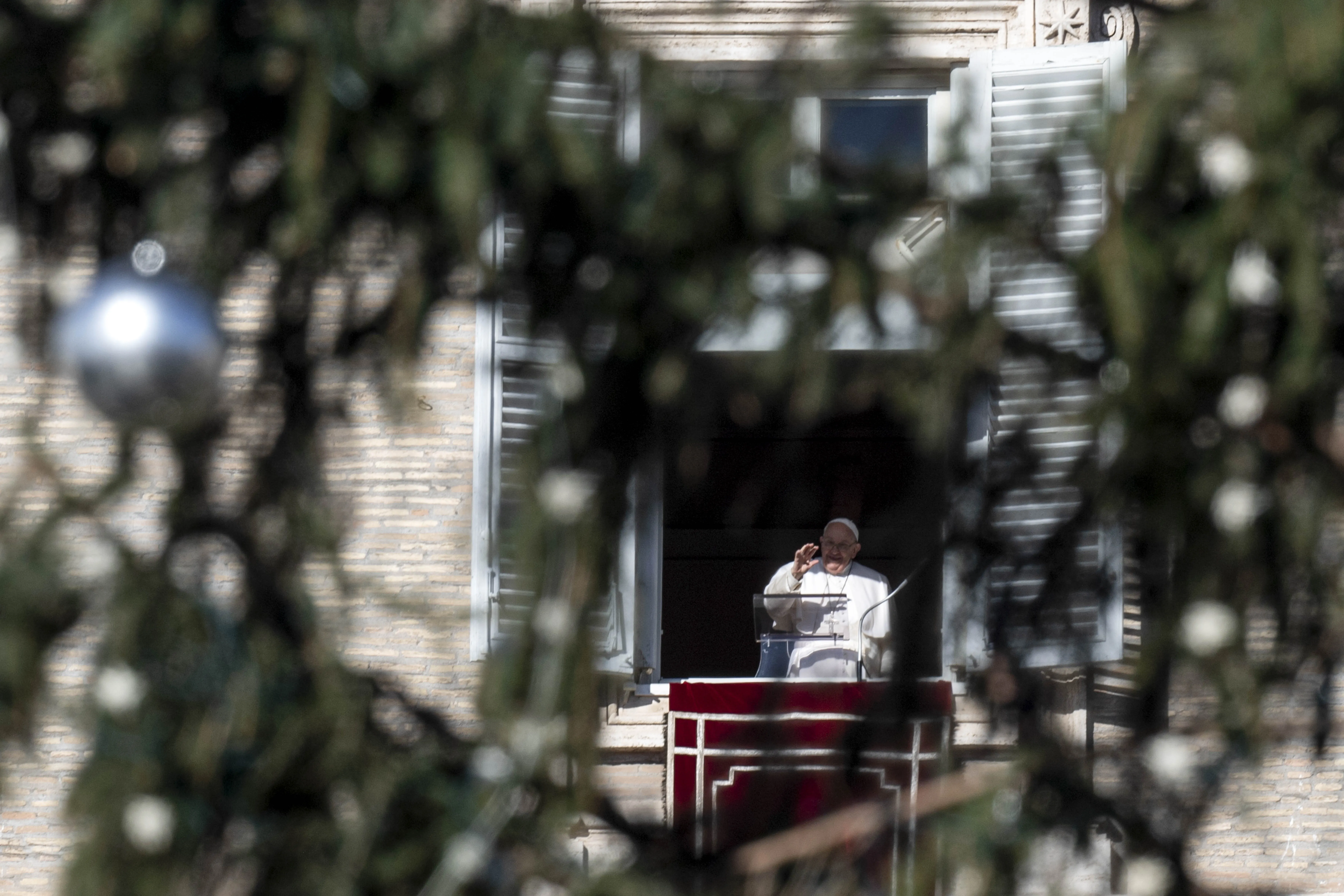
Expanding on this observation, the pontiff noted that John’s mission is characterized by his “frank language” and is underscored by his “sincere behavior, his austerity of life.” Thus it is through his example that the Holy Father suggested we look to John the Baptist as a figure who “motivate[s] us to rise above mediocrity and to be in turn models of good living for others.”
Expanding upon this point, the pope noted that we can see John as a “luminous” figure not only because he is “upright, free, and courageous” but because he submitted himself to God’s will, to carry out a mission to pronounce the light that is “Jesus, the Lamb of God” who “redeems, frees, heals, and enlightens.”
To that end, the luminosity of John is not self-aggrandizing, but instead he is at the service of others, a voice “who accompanies his brothers and sisters to the Word; he serves without seeking honors or the spotlight.” In this way the pope encouraged the faithful to look at John as a counterpoint to “other famous and powerful people” who “invested a lot in appearances.”
Drawing a connection between the biblical context and today, the pope noted that “in every age the Lord sends men and women like this,” but he asked the faithful: “Do we know how to recognize them? Do we try to learn from their witness, allowing ourselves to be challenged? Or rather, do we allow ourselves to be bedazzled by fashionable people?”
Following the recitation of the Angelus prayer, the Holy Father noted that on Saturday, Dec. 16, Argentine Cardinal Eduardo Francisco Pironio was beatified. The pope described Pironio as a “humble and zealous pastor, witness of hope, defender of the poor” who “collaborated with St. John Paul II in the promotion of the laity and in the World Youth Days.”
“May his example help us to be an outgoing Church, which becomes a traveling companion for everyone, especially the weakest,” the pope added.
The Mass of beatification was presided over by the 78-year-old Spanish Cardinal Vérgez Alzaga at the Sanctuary of Our Lady of Luján in Argentina, where Pironio is buried.
Also after the Angelus the pope sharply condemned the reported killing of two women outside a Catholic church in Gaza City on Saturday, allegedly by an Israeli sniper.
“I continue to receive very serious and painful news from Gaza,” the pope lamented. “Unarmed civilians are subjected to bombings and shootings. And this even happened inside the parish complex of the Holy Family, where there are no terrorists but families, children, sick and disabled people, nuns.”
“Someone says, ‘It’s terrorism, it’s war.’ Yes, it’s war, it’s terrorism. This is why Scripture states that ‘God stops wars … breaks bows and breaks spears,’” the pope said. “Let us pray to the Lord for peace.”

