No Picture
News Briefs

In Paris, former apostolic nuncio begins trial for alleged sexual assault

November 9, 2020 CNA Daily News 0

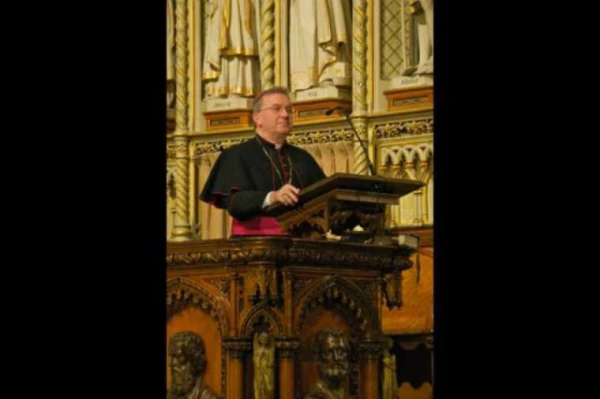
CNA Staff, Nov 9, 2020 / 06:05 pm (CNA).- The former apostolic nuncio to France will go on trial Nov. 10 in Paris after allegations he committed sexual assault by inappropriately touching five men since 2018.

Archbishop Luigi Ventura, who denies the claims, submitted his resignation as apostolic nuncio to France in December 2019 upon reaching the age of 75, and Pope Francis accepted the resignation less than 10 days later. The Vatican had revoked Ventura’s diplomatic immunity in July 2019, paving the way for a trial in French courts.

“Bishop Ventura impatiently awaits this trial so that he can explain himself, that the light can be shed and his innocence recognized,” Ventura’s lawyer, Solange Doumic, told Agence France Presse.

Doumic said that the former nuncio “himself asked for the lifting of diplomatic immunity so as to be able to explain himself to the courts.”

However, lawyers representing the civil complainants argue that lifting immunity was a “fight” for the plaintiffs. In February 2019 three of the plaintiffs challenged the French head of state over the issue.

“Faced with Mr. Ventura’s denials, my client hopes that the court will hear his word and recognize him in his victim status,” Elise Arfi, the lawyer for Mathieu de La Souchère, said.

Afri’s client was the first to make allegations publicly, Agence France Presse reports.

Sexual assault can be punished by up to five years in prison and a fine of up to 75,000 euros, about $88,600.

Ventura has been living in Rome since September last year, according to French news agency I. Media.

The first public accusation came in early 2019, after he was accused of inappropriately touching a municipal employee at a Jan. 17, 2019, reception for the New Year address of Paris mayor Anne Hidalgo. The accusation was then investigated by Parisian authorities for several months.

Since the alleged victim came forward, four other men have reported touching incidents during public events in France between January 2018 and February 2019.

After the initial allegation was made against Ventura, he also faced another accusation of sexual misconduct against an adult male relating to his time in Canada in 2008. He has denied the allegations.

Ventura was apostolic nuncio to Canada from 2001 to 2009.

Ventura was ordained a priest of the Diocese of Brescia, in the Lombardy region of northern Italy, in 1969. He entered the diplomatic service of the Holy See in 1978 and was stationed in Brazil, Bolivia, and the UK. From 1984 to 1995 he was appointed to serve at the Secretariat of State in the Section for Relations with States.

After his episcopal consecration in 1995, Ventura served as nuncio to Ivory Coast, Burkina Faso, Niger, Chile, and Canada. He was appointed apostolic nuncio to France in September 2009.


[…]

No Picture
News Briefs

Obituary: Rabbi Jonathan Lord Sacks

November 9, 2020 CNA Daily News 3

CNA Staff, Nov 9, 2020 / 10:00 am (CNA).- Catholics have joined faith leaders from around the world to offer prayers and tributes, after the death of Rabbi Jonathan Lord Sacks, the internationally renowned philosopher, leading voice in inter-relig… […]

No Picture
News Briefs

Leading German Catholic bishop renews intercommunion call after Vatican objections

November 9, 2020 CNA Daily News 3

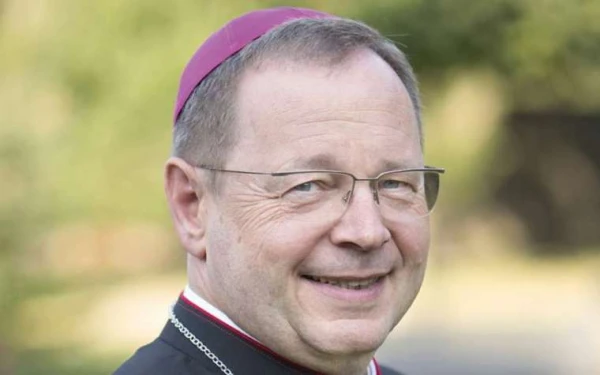
CNA Staff, Nov 9, 2020 / 04:00 am (CNA).- Bishop Georg Bätzing, president of the German bishops’ conference, reaffirmed Sunday his view that intercommunion with Protestants should be possible, despite Vatican objections.

He made the comment in a Nov. 8 message to the Synod of the Evangelical Church in Germany (EKD).

“The community in faith, which is already ecumenically visible in many ways, aims at a unity that will also be able to be experienced as a communion in the Eucharistic and the Lord’s Supper,” Bätzing wrote in the message.

He said he considered it “good” that a document produced by the Ecumenical Study Group of Protestant and Catholic Theologians (ÖAK), called “Together at the Lord’s Table,” had “rekindled the debate on the remaining open questions on the way” to what the paper calls “reciprocal Eucharistic hospitality” between Catholics and Protestants.

As CNA Deutsch, CNA’s German language news partner, reported, Bätzing continued: “I will undertake every effort in the bishops’ conference and also in dialogue with Rome to ensure that an intensive discourse is held on this issue and that the findings of the ecumenical dialogues are examined and acted upon.”

The Congregation for the Doctrine of the Faith (CDF) said in September that the proposal made in “Together at the Lord’s Table,” issued in September 2019, did not do justice to the Catholic understanding of the Church, the Eucharist, and Holy Orders.

The 57-page text advocated “reciprocal Eucharistic hospitality” between Catholics and Protestants, based on previous ecumenical agreements on the Eucharist and ministry. In response, the CDF issued a letter Sept. 18, signed by CDF prefect Cardinal Luis Ladaria and secretary Archbishop Giacomo Morandi.

The letter was accompanied by a four-page doctrinal note raising a number of theological concerns. The CDF said that Cardinal Marc Ouellet, prefect of the Vatican Congregation for Bishops, had requested a doctrinal assessment of the document in May. It noted that the German bishops had discussed the text at their plenary meeting that month in Mainz.

The CDF letter said: “The question of the unity of the Eucharist and the Church, in which the Eucharist presupposes and brings about unity with the communion of the Church and her faith with the pope and the bishops, is undervalued in the aforementioned document.”

“Essential theological and indispensable insights of the Eucharistic theology of the Second Vatican Council, which are widely shared with the Orthodox tradition, have unfortunately not been adequately reflected in the text.”

Cardinal Kurt Koch, president of the Pontifical Council for Promoting Christian Unity, said in an interview in September that he believed that the pope backed the intervention by the Vatican’s doctrinal office.

“I have also heard from other sources that the pope has expressed his concern in personal conversations,” Koch said, explaining that he was not referring simply to the question of intercommunion. 

“Not only, but about the situation of the Church in Germany in general,” he said, noting that Pope Francis addressed a long letter to German Catholics in June 2019.

CNA Deutsch reported that the ÖAK adopted the intercommunion document under the co-chairmanship of Bätzing and the retired Lutheran Bishop Martin Hein.

It added that Bätzing announced recently that the text’s recommendations would be put into practice at the Ecumenical Church Congress in Frankfurt in May 2021.

The ÖAK was founded in 1946 to strengthen ecumenical ties. It is independent of both the German Catholic bishops’ conference and the EKD, an organization representing 20 Protestant groups, but it informs both bodies about its deliberations.

The doctrinal congregation emphasized that significant differences in understanding of the Eucharist and ministry remained between Protestants and Catholics.

“The doctrinal differences are still so important that they currently rule out reciprocal participation in the Lord’s Supper and the Eucharist,” it said.

“The document cannot therefore serve as a guide for an individual decision of conscience about approaching the Eucharist.”

The CDF added that the ÖAK text should inspire further theological discussions. But it cautioned against any steps towards intercommunion.

“However, an opening of the Catholic Church towards Eucharistic meal fellowship with the member churches of the EKD in the current state of the theological discussion would necessarily open new rifts in ecumenical dialogue with the Orthodox Churches, not only in Germany,” it said.


[…]

No Picture
News Briefs

Order of Malta opts to elect a Lieutenant of the Grand Master amid constitutional reform

November 8, 2020 CNA Daily News 0

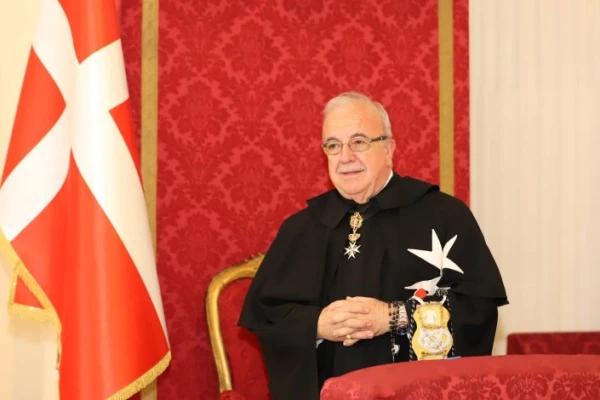
Rome, Italy, Nov 8, 2020 / 07:00 am (CNA).- The Order of Malta elected Fra’ Marco Luzzago as the Lieutenant of the Grand Master on Nov. 8. to serve a one year term amid the order’s constitutional reform.

Luzzago will lead the nearly 1000-year-old institution until another election will take place next year to select the order’s Grand Master, a position that is traditionally held for life.

Founded in Jerusalem in the year 1048, the Sovereign Order of Malta today operates mainly in the field of medical and humanitarian assistance as a primary body of international law and a lay Catholic religious order.

The Order of Malta’s elective body, the Council Complete of State, met in Rome at the Magistral Villa on the Aventine Hill Nov. 7-8. Forty-four electors from 16 countries, including Argentina, France, Lebanon, the United States, and Italy, were present for the vote out of the 56 eligible electors due to the coronavirus pandemic.

The council decided to elect a Lieutenant of the Grand Master rather than a Grand Master.

As Lieutenant of the Grand Master, Luzzago will serve a term of one year with all of the prerogatives of the Grand Master until the next election. This will allow the Order of Malta to continue its ongoing process of constitutional reforms.

An Italian born in Brescia in 1950, Fra’ Marco Luzzago studied medicine for several years at universities in Padua and Parma before he was called to manage his family’s properties. He then went on to a career in business in the field of large-scale retail distribution. He is related to Pope Paul VI.

He joined the Order of Malta in 1975 in the Grand Priory of Lombardy and Venice and took solemn religious vows in 2003. He has taken part in the Order of Malta’s international pilgrimages to Lourdes and in the national pilgrimages of Assisi and Loreto. Since 2010, he has completely dedicated his life to the Order of Malta, moving to care for one of the order’s commanders.

“The Holy Spirit has graciously turned his gaze to me. I thank each one of you for placing your trust in me and for showing by your presence here today a great love and a great dedication to our Order,” Luzzago said upon his election.

“For my part, I can only assure you of my maximum commitment to address the challenges that lie ahead of us in the coming months. First of all, the reform of the Constitutional Charter and the Code carried on with such fervour by our late Fra’ Giacomo, whom at this moment I remember with emotion.”

Luzzago succeeds Grand Master Fra’ Giacomo dalla Torre, who died in April. Since his death Fra’ Ruy Gonçalo do Valle Peixoto de Villas Boas has led the Order of Malta as interim lieutenant.

He will be sworn in by Cardinal-elect Silvano Maria Tomasi, the special delegate to the Order of Malta. Tomasi was appointed as the special delegate by Pope Francis on Nov. 1 following the resignation of Cardinal Angelo Becciu.

Luzzago’s election comes at a crucial time for the historic order, which has been in a slow-moving constitutional crisis since Pope Francis compelled the resignation of a previous Grand Master, Fra’ Matthew Festing in 2017.

That decision came after Festing himself had compelled the resignation of Grand Chancellor Albrecht Freiherr von Boeselager Boeselager in 2016, after it became known that an aid project of the order in Myanmar had distributed thousands of condoms. Boselager insisted that he had not known about the distribution of condoms, and that he had put a stop to it as soon as he became aware.

In 2017, Boeselager was reinstated as Grand Chancellor, and Becciu was appointed as the pope’s personal delegate to oversee the order’s reform, effectively supplanting the role of the order’s Cardinal Patron, Cardinal Raymond Burke, who remains in post only nominally.

As part of its reform, the Order of Malta is considering changes to the office of Grand Master itself, and the role of the first degree of professed knights – those who make perpetual religious vows – in the governance of the order, as opposed to the second and third degrees, who do not.

“The old Grand Master had named a small commission of experts on canon law to make proposals for changes which are necessary to the order’s constitution and code,” Boeselager told CNA in an interview on Oct. 23.

“In early 2018, we organized an international seminar to collect different ideas for the reform of the order, we had working groups on different topics, these presented to the seminar which made recommendations to the specialist commission as well.”

But, Boeselager said, “regarding the professed, the Holy Father has demanded especially that the regulations dealing with the first class of the order are revisited.”

He noted that the order’s current constitution and code, while revised in 1997, substantially date back to 1961, before Vatican Council II. “All the new elements which came in canon law regarding religious life [since the council] have not yet made it into the constitution of the order.”

Reform of the professed religious is a sensitive issue for the order, since it is the knights of the first degree who form the Council Complete of State and are eligible to serve as Grand Master and other senior governing roles.

Changing the nature and function of the order’s religious life is, Boeselager conceded, inseparable from reforming its governance. “These are two sides of the same coin,” he said.

Another possible reform under discussion is the abolition of a requirement that certain high offices in the order be held only by knights of noble descent, in keeping with the order’s tradition of drawing membership from the ranks of European nobility. Today, the majority of members of the order, albeit those of the lower degree, do not come from noble families, or even countries with an aristocracy.

“There is great consensus that the requirement of nobility for the Grand Master should be abolished,” Boeselager said, noting that the order’s transition away from its strictly aristocratic history was part of its evolving character.

“How the order deals with the nobility in its history shows how we adapt in steps, not in revolution,” pointing to a 1997 reforms which opened the second class of knights to non-nobles.

Today the Order of Malta, with its 13,500 members, 80,000 volunteers, and its staff of 42,000 professionals, has a mission of witnessing the faith and serving the poor and the sick. The Order manages hospitals, medical centers, clinics, institutions for the elderly and disabled, centers for the terminally ill, volunteer corps, and has a relief agency, Malteser International.

The Order of Malta has bilateral diplomatic relations with 110 states, official relations with six other states, ambassadorial relations with the European Union and is a permanent observer to the United Nations and its specialized agencies.

Since 1834 the seat of the Government of the Sovereign Order of Malta has been in Rome, where it has guarantees of extraterritoriality. As the Lieutenant of the Grand Master Luzzago will reside in the Magistral Palace in Rome.


[…]

No Picture
News Briefs

Teen martyred while protecting the Eucharist beatified in Spain

November 8, 2020 CNA Daily News 1

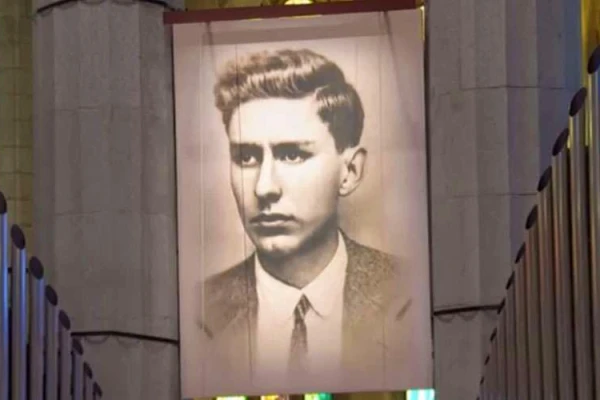
Rome Newsroom, Nov 8, 2020 / 05:15 am (CNA).- A 19-year-old Spanish martyr who gave his life while protecting the Eucharist was beatified Saturday at a Mass in the Sagrada Família Basilica in Barcelona.

“Yesterday in Barcelona Joan Roig Diggle, a lay man and martyr killed at the age of 19 during the Spanish Civil War, was proclaimed Blessed,” Pope Francis said in his Angelus address Nov. 8.

“May his example arouse in everyone, especially the young, the desire to live the Christian vocation to the full,” the pope said.

Blessed Joan Roig Diggle was killed “in hatred of the faith” in 1936 during the Spanish Civil War. The young man was known for his devotion to the Eucharist at a time when churches in Barcelona were being closed, burned, or destroyed, so a priest entrusted Joan Roig with a ciborium containing the Blessed Sacrament to distribute Holy Communion to those most in need in their homes as it was not possible to attend Mass.

During one of these visits, Joan Roig told a family that he knew that red militiamen were trying to kill him. “I fear nothing, I take the Master with me,” he said. When those seeking his life knocked on his door, the young man consumed the hosts he had been guarding to protect them from potential desecration.

The Libertarian Youth patrol then took him to the Santa Coloma cemetery where he was killed on Sept. 11, 1936 with five shots to the heart and one to the head. Blessed Joan Roig’s last words were: “May God forgive you as I forgive you.”

At Joan Roig’s beatification on Nov. 7, Cardinal Juan José Omella, archbishop of Barcelona, said in his homily that the young man was an “ardent defender of the Social Doctrine of the Church” and provides youth today with a “testimony of love for Christ and for his brothers.”

The apostolic nuncio in Spain, Bishop Bernardito Auza, and the archbishop emeritus of Barcelona, Cardinal Lluís Martínez Sistach, concelebrated the Mass, which took place with a limited attendance to prevent the spread of COVID-19.


Hace pocos minutos, se ha mostrado la imagen del nuevo beato Joan Roig Diggle en la @sagradafamilia.

Demos gracias a Dios. ?? pic.twitter.com/zfG0dqgGuU

— EsglésiaBarcelona ES (@esglesiabcn_es) November 7, 2020


Joan was born in Barcelona on May 12, 1917. His father was Ramón Roig Fuente and his mother, Maud Diggle Puckering, was from England.

He studied in schools run by De La Salle Brothers and the Piarist Fathers. His family experienced economic difficulties, so Joan worked to help cover expenses while he was pursuing his studies. Among his teachers were Fr. Ignacio Casanovas and Blessed Francisco Carceller, who would also go on to become martyrs.

His family moved to Masnou and the young man joined the Federation of Young Christians of Catalonia (FJCC), created in 1932 by Albert Bonet and which had 8,000 members before the Spanish Civil War. He wrote about social issues in the FJCC newsletter and was appointed to lead the catechesis of children between 10 and 14 years old.

“When he came to Masnou no one knew him, but his piety and ardent love for the Eucharist soon became evident. He spent hours before the Blessed Sacrament without realizing it. His example converted more than his words,” the president of the FJCC youth branch wrote in 1936.

Fr. José Gili Doria, the vicar of Masnou, wrote in 1936: “One day Joan said to me: ‘I normally dedicate at least two hours a day to spiritual life: Mass, communion, meditation and visit to the Blessed Sacrament; it is little, but my work and the apostolate do not give me more.”

In July 1936, Joan told some of his fellow members of the FJCC they should all be preparing to receive martyrdom with grace and courage, as did the first Christians.

In the intense persecution that followed, it is estimated that some 300 young people from this organization were killed in Catalonia, including some 40 priests. The headquarters of the FJCC was burned.

Joan’s mother said that in those days her son “was relieving sorrows, encouraging the timid, visiting the wounded, searching hospitals daily among the dead to find out which of his own had been killed.”

“Every night, at the foot of the bed, with the crucifix clasped in his hands, he implored for some clemency, for others forgiveness, and for all mercy and strength,” she said.

Cardinal Omella said: “Joan teaches us that all Christians are called to live our faith in community. No one builds his own faith alone, the Christian faith is essentially communal.”

Blessed Joan Roig Diggle is currently buried in a side chapel at the parish of St. Peter in El Masnou in Barcelona.

“He can be a model of Christian life for young people and adults in our society, his testimony can arouse the desire to follow Christ with joy and generosity. The deep friendship with God, prayer, the Eucharistic life and the apostolic ardor of the young blessed unites us to Christ and his Gospel,” the cardinal said.


[…]