
No Picture
News Briefs

Pope Francis decrees better control of Vatican funds and foundations
December 6, 2022 Catholic News Agency 2
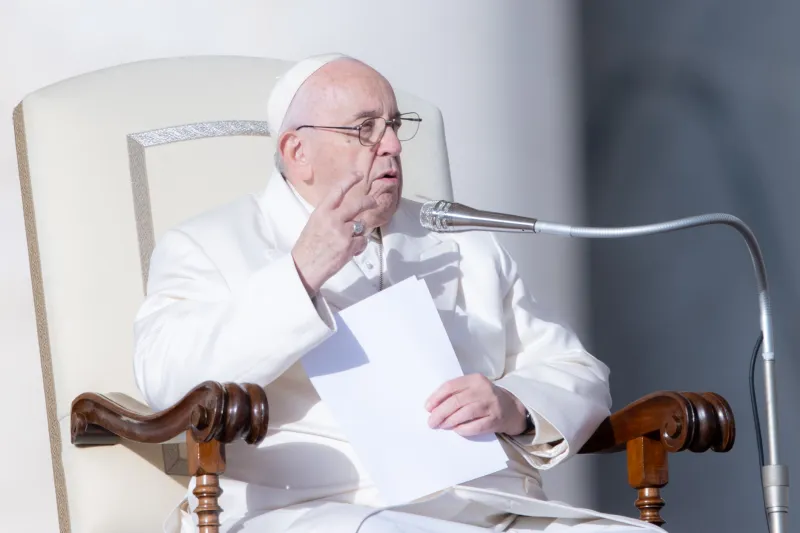
Pope Francis speaking at the general audience on St. Peter’s Square at the Vatican, Nov. 30, 2022 / Daniel Ibáñez / CNA

CNA Newsroom, Dec 6, 2022 / 08:00 am (CNA).

Pope Francis issued a decree on Tuesday aimed at improving the financial accountability of funds, foundations, and other legal entities inside the Vatican.

In the future, these entities — also known as juridical persons — will be controlled by the bodies such as the Secretariat for the Economy and not just supervised by their respective institutions.

The motu proprio is complemented by a law covering entities in the Vatican City State. Both were published Dec. 6 and come into force on Dec. 8.

Pope Francis noted in his apostolic letter that foundations and other affected entities “are instrumental in the realization of the ends proper to the curial institutions at the service of the ministry of the Successor of Peter.”

It was therefore necessary, he added, “that they be subject not only to the supervision of the curial institutions from which they depend, but also to the control and surveillance of the economic bodies of the Roman Curia.”

Already existing instrumental juridical persons will have to comply with the provisions of the motu proprio within three months.

The scope of the law is limited, according to Vatican News: It does not extend to “curial institutions and offices of the Roman Curia, institutions connected with the Holy See, the Governorate of Vatican City State, and entities professionally engaged in activities of a financial nature.”

The news follows the announcement on Nov. 30 that Pope Francis has appointed Maximino Caballero Ledo, 62, to lead the Secretariat for the Economy following the resignation of Jesuit Father Juan Antonio Guerrero. The Spanish layman has been secretary general, the second-ranking position, in the economy office since August 2020.

Pope Francis established the Secretariat for Economy in 2014 as part of his financial reform of the Vatican. It oversees the financial aspects of both the Roman Curia and the Vatican City State administration, including a review of financial reports.
[…]

No Picture
News Briefs

European Parliament displays Nativity scene for first time in its history

December 5, 2022 Catholic News Agency 1
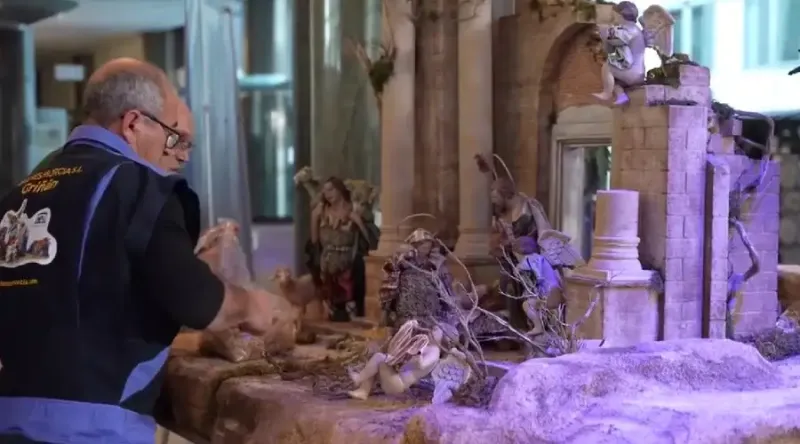
Installation of the first Nativity scene in the European Parliament / Credit: European People’s Party

CNA Newsroom, Dec 5, 2022 / 12:25 pm (CNA).

Christmas this year marks the first time in its history that the European Parliament has allowed a Nativity scene to be set up at its headquarters in Brussels. Until now, officials of the European institution had considered it “potentially offensive.”

The efforts of Isabel Benjumea, a member in the EU’s House of Representatives from Spain, were key to finally having a Nativity scene on display at the institution.

When she was elected in 2019, Benjumea tried her first year in office to prepare the groundwork for a gift of a Nativity scene to the parliament that would be exhibited during the Christmas season. However, she ran into European bureaucracy and deadlines.

The following year she began to take the necessary steps. The response could not have been more disheartening.

A Nativity scene could not be installed, she was informed by the office of the President of Parliament, because it was “potentially offensive” to nonbelievers.

“This had become a kind of crusade because it seemed unacceptable to me to ignore the Christian roots of Europe,” the parliamentarian told Spanish newspaper ABC.

Finally, this year the effort had the support of the Maltese president of the European Parliament, Roberta Metsola, although the Nativity scene has only been “authorized as a special exhibition,” which may or may not be renewed in the future.

The Nativity scene on display in the European Parliament is from Murcia, a region in southeastern Spain with a great tradition of Nativity scenes and imagery.

Artisans from the workshop of Jesús Griñán created the Nativity scene.

In his Aug. 24, 2003, Angelus address, St. John Paul II noted that he was prayerfully following the drafting of the Constitutional Treaty of the European Union.

The pontiff said that “the Catholic Church is convinced that the Gospel of Christ, which has been a unifying element of the European peoples for many centuries, should be and continue to be today too an inexhaustible source of spirituality and fraternity. Taking note of this is for the benefit of all, and an explicit recognition of the Christian roots of Europe in the treaty represents the principle guarantee for the continent’s future.”

However, the pope’s efforts were ignored.

In 2007, Pope Benedict XVI strongly criticized the EU for excluding any mention of God or the continent’s Christian roots in the institution’s declarations on the 50th anniversary of its founding.

This story was first published by ACI Prensa, CNA’s Spanish-language news partner. It has been translated and adapted by CNA.

[…]