Annual report shows progress in Vatican financial transparency

May 16, 2017 CNA Daily News 0

Vatican City, May 16, 2017 / 06:29 am (CNA/EWTN News).- The Vatican’s 2016 AIF financial report shows the trend toward transparency of previous years has continued, with a drop in suspicious activity and a growing number of international collaborators.

In May 16 comments to journalists, Rene Brülhart that so far “there has been a steady process in building a functional system, and hopefully a sustainable system” of financial transparency in the Vatican.

“If you look into the facts, into the figures, that’s what has been achieved in the last years, and 2016 has been a key moment in getting there,” he said.

Brülhart, a Swiss lawyer, is president of the Vatican’s Financial Intelligence Authority (AIF). Established by Benedict XVI in 2010 and strengthened under Francis, the AIF is the Vatican’s watchdog when it comes to financial supervision and preventing and countering money laundering.

The AIF works alongside other financial entities in the Vatican, including the Secretariat for the Economy and the Council for the Economy, both of which were established by Pope Francis as part of his ongoing reform of the Roman Curia.

Brülhart was present alongside AIF director Tommaso Di Ruzza at a May 16 press briefing on the AIF’s fifth annual report, which covered 2016 and summed up their continued efforts to crack down on suspicious financial activity in the Vatican and strengthen international ties.  

In 2016, the only entity supervised by the AIF was the Institute of Religious Works (IOR), more colloquially referred to as “the Vatican bank.”

In a press release on the report, Brülhart said “a significant fostering of international cooperation of the Vatican competent authority with its foreign counterparts to fight illicit financial activities, a consolidation of the reporting system as well as a further strengthening of the regulatory framework” were key achievements in 2016.

In comments to journalists, he noted that, in continuity with previous years, there had been a “significant increase of international cooperation” in 2016. This is key, he said, given the Holy See’s position as a global institution, which makes bilateral collaboration in the supervisory level “very important.”

According to the 2016 report, the year “was characterized by a continuous increase in supervisory and regulatory activities, especially in the field of prudential supervision.” In this regard, the majority of efforts were spent monitoring relationships among the IOR and foreign financial institutions.

“The unique geographical situation of Vatican City State and the activities carried out by the supervised entity (IOR) implies the necessity to establish relations with foreign financial intermediaries,” the report read.

In 2016, the AIF signed a “Memoranda of Understanding (MoU) with the supervisory authorities of Brazil, Italy and Poland. In addition, they also have formal ties with authorities in German, Luxembourg, and the United States.

Through their membership in the Egmont Group, the AIF is also allowed to interact with the financial intelligence units of 152 countries and jurisdictions.

Showing the efficiency of these relationships, AIF in 2016 had 837 international information exchanges, 720 of which were requested by AIF itself, while 116 were requests made by its foreign counterparts – an increase on both fronts from previous years

Part of this increase, according to the AIF report, is due to the increase in foreign counterparts and the AIF’s “preventive and proactive approach” at the international level. On the other hand, it’s also due to the “sophisticated feature of cases under strategic and operational analysis,” which involve various subjects and foreign jurisdictions.

In addition to an increase in international collaboration, 2016 saw a dip in the number of suspicious activity reports (SARs) filed compared to 2015.

For Brülhart, the decrease is “no surprise, but a logical follow-up to the path we have been taking these years.”

However, the report insisted that the number was still higher than in previous years, showing “an ever-increasing and effective implementation of reporting requirements by supervised entities,” Di Ruzza said in the press release.

The report also showed an improvement in the quality of SARs reports, with a positive impact in terms of their dissemination to the Vatican Promoter of Justice, “which are leading to domestic prosecution.”

If a transaction is flagged and found to be problematic, it is sent to the office of the Promoter of Justice, currently Gian Piero Milano. In 2016, 22 reports were sent to the office, 5 of which had action taken against them: 4 of the transactions were suspended, totally over $2 million, while the account was frozen for the remaining 1, worth over $1.5 million.

Asked about the fact that to date there has been no known public prosecution of persons found guilty of wrongdoing in the Vatican, Brülhart said he “cannot speak for the Promoter of Justice,” but, without getting into detail, acknowledged that “there have been relevant developments in recent times.”

He did explain, however, that the delay is likely due to several factors, including the fact that the system they put into place is still new, and lacks sufficient IT resources and qualified people who can develop the cases flagged by AIF before sending them to Milano’s office.

Bureaucracy is also part of the equation, he said, explaining that after receiving a case, Milano must request information from international agencies, which frequently slows down the process.
[…]

South Korean Catholics rally against use of nuclear power

May 16, 2017 CNA Daily News 0

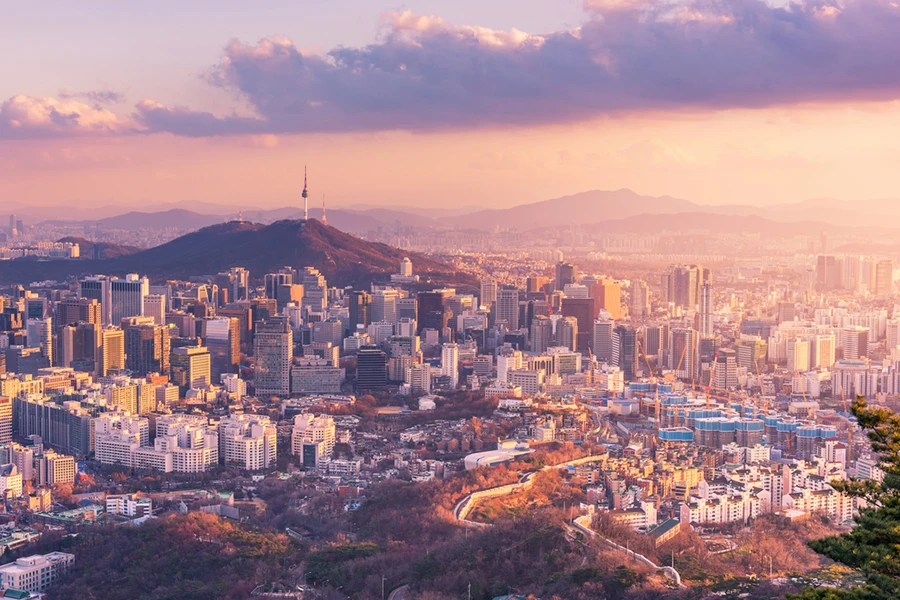
Seoul, South Korea, May 15, 2017 / 08:02 pm (CNA/EWTN News).- South Korean Catholics are opposing both the country’s reliance on nuclear power and the U.S. missile defense system recently established to pressure the North out of future weapon tests.

A major leader of the anti-nuclear movement, Father Moon Paul Kyu-Hyn, said “getting rid of nuclear power is the only way to survive, to save ourselves, and save the world,” according to Public Radio International.

A missile defense system has caused tensions between the U.S. and China as well as between China and South Korea. The country’s new president, Moon Jae-in, has emphasized his goal to solve the issues in the Korean Peninsula.

Father Moon expressed his disappointed in the new Terminal High Altitude Area Defense or THAAD, which became operational on May 2 in the Korean Peninsula. An agreement to install the system was established between the United States and South Korea’s former president, recently incarcerated for political corruption.

“THAAD is a weapon of war. You can’t be for peace if you’re preparing for war,” said Father Moon, an activist who spent three years in jail for illegally crossing over into North Korea in 1989.

He is now leading the charge on the anti-nuclear demonstrations participated by the clergy and lay people, who are opposed the expansion of nuclear power in all of Korea and the rest of the world. The group recently gathered in downtown Seoul to collect a million signatures for support against nuclear energy.

Nearly a third of the country’s electrical consumption relies on nuclear power from over 20 nuclear reactors. Moon Jae-in, who was confirmed president this week, promised to halt expansion of nuclear power and focus on clean energy during a campaign speech in April.

The push to remove nuclear power has increased in South Korea since three plants in Fukushima had a meltdown in 2011 caused by a Tsunami along the shores of Japan. The meltdown forced over 100,000 people to be evacuated from their homes, and the government is still cautious to allow everyone to return due to fears of radiation poison.

In an interview with Public Radio International, Father Cho Hyun-chul, a theology professor at Sogang University in Seoul, said if there is a similar accident revolving South Korea’s power plants then there would be “no room for us to live here. There is no more safe land.”

He continued to say that the destruction nuclear power can cause is “directly against God’s intention,” and the movement is stressing the need to care for the environment – a need heavily emphasized by Pope Francis especially in his encyclical Laudato Si.

The Pope recognized the “tremendous power” nuclear energy has gifted to humanity, but he also spoke against its dangers to the environment and the risk of being used improperly. He said a global consensus to focus on clean and renewable energy is essential for sustaining the earth.

“Such a consensus could lead, for example, to planning a sustainable and diversified agriculture, developing renewable and less polluting forms of energy,” Pope Francis wrote in Laudato Si.

According to Reuters, President Moon promised to ease away from nuclear energy in a campaign speech in April. The head for the president’s team on energy policy said South Korea “should move away from coal and nuclear power, and shift to clean or renewable energy-based platforms,” and that he would stop the plans to construct two new reactors in the south of the country.

[…]

What Cardinal O’Malley thinks we can all learn from Fatima

May 15, 2017 CNA Daily News 0

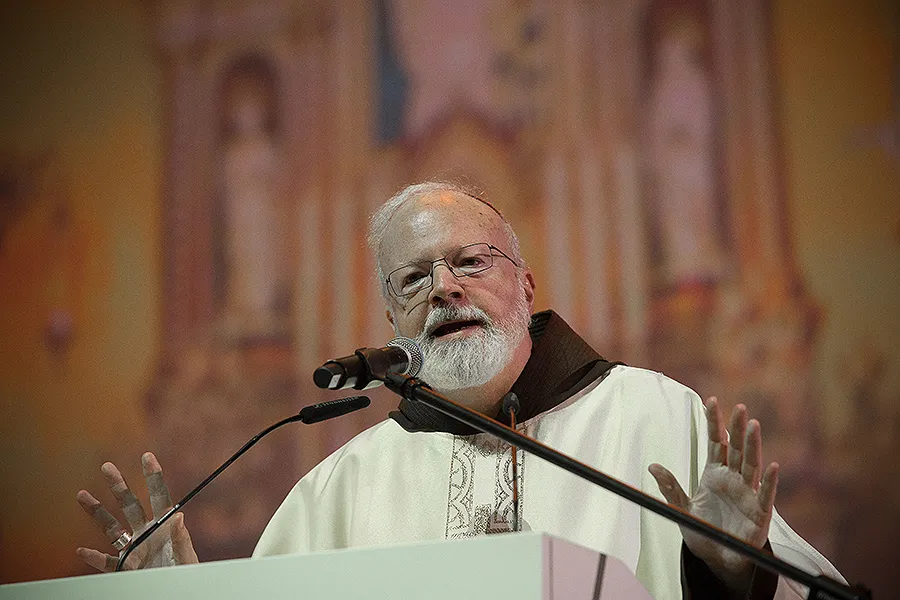
Fatima, Portugal, May 15, 2017 / 04:01 pm (CNA/EWTN News).- Cardinal Sean O’Malley of Boston said that this weekend’s celebrations for the 100th anniversary of Our Lady of Fatima can teach us all about the universal call to holiness and conversion.

“I’ve always had a great devotion to Our Lady of Fatima,” he told CNA, adding that he’s been involved in Portuguese ministry for many years.

“I had a Portuguese parish for 20 years and was bishop of Fall River for 10 years, where half the Catholics are Azorean, and in Boston we have so many Cape Verdians and Brazilians – Portuguese speaking.”

The cardinal was the only U.S. bishop to attend the Feb. 13 festivities surrounding the 100th anniversary of the Fatima apparitions in Portugal.

He said that the shrine at Fatima is among his favorite, and said that “it’s very moving to be here but especially be here with the Holy Father, for the hundredth anniversary and the canonization of Francisco and Jacinta. It’s just an unbelievable occasion.”

Particularly touching for him was the offertory at the canonization Mass, when the gifts were brought up by the family of the young boy whose miraculous healing was attributed to the intercession of two of the Fatima shepherd children, Jacinta and Francisco Marto, paving the way for their canonization.

The young Brazilian boy, named Lucas, was just five years old when he fell out of a window from a height of 20 feet. His head hit the ground, and he sustained serious injuries and a loss of brain tissue.

Doctors told the family that the boy’s chance of surviving was low, and if he did survive, he would have severe cognitive disabilities or even remain in a vegetative state. However, after the family and a nearby religious community prayed to the young shepherd children, Lucas suddenly made a full recovery, with no lasting effects of the injury.

“I had heard the interview on the television, and he was given up for dead and the cure was so obviously miraculous,” Cardinal O’Malley reflected, “and to see that child come up and give the Pope a hug. It was…very moving and it reminded us that the canonization is about the holiness and the goodness of little children.”

Francisco and Jacinta are the youngest non-martyrs to be canonized, a fact which Cardinal O’Malley saw as significant.

“I think the lesson is that children are called to holiness…when they were beatified, Cardinal José Saraiva Martins who was the Prefect of the Congregation of Saints talked about how modern families entrust their children to professional teachers in schools for 15-20 years of formal academic formation but sometimes they’re not really prepared for life.”

“And these children, their parents were probably illiterate peasants but they taught them how to lead a good life, how to have a deep faith in God, how to love, how to serve, how to work,” he continued. “And in such a short life, they achieved great sanctity and holiness and the fact that the Blessed Mother chose them is very significant.”

Cardinal O’Malley said that the canonization is a reminder “a reminder of how precious children are and that they too are called to sanctity and parents have a great responsibility to transmit the faith to their children and prepare them for life – this life and eternal life.”

And beyond parents and children, the message of Fatima is a call to conversion for all people, he said.

“Jesus is calling us to conversion, calling us to discipleship, calling us to follow him to a life of holiness, to mission, to announce the kingdom by our lives,” the cardinal said, adding that “this is the message of Fatima and it’s very, very relevant and very important.”


[…]

Venezuelans travel to Fatima with a plea for their country

May 15, 2017 CNA Daily News 0

Fatima, Portugal, May 15, 2017 / 11:11 am (CNA/EWTN News).- Jose Antonio dos Santos, an immigrant from Venezuela now living in Barcelona, made his way to Fatima for the centenary of the Marian apparitions with a special request for Our Lady: a solution for the dire crisis unfolding in his homeland.

Dos Santos, who held a large Venezuelan flag, told journalists May 13 that he came to Fatima to raise “the cry of a people and to ask the Virgin of Fatima the same thing that has come from her message 100 years ago, which was peace in Portugal and the freedom of a country that was oppressed.”

When Mary appeared to three young shepherd children in 1917, she came in the midst of a world embroiled in war – both on a global scale during World War I, and on a more local scale in Portugal itself, which was in a period of instability after the revolution and coup d’état leading to the establishment of the First Portuguese Republic in 1910.

Roughly 220,000 Portuguese civilians died during the war, thousands due to food shortages, and thousands more from the Spanish flu.

“Now the same thing is happening in Venezuela,” Dos Santos said, explaining that as he participates in the centenary celebrations of the Fatima Marian apparitions, he brings with him the petition for “a solution, above all for a country that is without medicine, without food.”

“It’s completely neglected in the entire country,” he said, adding that he hoped his flag would be a visible appeal to Pope Francis, who “who knows what it is to work on the peripheries.”

Dos Santos is originally from Madeira, Venezuela, but has been living in Barcelona for 10 years. He was forced to immigrate to Spain along with his ailing mother and two sisters when the family could no longer access medicine for his mother’s illness.

Riots have spiked in Venezuela in recent years, resulting from unemployment, food and medicine shortages, and President Nicolás Maduro’s authoritarian policies.

Price controls in 2003 caused inflation rates to skyrocket on basic necessities, barring the access of food and medicines to the people. Poor socialist policies have affected many products, and while they remain affordable on the shelf, they are under-produced and are soon swept off and sold on the black market at a triple digit inflation rate.

Violent riots have fluctuated since the death of the previous president Hugo Chavez in 2013, but gained even more traction after opposition leaders were arrested last year and Maduro’s attempt for more power by dissolving the legislature in March of this year.

Now working as a crewman for an airline company, Dos Santos said the situation in Venezuela has become “impossible.”

The conditions that Venezuelans are living in today is inconceivable, he said, adding that “what the world knows about what is happening there is practically nothing” due to strict control of the media.

Javier Pereira, one of Dos Santos’ three companions, said he appreciates the concern Pope Francis has shown for Venezuela, but voiced doubt that the nation’s government is listening.

“The Pope always asks through prayer and dialogue, but unfortunately the government of Venezuela pretends to agree with what the Pope says, but what is really happening in Venezuela (is) completely different,” Pereira said, explaining that the government is able to keep up the façade because they control the media.

“People don’t know because the media is closed, and they don’t publish. What is published is that yes, they want dialogue to be done, but what is happening, is not (dialogue),” he said.

Giving an example, Dos Santos said that Cardinal Jorge Liberato Urosa Savino of Caracas was once beaten inside the basilica of Santa Teresa for suggesting that opposition and government forces come to an understanding.

The cardinal had been celebrating Mass for the feast of the Nazareno de San Pablo, one of the biggest devotions in Venezuela, and simply said he hoped “there would be an understanding between people of the opposition and the government,” Dos Santos said.

After Mass, a group of people came to into the sacristy and “they hit him inside the basilica and he had to be escorted out.”

Media don’t report on this type of incident, Dos Santos said, and so the only way people find out about it is through social networks such as Twitter, Facebook and Instagram, “because the people are the ones using social communication.”

What he wants to ask Our Lady of Fatima, then, is “for freedom and the peace of Venezuela,” and that she would inspire “the governments of the countries that do not intervene” to help.

He said that should he get the opportunity, he would ask Pope Francis “to intercede as an authority, as an important figure, and to mediate, at least for now, a channel for medicine and food.”

“This is why we wanted to come early and be first in line, so that form the altar he can understand the message,” he said, pointing to his flag, which isn’t merely a banner for Venezuela, but “it’s a message from an entire country that cries out for freedom.”

Pope Francis recently sent a message to the country’s bishops, urging them to continue promoting a culture of encounter.

“Dear brothers, I wish to encourage you to not allow the beloved children of Venezuela to allow themselves to be overcome by distrust or despair since these are evils that sink into the hearts of people when they do not see future prospects,” he said in a May 5 letter.

“I am persuaded that Venezuela’s serious problems can be solved if there is the desire to establish bridges, to dialogue seriously and to comply with the agreements that were reached.”


[…]

Bishop poses ten questions for Catholic Brits ahead of general election

May 15, 2017 CNA Daily News 0

Portsmouth, England, May 15, 2017 / 03:30 am (CNA/EWTN News).- An English bishop has asked the people of his diocese to remember the sanctity of human life at all stages as they prepare to vote in the upcoming general election.

In a pastoral letter read in all the churches across the Diocese of Portsmouth May 14, Bishop Philip Egan posed ten questions that Catholics might consider in the election, including questions related to care for the environment, the family, the poor, the sick, the disabled, and persecuted Christians.

These questions could be used to “evaluate a manifesto, or you could put them to a prospective parliamentary candidate,” he said.


Remember the protection of human life at the next General Election,@BishopEgan urges @PortsmouthRC Diocese. https://t.co/uKBIauY19f

— Portsmouth Diocese (@PortsmouthRC) May 12, 2017


Catholics must consider the sanctity of life first and foremost, he noted.

“How far will this or that candidate protect the sacred dignity of each human life from conception to natural death, opposing moves to liberalise the abortion laws, to extend embryo experimentation and to legalize assisted suicide and euthanasia?”

The country is holding general elections three years early, on June 8 of this year, in a move by UK Prime Minister Theresa May to strengthen her Conservative Party government for upcoming Brexit negotiations.

In a British general election, all registered voters may vote for one candidate to represent their local area, or constituency, in Parliament. The leader of the party with the most members of parliament after the election becomes prime minister and forms a government.

Preliminary opinion polls show the Conservative Party in a comfortable lead, at around 46 percent, according to the BBC, followed by Labour at 29 percent. The Liberal Democrats are polling at 9 percent, UKIP at 6 percent, and both the Greens and the SNP at 4 percent.

According to The Independent, a leaked draft of the Labour Party’s manifesto says the party “will legislate to extend” abortion rights to women in Northern Ireland.

Bishop Egan reminded his flock in his pastoral letter that as baptized Christians “you and I are different – or at least we are meant to be. Jesus has chosen us to be His disciples within His Body the Church.”

This discipleship should carry over into the way a Christian votes, the bishop said.

“…as Catholics we have a crucial contribution to make to this democratic process,” he said.

In his questions, the bishop echoed Pope Francis and Benedict XVI’s concern for the environment when he posed the question: “How will they care better for the environment, promoting an ‘integral ecology’ with a simpler lifestyle?”

He also asked voters to consider whether candidates support family values, efforts to help the homeless, and the care of the mentally ill.

“And tenthly, how will they foster peace, justice and development abroad, whilst encouraging our Government to stand up for Christians who are being persecuted in such places as Syria and Egypt?”

He also encouraged his people to think about their role as missionary disciples, and in particular to pray for vocations to the priesthood, which “do not come out of thin air”, but from prayer and fasting, he said.

“Please pray for more priests. Why not say the Rosary for this intention? Or offer up your Friday abstinence? Or if you watch a football match, ask God to call one of the players or one of the fans?”

He concluded by asking his people to trust in the Lord and offered prayers for the country ahead of the elections.

“In (Sunday’s) Gospel, Jesus said: ‘Do not let your hearts be troubled. Trust in God still and trust in me.’ We believe that Jesus Christ is the Way, the Truth and the Life. He calls each of of us to discern our vocation and to play our part. As we approach the General Election, let us pray for our country.”

[…]