No Picture
News Briefs

Police probe arson attack at Boston-area church

August 3, 2020 CNA Daily News 1

Washington, D.C. Newsroom, Aug 3, 2020 / 03:00 pm (CNA).- Police are investigating two fires at Sacred Heart Church in Weymouth, Massachusetts, as arson. Both fires began overnight Sunday.

The fire damage was discovered on the morning of Monday, Augus… […]

No Picture
News Briefs

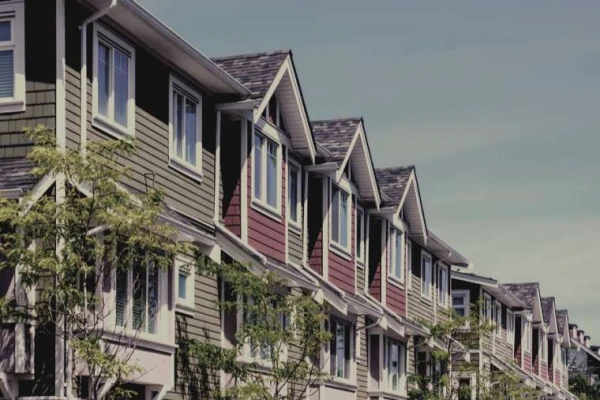
Federal housing rule change is self-defeating, Catholic leaders warn

July 29, 2020 CNA Daily News 0

CNA Staff, Jul 29, 2020 / 04:00 pm (CNA).-  

Changes to federal fair housing rules undermine the government’s responsibility to guide efforts to overcome the legacy of racial discrimination and economic segregation, U.S. bishops said Tuesday.

“Fair housing regulations remain one of the key tools for addressing long standing inequities and historical disadvantages and must be strengthened, not weakened,” leading figures in the U.S. Conference of Catholic Bishops and Catholic Charities said in a July 28 statement.

The statement responded to the U.S. Department of Housing and Urban Development’s decision to replace the Affirmatively Furthering Fair Housing rule with a new rule that will have less regulation.

“HUD’s replacement of the Affirmatively Furthering Fair Housing rule undermines efforts to promote fair housing and human dignity,” they said.

“Discriminatory practices such as redlining, disinvestment from communities, discriminatory practices in selling or renting homes, and racial and economic segregation have undermined fair housing for generations and continue to harm communities of color today. HUD’s new rule minimizes the affirmative responsibility to promote fair housing by removing clear guidance and effective accountability.”

Speaking for the U.S. bishops’ conference were Archbishop Paul S. Coakley of Oklahoma City, chair of the bishops’ Committee on Domestic Justice and Human Development; and Bishop Shelton J. Fabre of Houma-Thibodaux, chair of the bishops’ Ad Hoc Committee Against Racism. Sister Donna Markham, O.P., president and CEO of Catholic Charities, USA, joined the bishops’ statement.

The rule dates back to 2015, and was enacted under the Obama administration. It aimed to encourage local communities to address deeply ingrained patterns of housing segregation that shape how Americans shop, go to school and access health care, ABC News reports. It made federal money to local communities contingent on proactive plans to reduce inequality and to provide fair housing in its rules and its decisions on granting permits.

Critics said the rule was confusing, and said it was difficult to use the computer tool to submit reports and measure progress. The Trump administration suspended the rule soon after taking office.

U.S. Secretary of Housing and Urban Development Ben Carson on July 23 said the previous rule was “unworkable and ultimately a waste of time for localities to comply with” and “too often resulting in funds being steered away from communities that need them most.”

He said the Trump administration programs like opportunity zones drive “billions of dollars of capital into under-served communities where affordable housing exists, but opportunity does not.”

“Programs like this shift the burden away from communities so they are not forced to comply with complicated regulations that require hundreds of pages of reporting and instead allow communities to focus more of their time working with Opportunity Zone partners to revitalize their communities so upward mobility, improved housing, and home ownership is within reach for more people,” said Carson. “Washington has no business dictating what is best to meet your local community’s unique needs.”

On Twitter, Carson characterized the Obama-era rule as “a ruse for social engineering under the guise of desegregation” that turned Housing and Urban development “into a national zoning board.”

Diane Yentel, president of the National Low Housing Coalition, rejected that claim.

“The Fair Housing Act sought to undo decades of social engineering via racist housing policies that created segregated communities,” she said, according to ABC News.

President Trump weighed in on the rule, framing affordable housing as a threat to suburban safety and housing values.


I am happy to inform all of the people living their Suburban Lifestyle Dream that you will no longer be bothered or financially hurt by having low income housing built in your neighborhood…

— Donald J. Trump (@realDonaldTrump) July 29, 2020


“I am happy to inform all of the people living their Suburban Lifestyle Dream that you will no longer be bothered or financially hurt by having low income housing built in your neighborhood,” the president said on Twitter July 29.

“Your housing prices will go up based on the market, and crime will go down,” he said, noting the rescinding of the Obama-era rule. “Enjoy!” he added.

Trump has previously claimed the housing policies of his political rivals will affect suburban safety. In July 16 remarks on the South Lawn of the White House, Trump accused Democratic presidential candidate Joe Biden of wanting to “abolish” the suburbs and to eliminate single-family zoning, “bringing who knows into your suburbs, so your communities will be unsafe and your housing values will go down.”

The change comes amid significant difficulty for the United States in the wake of the new coronavirus epidemic.

Peaceful protests followed widespread viewing of video of the May 25 death of George Floyd, a black man, while being detained by Minneapolis police. In many major U.S. cities, these protests were also accompanied by riots and civil unrest that could be the costliest in U.S. history. They caused hundreds of millions of damage and multiple deaths in Minneapolis alone.

Concerns about police brutality have prompted legislation billed as police reform in several states, as well as calls to defund the police. There are also reports of demoralization among police forces, failure to intervene in crime, and efforts of officers to seek early retirement.

In March, the U.S. bishops and Catholic Charities USA filed joint comments asking HUD to withdraw the proposed new rule on the grounds that it fails to address barriers to fair housing, reduces community engagement, weakens the definition of Affirmatively Furthering Fair Housing, and weakens the role of public housing authorities.

“The responsibility to ensure fair housing choice is more robust than simply guarding against housing discrimination. The previous definition of AFFH was more holistic and included important elements such as overcoming patterns of segregation and fostering inclusive communities,” their March statement said.

The proposed rule, they said, wrongly reduced the definition of fair housing to ensuring that individuals and families have “the opportunity and options to live where they choose, within their means, without unlawful discrimination related to race, color, religion, sex, familial status, national origin, of disability.”

On Wednesday the bishops and Catholic Charities USA cited the U.S. bishops’ 1975 statement “The Right to a Decent Home,” which said “an absence of racial discrimination is no longer enough. We must insist upon effective programs to remedy past injustice.”

“Let us renew this call to action to ensure all people have access to safe, decent, and affordable housing,” they added.


[…]

No Picture
News Briefs

South Sudan’s tribes can power peace efforts, Catholic priest says

July 16, 2020 CNA Daily News 1

CNA Staff, Jul 16, 2020 / 03:00 am (CNA).- After a violent incident between South Sudanese tribal members in a previously peaceful refugee camp in Uganda, a local priest says that tribes must provide conflict management and education, not produce division.

“Tribes, which can be a good medium to learn cultures, languages and traditions, should not be misused to fuel hatred and discord,” said Fr. Lazar Arasu, the Director of Don Bosco Palabek Refugee Services.

Arasu, a native of southern India’s Tamil Nadu State, is a Salesian priest who has lived in East Africa for three decades.

Most people tend to have only a superficial knowledge of their cultures and traditions, he explained. He underscored the need for people to learn the deeper meaning of culture, tradition and their history in the right way in order to have the right attitude to the institution of tribes and cultures.

The Church, the priest said, “should be an umbrella embracing under her shade people of all tribes and differences. When they remain neutral, they remain the true voice of God.”

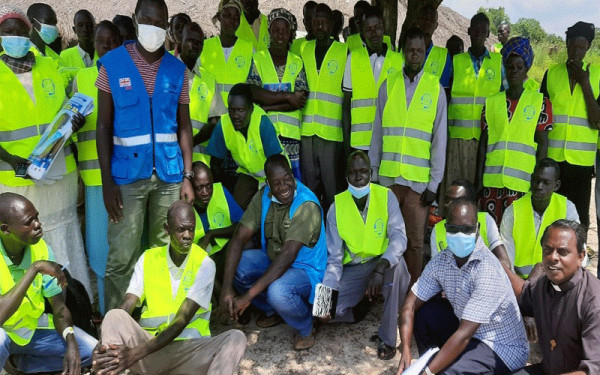
The Palabek Refugee Settlement in northern Uganda in the Archdiocese of Gulu. It is home to about 55,000 refugees from nearby South Sudan, the world’s youngest country.

The settlement woke to a rude shock after a violent incident left one person dead and at least 20 injured.

The June 23 incident occurred between two communities of South Sudanese refugees. The clash over a piece of land involved members from the Lango and Nuer communities who live alongside 12 other South Sudanese tribes that have been coexisting at the camp for years.

Arasu is concerned that the background of unresolved conflicts in South Sudan has helped push people into mistrust and suspicion of each other. The mood for conflicts among the South Sudanese, including those living in refugee camps, is heightened by the fact that past conflicts have never been resolved,

“In between the wars, no community dialogue was encouraged; often the peace talks involved only political leaders who held ‘synthetic’ peace deals. Full pledged wars had roots in communities at grassroots,” Arasu said in his reflection, “Building Bridges of Peace in South Sudan,” provided to ACI Africa, CNA’s African news partner.

He called for capacity building among leaders to help them learn the right attitudes to tribes, ethnic differences, and conflict management. This will help end protracted violence.

The Salesians in Uganda participate in peace meetings, counseling and casual visits to the families. This help makes progress to restore peace, especially among refugees seeking safety in the country. The Salesians have assured settlement authorities and security forces of their support and assistance, Arasu said.

“May God continue to help us to build bridges of peace and help us to be bridges of peace and harmony,” said the priest.

Members of the Salesians of Don Bosco have been ministering at the refugee settlement in Palabek for three years.

“They are taking steps to be close to the people, especially those affected by violence, by way of reaching out to them with food and a few other necessities,” said the priest.

At the Palabek Refugee Settlement, the Salesians report, the Acholi are the largest community at 45 percent, followed by the Lutuku at 15 percent and the Lango at 10 percent. Other tribes such as the Nuer make up 3 percent or less.

The Salesians help provide psycho-social support and pastoral care for thousands of Christians. Their four nursery schools educate over 1,000 children, more than 700 children are enrolled in Salesian primary and secondary schools, and other initiatives help support 700 families.

At their vocational training center, 400 refugees and 50 host community Ugandans are students seeking work skills, the Salesians’ news service Mission Newswire reports.

South Sudan’s five-year civil war began shortly after South Sudan gained independence in 2011.

Different parties to the conflict deliberately prevented humanitarian aid from reaching civilians. The policy of deliberate starvation along ethnic and humanitarian lines caused acute food security problems for 55% of the population.

The war killed hundreds of thousands of people and left 2.1 million people internally displaced, with another 2.5 million as refugees abroad, according to the United Nations.

People in South Sudan continue to face serious humanitarian concerns, exacerbated by government corruption, locust swarms, and floods in October that destroyed crops and livestock.

Arasu blamed the protracted violence in South Sudan on tribal politics and “deep rooted tribal hatred”.

He attributed this tribal hatred to several factors. The British colonists sowed disunity among the various communities in South Sudan and favored some tribes over others, a situation that continues to manifest itself in incidences of violence to date.

“This instilled prejudice, jealousy, suspicion and hatred on tribes with larger populations,” Fr. Arasu said.

Under Arab rule, he said, the Sudanese indigenous tribes and people were suppressed on racial and religious grounds.

There has been systematic looting of native wealth and other human rights abuses, perpetrated both by foreigners and by native rulers.

In addition, the priest sees natural tension between different communities based on their different ways of life, such as conflict between pastoral tribes who herd livestock and agrarian tribes focused on agriculture.

Suspicion and mistrust mingled with prejudice can cause irritation and annoyance that can trigger war, causing enormous damage even lasting for years, said Arasu. The danger is “any small incidents such as a little misunderstanding at water-points, playgrounds and markets can be blown into full-fledged war.”

“Having witnessed the bloody past, it is difficult to believe the coming of peace. Down through the decades, numerous peace agreements have been signed and discarded thoughtlessly,” he said.

“Until peace is restored at grassroots there can be no meaningful peace at the national level,” he said. “South Sudan needs peace more than anything else.”

Tribal animosity caused some problems for the appointment of the new Catholic Archbishop of Juba Stephen Ameyu. Some critics presented themselves as leaders of the Bari tribe and objected that he was not a member of the tribe. However, in December 2019 the Juba-based Bari Community Association made clear that these critics’ position did not speak for the entire community.

In January the Republic of South Sudan and the South Sudan Opposition Movements Alliance signed a peace declaration in Rome. Under the peace agreement facilitated by the Catholic community of Sant’Egidio, opposition groups and the South Sudanese government recommitted to cease hostilities, pursue political dialogue, and allow humanitarian aid for the people of South Sudan.

A new government was sworn into office in February.

A version of this story was first published by ACI Africa. It has been adapted by CNA.


[…]