


 By
The priest spent hours accompanying injured passengers trapped inside the wrecked train cars.
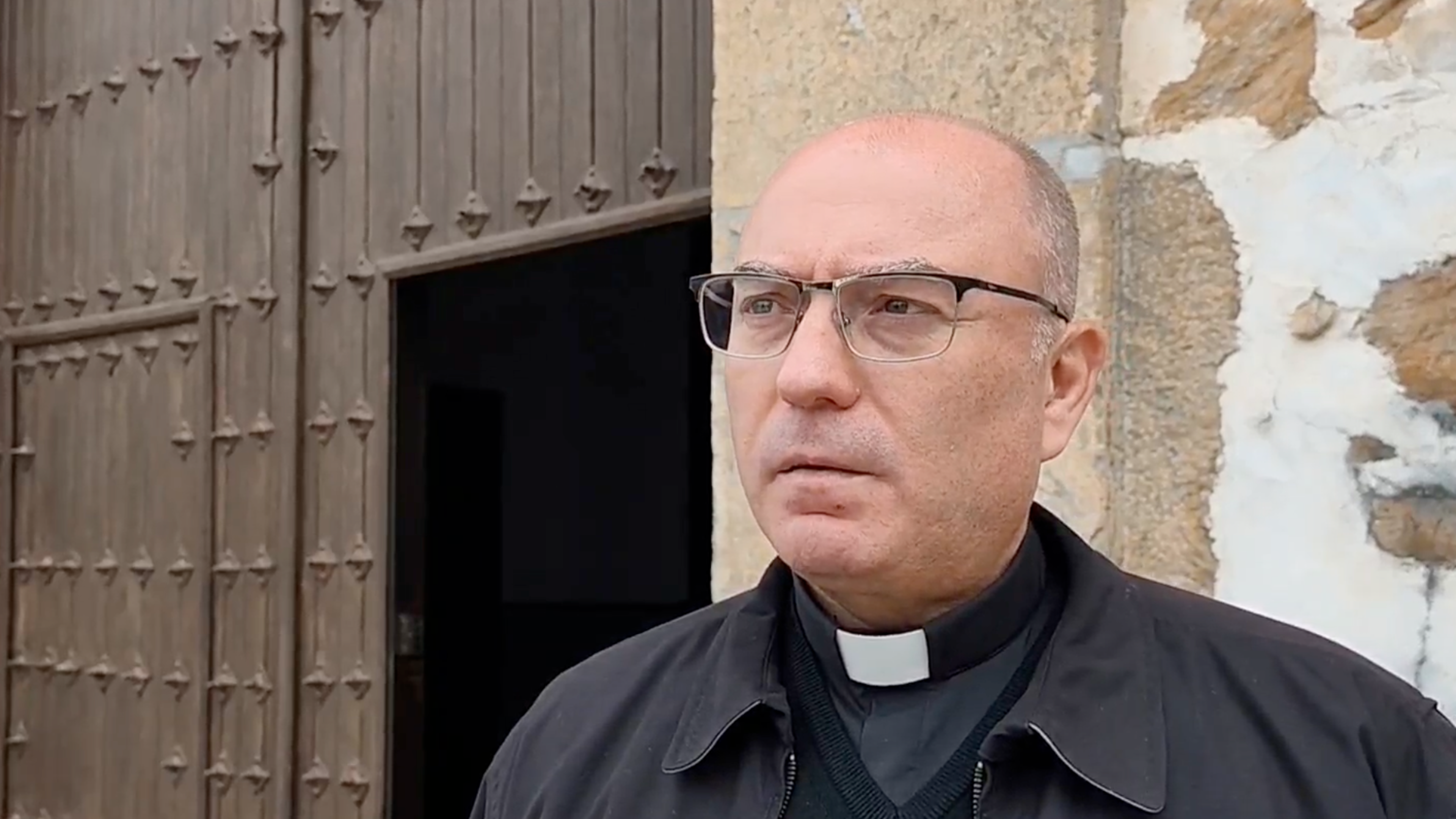
URDA, Spain — Everything changed for Father José Miguel Fernández, parish priest of the Spanish town of Urda, when he received a call from Archbishop Francisco Cerro Chaves of Toledo informing him of the scale of the disaster.
The front of a Renfe train traveling at 200 km/hr (124 mph) had slammed into the last cars of an Iryo train at kilometer 118 of the Madrid-Seville railway line, leaving behind a horrific scene with dozens dead and injured. As of Thursday, the preliminary death toll was 69.
Without hesitation, the priest went to the site to accompany the victims trapped in the train cars.
According to his account, he arrived around 11 a.m., two hours after the collision, and joined the relief effort improvised by dozens of volunteers, many of them members of his parish.
‘Our minds turn to God and we look up to heaven’
The first thing he saw was “a huge line of injured people emerging from the train cars,” he told Nicolás de Cárdenas, correspondent for EWTN News Español, the Spanish-language sister service of EWTN News.
Residents of the town did what they could to help, transporting the injured in their own vehicles to Urda so they could receive medical care.
“These are moments that, humanly speaking, break your heart, but very quickly our minds turn to God and we look up to heaven,” Fernández said.
Among the injured, he especially remembered a man who approached him and said: “Father, give me a hug, I’m alive.”
That encounter set the tone for the entire day.
“I said to myself, well, this is how you can draw near today: by giving a hug. So that’s what I spent the entire morning doing while I was at ground zero, holding people’s hands and giving them a hug.”
‘Trust in God, for God is good’
He later went to Urda’s municipal sports hall, which had been converted into a field hospital. Many desperate relatives arrived there looking for news about their loved ones.
“There is no consolation for them. They want to know immediately what has happened. Where is my relative? Where is my loved one? And so what I tried to do was calm them, reassure them, and tell them: What matters is hope. Have hope. Trust in God, for God is good,” he recounted.
‘We are priests, but we are human’
For hours, the priest continued the same mission he had begun beside the railway tracks: accompanying the suffering of people who had lost everything in a matter of seconds.
He also acknowledged that on “many occasions” he ended up crying with them.
“We are priests, of course, but we are human, and the pain and sorrow of our brothers and sisters affect us too,” he explained.
The pope’s affection
From the Vatican, the Holy Father’s spiritual closeness was not long in coming. Pope Leo XIV said he was “deeply saddened” by the tragic railway accident.
In a telegram signed, as is customary, by Vatican Secretary of State Cardinal Pietro Parolin, he assured his prayers “for the eternal repose of the deceased” and expressed his “heartfelt condolences to the families of those who lost their lives,” together with words of comfort and his hope for a speedy recovery for the injured.
In the message, addressed to Chaves, the pontiff acknowledged the work of those involved in the emergency response, encouraging “members of the rescue teams to persevere in their relief and assistance efforts” following the disaster.
Finally, the pope imparted his heartfelt apostolic blessing to all those affected as “a sign of hope in the risen Lord.”
This story was first published by EWTN News Español, the Spanish-language sister service of EWTN News. It has been translated and adapted by EWTN News English.
If you value the news and views Catholic World Report provides, please consider donating to support our efforts. Your contribution will help us continue to make CWR available to all readers worldwide for free, without a subscription. Thank you for your generosity!
Click here for more information on donating to CWR. Click here to sign up for our newsletter.

Leave a Reply