

 By
The pontiff called for an ethical framework for artificial intelligence and warned that technology must serve life, peace and the common good.
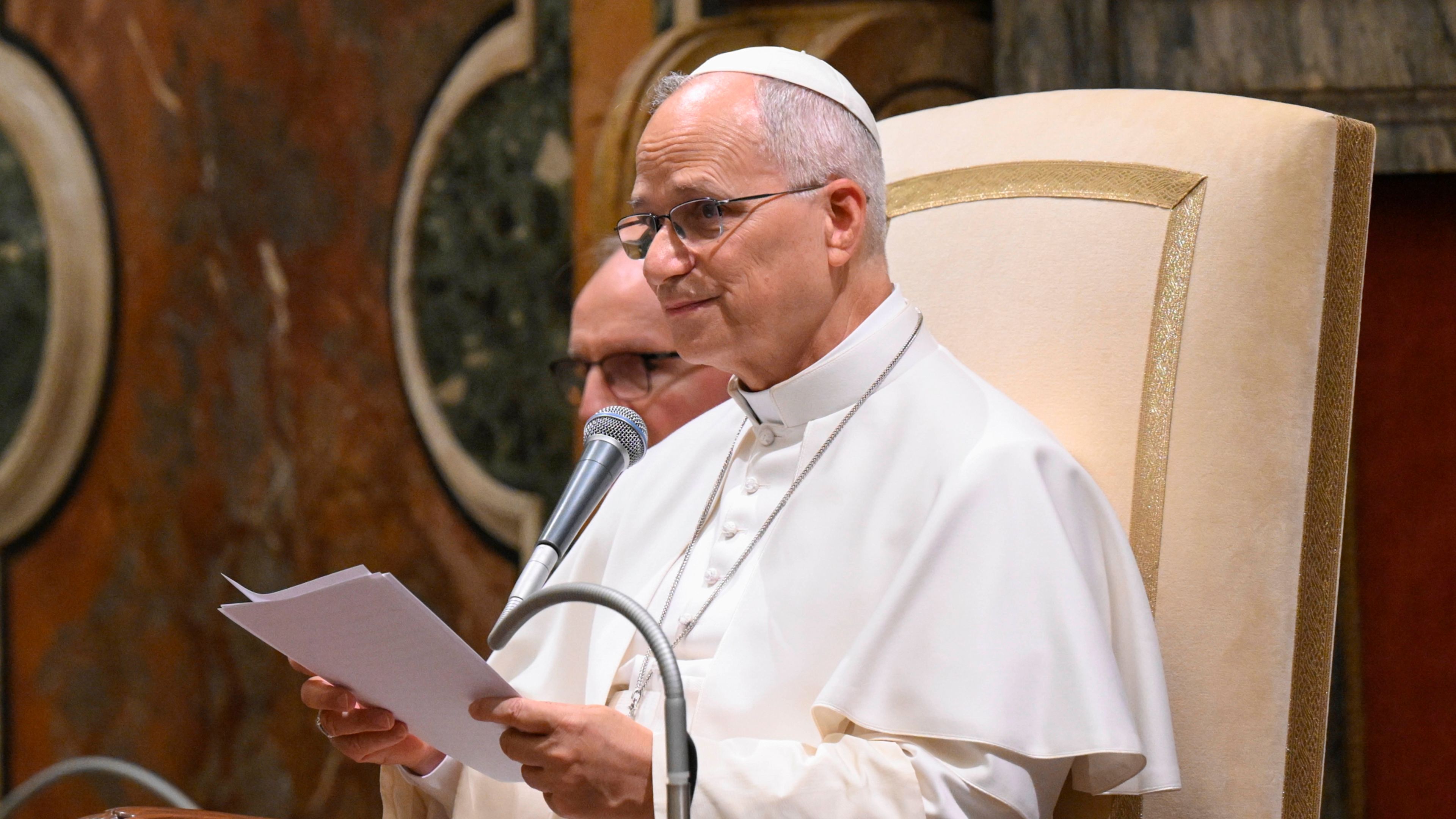
Pope Leo XIV warned Friday that decisions affecting human life are increasingly being entrusted to machines as he called for ethical safeguards governing artificial intelligence and other digital technologies.
“One of the serious problems today is the fact that decisions concerning human life are being entrusted to machines,” Pope Leo XIV said Aug. 28 during an audience with members of the International Institute of Administrative Sciences.
“The speed at which innovations in AI, in artificial intelligence, are developing prompts us to ask whether, in the future, we will be able to control these machines and whether humanity runs the risk of becoming victim of its own inventions,” he said.
The International Institute of Administrative Sciences, of which the Holy See is a member, was founded in 1930 in the aftermath of the Great Depression. It works to help public authorities adapt governance to the changing needs of society.
Pius XII addressed the institute in 1950, highlighting the responsibility of public administration to serve society in accordance with the Creatorʼs wisdom.
Pope Leo XIV said the theme of the instituteʼs conference represented “a powerful appeal to our world in the digital age” to maintain a proper balance in the use of digital technologies.
He said the appeal echoed his recent encyclical Magnifica Humanitas, on safeguarding the human person in the age of artificial intelligence.
The pope said the rapid development of digital technology is a reality that directly affects peopleʼs way of life and “permeates every level of social life.”
Against that backdrop, he praised the instituteʼs effort to reaffirm “the irreplaceable nature of human intelligence in the face of these technological tools” and to help public authorities make decisions “for the good of humanity.”
Pope Leo XIV also called for an ethical framework to guide the use of artificial intelligence and other digital tools, noting that such technologies are increasingly concentrated in the hands of major economic and technological actors while governments struggle to exercise effective oversight.
“We must ensure that the good of the human family is not sacrificed to private interests,” he said.
The pope encouraged the instituteʼs members to continue studying ways public administration can help keep technology centered on the human person.
“I encourage you to continue your research in order to find the ways and means of contributing to public administration in the humanization of digital technologies, so that they may serve life and peace,” he said.
Pope Leo XIV also recalled Pope Francis’ 2024 World Day of Peace message, in which Francis called for scientific and technological research to be directed toward peace and the common good and placed at the service of the integral development of individuals and communities.
This story was first published by ACI Prensa, the Spanish-language sister service of EWTN News. It has been translated and adapted by EWTN News English.
If you value the news and views Catholic World Report provides, please consider donating to support our efforts. Your contribution will help us continue to make CWR available to all readers worldwide for free, without a subscription. Thank you for your generosity!
Click here for more information on donating to CWR. Click here to sign up for our newsletter.

Leave a Reply