

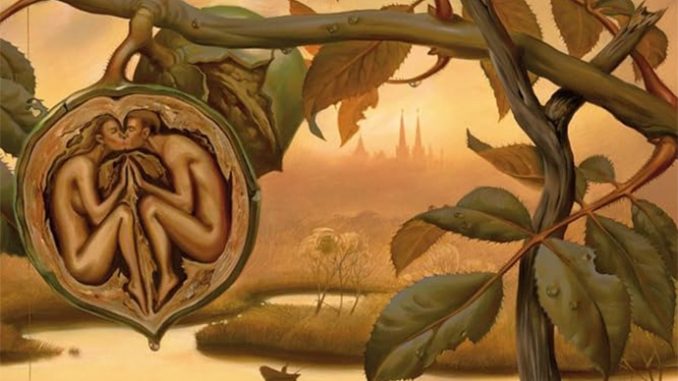
In 1949, Ida Friederike Görres wrote, “That which is unnatural … people say, is indissolubility.” She disagreed. By 1971, when she sent her final book, What Binds Marriage Forever (CUA Press, 2026), to the publisher, she saw that this argument was one of the battering rams used by the sexual liberationists pushing for divorce and remarriage with full access to the sacraments—that is, a redefinition of marriage—inside the Church.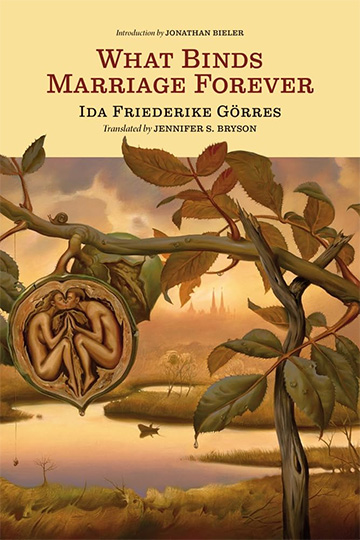
To respond, she stepped back to consider what is human. In What Binds Marriage Forever, Görres defends the indissolubility of marriage through reflections on “an anthropological understanding of monogamy.” In doing so, she does more than defend a teaching of the Church; she reveals the deeper truth beneath it.
In 1971, the sexual revolution was advancing like a juggernaut in Germany. Some were pushing hard to extend its reach into the Church. From university departments of theology to diocesan chancellories to Catholic journals, Görres was watching enthusiasts of this juggernaut seize central positions of influence and power within the Church.
What Binds Marriage Forever had a message that the new Synodal Way Catholics in Germany did not want to hear. This book was quickly pushed aside and largely forgotten; it has been out of print in Germany for fifty-five years. Yet, the topics this book addresses are front and center, and Görres’s insights are ones we need today. What Binds Marriage Forever, now available in English (CUA Press, 2026), provides not only a window into the history of the fight over marriage in the Church fifty years ago but also vital insights for today.
Görres opens the book by considering the case presented by a Catholic in 1970 for allowing divorce and remarriage. She could have titled this section of the book: The origins of the bumper sticker “love is love.” The argument is, basically, “love, love, love!”—in which “love” is equated with individual “happiness” and “free, spontaneous choice.” These advocates insist that marriage exists only when two people feel love; and where there is no longer love, there is no longer marriage.
Görres steps back from this “emotional propaganda,” as she calls it, to survey marriage across the millennia in human cultures, applying her anthropological approach. She identifies two poles that define intimate relationships in non-Christian cultures: one is kinship, the other is eros.
Pole #1: Kinship
This is how Görres describes the extended family of kinship:
This requires three groups: the ancestors, the current bearers, and the descendants for whom the “heritage”—tangible as well as spiritual—is guarded and extended. This process is a unity: the handing over, the transmission, and the tradition as an object and as a perpetual act. Since humans are mortal, the actual bridges that keep passing on the legacy beyond the boundary of death are marriages … Marriage does not create a family; instead, it continues one.
She observes the strange contradiction that those rallying for “progress” are the same ones pushing for disassociating sex with fertility: “The relationship to the future on which everything is based is eminently human. It is strange that today’s worshipers of the future have become so oddly blind to this.”
However, she observes, prioritizing kinship alone has a built-in instability because, while kinship-based marriage provides constraints on the danger of eros, it can do so to the point of structurally excluding love. Moreover, prioritizing kinship in marriage for the sake of clan and inheritance tends to deny individual consent and fosters a proclivity to allow divorce in the event of infertility. Thus, kinship alone is not sufficient as the basis to define “marriage” as a cornerstone of stability in a civilization and human flourishing.
What Görres means by marriage, the direction toward which it needs to lean if husband and wife are to thrive (or at least not crash and burn), is “its primordial sense, as it was according to the will of the Creator on the morning of creation.”
Pole #2: Eros
The second pole toward which non-Christian notions of the sexual relation of man and woman tend is eros. She observes how enthusiasts of allowing for divorce and remarriage claim marriage is about what they call “love.” Yet, Görres shows that what they usually mean by this is eros, not love. She notes how in literature, eros “includes the typical symbolic references of hunting, hunter, arrow, and trap, as well as fortress and conquest.” This is the very excitement these enthusiasts seek. Yet, “within this framework,” writes Görres, “eros is fundamentally adrift—and thus becomes the most dangerous power.”
Görres dismantles the claim that the “freedom” to switch from partner to partner as passions change is a more “natural” approach to sex. She demonstrates that centering individual independence in pursuit of eros in intimate relationships has always proven antithetical to authentic love. She shows how, from ancient Greek mythology to today, this has been and remains a recipe for instability. And, she observes, “uninhibited selfish sexuality is the very definition of fornication.”
The Mean Between the Extremes: Indissolubility
She concludes that, between these two extremes of eros and kinship as common leitmotifs for marriage in human culture, what the Church teaches about marriage—a mean between these two—is, in fact, the most natural approach.
Indissolubility, argues Görres, allows for the potential for the emergence of love and eros within marriage. “Love,” she writes, “can find its place within fides and sacramentum; it is very much desired. Yet, love is not its root, rather its fruit.” Indissolubility supports extended kinship while safeguarding individual consent to marriage. It also respects the significance of the marriage bond, even when there is unwilled infertility—as she and her husband experienced, with great pain, in their own marriage.
Görres fully recognizes that difficulties within a marriage can abound. Yet indissolubility, instead of being the problem for problematic marriages, is the very structure of stability and support that can allow a marriage to mature. She illustrates this with an analogy:
Like every birth, this beginning initiates a process of becoming. A marriage that is becoming—that has just become a marriage—is a marriage like the way an embryo is a human. The marriage’s undeveloped state gives it as little justification for its destruction as the child’s undeveloped state would be justification for abortion.
“For this commencement,” she explains, “can grow into the miracle of the marital union that coalesces everything together.” She emphasizes that “this seal of unity” in the fidelity of marriage bears witness to God’s own fidelity to us, sin and all. When spouses do not give up on each other, they reflect to the world God’s own unfailing love, which does not give up on us.
As she wrote in 1968 in her essay “Our Image of Christ” in Bread Grows in Winter (Ignatius Press, 2025):
He is the center of their existence; they measure everything they do and do not do by His Word and Will by its effect for His Kingdom . . . I think of the unhappy ones who do not divorce because of this, of the divorced who forego a second marriage to someone newly discovered—staggering testimonies that He is Lord.
The Church’s teaching on marriage allows a way to balance the poles of kinship and eros. Far from being merely a practical yet dry stability, this instead is what facilitates fruitfulness. She explains:
Covenant, law, and grace … are not outside or ancillary to love, nor are they a substitute for it. Rather they are the ground, the enclosure, in which the modes of love I have mentioned and the complement of their natural shortcomings; they and their integration into each other, interior and external support, the dynamism of growth toward maturity. Also, last but not least, and as the most important element, these three are the healing power in the event of impending decay as when a tear occurs.
Görres highlights how the attempt to define the purpose of marriage in terms of individual ”happiness” and “love” understood as a fleeting emotion is a fragile foundation, perpetually vulnerable to the disappointment of one person in the imperfection bound to surface in the other. In her view, the sexual liberationists who want to claim what is “natural” for their side fail. She contrasts this with marriage. Between fickle eros and the strict claims of kinship, the indissoluble bond of marriage stands as the balanced path supporting human flourishing. It is not a harsh restriction, but a secure framework that allows time for maturation, and bears witness to the Love of all loves that never gives up—an institution that befits both human beings and the cosmic order.
In an era that speaks much of the future yet is often dismissive of the unique, vital contribution of marriage and family for the generations yet to come, What Binds Marriage Forever calls us back to the original meaning of marriage as intended from the beginning of creation. Today, as calls within the Church to redefine marriage continue, Görres offers timely clarity. She reminds us that what truly binds marriage forever is not fleeting emotion, but a share in and sign of the Creator’s fidelity.
If you value the news and views Catholic World Report provides, please consider donating to support our efforts. Your contribution will help us continue to make CWR available to all readers worldwide for free, without a subscription. Thank you for your generosity!
Click here for more information on donating to CWR. Click here to sign up for our newsletter.

Thoughtful (revolutionary?) perspective.
(Pole #1: Kinship – dissociating sex from fertility)
Brilliantly written. The word “covenant” actually has profound meaning and implications.
About “covenant,” does Benedict here redefine this word as it applies to both the New Covenant and, therefore, to marriage as well?
https://www.christianunity.va/content/unitacristiani/fr/cardinal-koch/20220/conferences/The-Church-as-Communion-in-the-Theological-Vision-of-Joseph-Ratzinger-Benedict-XVI.html
“The unique newness of the Christian understanding of communion is especially shown in Christology, also by contrast with Old Testament revelation, as clearly brought out by Joseph Ratzinger: ‘The Old Testament knows no (chaburah, koinonia) [!] between God and humankind; the New Testament is this communion, in and through the person of Jesus Christ.”[17] After all, in Jesus Christ the new event has taken place – that the one and only God enters into communion with human beings in a real way by becoming incarnate in human nature. The incarnation proves to be the new synthesis that God has accomplished in the history of salvation: ‘The incarnate Son is the between God and humankind.’[18] Jesus Christ has enabled the communion between God and humankind because, as the incarnate Word, he is this ‘communion’.”
Not mentioned is the additional psychology of “compartmentalization”…the drifting away from the “we” in order to escape from an almost intolerable situation. Cutting the lifeline so as to not swamp the imagined lifeboat…About such suffering, this:
“The most complete unity between spouses is experienced not when they enjoy something together, but when they suffer together, each for the other, each with the other, loving each other in suffering and despite suffering. The first unity should serve the make the second possible” (Cantalamessa, “Virginity,” St. Paul’s, 1995).
And, more broadly for all, “Rejoice, beloved, in the measure that you share in Christ’s suffering” (1 Pet. 4:13).
“Today, as calls within the Church to redefine marriage continue…”, it is important to note that God, The Most Holy Blessed Trinity, In The Unity Of The Holy Ghost, Is The Author Of Love, Of Life, And Of Marriage, and we cannot change God’s Revealed Divine Law without rendering onto Caesar or ourselves, what belongs to God and ipso facto defecting from The One Body of Christ.
In summary, What The Secure Bond Marriage Needs Today, is that of The Holy Ghost, and the affirmation of The Sanctity and Dignity of the marital act within The Sacrament of Holy Matrimony, which is an affirmation of God’s Desire that we respect The Sanctity and Dignity of Human Life, the lives of our beloved sons and daughters from the moment of conception.
“Do you not know that your bodies are temples of the Holy Spirit, who is in you, whom you have received from God? You are not your own; you were bought at a price. Therefore honor God with your bodies.”– 1 Corinthians 6:19-20
We can know through both Faith and reason that what motivates those who desire to change the essence of God’s Will for Marriage and The Family within The Catholic Church leading to the denial of the essence of being a husband or wife, father or mother, son or daughter, brother or sister, is the claim that we are not Called to Holiness and thus Authentic Love, in our “private” relationships, a blasphemy of The Holy Ghost, first introduced by Jorge Bergoglio, clearly illuminating a rupture from Divine Law.
If there is a union of a private nature, there is neither a third party, nor is society affected.“ -Jorge Bergoglio , adopting the mantra of the modernists, who deny The Divinity of The Most Holy Blessed Trinity, ipso facto defecting from The Catholic Church.
Jorge Bergoglio’s refusal of submission to the supreme pontiff or of communion with the members of the Church subject to him”, prior to his election to the Papacy, illuminated the fact that Jorge Bergoglio, was in essence, elected to the Papacy as head of a schismatic magisterium attempting to subsist within The One Body Of Christ, while denying the essence of The Unity Of The Holy Ghost, and thus our Call to Holiness in all our relationships, including our “private “ relationships, and thus could not have possibly been validly elected to The Papacy.
“When the freedom to be creative becomes the freedom to create oneself, then necessarily the Maker Himself is denied and ultimately man too is stripped of his dignity as a creature of God, as the image of God at the core of his being. The defence of the family is about man himself. And it becomes clear that when God is denied, human dignity also disappears. Whoever defends God is defending man.” – Pope Benedict’s Christmas Address 2012
Christmas greetings to the members of the Roman Curia (21 December 2012) | BENEDICT XVI
“If there is a union of a private nature, there is neither a third party, nor is society affected.“ -Jorge Bergoglio , adopting the mantra of the modernists, who deny The Divinity of The Most Holy Blessed Trinity, ipso facto defecting from The Catholic Church.”
That is an extension of Luther’s argument in the 1500’s.
An occasional episode of Eros can be a good thing.
This article spoke volumes to me. Against the advice of almost all of my friends and siblings, I went back to a troubled marriage. Not because I was forced to by the church, but because I thought that was what God was asking of me. I could bringing HIS love to our wounds. In learning to love God and to trust Him with all my heart, my mind and will, and to try to love myself, then my husband, then our grown daughter, in that order. This was a hard lesson for me and in my learning it, a lot of pain for all three of us. I am not a martyr, I am broken woman who found savior, who is helping me to try to mend the hearts of those I love most in this broken world.
Kathy, what you write speaks of Truth.
God bless you, Kathy. I just finished reading the novel, “The Big Rock Candy Mountain,” by Wallace Stegner. The wife left a bad marriage for a while, taking her two children, but she returned. Not much changed; the husband continued to be forever searching for the American western dream at the cost of great suffering to his family. However, at the end of the spouses’ lives, at the novel’s end, although no Christian message or character crossed its pages, the sacrificial love of a good woman was what was remembered and claimed. God bless you.
When you don’t have Christ, lust will suffice (not).
“If there is a union of a private nature, there is neither a third party nor is society affected.”
This is a quote from Julio Bergoglio?
AI says, “Yes,” Francis apparently said that during an in‑flight press conference on January 28, 2015.
If he did, that was not the first time he made this statement.
https://www.catholicworldreport.com/2017/03/04/could-a-pope-be-in-schism/
Lest I drive a certain commenter to distraction for lack of credentials, because I’m not and never was married – my credentials are directly from Christ, conferred by a bishop cardinal, Apostolic Defender of the Faith.
A wife or husband is the divine, strategically placed intermediary between the one and the other to God. Having listened and absolved infractions real or perceived during countless confessions – remaining devoted to a spouse, true to the promises made in witness before Christ, priest, and Church – it requires heroic virtue. A constant submission to that which surpasses our own perceived needs, the sacrificial love of the same Christ who declared the sacrament.
That doesn’t require surrender of one’s inherent dignity as a person created in God’s image, rather that it’s in claiming one’s personal inner strength, we reveal to the spouse the better person they may become.
Padre, I cannot imagine the spiritual confidence required to hear confessions. Making a good confession is difficult enough, but hearing them must take a faith and confidence that I cannot imagine. In that confessional, the Priest is acting as Christ himself. To say that this is an awesome responsibility is an understatement.
William yes, and yes. As said by many of the saints it’s all a matter of grace. If we believe through that gift of faith, we have a certain confidence that prioritizes the good over fear of responsibility for the very salvation of the soul. The boy or girl, adult or young.
Love for them overcomes the uncertainties, and elicits insights and confident counsel. We know when the truth of the faith is upheld regarding error, misunderstanding of revealed truth we’ve done well. My experience has been a degree of proactive engagement, has brought persons back from diluted belief to true practice.
Thanks. We tried to give JB the benefit of many doubts since he spoke out of both sides of his mouth…As a cardinal, in the book you quote, JB did go on to say that children need both mother and father. He continued to confuse the faithful throughout his confused reign.
Yes, the CCC does point to the effects of sin. Sin affects EVERYONE, even when sin is private. It affects the sinner, and sinners cannot help but manifest confusion. Sin clouds the intellect, frays the conscience, and wastes spiritual-mental energy when sinners attempt to rationalize, mitigate or otherwise allow SIN. Sin affects the individual sinner, and thus every single one of his relationships. Sin affects the culture. Sin affects the cosmos. The sinner choosing sin cannot hide pride and its dissonant shame. Until we beg God to take those on and away from us.
Thanks, ND