Archbishop José María Gil Tamayo presides over the Archdiocese of Granada, Spain. (Credit: Archdiocese of Granada)
ACI Prensa Staff, Jan 26, 2024 / 05:30 am (CNA).
“I am not going to bless even one homosexual union,” said the archbishop of Granada, Spain, José María Gil Tamayo, when asked about the application of the declaration Fiducia Supplicans on the pastoral meaning of blessings, published in December by the Dicastery for the Doctrine of the Faith (DDF).
In a meeting with journalists held on the feast day of St. Francis de Sales, the patron saint of journalists, Jan. 24, Gil stated that his intention is to “bless the person” without having to do “a ceremony,” according to Europe Press.
The prelate read a statement expressing the position of the archdiocese regarding Fiducia Supplicans and said that, “in communion with Pope Francis, he will proceed with respect to nonliturgical pastoral blessings with a pastoral meaning, faithfully observing what the Holy See indicated in the Fiducia Supplicans declaration and in the subsequent explanatory note.”
This manner of proceeding will be carried out “with painstaking respect for the unalterable doctrine of the Church on true marriage and irregular unions, avoiding all confusion and seeking the good of the faithful,” the statement concludes.
According to the Europa Press report, during the conversation with the media Gil added that he is not going to participate in campaigns framed in terms of being “for or against” the pontiff.
The Spanish bishops on Fiducia Supplicans
Several Spanish bishops have spoken out since the publication of the Vatican document on the pastoral meaning of blessings. The first to do so was the bishop of Orihuela-Alicante, José Ignacio Munilla, who summed up the document as not containing heresies but whose application, he predicted, will be “chaotic.”
Munilla subsequently determined that in his diocese any request for a blessing by homosexual or other couples in an irregular situation should be in consultation with the vicar general, “until a correct praxis is consolidated, or, where appropriate, until a possible publication of diocesan guidelines.”
The bishop of Almería, Antonio Gómez Cantero, defended the declaration as “very precise” and encouraged “reading the entire document” before issuing opinions on the matter. Furthermore, he explained that he has already blessed homosexual couples in the past.
The archbishop of Oviedo, Jesús Sanz, has spoken on several occasions about the document. Most recently on social media he called Fiducia Supplicans “demagogy that twists the Christian tradition and the magisterium of the Church.”
What is the Fiducia Supplicans declaration?
The Fiducia Supplicans declaration on the pastoral meaning of blessings is a document published by the DDF on Dec. 18, 2023, and signed by Pope Francis; the DDF prefect, Cardinal Víctor Manuel Fernández; and the secretary of the doctrinal section, Father Armando Matteo.
Its contents drew various reactions from numerous bishops and episcopal conferences, sometimes eliciting a cautious reception and other times pointed criticism, such that the DDF published a note on Jan. 4 in order to “help clarify the reception of Fiducia Supplicans.”
The note emphasizes that the declaration is neither “heretical” nor “blasphemous” and that bishops cannot prohibit pastoral blessings. It also recognizes the particular situation of some countries, particularly in Africa, and offers guidelines for distinguishing between liturgical and pastoral blessings.
On Jan. 11, the Symposium of Episcopal Conferences of Africa and Madagascar (SECAM) published a document, with the endorsement of Pope Francis and Fernández, which concludes that it would be imprudent to apply Fiducia Supplicans in these countries.
Two days later, Pope Francis responded during a meeting with the priests of the Diocese of Rome “to questions about the blessing of same-sex couples, stating that it does not change the doctrine on the sacrament of marriage between a man and a woman. Persons are blessed, not sin.”
On Jan. 15, during a television interview, Pope Francis urged critics to raise their doubts: “When decisions are not accepted, it’s because they are not understood. When you don’t like it, go talk, ask your questions and have a fraternal discussion,” he said.
This story was first published by ACI Prensa, CNA’s Spanish-language news partner. It has been translated and adapted by CNA.
If you value the news and views Catholic World Report provides, please consider donating to support our efforts. Your contribution will help us continue to make CWR available to all readers worldwide for free, without a subscription. Thank you for your generosity!
Click here for more information on donating to CWR. Click here to sign up for our newsletter.
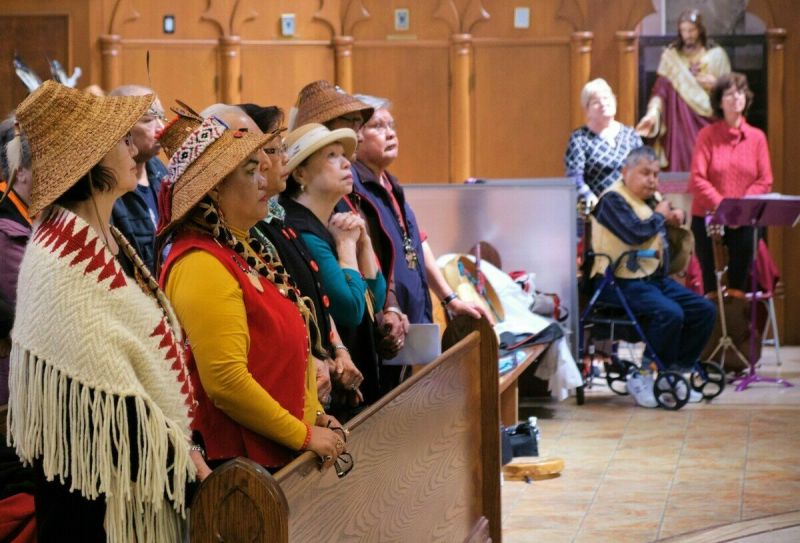
Members of the Sts’ailes First Nation at Holy Rosary Cathedral last year for the first Mass to integrate a First Nation language. A Cardus report presents the voices of Indigenous Canadians speaking about their faith and distinguishing it from the traditional spirituality they’re often associated with. / Photo courtesy Nicholas Elbers, 2022
Vancouver, Canada, May 17, 2023 / 14:15 pm (CNA).
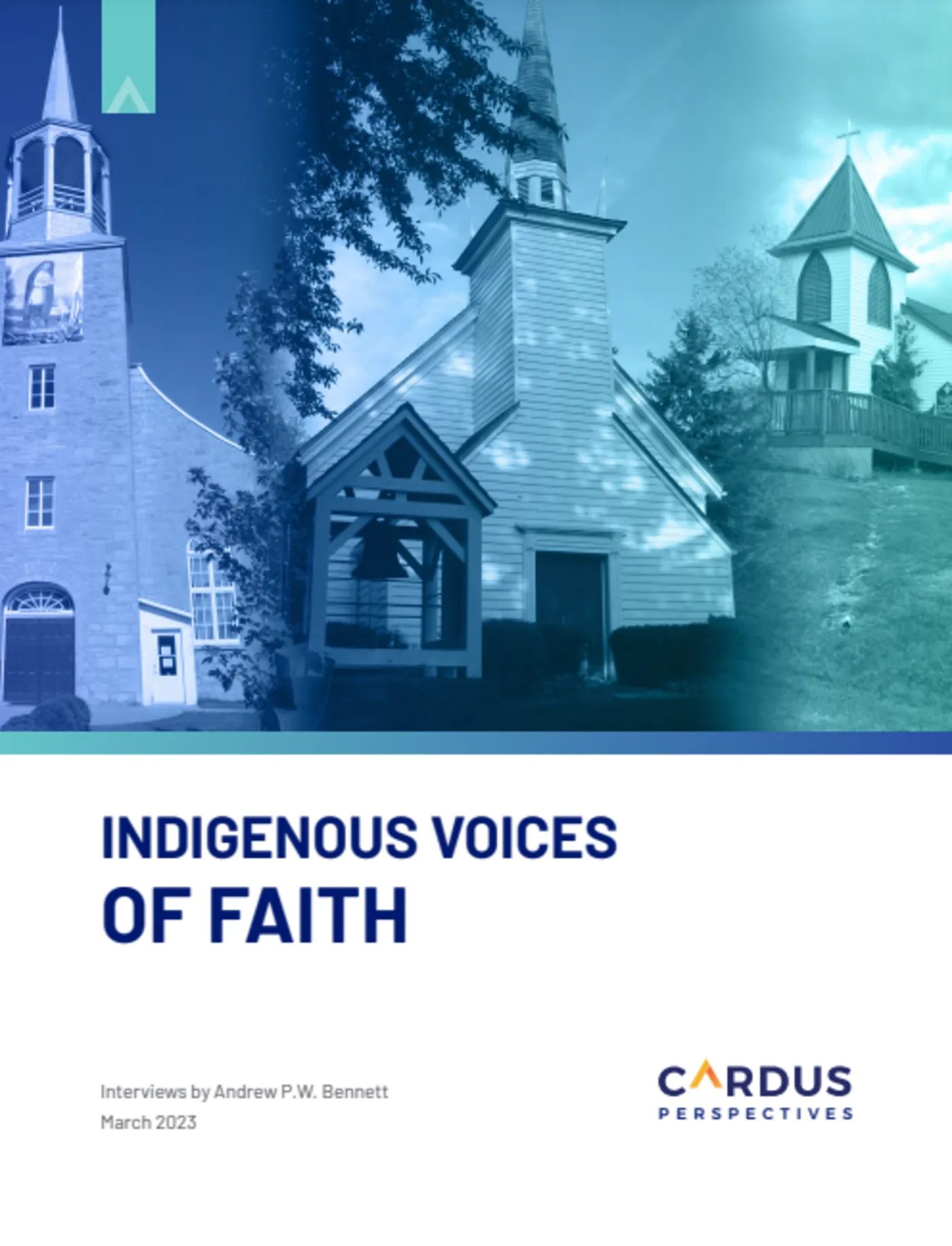
A groundbreaking report published by the Ottawa-based Cardus Institute has given voice to Indigenous Canadians who are frustrated by secular society’s unawareness of — or unwillingness to accept — the fact that almost half of them are Christian.
“I find that insulting to Indigenous people’s intelligence and freedom,” Catholic priest Father Cristino Bouvette said of the prejudice he regularly encounters.
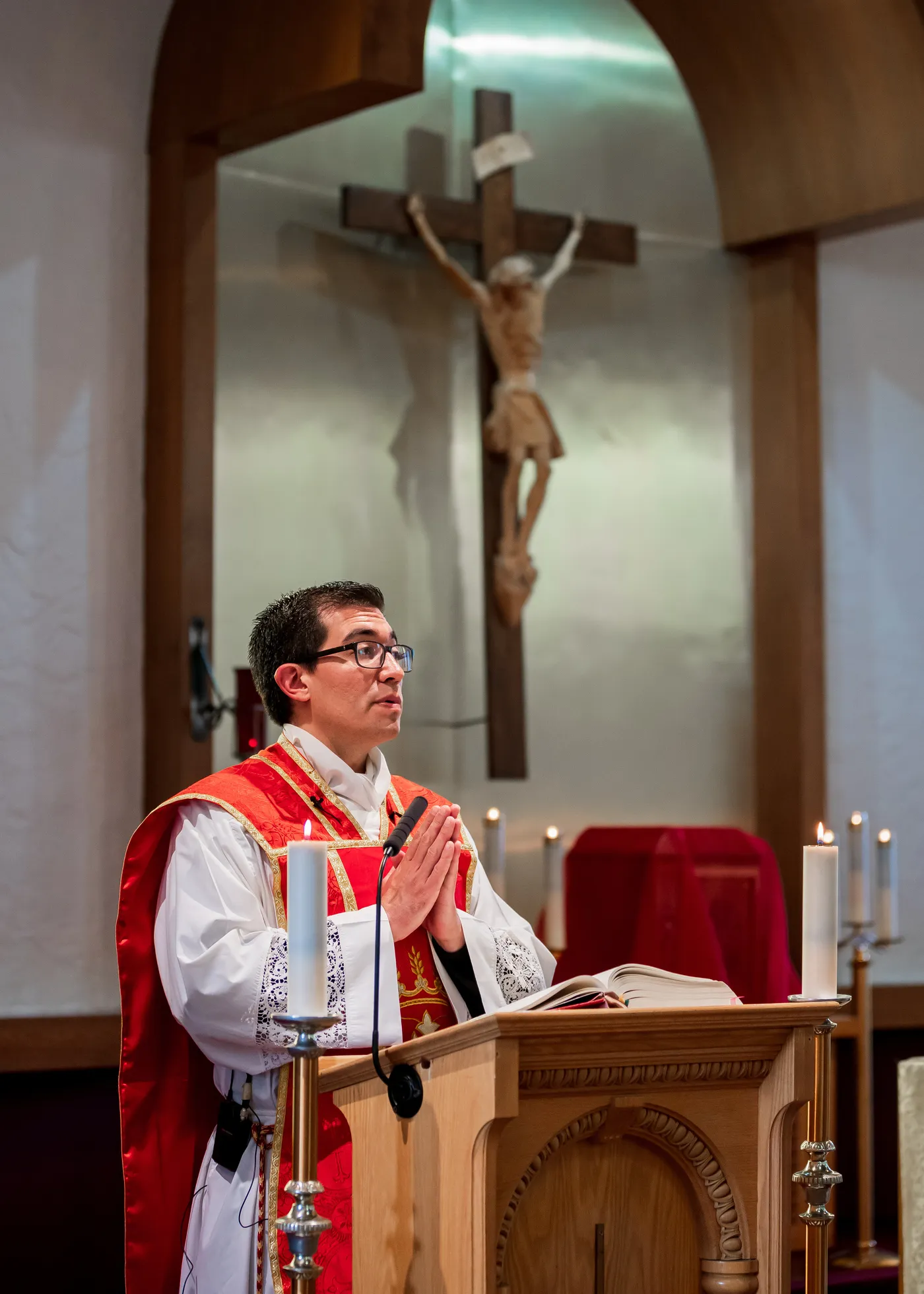
Bouvette, who has mixed Cree-Métis and Italian heritage and now serves as vicar for vocations and Young Adults in the Diocese of Calgary, was one of 12 individuals interviewed by Cardus for the report “Indigenous Voices of Faith.”
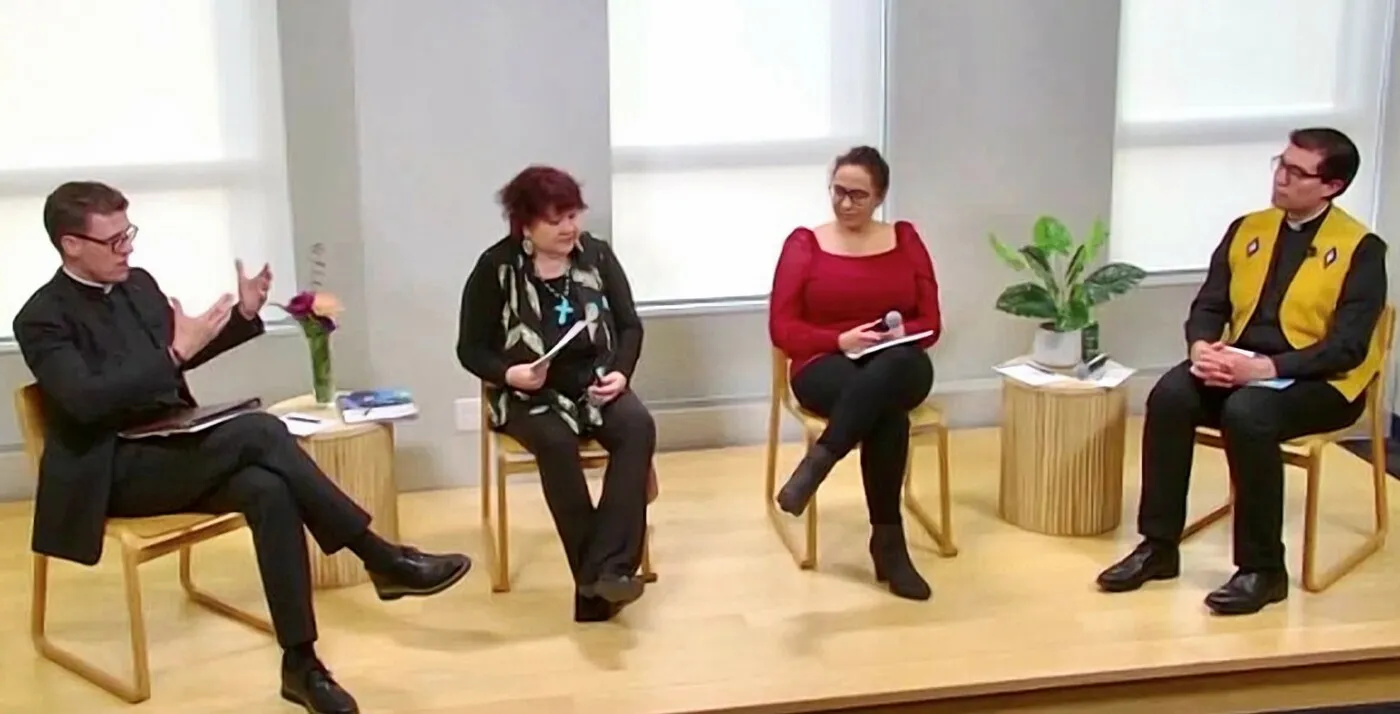
Father Deacon Andrew Bennett, left, leads a post-production discussion by Indigenous Voices of Faith participants. Photo courtesy of Cardus
Prejudice against Indigenous Christians has become so strong, even inside some Indigenous communities, “that Indigenous Christians in this country right now are living in the time of new martyrdom,” Bouvette said.
Although that martyrdom may not cost them their lives, “they are ostracized and humiliated sometimes within their own communities if they openly express their Christian or Catholic faith.”
Statistics Canada reported last year that the 2021 census found that 850,000, or 47%, of Canada’s 1.8-million Indigenous people identify as Christian and that more than a quarter of the total report they are Catholic. Only 73,000, or 4%, of Indigenous people said they adhere to traditional Indigenous spiritual beliefs.
In a new report, Cardus wants to “amplify the voices of Indigenous Canadians speaking for themselves about their religious commitments, which sometimes clash with the typical public presentation of Indigenous spirituality.” Photo courtesy of Cardus
Ukrainian Catholic Deacon Andrew Bennett, program director for Cardus Faith Communities, conducted the interviews for the think tank last fall. He published his report in March at a time when Canadian mainstream media and many political leaders continued to stir division and prejudice through misleading commentary about abandoned cemeteries at Indian Residential Schools.
The purpose of the report, he writes, “is to affirm and to shed light on the religious freedom of Indigenous peoples to hold the beliefs and engage in the practices that they choose and to contextualize their faith within their own cultures.”
Too often, however, “the public narrative implies, or boldly declares, that there’s a fundamental incompatibility between Indigenous Canadians and Christianity or other faiths,” Bennett said. “[M]any Indigenous Canadians strongly disagree with those narratives.”
Father Bouvette is clearly one of those.
“We did not have Christian faith imposed upon us because of [my Indigenous grandmother’s] time in the residential school or her father’s time in the trade school that he was sent to,” Bouvette said. “No, it was because our family freely chose to receive the saving message of Jesus Christ and lived it and had continued to pass it down.”
Bouvette said his “grandmother was not tricked into becoming something that she didn’t want to be, and then tricked into staying that way for 99 years and 11 months of her life. She was a Christian from the day of her birth, and she remained a Christian until the day of her death. And so that was not by the consequence of some imposition.”
Nevertheless, Canadians continue to labor under a prejudice holding the opposite view. “I do believe that probably the majority of Canadians at this time, out of some mistaken notion of guilt for whatever their cultural or ethnic background is, think they are somehow responsible for Indigenous people having had something thrust upon them that they didn’t want,” Bouvette said.
“We did not have Christian faith imposed upon us,” Father Cristino Bouvette says in a Cardus report on Indigenous faith. Photo courtesy of Cardus
“But I would say, give us a little more credit than that and assume that if there is an Indigenous person who continues to persevere in the Christian faith it is because they want to, because they understand why they have chosen to in the first place, and they remain committed to it. We should be respectful of that.”
The executive director of the Catholic Civil Rights League, Christian Elia, agrees and says society should grant Indigenous Catholics the respect and personal agency that is due all Canadians.
“Firstly, I am not an Indigenous person, so I cannot speak for our Indigenous brothers and sisters, but neither can non-Indigenous secularists who choose to ignore that Indigenous people in Canada continue to self-identify as Christian, the majority of these Catholic,” Elia said in an interview with The B.C. Catholic.
He said his organization has heard from many Indigenous Catholics who are “growing weary of the ongoing assumption that somehow they have been coerced into the faith, that it is inconceivable that they wish to be Catholic. This condescending attitude must stop.”
Deacon Rennie Nahanee, who serves at St. Paul’s Indian Church in North Vancouver, was another of the 12 whom Bennett interviewed. A cradle Catholic and member of the Squamish First Nation, Deacon Nahanee said there is nothing incompatible with being both an authentic Indigenous person and a Catholic.
“I’m pretty sure we had a belief in the Creator even before the missionaries came to British Columbia,” he said. “And our feelings, our thoughts about creation, the way that we lived and carried out our everyday lives, and the way that we helped to preserve the land and the animals that we used for food, our spirituality and our culture, were similar to the spirituality of the Catholic Church.”
“I believe that’s why our people accepted it. I don’t think anybody can separate themselves from God, even though they say so.”
Interviewed later by The B.C. Catholic, Nahanee said he is not bothered by the sort of prejudice outlined by Bouvette. “People are going to say or do what they want,” he said.
Voices of Indigenous Christianity
Bennett, program director of Cardus Faith Communities, interviewed 12 Indigenous Canadians, most of them Christian, about their religious commitments, “which often clash with the typical public presentation of Indigenous spirituality.” Here is a selection of some of their comments:
Tal James of the Penelakut First Nation in Nanaimo spoke about the relationship between Indigenous culture and his Christian faith:
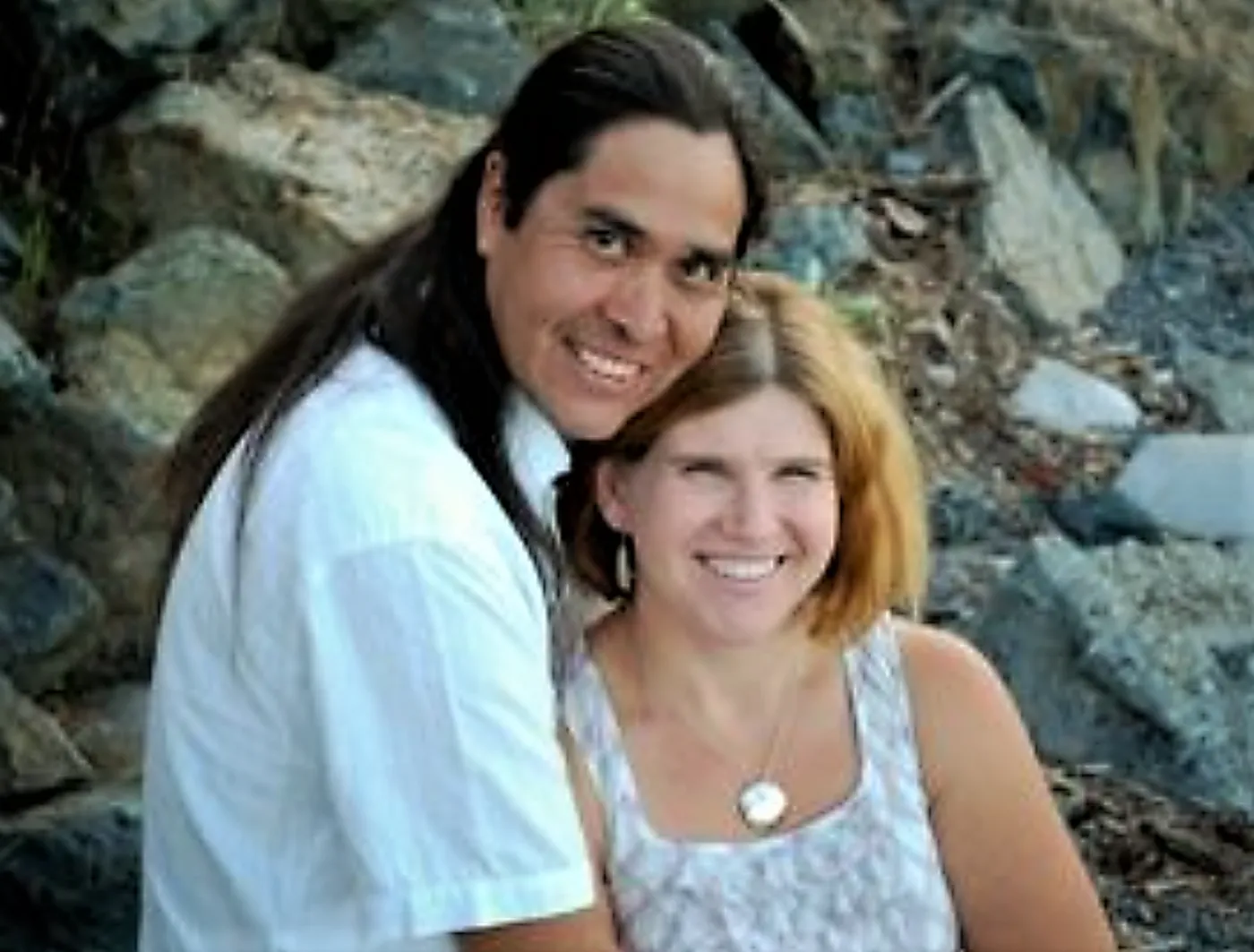
Tal James and wife Christina. Photo courtesy of Project 620 – James Ministry
“I think … that our [Indigenous] cultures were complete, and in Jesus they’re more complete. I think that’s a big thing and a big step for a lot of us. You’re going to have a lot of non-Indigenous people look at you and question your actions based on your Aboriginal heritage. Don’t take that to heart. They’re the ignorant ones who don’t want you to flourish. Those of you who are Christians, First Nations Christians, you come to the table with the same gifting that non-Aboriginal people have. For them to say, ‘We want to make room for you at the table,’ correct them. You are already at the table, and encourage them to step back and allow your gifts to flourish. Because it’s one in the same spirit.”
Rose-Alma McDonald, a Mohawk from Akwesasne, which borders New York, Ontario, and Quebec, talked about re-embracing her Catholic faith:
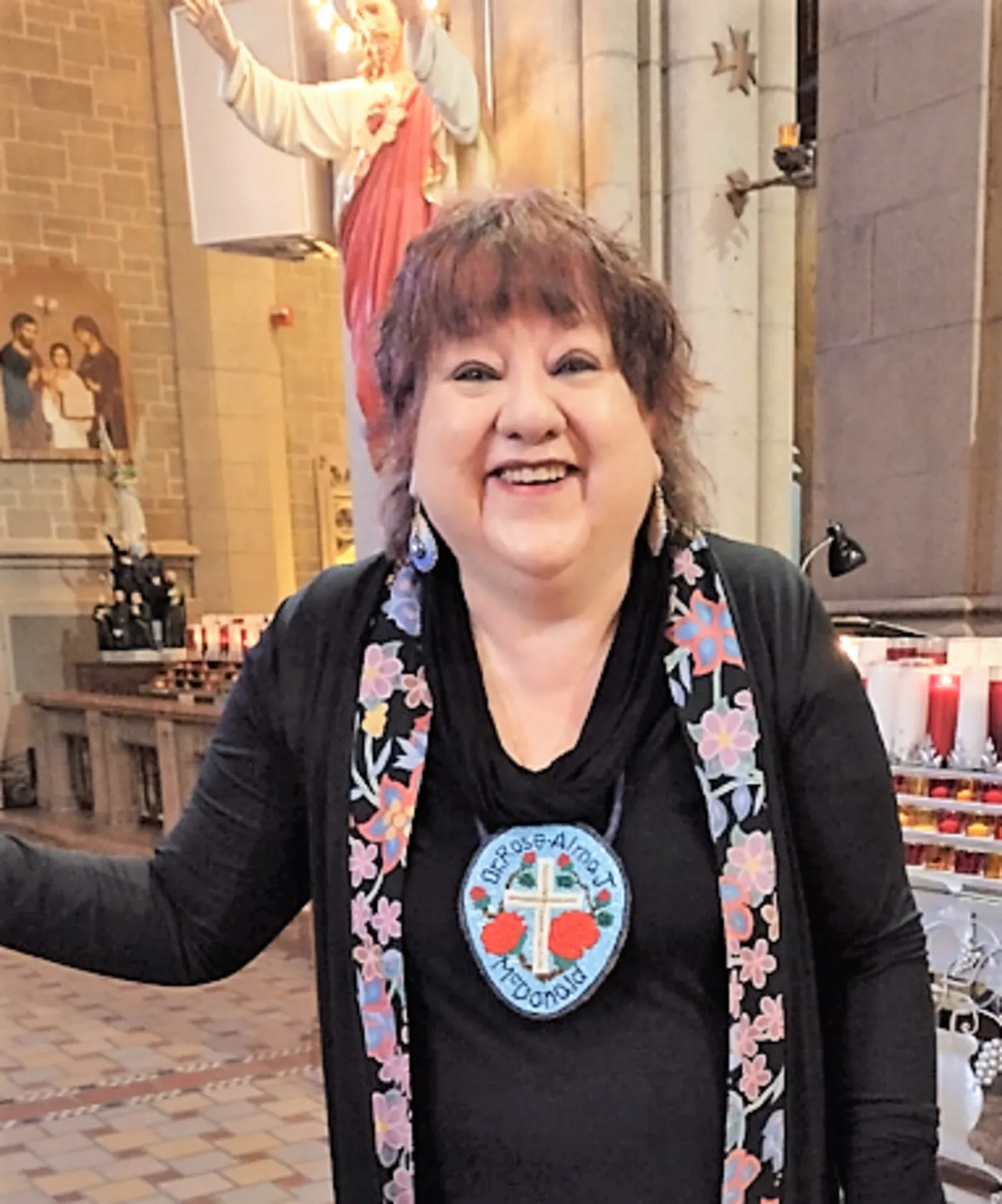
Rose-Alma McDonald. Photo courtesy of Cardus
“I surprised everybody, including myself, in terms of embracing Catholicism after 20 years away. So I’ve had a few epiphanies in the sense that this is why my mother made me do so much in the church growing up. When I’m working, volunteering, and doing stuff in the church, I remember that. I keep remembering I’m Catholic and I’m still Catholic. I will stay Catholic because of the way I was raised.”
Jeff Decontie, a Mohawk from the Algonquin First Nations who lives in Ottawa, talked about being a person of faith in a secular world:
Jeff Decontie. Photo courtesy of Cardus
“Secular worldviews can sort of eat up everything around them and accept a whole wide range of beliefs at the same time. For example, you have the prevailing scientific thinking alongside New Age believers, and people in society just accept this, saying, ‘Oh, whatever it is you believe in, all religions lead to the same thing.’ No one questions it. How can these contradictions coexist? … Then we ask an [Indigenous] elder to lead prayer? Any other religion would be a no-no, but you can ask for an elder who’s going to pray a generic prayer to some generic Creator, and it’s not going to ruffle any feathers. I think that’s the danger of secular thought creeping into Canada: It goes unnoticed, it’s perceived as neutral, but at the same time it’s welcoming a whole wide range of beliefs. And it doesn’t just influence Indigenous thought. It’s influencing Christianity.”
Rosella Kinoshameg, a member of the Wikwemikong Reserve on Manitoulin Island in Ontario, spoke about being Indigenous and Catholic:
Rosella Kinoshameg. Photo courtesy of the Catholic Register
“Well, I can’t change being Indigenous. That’s something that is me. I can’t change that. But to believe in the things that I was taught, the traditional things, the way of life and the meanings of these things, and then in a church, well, those things help one another and they make me feel stronger.”
This article was originally published May 10, 2023, in The B.C. Catholic, a weekly publication serving the Catholic community in British Columbia, Canada, and is reprinted here on CNA with permission.
CNA Staff, Nov 25, 2020 / 06:00 am (CNA).- Sr. Wanda Boniszewska led an extraordinary life. The Polish nun was a reputed stigmatist tortured by Stalin’s secret police. Her spiritual journal, published after her death in 2003, recorded her astound… […]
Chicago, Ill., Mar 31, 2021 / 06:01 pm (CNA).- Amid a plan to merge and close dozens of parishes, the Archdiocese of Chicago has disproportionately closed parishes that minister to black Catholics due to low attendance, according to an archdiocesan official.
“There have been disproportionate numbers of closings in the Black Catholic community, but this is going on all across the Diocese,” Cliff Barber, chief strategy officer of the archdiocese, said in a March 29 interview with the Chicago Crusader, a publication that focuses on the African American community.
“There has been some shared pain here, but it’s just been disproportionate in the Black Catholic community.”
Barber also heads the archdiocese’ Black Catholic Initiative, which seeks to support the Black Catholic community in the city. Barber said there are about 6,000 Mass-attending Black Catholics in the archdiocese, heavily concentrated in the south and west sides of the city.
The Chicago archdiocese has been closing and merging parishes for several years, with the latest round of mergers announced March 9-10.
One such parish is the predominantly African-American St. Peter Claver Mission, which will join the parishes of St. Benedict and St. Walter under a new parish name.
The Chicago archdiocese lists nearly forty parishes on its website as ministering specifically to the black community; Baker said there are nearly 800 predominantly Black Catholic parishes across the U.S., most of which are located in the east and south.
Overall, the church closures and mergers are part of Cardinal Blase Cupich’s project “Renew My Church,” which he announced in 2016. At the time, around 100 parishes were expected to close due to a shortage of priests and church buildings in need of repair.
Barber told the Crusader that the Black Catholic Initiative is relaunching itself in 2021 with an updated mission.
Chicago has been home to communities of Black Catholics for several hundred years. Following the evangelization of black slaves and freed men by Jesuit missionaries in the decades before the American Revolution, large African-American Catholic populations settled in cities including Baltimore, Philadelphia, Chicago, and numerous cities throughout the South.
Chicago has at least one prominent African American Catholic who may someday be canonized — Venerable Augustus Tolton, who was born a slave in Missouri and was the first African-American priest. He was ordained a priest in the Archbasilica of Saint John Lateran on Holy Saturday 1886, and was sent back to serve in Illinois in the Diocese of Alton. He worked at a parish in Quincy, but met with opposition from a white priest, and in 1889 secured permission to transfer to the Archdiocese of Chicago.
In Chicago he founded a black parish, Saint Monica’s. He died July 9, 1897 from heat stroke and heart failure, at the age of 43.
So, let’s get on with a harmonized “fraternal investigation”! Participants can include all of Africa, plus Poland, Hungary, Kazakhstan, Peru, and part of France and now parts of Spain.
Asia, Africa, Europe and South America, four of the continents assembled in the continental Synod 2023! (also less vocal: the “cautious” North America, the Middle East, and Oceania).
The global continents versus Germanic incontinence?
But with the seven continental synods, why pray tell do we still omit the continent of Antarctica???
Perhaps because in moral theology nothing can be BOTH black and white, and down under, so to speak, we happen to see some 20 million penguins synodally “walking together.”
“The global continents versus Germanic incontinence?”
“Sorry, dear Peter D. Beaulieu, the ‘pope’ says: “FS same-sex blessings are only opposed by a few small ideologue groups; with Africa as a special case.”!!!
R. R. Reno, the editor of ‘First Things’ gives a correctively truthful account:
♦ During the week before Christmas, Rome issued Fiducia Supplicans, a woolly-headed document about blessing same-sex couples. Anything remotely resembling a marriage blessing is streng verboten. But it’s OK to use exquisitely refined pastoral judgment sometimes, in some circumstances, to bless same-sex couples. The document strikes a clear note: Nothing can be blessed that is counter to God’s will. But one wonders: couples? We’re not talking about tennis partners. Confusion mounts. Two homosexuals united in a relationship can be blessed as couples, but not as sexual partners? One predicts that Fr. James Martin, Catholicism’s leading Rainbow collaborationist, will jump into the confusion to provide clarification. Indeed, within hours of the release of the document, he offered a blessing to a same-sex couple, helpfully (for his purposes) photographed by the New York Times. They are holding hands, heads bowed, as Fr. Martin makes the sign of the cross. No, no, he was not blessing their sexual relationship! That can’t be done, the Vatican assures us. Except, of course, when it is done, which seems to be the obvious consequence of the document, and possibly its intent.
Dear Deacon Edward: “confusion & division” for sure, but from the viewpoint of the PF coterie it’s all for a necessary cause, as an essential first step towards the normalization of their demonic desire to legitimize ‘informal’ blessing of homosexual relationships among the clergy: deacons, brothers, priests, bishops, archbishops, cardinals & pope.
These ecclesial peers want it hot & appear to be on a slippery slope to eternity in a really hot place. Enjoy, enjoy . . !
Ever in the love of Christ Jesus; blessings from marty
“When decisions are not accepted, it’s because they are not understood”.
How can you have a dialogue when the decision has already been made, presumably without your input because you are just too dense to get it?
Is anyone actually disciplining James Martin for blessing a homosexual couple?
Please don’t tell us Francis wouldn’t allow it. He already has. And he’s doing absolutely nothing to discipline those who bless couples in “irregular” unions, nor to prevent them from doing so.
Do not be fooled. This, and the confusion it fosters, is by design.
The ink didn’t even dry and Martin was blessing gay couples. The rag New York Times covered it. I won’t hold my breath waiting for disciplinary action to come anytime soon.
As the African Bishops pointed out, when the “allowable” blessing is so marginally different than outright approval, it is a GIVEN that many will not understand the subtle difference.It is splitting hairs. It does not matter WHAT the pope “intended”. Or wrote. He didnt have any reason to make this statement to begin with, which is causing massive division within the church. To placate and seeming to give approval to a handful of folks living in sin is actually NOT a good reason. Further, in places like Africa where laws on homosexuality are heavily influenced by Muslim belief, the penalty for such activity is often DEATH. This puts the church in a place of seeming to defend what is culturally unacceptable there on every level. That can only make the church an even bigger target than it is now.
What Tucho and Bergoglio say in the document is window dressing.
Think about it. When Catholics see gay “couples” being blessed by a priest, they are going to conclude that the Church is now blessing gay couples. Because, quite frankly, it is.
They’re not going to know about — or care about — what the document says.
Bergoglio knows this, of course. So he doesn’t mind paying lip service to Catholic beliefs, all the while continuing his efforts to undermine them.
How the adorable Heart of the Beloved is wounded! This is not about persons but about unions or couples, like the palm and the fingers are the coupling that is the hand, distinct yes, separated or otherly, no and never.
Ones intent or intending cannot make the hand or couple-union only a person/s nor the hand only the palm or fingers, no the created reality is a unity, distinct but indivisible, not two or separated…much like the Beloved Himself three but always One and Indivisible, one and never separated. Blessings 🌹 Console Jesus and Mary, may they make us true
Homosexualists want you to confirm for them that they are created that way from within the Blessed Trinity all beyond separation; and have you bless them and praise the Trinity.
But everyone, except for Jesus and the BVM, comes into the world with defect of original sin, in whatever manner it will be discovered. This means that not everything we have by inheritance is ordained from God and not everything likewise is part of Redemption.
I may have a different created complex in original sin nothing to with homosexualism; where nonetheless it has no merit and has to be rejected, NOT part of any journey. I find your idea of “things necessarily conjoined” that “must be in unity”, applied here, is utterly distracted and running to compulsions. Sounds sweet but … What?
We are not created perfect. It is the grace of God that is perfect and leads us in its way steadying and building up reason, nature, what is right and good, faithfulness and attraction to truth. Also teaching us the necessary excisions. We are not brought to it as couples.
Such, are some of the true issues to do with homosexualism that are being left abandoned and left to random forces while the wrong things are given prominence only then infuse deeper confusion and stir up distrust. Having Welby talk about love and Gaza where his other positions are inimical is not our witness.
I want to call attention to the fact that Bergoglio has already succeeded in the first stage of his effort to normalize homoerotic behavior in the Church.
Note that even this Spanish Bishop Gil, who is less than enthused about Sfiducia Supplicans, refers to homosexual individuals as “couples” and as being in “irregular unions.”
I feel compelled to object. Gays with other gays are not “couples.” What they do is neither “union” nor “sex.”
It is nothing more than mutual masturbation, no more resembling the conjugal act than gin rummy or washing your car.
So “gay marriage” is in no way an alternative to marriage, “irregular” or otherwise.
Now, I’m old. And I enjoy being old, because I remember lots of things.
One thing I remember is that, for most of my adult life, from the late sixties through the push for gay “marriage” in the early aughts, the left was dead-set against marriage as an institution.
They would try to undermine marriage whenever and however they could.
“No piece of paper can tell me who to love,” was their mantra.
One of the left’s most reliable and most popular music groups from the sixties and seventies, Crosby, Stills & Nash, even did a song, “Love the One You’re With,” extolling the manifold joys of barnyard promiscuity.
So you can imagine my surprise when the lefties turned on a dime one day about twenty years ago and began wailing about the sad plight of gays who would never find happiness or fulfillment unless they were accorded full acceptance of their “marriages” by our cruel and bigoted society at large.
Why would gays care about having a piece of paper that dictated whom they were allowed to love, I wondered.
Simple. The reality is, the left cares nothing about marriage or its purpose — establishing families and providing a safe, stable, secure home for every child.
The left’s purpose in all this — as is always the case, with every issue they promote — is to undermine families, to promote abortions, to prevent births and to minimize life.
“Polyamory” — the barnyard promiscuity mentioned above — will quite obviously be the next moral outrage embraced by the evil one’s leftist minions.
If Bergoglio lives to see it, I anticipate the apostolic exhortation will be titled, “Fiducia Plures.”
In English, “Imploring Multitudes.”
And humanity’s suffering will once again be exacerbated by the death-dealing left.
Forgive me Lord, Archbishop Gil is not being very courageous nor very correct. “Gil stated that his intention is to ‘bless the person’ without having to do ‘a ceremony,’ according to Europe Press”.
Archbishop Gil is doing exactly what Cardinal Fernández and Pope Francis’ recommend in FS. “I am not going to bless even one homosexual union” [Gil] is an unfortunate fallacy. Example. If we bless ‘the person’ knowing that he she is homosexual we cannot separate person or persons and homosexual behavior. As said it’s a double bind in which the act contains two propositions, blessing of a person or persons and blessing a homosexual person or persons. It’s the act of blessing sinful behavior that’s egregious, not the intent.
In a human act there are two objects of the will, the internal and the external. The internal object willed is the intent, the external is the act. The external act, the materia sine quam, is what the act does. Without which it cannot be an act. It is the object [or moral object alluded to by John Paul II in Veritatis Splendor] of the act. As such morality is determined by what we do, not simply by what we intend. With that said in order for such a blessing to possess moral validity there must be the precondition of some form of repentance.
It is necessary to separate here a case of those homosexuals who come not as a couple i.e. single individuals who can be present in any congregation and those two homosexuals who make a homosexual couple. In the first case, they can and do receive a blessing just as anyone else. In the second they cannot receive a blessing unless they meet certain conditions determined by the Church’s teaching.
A few days ago I published an essay on this topic which discussed the initial maddening argument “we are blessing a homosexual couple as persons and not as a couple” – but apparently this argument meanwhile became a bit more down to earth and slightly less maddening, like an argument of Archbishop Gil. Still, my discourse covers his “way out” as well so I will quote it:
“I am not going to address here the most common argument of the proponents of the blessings of homosexual couples in the Roman Catholic Church who manage to split their conscience to the point of truly believing that blessing a couple does not mean an approval of the very actions which make them a couple because “we are blessing them as persons”. It has been addressed already, by the fact that the Church has been imparting blessings on the all kinds of persons (including homosexual) for all its history hence there was no need of a document that states so – unless one had in a mind something else than blessing a person, in this case the blessing of a couple as a couple. “No, they are blessed as persons”. Here we go again.”
I.e., Archbishop Gil could bless piles of homosexuals before just like anyone else, no problem. ‘FS’ was not about that. ‘FS’ wants him to bless a couple, in however oblique way – to separate them into two corners, reading a prayer over one and then another and so on will not cancel the fact that they came to him as a couple.
Anna. Thanks for your response. I was aware Archbishop Gil was essentially referring to single persons. Couples are taken for granted when it’s apparent that they present themselves as homosexuals. A single person nevertheless is not exempt. If he or she presents as a homosexual with apparent intent to be blessed as a homosexual, thereby seeking approbation, I will not offer a blessing nor should any priest.
Whereas those who approach a priest presenting as homosexuals instead offer the priest an opportunity to speak to them about the faith and the consideration of repentance/conversion of manners. May I ask if your published essay is available online?
I think when a priest blesses a single person (one) he usually cannot see who the person is – a heterosexual or homosexual (unless the latter is beaming with “pride” symbols all over him and then it is another matter of course).
Yes, my essay is available online:
orthodox-christian-icons.com/abomination-of-desolation.html
Anna I read your excellent essay. Your icons are beautiful.
Dear Anna, thank you for the deeply illuminating essay on ‘The Abomination of Desolation’ that is the denial of serious sin by our ecclesial leaders.
Thank you, too, for the lovely ikons on your website.
Anna, a comment here on the transformative implication posed by the parsed theology of FS. This is a singular moment in Church history that the blessing of a person or persons living in sin, by implication any sin and all sin, may be presumed blessed rather than the sin. Whereas the two cannot be separated. It’s the perfect guise to diminish faithful practice.
This manner of proceeding will be carried out “with painstaking respect for the unalterable doctrine of the Church on true marriage and irregular unions, avoiding all confusion and seeking the good of the faithful,” the statement concludes.
Amen. For all of Bergoglio’s hatred for conservative, i.e., orthodox, American bishops, it’s noteworthy that the loudest opposition to his heresy is coming from other shores.
There’s no such reality as a “homosexual union.” The archbishop might consider taking a course in human anatomy and, when finished with that, take a course in the Theology of the Body.
Es claro que esto no lo va leer ni mi abuela (falleció hace mucho), pero,,,,,,,,,1) Si un señor o señora homosexual pide en persona una bendición el sacerdote no puede negarla bajo ningún punto de vista salvo que pida se bendiga “su modo de vida”, no su “persona”. 2) Si una pareja de homosexuales se presenta como tal y como tal pide bendición, no se puede bendecir lo que Dios reprobó.3) El caso de una pareja heterosexual que pide bendición, salvo que hagan alarde de irregularidad el sacerdote no puede negar bendición, porque de internis nemo judicat,y lo que hacen no es “intrínsicamente” malo (como la homosexualidad) y no puede juzgarse si viven como dice S.Pablo II, o si tienen conciencia de la nulidad de su matrimonio anterior, o smplemente si no conviven. Simplemente piden ser bendecidos para hacer de sus vidas lo que Dios quiere, ¿Y quién es el sacerdote para juzgarlos, salvo que ellos lo pidieren?









Pope Francis invites a “fraternal discussion” while Cardinal Parolin suggests the need for an “investigation:” https://www.catholicworldreport.com/2024/01/13/cardinal-parolin-fiducia-supplinas-has-touched-a-very-sensitive-point/
So, let’s get on with a harmonized “fraternal investigation”! Participants can include all of Africa, plus Poland, Hungary, Kazakhstan, Peru, and part of France and now parts of Spain.
Asia, Africa, Europe and South America, four of the continents assembled in the continental Synod 2023! (also less vocal: the “cautious” North America, the Middle East, and Oceania).
The global continents versus Germanic incontinence?
But with the seven continental synods, why pray tell do we still omit the continent of Antarctica???
Perhaps because in moral theology nothing can be BOTH black and white, and down under, so to speak, we happen to see some 20 million penguins synodally “walking together.”
And in response to their God given penguin sense of natural law no less.
“The global continents versus Germanic incontinence?”
“Sorry, dear Peter D. Beaulieu, the ‘pope’ says: “FS same-sex blessings are only opposed by a few small ideologue groups; with Africa as a special case.”!!!
R. R. Reno, the editor of ‘First Things’ gives a correctively truthful account:
♦ During the week before Christmas, Rome issued Fiducia Supplicans, a woolly-headed document about blessing same-sex couples. Anything remotely resembling a marriage blessing is streng verboten. But it’s OK to use exquisitely refined pastoral judgment sometimes, in some circumstances, to bless same-sex couples. The document strikes a clear note: Nothing can be blessed that is counter to God’s will. But one wonders: couples? We’re not talking about tennis partners. Confusion mounts. Two homosexuals united in a relationship can be blessed as couples, but not as sexual partners? One predicts that Fr. James Martin, Catholicism’s leading Rainbow collaborationist, will jump into the confusion to provide clarification. Indeed, within hours of the release of the document, he offered a blessing to a same-sex couple, helpfully (for his purposes) photographed by the New York Times. They are holding hands, heads bowed, as Fr. Martin makes the sign of the cross. No, no, he was not blessing their sexual relationship! That can’t be done, the Vatican assures us. Except, of course, when it is done, which seems to be the obvious consequence of the document, and possibly its intent.
Lies & intrigue, with a diabolical intent. . .
The fact is that Pontiff Francis has created confusion and division in the Body of Christ. About that there can be no doubt.
Dear Deacon Edward: “confusion & division” for sure, but from the viewpoint of the PF coterie it’s all for a necessary cause, as an essential first step towards the normalization of their demonic desire to legitimize ‘informal’ blessing of homosexual relationships among the clergy: deacons, brothers, priests, bishops, archbishops, cardinals & pope.
These ecclesial peers want it hot & appear to be on a slippery slope to eternity in a really hot place. Enjoy, enjoy . . !
Ever in the love of Christ Jesus; blessings from marty
“When decisions are not accepted, it’s because they are not understood”.
How can you have a dialogue when the decision has already been made, presumably without your input because you are just too dense to get it?
And he shouldn’t because Fiducia Supplicans forbids it!!! Pope Francis wouldn’t allow it.
Is anyone actually reading this document before they accuse??
Is anyone actually disciplining James Martin for blessing a homosexual couple?
Please don’t tell us Francis wouldn’t allow it. He already has. And he’s doing absolutely nothing to discipline those who bless couples in “irregular” unions, nor to prevent them from doing so.
Do not be fooled. This, and the confusion it fosters, is by design.
The ink didn’t even dry and Martin was blessing gay couples. The rag New York Times covered it. I won’t hold my breath waiting for disciplinary action to come anytime soon.
As the African Bishops pointed out, when the “allowable” blessing is so marginally different than outright approval, it is a GIVEN that many will not understand the subtle difference.It is splitting hairs. It does not matter WHAT the pope “intended”. Or wrote. He didnt have any reason to make this statement to begin with, which is causing massive division within the church. To placate and seeming to give approval to a handful of folks living in sin is actually NOT a good reason. Further, in places like Africa where laws on homosexuality are heavily influenced by Muslim belief, the penalty for such activity is often DEATH. This puts the church in a place of seeming to defend what is culturally unacceptable there on every level. That can only make the church an even bigger target than it is now.
It does no such thing.
Patrice, don’t be misled.
What Tucho and Bergoglio say in the document is window dressing.
Think about it. When Catholics see gay “couples” being blessed by a priest, they are going to conclude that the Church is now blessing gay couples. Because, quite frankly, it is.
They’re not going to know about — or care about — what the document says.
Bergoglio knows this, of course. So he doesn’t mind paying lip service to Catholic beliefs, all the while continuing his efforts to undermine them.
Yes, did you? The only thing FS excplicitly forbids is respect for and fidelity to Catholic doctrine. Read paragraph 25 carefully.
How the adorable Heart of the Beloved is wounded! This is not about persons but about unions or couples, like the palm and the fingers are the coupling that is the hand, distinct yes, separated or otherly, no and never.
Ones intent or intending cannot make the hand or couple-union only a person/s nor the hand only the palm or fingers, no the created reality is a unity, distinct but indivisible, not two or separated…much like the Beloved Himself three but always One and Indivisible, one and never separated. Blessings 🌹 Console Jesus and Mary, may they make us true
Homosexualists want you to confirm for them that they are created that way from within the Blessed Trinity all beyond separation; and have you bless them and praise the Trinity.
But everyone, except for Jesus and the BVM, comes into the world with defect of original sin, in whatever manner it will be discovered. This means that not everything we have by inheritance is ordained from God and not everything likewise is part of Redemption.
I may have a different created complex in original sin nothing to with homosexualism; where nonetheless it has no merit and has to be rejected, NOT part of any journey. I find your idea of “things necessarily conjoined” that “must be in unity”, applied here, is utterly distracted and running to compulsions. Sounds sweet but … What?
We are not created perfect. It is the grace of God that is perfect and leads us in its way steadying and building up reason, nature, what is right and good, faithfulness and attraction to truth. Also teaching us the necessary excisions. We are not brought to it as couples.
Such, are some of the true issues to do with homosexualism that are being left abandoned and left to random forces while the wrong things are given prominence only then infuse deeper confusion and stir up distrust. Having Welby talk about love and Gaza where his other positions are inimical is not our witness.
I want to call attention to the fact that Bergoglio has already succeeded in the first stage of his effort to normalize homoerotic behavior in the Church.
Note that even this Spanish Bishop Gil, who is less than enthused about Sfiducia Supplicans, refers to homosexual individuals as “couples” and as being in “irregular unions.”
I feel compelled to object. Gays with other gays are not “couples.” What they do is neither “union” nor “sex.”
It is nothing more than mutual masturbation, no more resembling the conjugal act than gin rummy or washing your car.
So “gay marriage” is in no way an alternative to marriage, “irregular” or otherwise.
Now, I’m old. And I enjoy being old, because I remember lots of things.
One thing I remember is that, for most of my adult life, from the late sixties through the push for gay “marriage” in the early aughts, the left was dead-set against marriage as an institution.
They would try to undermine marriage whenever and however they could.
“No piece of paper can tell me who to love,” was their mantra.
One of the left’s most reliable and most popular music groups from the sixties and seventies, Crosby, Stills & Nash, even did a song, “Love the One You’re With,” extolling the manifold joys of barnyard promiscuity.
So you can imagine my surprise when the lefties turned on a dime one day about twenty years ago and began wailing about the sad plight of gays who would never find happiness or fulfillment unless they were accorded full acceptance of their “marriages” by our cruel and bigoted society at large.
Why would gays care about having a piece of paper that dictated whom they were allowed to love, I wondered.
Simple. The reality is, the left cares nothing about marriage or its purpose — establishing families and providing a safe, stable, secure home for every child.
The left’s purpose in all this — as is always the case, with every issue they promote — is to undermine families, to promote abortions, to prevent births and to minimize life.
“Polyamory” — the barnyard promiscuity mentioned above — will quite obviously be the next moral outrage embraced by the evil one’s leftist minions.
If Bergoglio lives to see it, I anticipate the apostolic exhortation will be titled, “Fiducia Plures.”
In English, “Imploring Multitudes.”
And humanity’s suffering will once again be exacerbated by the death-dealing left.
Forgive me Lord, Archbishop Gil is not being very courageous nor very correct. “Gil stated that his intention is to ‘bless the person’ without having to do ‘a ceremony,’ according to Europe Press”.
Archbishop Gil is doing exactly what Cardinal Fernández and Pope Francis’ recommend in FS. “I am not going to bless even one homosexual union” [Gil] is an unfortunate fallacy. Example. If we bless ‘the person’ knowing that he she is homosexual we cannot separate person or persons and homosexual behavior. As said it’s a double bind in which the act contains two propositions, blessing of a person or persons and blessing a homosexual person or persons. It’s the act of blessing sinful behavior that’s egregious, not the intent.
In a human act there are two objects of the will, the internal and the external. The internal object willed is the intent, the external is the act. The external act, the materia sine quam, is what the act does. Without which it cannot be an act. It is the object [or moral object alluded to by John Paul II in Veritatis Splendor] of the act. As such morality is determined by what we do, not simply by what we intend. With that said in order for such a blessing to possess moral validity there must be the precondition of some form of repentance.
Correction: It’s materia circa quam not materia [sine] quam
It is necessary to separate here a case of those homosexuals who come not as a couple i.e. single individuals who can be present in any congregation and those two homosexuals who make a homosexual couple. In the first case, they can and do receive a blessing just as anyone else. In the second they cannot receive a blessing unless they meet certain conditions determined by the Church’s teaching.
A few days ago I published an essay on this topic which discussed the initial maddening argument “we are blessing a homosexual couple as persons and not as a couple” – but apparently this argument meanwhile became a bit more down to earth and slightly less maddening, like an argument of Archbishop Gil. Still, my discourse covers his “way out” as well so I will quote it:
“I am not going to address here the most common argument of the proponents of the blessings of homosexual couples in the Roman Catholic Church who manage to split their conscience to the point of truly believing that blessing a couple does not mean an approval of the very actions which make them a couple because “we are blessing them as persons”. It has been addressed already, by the fact that the Church has been imparting blessings on the all kinds of persons (including homosexual) for all its history hence there was no need of a document that states so – unless one had in a mind something else than blessing a person, in this case the blessing of a couple as a couple. “No, they are blessed as persons”. Here we go again.”
I.e., Archbishop Gil could bless piles of homosexuals before just like anyone else, no problem. ‘FS’ was not about that. ‘FS’ wants him to bless a couple, in however oblique way – to separate them into two corners, reading a prayer over one and then another and so on will not cancel the fact that they came to him as a couple.
Anna. Thanks for your response. I was aware Archbishop Gil was essentially referring to single persons. Couples are taken for granted when it’s apparent that they present themselves as homosexuals. A single person nevertheless is not exempt. If he or she presents as a homosexual with apparent intent to be blessed as a homosexual, thereby seeking approbation, I will not offer a blessing nor should any priest.
Whereas those who approach a priest presenting as homosexuals instead offer the priest an opportunity to speak to them about the faith and the consideration of repentance/conversion of manners. May I ask if your published essay is available online?
I think when a priest blesses a single person (one) he usually cannot see who the person is – a heterosexual or homosexual (unless the latter is beaming with “pride” symbols all over him and then it is another matter of course).
Yes, my essay is available online:
orthodox-christian-icons.com/abomination-of-desolation.html
Anna I read your excellent essay. Your icons are beautiful.
Dear Anna, thank you for the deeply illuminating essay on ‘The Abomination of Desolation’ that is the denial of serious sin by our ecclesial leaders.
Thank you, too, for the lovely ikons on your website.
orthodox-christian-icons.com/abomination-of-desolation.html
Anna, a comment here on the transformative implication posed by the parsed theology of FS. This is a singular moment in Church history that the blessing of a person or persons living in sin, by implication any sin and all sin, may be presumed blessed rather than the sin. Whereas the two cannot be separated. It’s the perfect guise to diminish faithful practice.
“It’s the perfect guise to diminish faithful practice.”
Or even camouflaging their construction of a new anti-Apostolic religion . . ?
Cathocommunism anyone . . ?
This manner of proceeding will be carried out “with painstaking respect for the unalterable doctrine of the Church on true marriage and irregular unions, avoiding all confusion and seeking the good of the faithful,” the statement concludes.
Amen. For all of Bergoglio’s hatred for conservative, i.e., orthodox, American bishops, it’s noteworthy that the loudest opposition to his heresy is coming from other shores.
There’s no such reality as a “homosexual union.” The archbishop might consider taking a course in human anatomy and, when finished with that, take a course in the Theology of the Body.
Es claro que esto no lo va leer ni mi abuela (falleció hace mucho), pero,,,,,,,,,1) Si un señor o señora homosexual pide en persona una bendición el sacerdote no puede negarla bajo ningún punto de vista salvo que pida se bendiga “su modo de vida”, no su “persona”. 2) Si una pareja de homosexuales se presenta como tal y como tal pide bendición, no se puede bendecir lo que Dios reprobó.3) El caso de una pareja heterosexual que pide bendición, salvo que hagan alarde de irregularidad el sacerdote no puede negar bendición, porque de internis nemo judicat,y lo que hacen no es “intrínsicamente” malo (como la homosexualidad) y no puede juzgarse si viven como dice S.Pablo II, o si tienen conciencia de la nulidad de su matrimonio anterior, o smplemente si no conviven. Simplemente piden ser bendecidos para hacer de sus vidas lo que Dios quiere, ¿Y quién es el sacerdote para juzgarlos, salvo que ellos lo pidieren?