The historical evidence behind Jesus Christ’s existence is “overwhelming,” according to a senior apologist at Catholic Answers.
Tim Staples is challenging the “Jesus is a myth” argument that he says has been circulating online and flooding social media. He walked through the evidence, including historical records, miracles, and the Gospels, during EWTN News Nightly on July 30. His comments complemented a piece recently published by his organization called, “On Historical Evidence, Jesus Wins.”
Staples said that Jesus’ existence, historically, is “just really a no-brainer.”
“It’s only been in the last 150 years or so that this sort of ‘Jesus is a myth’ thing has revitalized,” he said. “We have an enormous amount of evidence from earliest sources.”
He pointed to Roman historians including Cornelius Tacitus and Suetonius. He also listed Lucian, a 2nd-century satirist, Flavius Josephus, an early Jewish historian, and Thallus, a Gentile historian in the first century.
Staples added that even the “enemies of Christianity in the early centuries” didn’t dispute Jesus’ existence. He listed Cerinthus, an early Gnostic, Simon Magus, a Samarian magician, and Celsus, a Greek philosopher.
None of the “various enemies of Christianity” even attempt to “deny the historicity of the person, Jesus,” he said, not “even later in the Jewish Talmud.”
In other words, “the fight is really over who he is.”
Still, he said, the Christ-myth controversy persists.
“Especially in the Soviet Union, you had a revitalization of this ‘Jesus is a myth’ sort of thing,” Staples said. “And now on the internet, lies tend to spread very, very fast so you have this newfangled sort of ‘Jesus is a myth’ sort of thing.
“But it simply does not hold up under scrutiny,” he concluded. “That historical evidence is overwhelming.”
He also addressed another piece of evidence: Jesus’ miracles.
“Those miracles of Christ are extremely important because they’re attested to, not just by friend, but also by foe,” Staples said.
He also highlighted the importance of the four Gospels and challenged those who deny their contents. He cited Sir William Ramsay, a late 19th-century skeptic, who attempted to expose the Gospels (particularly Luke–Acts) as “fabrications.” That didn’t happen. Instead, during his investigation, Ramsay found Luke–Acts “to be the most accurate work of ancient history he had ever encountered” and converted to Christianity.
Staples called the Gospels and the book of Acts “extraordinary” because of “the detail.” In this case, he said, scrutiny often leads to the scrutinizers “becoming believers.”
If you value the news and views Catholic World Report provides, please consider donating to support our efforts. Your contribution will help us continue to make CWR available to all readers worldwide for free, without a subscription. Thank you for your generosity!
Click here for more information on donating to CWR. Click here to sign up for our newsletter.
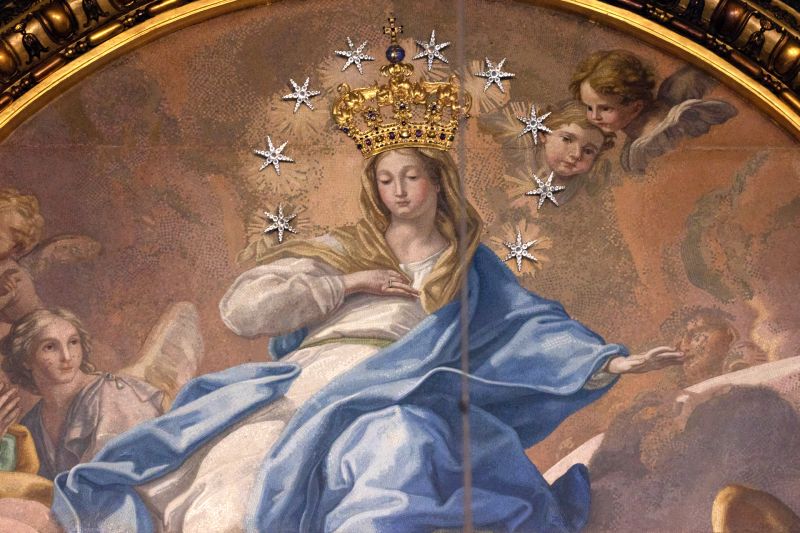
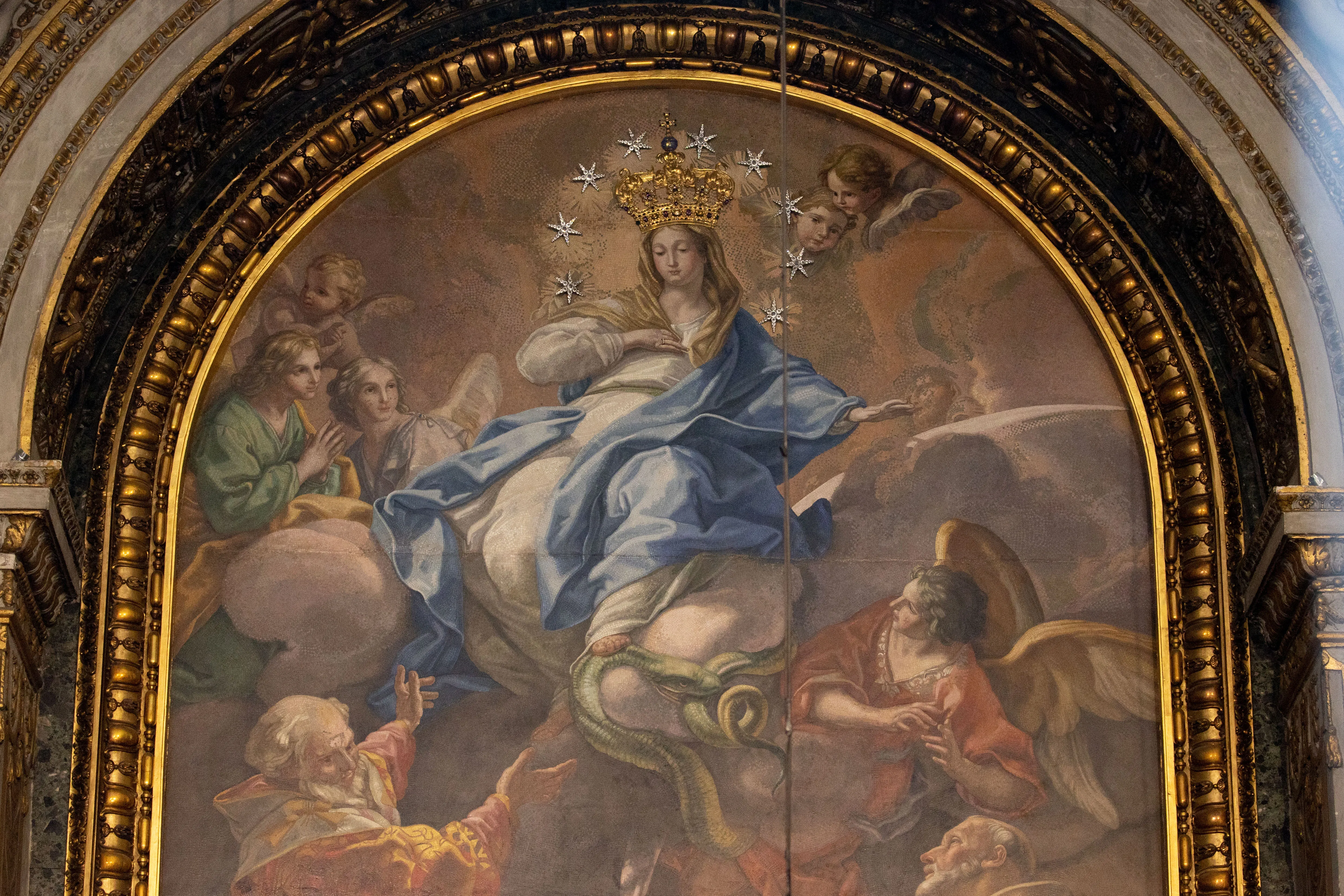
When Pope Pius IX declared the doctrine of the Immaculate Conception of the Virgin Mary on December 8, 1854, he had a golden crown added to the mosaic of Mary, Virgin Immaculate, in the Chapel of the Choir in St. Peter’s Basilica. / Daniel Ibañez/CNA
Vatican City, May 29, 2023 / 10:30 am (CNA).
To honor the Blessed Virgin Mary, the Vatican offers a special Marian pilgrimage within St. Peter’s Basilica each Saturday afternoon during the month of May.
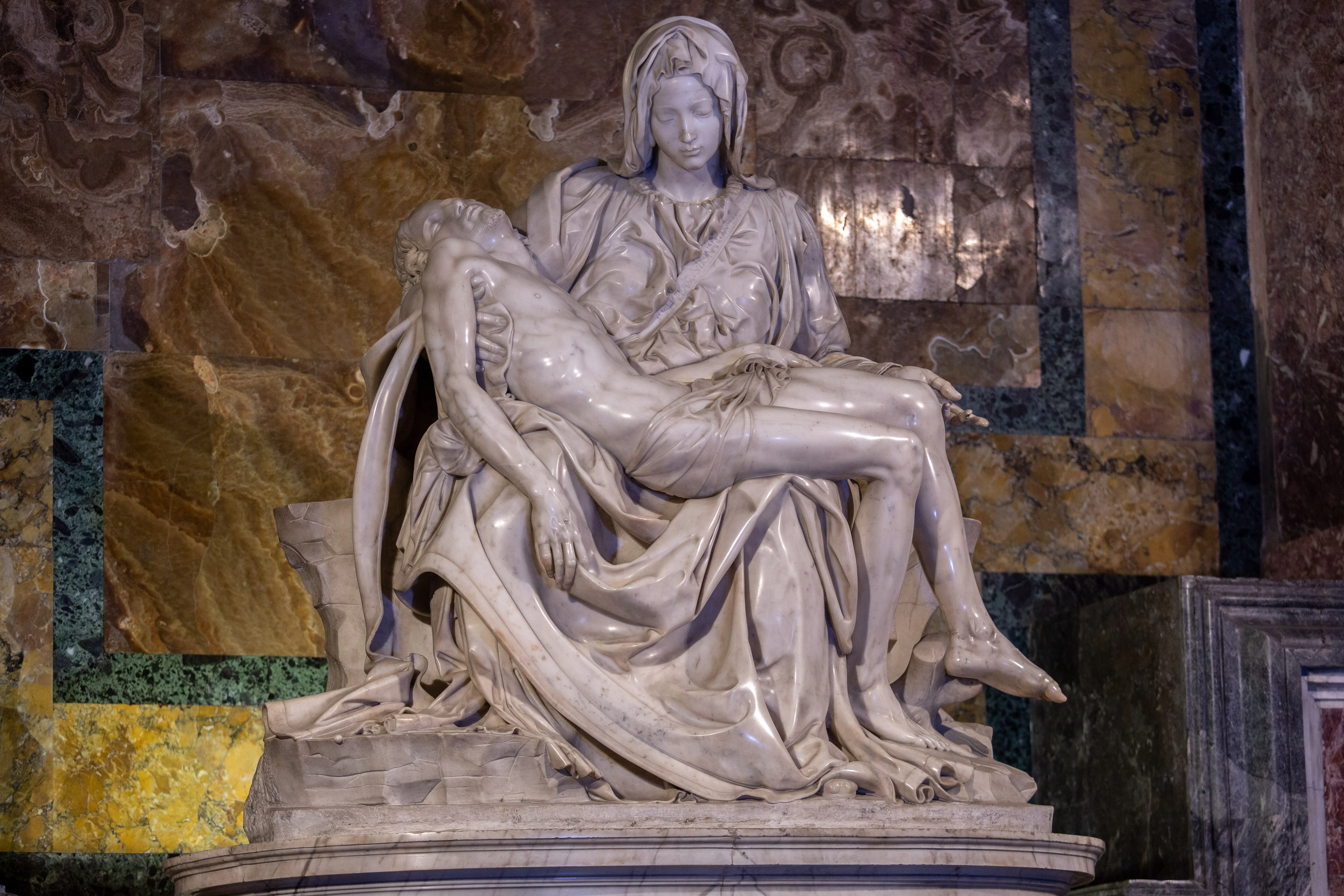
The Marian itinerary brings pilgrims from Michelangelo’s marble sculpture of the Pieta to Our Lady of Perpetual Help, a 12th-century painting brought into the basilica in 1578 in a solemn procession.
For those unable to travel to the Eternal City, CNA is providing the following “virtual tour” with photos by Daniel Ibañez of eight beautiful images of Our Lady in St. Peter’s Basilica for the feast of Mary, Mother of the Church.
In St. Peter’s Basilica’s Chapel of the Choir, a large mosaic based on painting by Italian artist Pietro Bianchi depicts Mary, Virgin Immaculate, in the glory of heaven being venerated by St. John Chrysostom (left) and other saints. Daniel Ibañez/CNA
Virgin Immaculate
In the basilica’s Chapel of the Choir, a large altarpiece reveals Mary, Virgin Immaculate, in the glory of heaven above angels and saints. The mosaic based on an 18th-century painting by Italian artist Pietro Bianchi depicts St. John Chrysostom St. Francis of Assisi, and St. Anthony of Padua venerating the Blessed Virgin Mary.
The chapel is located on the left side of the basilica behind an iron gate designed by Gian Lorenzo Bernini. St. John Chrysostom is buried beneath the altar, which also contains relics of St. Francis and St. Anthony.
When Pope Pius IX declared the doctrine of the Immaculate Conception of the Virgin Mary on December 8, 1854, he had a golden crown added to the mosaic of Mary. Pope Pius X later added a larger diamond crown to mark the 50th anniversary of the declaration in 1904.
The original painting by Bianchi can be found in Rome’s Basilica di Santa Maria degli Angeli e dei Martiri.
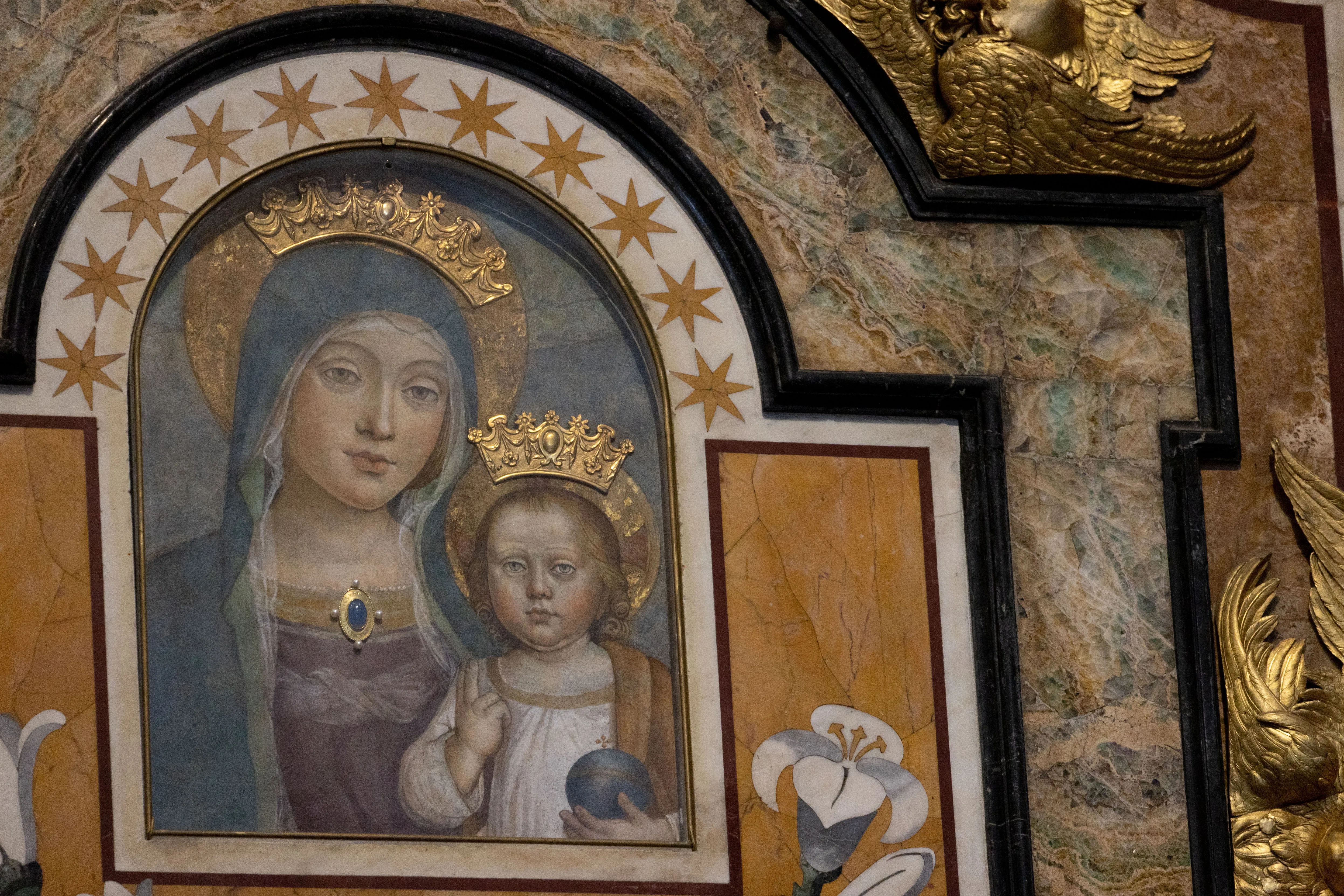
Mother of the Church
St. Peter’s Basilica contains an icon of the Virgin Mary titled “Mater Ecclesiae,” which means “Mother of the Church.”. Daniel Ibañez/CNA
The basilica contains an icon of the Virgin Mary titled “Mater Ecclesiae,” which means “Mother of the Church.”
The original image of the Virgin Mary and the Christ Child was painted on a column in old St. Peter’s Basilica, built by Emperor Constantine in the fourth century. It was later transferred to the 16th-century St. Peter’s Basilica. Paul VI honored the icon with the title “Mater Ecclesiae” after the Second Vatican Council.
A mosaic of the Virgin Mary overlooking St. Peter’s Square was inspired by the original Mater Ecclesiae image. The mosaic was installed after the assassination attempt against St. John Paul II in 1981.
When he blessed the mosaic, John Paul II prayed “that all those who will come to this St. Peter’s Square will lift up their gaze towards you [Mary], to direct, with feelings of filial trust, their greetings and their prayers.”
In 2018, Pope Francis added the memorial of “Mary, Mother of the Church” to the liturgical calendar for the Monday after Pentecost.
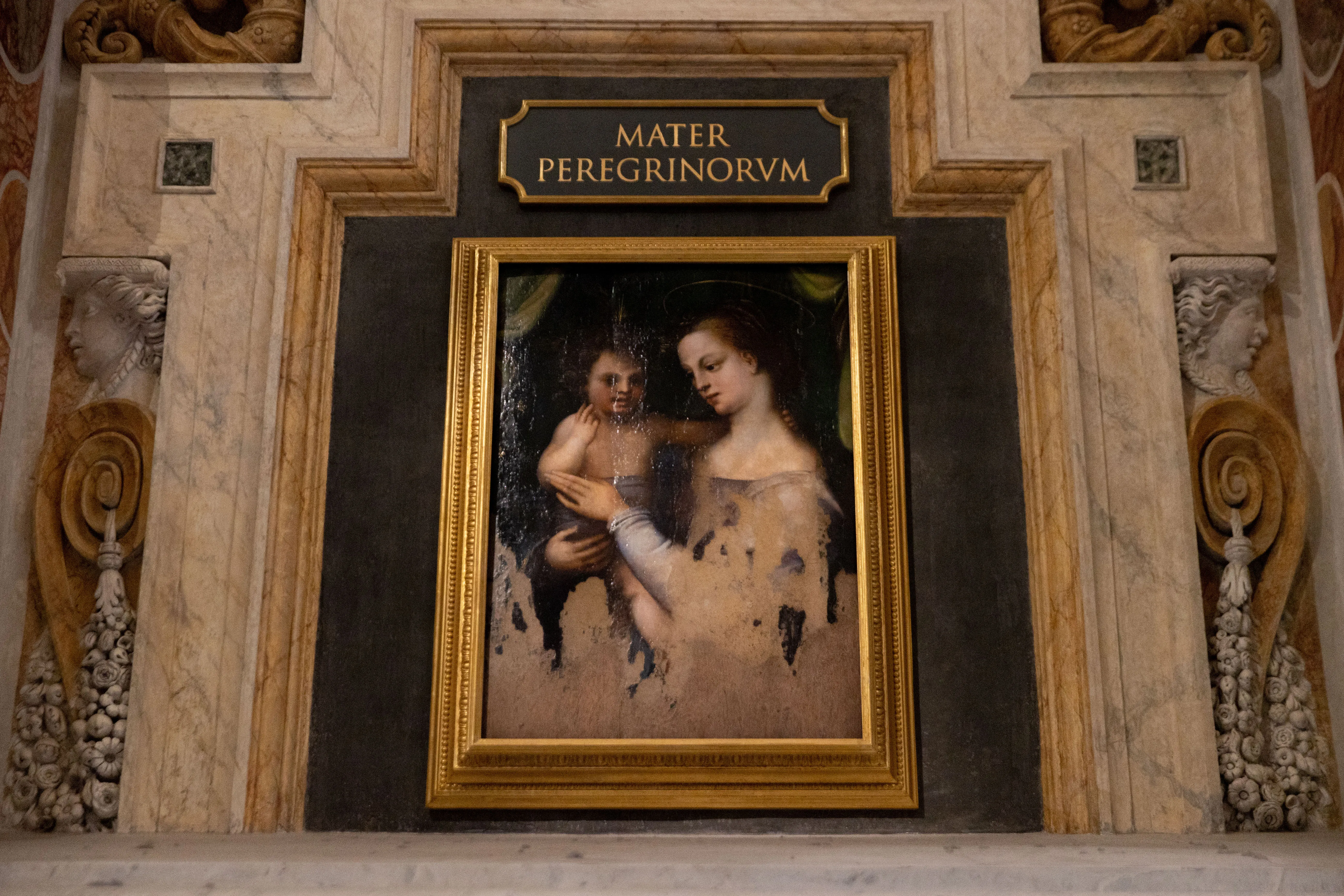
Mother of Pilgrims
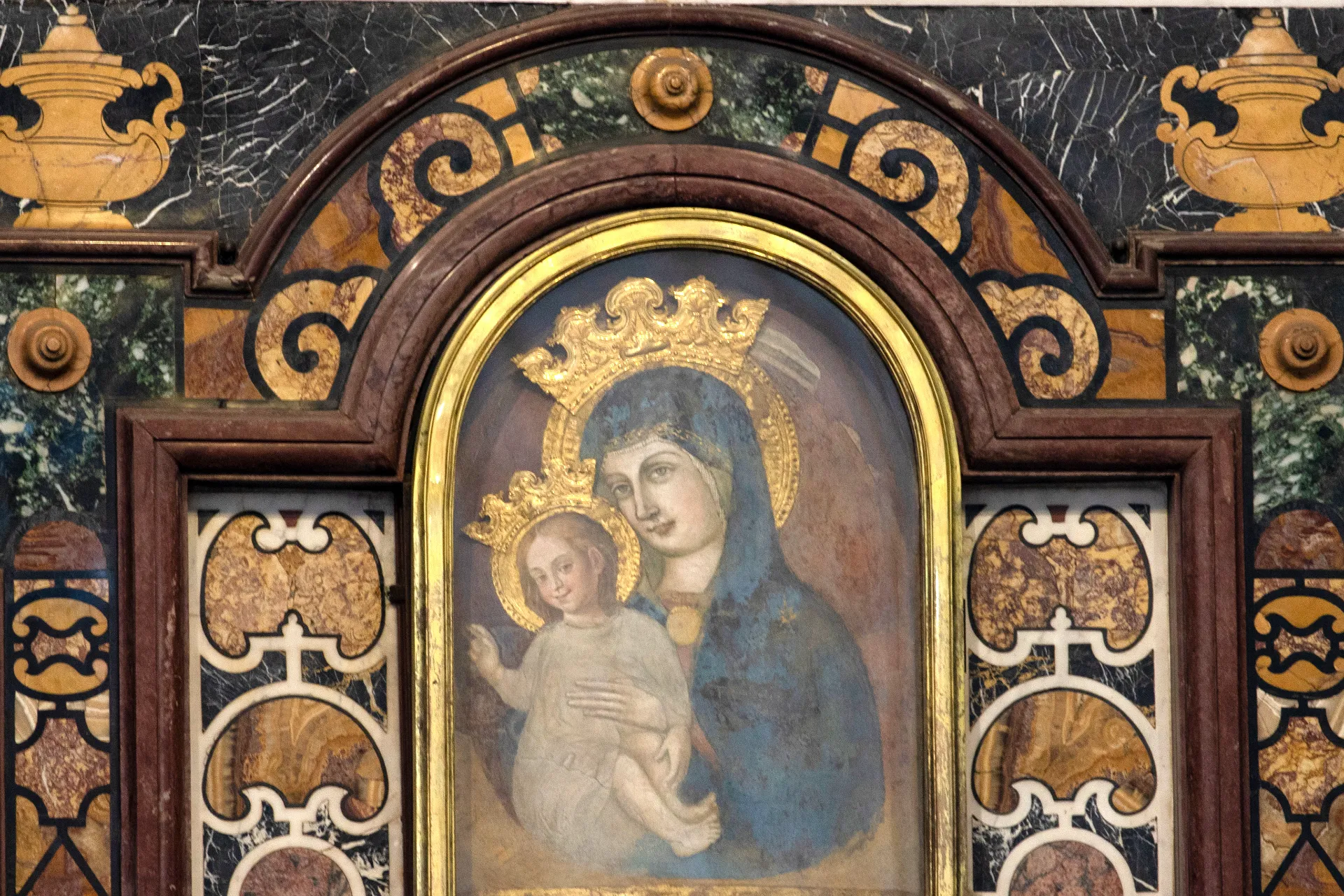
A restored 16th-century painting of Our Lady holding her Son can be found in St. Peter’s Basilica above the sarcophagus of Pope Gregory XIV under the title “Mother of Pilgrims.”. Daniel Ibañez/CNA
A restored 16th-century painting of Our Lady holding her son can be found in St. Peter’s Basilica above the sarcophagus of Pope Gregory XIV.
The image is titled “Mater Peregrinorum” or Mother of Pilgrims. The original artist is not known, but Italians also refer to the painting as the “Madonna di Scossacavalli” because it came from Rome’s Church of San Giacomo Scossacavalli, which was demolished in 1937 to create the current Via della Conciliazione leading to St. Peter’s Basilica.
Our Lady of Perpetual Help
A 12th-century painting on wood titled Our Lady of Perpetual Help in the Gregorian Chapel of St. Peter’s Basilica. Daniel Ibañez/CNA
A 12th-century painting on wood titled Our Lady of Perpetual Help, also known as Our Lady of Succor, was transferred to an altar in St. Peter’s Gregorian Chapel on February 12, 1578 with a solemn procession.
The painting was the first artistic restoration completed under Pope Francis’ pontificate during the Year of Faith, according to a book published by the Knights of Columbus.
The remains of the Doctor of the Church St. Gregory of Nazianzus (d. 390) are preserved in an urn beneath the Altar of Our Lady of Succor in the Gregorian Chapel, found on the right side of the basilica.
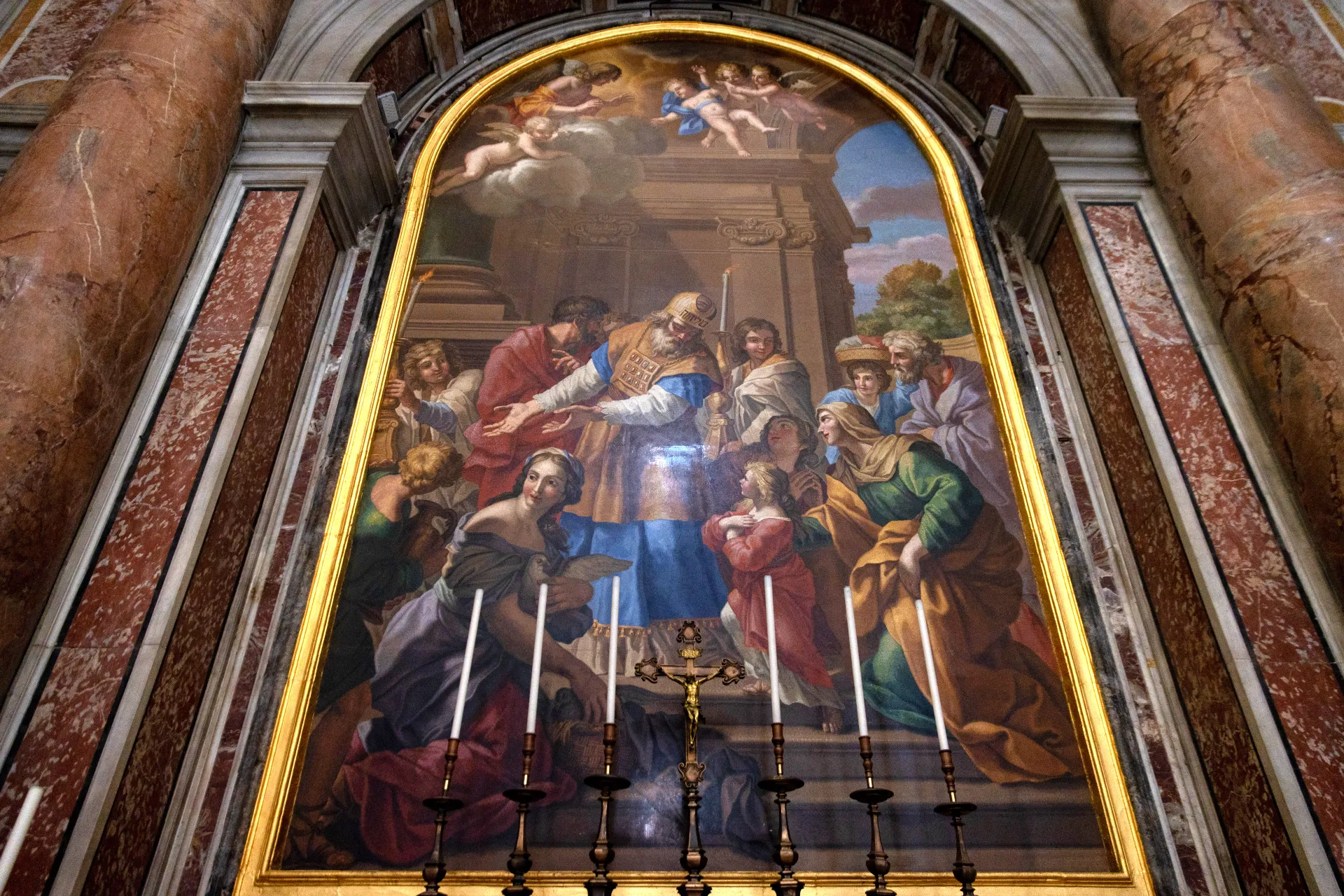
Ark of the Covenant
A mosaic altarpiece of the Presentation of the Virgin Mary in the Temple can be found above the tomb of Pope St. Pius X near the left-front entrance of the basilica. Daniel Ibañez/CNA
A colorful mosaic altarpiece of the Presentation of the Virgin Mary in the Temple brightens the wall above the tomb of Pope St. Pius X (d. 1914) in the Presentation Chapel near the left-front entrance of the basilica.
A young Mary is depicted on the steps of the Temple with her parents, Sts. Anne and Joachim, the grandparents of Jesus.
The mosaic completed by Pietro Paolo Cristofari in 1728 is based on a painting by 17th-century artist Giovanni Francesco Romaneli, the original of which can be found in Rome’s Basilica di Santa Maria degli Angeli e dei Martiri.
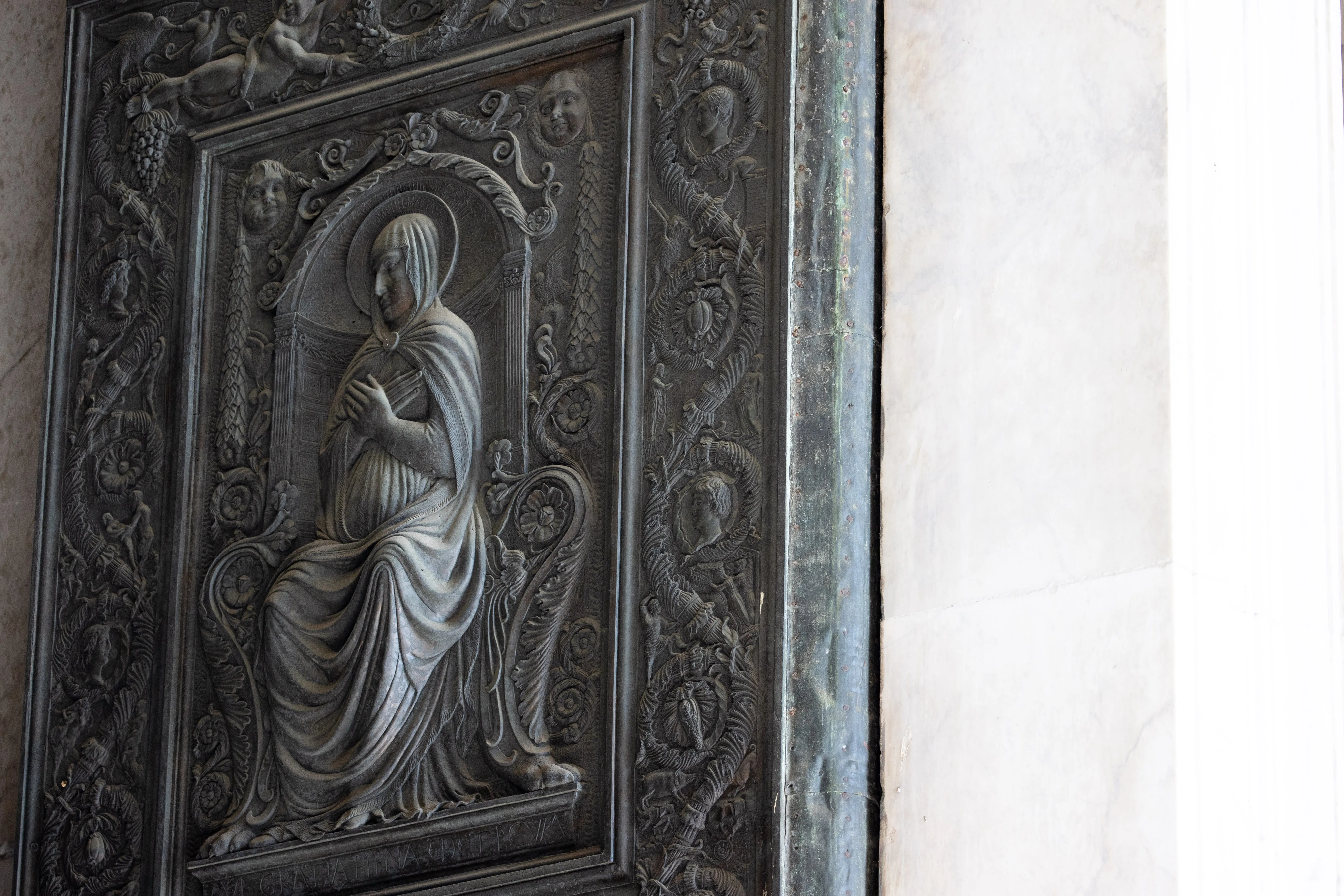
Gate of Heaven
According to Father Agnello Stoia, the pastor of the parish of St. Peter’s Basilica, the 15th-century image of Mary on the oldest door of St. Peter’s Basilica is a reminder of Mary’s title, “Gate of Heaven.”. Daniel Ibañez/CNA
The central door leading to basilica was retained from the old St. Peter’s Basilica and is known as the Filarete Door. Created by a Florentine artist in 1455, the door depicts Christ, the Virgin Mary, and the apostles Sts. Peter and Paul.
According to Father Agnello Stoia, the pastor of the parish of St. Peter’s Basilica, the 15th-century image of Mary on the door is a reminder of Mary’s title, “Gate of Heaven.”
Queen Assumed into Heaven
The mosaics decorating the interior dome of St. Peter’s Basilica depict the Blessed Virgin Mary next to Christ the Redeemer and the Apostles. Daniel Ibañez/CNA
Looking up at the soaring cupola, or dome, of St. Peter’s Basilica, one sees mosaics depicting the Blessed Virgin Mary next to Christ the Redeemer, along with St. John the Baptist and the apostles.
The mosaic of the Virgin Mary on the Great Dome, completed in 1610 by Orazio Gentileschi, is based on drawings by Italian Mannerist painter Giuseppe Cesari.
Mother of the Redeemer
Michelangelo’s Pieta conveys the faith and emotion of the Blessed Virgin Mary as she cradles in her arms the dead body of her only son after witnessing him crucified. Daniel Ibañez/CNA
Michelangelo Buonarroti carved the Pieta from a single slab of Carrara marble when he was 24-years old. The sculpture was unveiled in St. Peter’s Basilica for the Jubilee of 1500.
The moving sculpture conveys the faith and emotion of the Blessed Virgin Mary as she cradles in her arms the dead body of her only son after witnessing him crucified.
The sculpture sits above a side-altar near the front entrance of St. Peter’s Basilica, where Mass was sometimes offered before recent restrictions. Visitors to the basilica can only see the Pieta behind bulletproof glass after a man attacked the sculpture with a hammer in May 1972.
The Pieta was the only work of art that Michelangelo ever signed.
U.S. Special Presidential Envoy for Climate John Kerry. / Public domain.
Vatican City, May 14, 2021 / 13:00 pm (CNA).
Pope Francis will meet Saturday with U.S. climate envoy John Kerry, who is also a keynote speaker at a Vatican conference on fi… […]
Portland, Ore., Feb 4, 2022 / 15:19 pm (CNA).
The Episcopal Diocese of Oregon and St. Timothy’s Episcopal Church are suing the city of Brookings, Oregon, after the city passed an ordinance in October limitin… […]


 By
By 



Leave a Reply