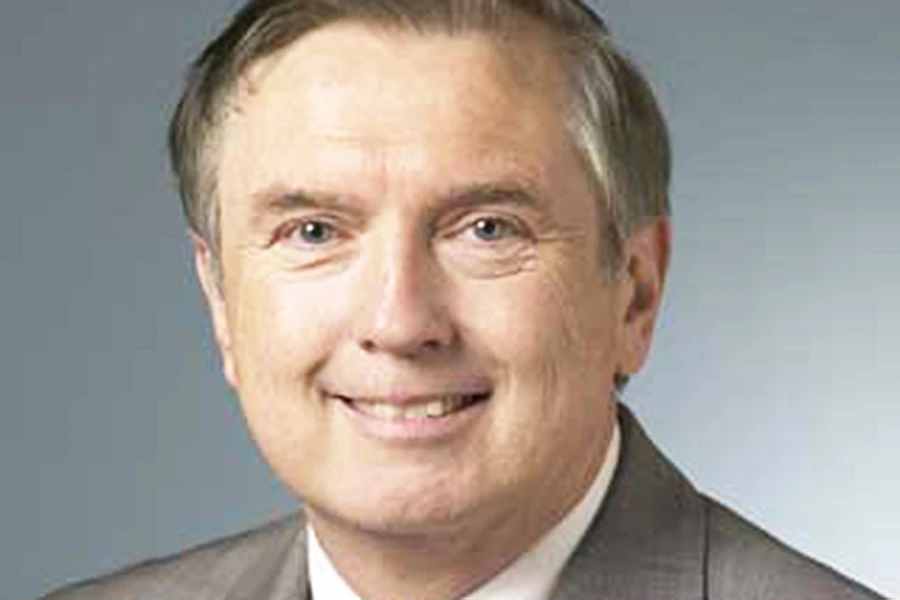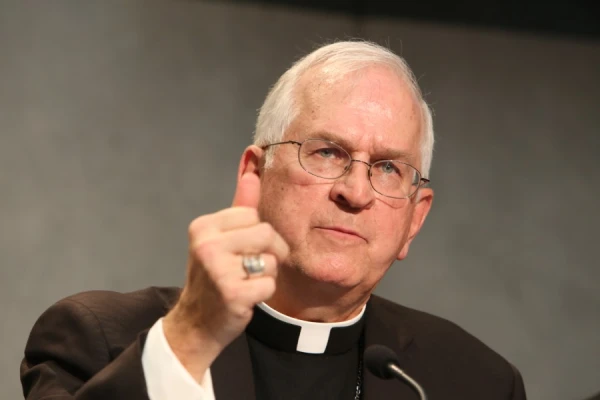
CNA Staff, Sep 23, 2020 / 04:00 pm (CNA).- After a controversial grand jury decision regarding the death of Breonna Taylor, Archbishop Joseph Kurtz of Louisville called for unity to work for racial justice and to combat racism, while many in the city of Louisville braced for protests.
The archbishop made his plea on Wednesday, September 23, shortly after the announcement of the grand jury’s decision to indict one of the police officers involved in Taylor’s death.
“I again join with citizens throughout our community and the nation in mourning the tragic death of Breonna Taylor,” said Kurtz in the statement, which was distributed to clergy and leaders within the Archdiocese of Louisville and provided to CNA.
Taylor, 26, was killed March 13 in Louisville during a police raid of her apartment. Taylor, a Black woman, was shot five times by the police after her boyfriend initially fired at the officers who breached Taylor’s apartment’s door to execute a warrant. The officers involved were white. An issue of contention is whether, and how loudly, the officers announced themselves when entering the apartment.
Taylor’s boyfriend, Kenneth Walker, acknowledged firing the first shots, and claimed that he thought the police were intruders. Walker has said he did not hear officers announce themselves as police.
On Wednesday, a grand jury indicted one of the officers who served the warrant, Brett Hankison, with three counts of “wanton endangerment” for firing three shots into and near Taylor’s apartment. Hankinson was fired from the Louisville Police in June. The other two officers were not indicted. None of the shots fired by Hankinson were those which struck Taylor.
“Whatever our reaction to the decision by the Grand Jury and the Attorney General’s Office, we must now come together to work for racial justice,” Kurtz said Wednesday.
“There is no question that our nation’s original sin of racism continues to destroy the lives of persons of color and that racism extends through so many systems of our society… educational, economic, religious, housing, criminal justice, voting, and employment,” said the archbishop.
The Church, said Kurtz, “stands ready to work with civic, community, educational, business, and non-profit partners to address these issues.”
No officer was directly charged with Taylor’s death. The charges of “wanton endangerment” carry a maximum sentence of five years in prison each.
Taylor’s mother received a $12 million wrongful death settlement from the City of Louisville.
The city declared a state of emergency before the grand jury’s decision was announced. The phrase “Justice for Breonna Taylor” has become one of the most prominent rallying cries of the Black Lives Matter movement, and her portrait has been frequently featured on posters and banners at protests.
Kurtz said he respects the First Amendment right to protest, but pleaded for peace “and the rejection of violence” during demonstrations.
“Let us all join in prayers for Breonna Taylor’s family and friends and for justice, peace, and healing in our community,” said Kurtz.
If you value the news and views Catholic World Report provides, please consider donating to support our efforts. Your contribution will help us continue to make CWR available to all readers worldwide for free, without a subscription. Thank you for your generosity!
Click here for more information on donating to CWR. Click here to sign up for our newsletter.

Cheyenne, Wyo., Aug 14, 2019 / 02:30 pm (CNA).- Police in Wyoming have recommended that two clerics accused of sexually abusing male juveniles in the 1970s and ’80s be criminally charged, the Casper Star-Tribune reported Wednesday.
A press release from the police said its investigation “stems from a case initiated in 2002 that was reopened in 2018,” the Casper daily reported Aug. 14.
The clerics whom the police have recommended charging were unnamed in the release.
In July 2018 the Diocese of Cheyenne announced that Emeritus Bishop Joseph Hart had been credibly accused of sexually assaulting two boys after he became Bishop of Cheyenne in 1976, following an investigation of charges ordered by its current bishop.
In 2002, a Wyoming man accused the bishop of sexually abusing him as a boy, both during sacramental confession and on outings. The alleged abuse took place after Hart had become a bishop.
The Natrona County district attorney in 2002 had put forward a report saying there was no evidence to support the allegations that originated in Wyoming.
The Cheyenne diocese said in July 2018 that it “now questions that conclusion.”
According to the diocese, Bishop Steven Biegler, the present ordinary, had ordered a “fresh, thorough investigation” because the claims against Hart had not been resolved.
In December 2017, the bishop retained an outside investigator who obtained “substantial new evidence” and who concluded the district attorney’s 2002 investigation was flawed. The investigator concluded that Bishop Hart had sexually abused two boys in Wyoming.
The diocesan review board, after reviewing the report, concurred with the investigator, finding the allegations “credible and substantiated.” The diocese reported the alleged abuse to the Cheyenne district attorney in March 2018, and Cheyenne police opened an investigation.
The diocese said it reported the allegations of abuse as required by its own policy, the national Catholic Church policy, and Wyoming law.
In August 2018, the diocese announced it had found credible a third allegation of child sexual abuse committed by Bishop Hart.
“A third individual reported that he, too, was sexually abused by Bishop Hart in 1980,” the diocese said. This third person reported the abuse after the diocese’s announcement there was “credible and substantiated” evidence that Bishop Hart had abused two Wyoming boys.
This third allegation was also reported to the Cheyenne Police Department.
Bishop Hart has denied accusations of abusing minors.
His first accusers came forward in 1989, when he was alleged to have abused boys while serving as a priest in Kansas City. Ten individuals named Hart in lawsuits related to child sexual abuse claims dating from the 1970s. These accusations were part of settlements the Diocese of Kansas City-St. Joseph reached in 2008 and 2014, though Bishop Hart denied the accusations, the Missouri diocese said July 2.
Bishop Hart was ordained a priest for the Diocese of Kansas City – St. Joseph in 1956, where he served until he was named an auxiliary bishop in Cheyenne in 1976, and appointed to lead the diocese two years later. He served as Bishop of Cheyenne until his resignation in 2001 at the age of 70.
In June the Cheyenne diocese released a list of substantiated allegations of sexual abuse against minors or vulnerable adults. The release listed allegations against 11 clerics who had served in the diocese.
Washington D.C., Feb 26, 2019 / 03:05 am (CNA).- A global marriage ministry is launching a new initiative to provide resources, encouragement and enrichment opportunities for military couples in Canada and the United States.
The project is part of Worldwide Marriage Encounter (WWME), in conjunction with the North American Military Services Outreach (NAMSO).
Worldwide Marriage Encounter, which originated in the 1950s with Spanish priest Father Gabriel Calvo, is a marriage enrichment program that offers weekend retreats to help couples foster communication skills, inspire family life, and promote friendships with other Catholic couples.
The military initiative was announced on Feb. 19 by Dave and Lucy Snyder, who first attended a WWME marriage retreat in 1977. They have held a range of leadership positions at WWME’s local and regional levels and been on the national board for a number of years.
Now a retired member of the U.S. Army, Mr. Snyder told CNA that the program hopes to create bonds between military couples and shed light on the specific challenges they face.
Military couples may find themselves encountering obstacles that other marriages do not experience, and they need to know they are not alone, he said, pointing to the support of priests and other families in similar situations.
“There is a good way to make it through our lives together and still be happy and faithful in our commitment,” he said.
At the website www.foryourmilitarymarriage.com, military couples share their experiences through a blog; links offer resources, statistics and tips for building health relationships; and an online network connects Catholic military couples, offering fellowship and encouragement for one another, regardless of age or stage of married life.
This online experience is part of a bigger NAMSO program, which also includes one-day marriage retreats at the local parish or military base. These six-hour events enrich marriages through workshops and lectures dealing with communication, combined decision-making, prayer, and cooperative service to the Church, among other topics.
Also offered are “journey talks” – four-part programs that take people on a journey of self, as a couple, with God, and with others.
“This is what we call positive reinforcement strategy, whether it is in couple prayer or learning to be better listeners [or] learning how to serve our community as a couple,” Snyder said.
“It’s really a positive and uplifting program.”
A major component of the program is the building of relationships with other military couples.
“NAMSO’s Marriage Enrichment program offers wisdom and insight from couples who have lived the military life and understand the unique challenges and circumstances that can put pressure on a military couple’s relationship,” said a statement on the website.
Snyder stressed that military couples face unique circumstances, including long-distance relationships during deployment, ongoing relocation of families, and potential struggles after military tours that may involve PTSD or injuries.
Couples who have been through these experiences already are able provide valuable advice to younger couples, he noted.
“That’s why we use active and retired military,” because the shared experiences create an “awareness of the struggles that military couples go through,” he said.
“There is kind of kinship there that most, especially the retired ones, have gone through … and are much more aware of some of the pitfalls that can happen.”
Marriage is important for society, Snyder said, but today it faces many distractions. He expressed hope that the new website and the NAMSO retreats can reinforce family life and sustain the commitment of marriage for couples in the military.
“We want to ensure that couples have good strong goals for commitment in their marriage because of the importance of marriage in our Church and then in our society, as we want to raise good, healthy kids [and] provide role models to them of a good marital relationship,” he said.
A Chase bank building in Wilmington, Delaware. / Credit: Harrison Keely, CC BY 4.0, via Wikimedia Commons
CNA Staff, Mar 25, 2025 / 06:00 am (CNA).
Legislators in several states are moving to address the practice of “debanking” as part of an effort to stop what some critics say are anti-conservative measures employed by major U.S. financial institutions.
The Cambridge Dictionary defines debanking as “the act by a bank of closing someone’s account because they are regarded as a risk legally, financially, or to the bank’s reputation.” Critics have claimed that the practice is used by banks to antagonize certain groups, including conservatives and other political activists.
For example, the Trump Organization filed a lawsuit earlier this month against one of the largest banks in the United States. President Donald Trump claims he was a victim of debanking after Capital One allegedly closed hundreds of his organization’s accounts soon after his supporters’ Jan. 6, 2021, storming of the U.S. Capitol.
In her recently-released memoir, Melania Trump alleged that she and her son, Barron, were also debanked.
The Ruth Institute, a global coalition designed to equip Christians to defend the family, alleged it was debanked in 2017. Just two years ago, a Memphis-based Christian charity called the Indigenous Advance Ministries also claimed that it had been debanked by Bank of America.
In another high-profile case, in 2022 former U.S. senator and ambassador Sam Brownback announced that his nonprofit group the National Committee for Religious Freedom had been debanked.
Ambassador Sam Brownback speaks on Feb. 6, 2018. Credit: Jonah McKeown/ CNA
Over the past decade, other high-ranking individuals and grassroots organizations have reportedly faced debanking, including Nigel Farage, who led the Brexit effort in the United Kingdom; evangelist and motivational speaker Nick Vujicic; Moms for Liberty, a parental rights advocacy group; Christian author and preacher Lance Wallnau; and Timothy Two Project International, a Christian ministry.
U.S. bishops ‘monitoring’ debanking; legislators move to address
While it’s unclear to what extent debanking has affected U.S. Catholics, the U.S. Conference of Catholic Bishops acknowledged the phenomenon in its 2025 religious liberty report.
“In recent years, individuals have raised concerns that banks are discriminating on the basis of political and religious viewpoints,” the report read.
“In response to incidents like these, some states have begun passing laws intended to prevent politically motivated debanking,” the bishops noted. “However, the U.S. government argues that these laws hamstring banks, who need to be able to account for potential customers’ exposure to foreign actors. The lack of transparency, though, makes it difficult to ascertain why someone like Ambassador Brownback would be debanked.”
According to the report, the USCCB is “monitoring this issue but has not taken a position on it.”
Taking action against debanking
Some lawmakers are moving to address the controversy via legislation.
An anti-debanking bill in Idaho was sent to the state governor for signature last week.
The Transparency in Financial Services Act would prohibit “large financial institutions from discriminating against customers based on their political or religious views” and would give customers the right to request the reason for denial from an institution.
Montana’s Republican-sponsored Equality in Financial Services Act and South Carolina’s anti-debanking bill — similar to Idaho’s bill — have made some progress in the state Legislature, while Georgia’s Freedom of Speech and Belief Act failed to pass at the beginning of March.
Some see changes in bank policy, or even legal changes, as potential solutions to debanking.
Alliance Defending Freedom (ADF) — a legal group committed to protecting religious freedom and freedom of speech — worked with Indigenous Advance Ministries to file a consumer complaint following its alleged debanking in 2022.
“No American should ever fear losing access to their bank account due to their religious or political beliefs,” Lathan Watts, ADF’s vice president of public affairs, told CNA.
In its 2023 Viewpoint Diversity Score Index, ADF found that 7 out of 10 of the largest commercial banks — including Chase — have “hate speech” or “reputational risk” policies that contribute to debanking.
JPMorgan Chase, a top American bank, recently adjusted its policy, agreeing to protect clients against political and religious debanking in its code of conduct after 19 attorneys general petitioned the bank to cease its debanking practices in 2023.
“Chase’s policy change is a significant step by our nation’s largest bank to uphold financial access for all Americans,” Watts said. “This change provides necessary protections for customers like Ambassador Brownback, whose account at the National Committee for Religious Freedom was unexpectedly canceled in 2022.”
Watts shared his hope that other banks will take similar measures.
“Alliance Defending Freedom actively engaged with Chase in these negotiations, and we are hopeful that other banks will follow suit in safeguarding fundamental financial freedoms,” Watts said.
Jennifer Roback Morse, the founder and president of the Ruth Institute — an organization dedicated to combating the effects of the sexual revolution — recalled her own experience allegedly being debanked.
“In 2017, the Ruth Institute was one of the first organizations to be attacked in the banking arena,” Morse told CNA. “In our case, our credit card processor cut us off with no notification, or explanation, except to say that we ‘violated its standards.’”
Ruth Institute President Jennifer Roback Morse speaks on “The World Over with Raymond Arroyo” on June 13, 2019. Credit: “The World Over with Raymond Arroyo/EWTN News screenshot
While there was no clear explanation, Morse believes it was due to a leftist law center labeling the organization as a hate group.
“We surmised this was because we were listed on the Southern Poverty Law Center’s ‘Hate Map’ for our opposition to the redefinition of marriage and other LGBT-issues,” Morse said. “Thankfully, we were able to secure another credit card processor fairly quickly.”
Morse told CNA that banking “is a highly regulated, semi-monopolistic industry, comparable in some respects to public utilities such as electricity and water.”
“I am in favor of banks being legally required to be transparent and even-handed in their standards,” she said.
“Alternatively, if banks are permitted to engage in viewpoint discrimination,” she argued, “I would urge that bakers, florists, therapists, and other professionals also be permitted to refuse service to potential customers for any reason they choose.”
“A disappointed customer can find an alternative photographer a lot easier than they can find an alternative bank,” Morse noted. “And it is a lot easier to participate in the business world without a photographer or florist than to survive without banking services.”
‘A balanced approach’
While conservative legislators are pushing these anti-debanking bills, support for this legislation is not entirely united within the conservative movement.
A recent poll found that while a majority of conservatives are concerned about debanking, nearly three-quarters of conservatives expressed support for banks having the right to choose their own clients.
The poll by the Tyson Group found that conservatives “do not support broad government intervention that prevents financial institutions from making risk-based assessments when determining their customers.”
“When informed that legislation could force businesses to provide services to customers at odds with their values and the conservative movement, many expressed hesitations,” the study noted.
“As conservatives push for greater accountability from regulators, they also seek a balanced approach to debanking that avoids unintended consequences and protects the rights of both consumers and businesses.”
Some opponents of anti-debanking laws maintain that restrictions against debanking could have unintended consequences.
In South Carolina, for example, an anti-debanking bill under consideration, the Equality in Financial Services Act, would prevent financial institutions from discriminating when providing financial services.
But a Republican executive committeeman from Richland, South Carolina, is concerned that such an anti-debanking law could require pro-life banks to work with abortionists.
“Stopping abortion and protecting children requires winning hearts and minds but also cutting off the financial pipeline that enables these activities,” Eaddy Roe Willard, Richland GOP executive committeeman, told CNA. “Misguided legislation at the state level will only make it harder to do that.”
Hopefully the bishop will find some time to take a break from working for racial justice, and will use the time to preach the gospel.