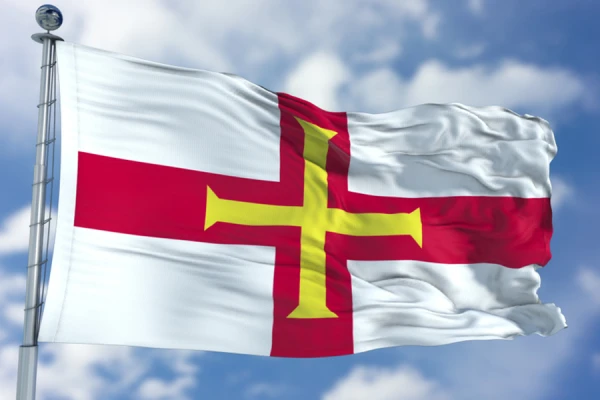
CNA Staff, Jun 25, 2020 / 12:01 pm (CNA).- The parliament of the Channel Island of Guernsey voted Wednesday to approve a bill expanding abortion time limits, and removing time limits altogether on the abortion of unborn children with disabilities.
Votes held June 24 on 12 propositions made by the health and social care committee of the States of Guernsey carried each of them.
Under the new law meant to ‘modernize’ the territory’s abortion law, the abortion time limit will be increased to 24 weeks, as it is in the UK. The previous law, adopted in 1997, permitted abortion up to 12 weeks. There will be no upper limit on when a child with “significant fetal abnormality” can be aborted. These propositions were approved by a 23-13 vote, with one abstention.
The new law also decriminalizes the procurement of abortion outside the legal framework; drops a requirement that the mother consult with two medical practitioners; allow nurses and midwives to preform medical abortions; and allows medical abortions at home.
It will also force conscientious objectors to make referrals without delay; “make clear that health practitioners may not refuse to participate in care required to save the life or prevent serious injury to the physical or mental health of a woman”; and “create a power in the Law for the Committee for Health & Social Care to make regulations making further provision in relation to the circumstances in which the right of health practitioners to conscientiously object to the provision of care in relation to abortions may be exercised.”
Guernsey is a self-governing Crown Dependency for which the UK is responsible, located off the coast of Normandy. The new law will extend to Guernsey and its associated islands, but not Alderney and Sark, which are also part of the Bailiwick of Guernsey.
During debate on the propositions, according to the Guernsey Press, Deputy Richard Graham commented that “I regret that Health & Social Care have identified the UK as the gold standard to be followed, instead I would urge them to look to those countries that have low abortion rates, and seek to learn lessons from them, they are no less civilised, no less compassionate than we are, and they strike me as a far better abortion role model than the UK.”
The Bailiwick Express reported that Deputy Emilie McSwiggan, a member of the health and social care committee, said: “What we are trying to do is find a way through that is as compassionate as it can be, which is as fair as it can be, which balances and reflects the choices that people have to make and allows people to make those choices safely and within the context of a legal framework that is clear and modern and fair.”
Several amendments to the new law, which sought to reduce the proposed time limit on abortions or to maintain limits on the abortion of unborn children with disabilities, had been defeated June 19. The amendments would have retained the same time limits for the abortion of children with disabilies as of all unborn children; made clear that non-fatal conditions such as Down syndrome or cleft palate are not considered fatal foetal abnormalities; and changed the time limit for abortions to 16 or 22 weeks, rather than 24.
Earlier, a sursis motivé to stay the deliberation of the draft law and allow for broader public consultation had been defeated.
According to official figures, 113 abortions were performed in Guernsey in 2018, with a further three involving Guernsey residents performed in England and Wales.
The Catholic Church on the island held an all night prayer vigil at St. Joseph’s Church in St. Peter Port ahead of debate last week.
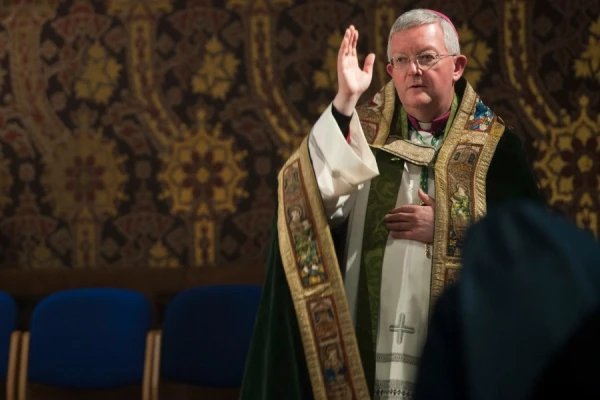
Bishop Egan of Portsmouth, the diocese which includes Guernsey, urged Catholics earlier this month to resist the “fundamentally detestable” efforts to liberalize the island’s abortion law.
In a June 7 message he argued the changes would violate the commandment “Thou shalt not kill” and the injunction “Love thy neighbor as thyself”, which formed the basis of laws in civilized societies.
“This is why abortion and the current proposal to ‘modernize’ — that is, to increase — its availability in Guernsey is fundamentally detestable,” he said. “Under the bogus word ‘modernization,’ an attempt is being made to further liberalize abortion, to make it a lot easier and a lot more common.”
Egan said: “They want to allow abortions much later in pregnancy, abortions to be carried out with less red tape, abortions to take place at home and outside hospitals, and, grimly, abortions right up to birth for a disabled child, a child unwell, or a child with Downs syndrome. How must a person with Downs syndrome feel about this?”
“They refer to abortion euphemistically as a ‘procedure,’ a ‘termination’ with help from ‘the professionals.’ But what procedure can justify any professional terminating the life of an innocent baby? The more you see what an abortion is, the more you can see it is anti-life, anti-human and anti-woman.”
In a joint letter, John P. Ogier, pastor of Spurgeon Baptist Church, and Fr. Bruce Barnes, the Catholic Dean of the Bailiwick of Guernsey, criticized the timing of the debate amid the coronavirus pandemic.
They wrote: “We believe this is an entirely inappropriate time to be considering such a sensitive and morally important issue, in the midst of the current COVID-19 pandemic and with such a truncated timescale for public debate and consideration.”
 […]
[…]



Leave a Reply