

 By
By Pope Leo XIV kicks off his trip to Africa in the country of Algeria, which is home to a small but lively Catholic population.
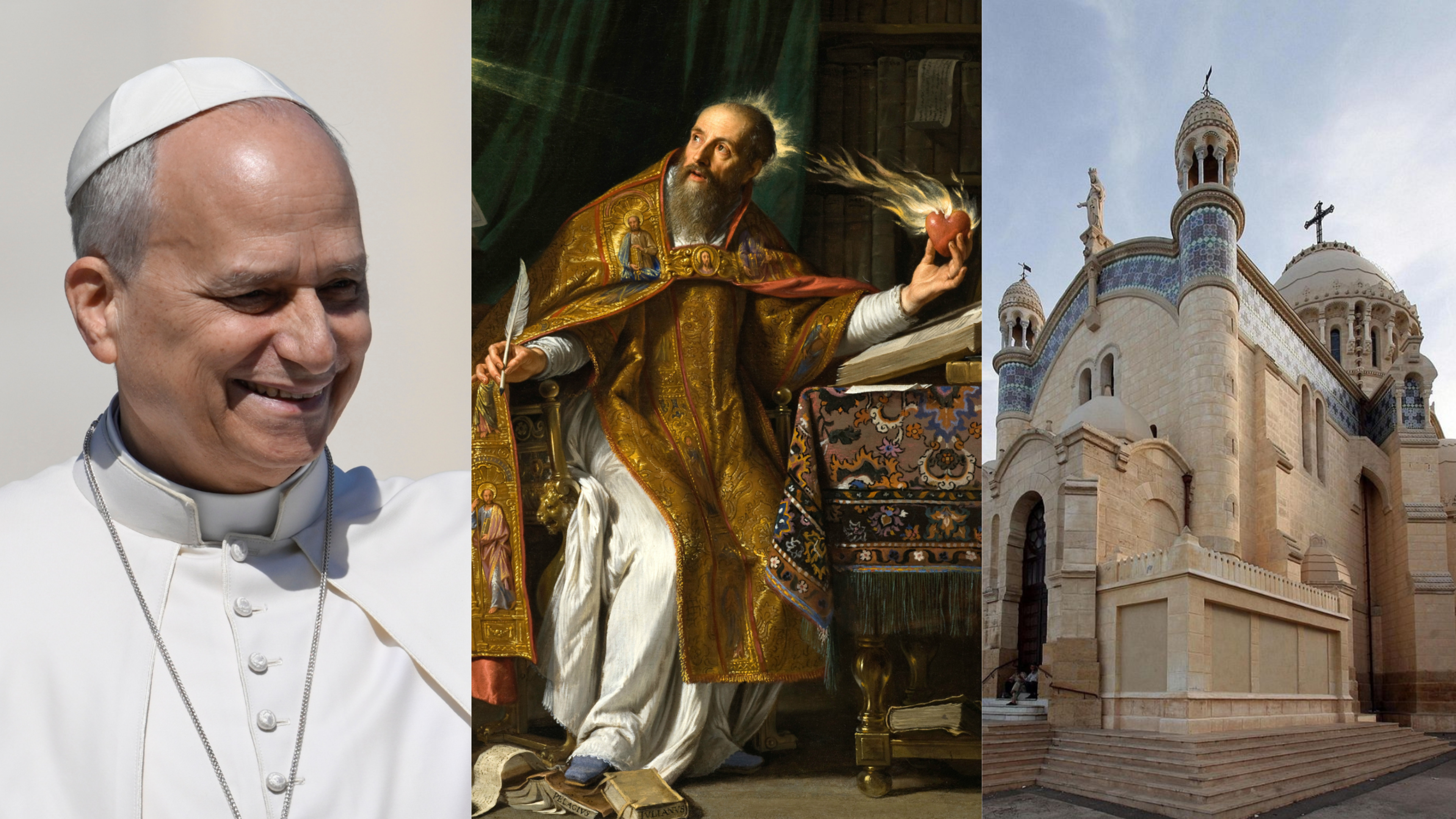
Pope Leo XIV kicks off his first papal trip to Africa in Algeria on Monday, spending two days there before visiting Cameroon, Angola, and Equatorial Guinea.
Here are seven key things to know about the tiny but lively Catholic Church he’s about to meet:
1. Catholics are a tiny flock in this huge country.
Algeria has roughly 45 million to 48 million people but only a few thousand Catholics — often estimated at no more than 10,000, a fraction of 1% of the population.
Most Catholics are expatriates, sub-Saharan African students, migrant workers, diplomats, and religious; Indigenous Algerian Catholics are very few because conversion from Islam is both sensitive culturally and regulated legally. Yet, the Church maintains dioceses, parishes, and regular sacramental life, showing a qualitative rather than numerical impact.
2. Algeria has one of the largest dioceses in the world.
The Church is organized into four jurisdictions: the Archdiocese of Algiers and the Dioceses of Oran, Constantine and Hippone, and Laghouat‑Ghardaïa.
The pope is set to visit Algiers and Annaba (ancient Hippo); however, Laghouat‑Ghardaïa covers a massive Sahara territory, making it one of the largest dioceses in the world by land area.
Because Catholics are so scattered, priests and religious often serve several communities at once, relying on close-knit, relational ministry more than big programs.
3. This is the homeland of St. Augustine.
Considering that the pope is a member of the Order of St. Augustine, this visit will have very special and personal moments. Algeria once hosted a vibrant Latin Christian world; its greatest son is St. Augustine of Hippo, bishop and doctor of the Church.
Annaba — a city the pope will visit — was once called Hippo Regius and is home to the Basilica of St. Augustine, which physically links the early Church to today’s small Catholic community.
4. The Catholic Church in Algeria lives under a tightly regulated religious framework.
Islam is the state religion in Algeria, and while the constitution affirms freedom of conscience, non-Muslim worship is closely regulated. Non-Muslim communities must register places of worship, public proselytism is restricted, and conversion from Islam can bring serious social consequences.
Recent years have seen some closures and administrative pressures on Christian worship spaces and ministries, underscoring how fragile this small Church’s institutional space is.
Despite this, the Catholic Church in Algeria runs schools, cultural centers, and charitable initiatives, often through institutes of consecrated life and societies of apostolic life.
5. The 1990s martyrs still mark Catholic life in this country.
During Algeria’s civil conflict in the 1990s, several priests, religious, and the Trappist monks of Tibhirine were killed, along with Bishop Pierre Claverie of Oran. In 2018, 19 martyrs of that period were beatified in Oran in a ceremony attended by Muslim leaders and framed as a sign of reconciliation for the whole nation.
These martyrs are remembered not as political actors but as friends who chose to stay with the Algerian people, shaping today’s Catholic identity of fidelity and solidarity.
6. Interreligious dialogue is not optional but the heart of the mission.
As a tiny minority in a Muslim-majority country, the Catholic Church defines much of its mission through respectful dialogue with Islam. Priests and religious engage in academic exchanges, social projects, and cultural encounters that build trust rather than confrontation.
7. Marian devotion is a bridge amid differences.
Places like the Basilica of Our Lady of Africa in Algiers have become strong symbols of coexistence, where Marian devotion is a bridge even amid deep theological differences.
This is a unique site of interreligious coexistence where many Muslims visit to pray to Mary, whom they call “Lalla Meriem.”
A famous inscription behind the altar reads: “Our Lady of Africa, pray for us and for the Muslims.”
If you value the news and views Catholic World Report provides, please consider donating to support our efforts. Your contribution will help us continue to make CWR available to all readers worldwide for free, without a subscription. Thank you for your generosity!
Click here for more information on donating to CWR. Click here to sign up for our newsletter.

Leave a Reply