

 By
By 
The number of catechumens — people preparing to receive baptism — continues to grow robustly in France. After reaching the highest number in two decades in 2025, with a total of 10,384 baptisms during the Easter Vigil, several French dioceses indicated that this year the number could reach 20,000.
Young people are seeking something transcendent
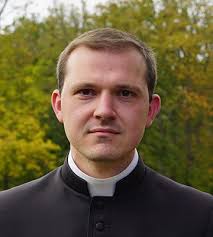
Father Gian Strapazzon, rector of St. Vincent de Paul Seminary in France, arrived in the country 12 years ago from his native Brazil. In an interview with ACI Prensa, the Spanish-language sister service of EWTN News, he said there he encountered exemplary priests whose witness confirmed his vocation: “They were like lights amidst the darkness.”
St. Vincent de Paul Seminary serves as the primary formation center for the Institute of the Good Shepherd, founded in 2006 in Courtalain within the French Diocese of Chartres. It is distinguished by its formation of priests utilizing the traditional Roman rite.
The record number of conversions in France, particularly among young adults, stems from “reaction to a society that’s not finding answers,” reflecting a spiritual awakening in Europe, according to Strapazzon.
“These are young people seeking something transcendent who find answers in preaching rooted in the tradition of the Catholic faith — just as it has always been done. This encourages many adults to take a more radical step and live out their faith more intensely,” he noted.
The eight dioceses comprising the ecclesiastical province of Paris have convened a council that opened Jan. 25 and will continue through May 2027 with the aim of discerning an appropriate response to the growing numbers of younger people coming into the Church and establishing common guidelines at the provincial level.
This is indispensable, according to Strapazzon, who said “it is necessary to understand the source of this surge in order to offer good solutions.”
“People want Our Lord Jesus Christ,” he explained, “and this must be taught correctly. People are already weary of the superficiality they encounter in the world; they are seeking the true God, the revelation of God.”
The rector of the French seminary underscored the importance of teaching sound doctrine and noted that many adults who wish to receive the sacrament of baptism — even those raised in non-Catholic environments — attend the Traditional Latin Mass.
“This is what attracts people today: this truth and this search for something concrete, serious, and profound, something that stands in contrast to what they have become accustomed to in the modern world, as they realize that the latter does not quench the thirst of their souls,” Strapazzon said. “For this reason, obviously, it is essential that there be sound doctrine.”
Increase in applications to enter the seminary
Strapazzon has also witnessed an increase in applications to the seminary in recent years: “At the seminary, we have a young man who was baptized five years ago as well as another who converted from Islam.”
He noted, however, that the Church encourages “a certain prudence” regarding the acceptance and formation of newly baptized young men, who must wait at least two years after their baptism before entering the seminary.
“One can become confused in one’s fervor and fail to discern. It’s one thing to be a Christian and quite another to have a vocation to the priesthood. For this reason great prudence [is always exercised]. But yes, here we receive many inquiries every year from individuals who have been baptized only recently, individuals who require guidance to discern whether to enter the seminary.”
The priest emphasized that this unprecedented phenomenon in France “demonstrates to us that the Church of Our Lord is always alive, that our faith is truly catholic — that is to say, universal — and that it is always enduring and life-giving.”
He said this will continue to happen as long as there is a “faith preached with fidelity” on the part of the priests. “Even if there are no priests, the Lord has told us that the stones will preach,” he reminded.
Strapazzon explained that the correct way to interpret this phenomenon “is that the Catholic Church is always alive, will always be fruitful, and when it dies in one place, it revives in another. Moreover, in her resides a soul which is the Holy Spirit who constantly moves it and builds it up.”
This story was first published by ACI Prensa, the Spanish-language sister service of EWTN News. It has been translated and adapted by EWTN News English.
If you value the news and views Catholic World Report provides, please consider donating to support our efforts. Your contribution will help us continue to make CWR available to all readers worldwide for free, without a subscription. Thank you for your generosity!
Click here for more information on donating to CWR. Click here to sign up for our newsletter.

Leave a Reply