
Vatican City, May 17, 2018 / 12:20 pm (CNA/EWTN News).- Two Vatican offices called Thursday for the development of new forms of economy and finance with regulations directed to the common good and respect for human dignity.
“It is especially necessary to provide an ethical reflection on certain aspects of financial transactions which, when operating without the necessary anthropological and moral foundations, have not only produced manifest abuses and injustice, but also demonstrated a capacity to create systemic and worldwide economic crisis,” read Oeconomicae et pecuniariae quaestiones, (Economic and financial issues), a document of the Congregation for the Doctrine of the Faith and of the Dicastery for Promoting Integral Human Development presented May 17.
The document, signed Jan. 6, presents considerations for an ethical discernment of economics and finances, and argues that profit should not be an end in itself, but must be pursued with the goal of achieving greater solidarity and a more equitable distribution of wealth.
It presents fundamental considerations, such as the need for ethics for the economy to function correctly, and treats at length of specific ethical issues in financial and economic markets.
It was presented during a press conference by Archbishop Luis Ladaria, prefect of the Congregation for the Doctrine of the Faith, and Cardinal Peter Turkson, prefect of the Dicastery for Promoting Integral Human Development.
Sitting alongside the prefects were professors Leonardo Becchetti from Rome’s Tor Vergata University and Lorenzo Caprio, from the Catholic University of Milan.
Archbishop Ladaria said the aim of the document is to provide a correct anthropological vision for the current market, since “the common good has disappeared” from many areas of economics and finance.
According to Becchetti, the document also identifies a major problem in the global economy: “we have a growing global wealth, which is a good thing, but we have a huge problem of distribution.”
“Regulation is key” to bringing more balance, he said, citing the need to be attentive to a growing dependence on technology while also ensuring people have work. The main problem, he said, “is fiscal,” and he stressed the need to give attention to areas with fewer resources.
The document frequently cites Pope Francis and Benedict XVI, but also includes citations from Pius XI, the Second Vatican Council, and the subsequent magisterium.
Oeconomicae et pecuniariae quaestiones cites the growing influence of financial markets, saying there is a need for “appropriate regulation of the dynamics of the markets and, on the other hand, a clear ethical foundation that assures a well-being realized through the quality of human relationships; rather than merely economic mechanisms, which by themselves cannot attain it.”
The recent global financial crisis, the text read, is an invitation to “develop a new economy, more attentive to ethical principles, and a new regulation of financial activities that would neutralize predatory and speculative tendencies and acknowledge the value of the actual economy. ”
What is at stake is the well-being of men and women throughout the planet who risk being excluded and marginalized from true well-being, while a small minority, “indifferent to the condition of the majority, exploits and reserves for itself substantial resources and wealth.”
The document said the time has come to begin recovering “what is authentically human,” and to expand minds and hearts to they recognize what is both true and good, “without which no social, political and economic system could avoid bankruptcy, failure, and, in the long term, collapse.”
Competent and responsible authorities, the text read, have the duty “to develop new forms of economy and of finance, with rules and regulations directed towards the enlargement of the common good and respect for human dignity along the lines indicated by the social teachings of the Church.”
The text flagged erroneous and misguided approaches to the economic and financial markets such as consumerism, materialism, and an over-emphasis on profit, citing them as mentalities which endanger the common good and increase inequalities throughout the world.
“Our contemporary age has shown itself to have a limited vision of the human person, as the person is understood individualistically and predominantly as a consumer, whose profit consists above all in the optimization of his or her monetary income. The human person, however, actually possesses a uniquely relational nature and has a sense for the perennial search for gains and well-being that may be more comprehensive, and not reducible either to a logic of consumption or to the economic aspects of life.”
“No profit is in fact legitimate when it falls short of the objective of the integral promotion of the human person, the universal destination of goods, and the preferential option for the poor,” the text said, stressing that a legitimate economic system “thrives not merely through the quantitative development of exchange but rather by its capacity to promote the development of the entire person and of every person.”
On this basis, the document urged that universities and business schools provide as a foundation an education by which students will “understand economics and finance in the light of a vision of the totality of the human person”, avoiding “a reductionism that sees only some dimensions of the person.”
Well-being has to be measured by more than just Gross Domestic Product but must also take into account safety and security and “the quality of human relationships and of work. Profit should be pursued but not ‘at any cost’, nor as a totalizing objective for economic action.”
Profit and solidarity “are no longer antagonists,” the document said. However, “where egoism and vested interests prevail, it is difficult for the human person to to grasp the fruitful interchange between profit and gift, as sin tends to tarnish and rupture this relationship.”
“It is impossible to ignore the fact that the financial industry, because of its pervasiveness … is a place where selfishness and the abuse of power have an enormous potential to harm the community.”
The documented lamented that “Capital annuity can trap and supplant the income from work, which is often confined to the margins of the principal interests of the economic system. Consequently, work itself, together with its dignity, is increasingly at risk of losing its value as a ‘good’ for the human person and becoming merely a means of exchange within asymmetrical social relations.”
It pointed out an inversion between means and ends, in which work has become an instrument, and money an end.
Oeconomicae et pecuniariae quaestiones said that credit has an “irreplaceable social function,” but that “applying excessively high interest rates, really beyond the range of the borrowers of funds, represents a transaction not only ethically illegitimate, but also harmful to the health of the economic system. As always, such practices, along with usurious activities, have been recognized by human conscience as iniquitous and by the economic system as contrary to its good functioning.”
Instead, financial activities are called to serve the real economy, “to create value with morally licit means, and to favour a dispersion of capital for the purpose of producing a principled circulation of wealth.”
“What is morally unacceptable is not simply to profit, but rather to avail oneself of an inequality for one’s own advantage, in order to create enormous profits that are damaging to others; or to exploit one’s dominant position in order to profit by unjustly disadvantaging others, or to make oneself rich through harming and disrupting the collective common good.”
The text then highlights the need for greater communion, collaboration, and solidarity in the market, and offers suggestions for ways in which these can be implemented.
In a healthy market “it is easier to respect and promote the dignity of the human person and the common good,” the Vatican offices wrote.
The experience of recent decades has demonstrated the need for both ethics and regulation, the document states.
With an increased globalization of financial markets, the system “requires a stable, clear and effective coordination among various national regulatory authorities,” allowing them to share binding decisions when necessary, especially when it comes to threats against the common good.
“Where massive deregulation is practiced, the evident result is a regulatory and institutional vacuum that creates space not only for moral risk and embezzlement, but also for the rise of the irrational exuberance of the markets, followed first by speculative bubbles, and then by sudden, destructive collapse, and systemic crises,” Oeconomicae et pecuniariae quaestiones states.
The text condemned the tendency of business managers to establish policies which aim “not at increasing the economic health of the companies that they serve, but at the mere profits of the shareholders, damaging therefore the legitimate interests of those who are bearing all of the work and service benefiting the same company, as well as the consumers and the various local communities (stakeholders).”
The document suggested that ethical committees be established in banks to support the administration, and to help cushion them from the impact of losses.
The text then pointed to financial instruments such as derivatives and credit default swaps, which going unchecked, can lead to “unacceptable” consequences from an ethical point of view, essentially gambling with a person’s future.
Use of offshore accounts as tax havens was also condemned, though it was noted that tax systems throughout the world are not always equal, which can damage weaker parties in favor of wealthier ones.
Despite the fact that more nations are cracking down on offshore accounts, penalties have not been enforced and norms have either not been applied or they have not proved effective due to the political powers pulling the strings.
All of these problems are “not only the work of an entity that operates out of our control,” but are “in the sphere of our responsibilities.”
Oeconomicae et pecuniariae quaestiones states that it is “therefore quite evident how important a critical and responsible exercise of consumption and savings actually is.”
As an example, the text said shopping is a daily task by which we can choose to avoid purchasing products produced by chains which violate “the most elementary human rights,” such as sweat-shops.
“Through the gesture, apparently banal, of consumption, we actually express an ethics and are called to take a stand in front of what is good or bad for the actual human person.”
Likewise, persons are called to direct their savings to “those enterprises that operate with clear criteria inspired by an ethics respectful of the entire human person, and of every particular person, within the horizon of social responsibility.”
“Each one is called to cultivate procedures of producing wealth that may be consistent with our relational nature and tend towards an integral development of the human person.”
The document concludes with a call to hope in light of the challenges of the economy, saying, “every one of us can do so much, especially if one does not remain alone.”
“Today as never before we are all called, as sentinels, to watch over genuine life and to make ourselves catalysts of a new social behavior, shaping our actions to the search for the common good, and establishing it on the sound principles of solidarity and subsidiarity.”
 […]
[…]


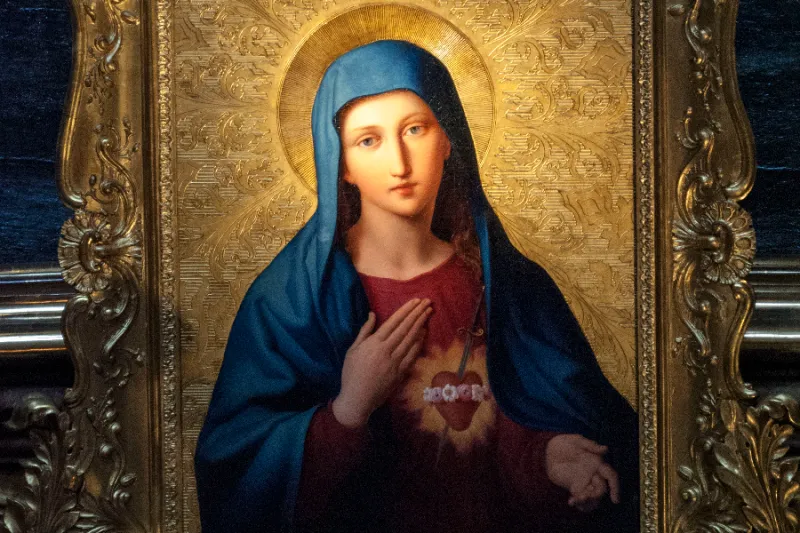


Delightfully, especially in hindsight, the Protestant observers at the Second Vatican Council were dismayed at the attention given to Mary in Lumen Gentium, the last of the 16 key documents to be approved. And prelates who hoped for a separate document were actually incorrect to be disappointed.
Said one guest observer from the now post-Protestant world, Professor Oscar Cullmann:
“…The fact that the text on Mary, after so much discussion as to where it should be placed, should finally become the concluding chapter of the schema on the Church–a decision which was in fact intended to weaken Mariology–has in reality made it even stronger, because everything stated about the Church culminates, so to speak, in this chapter” (cited in Wiltgen, “The Rhine Flows into the Tiber,” 1967, p. 158).
A far cry, this, from the later culmination of the Synod on Youth (2018) with a curiously attached open door to what has become a synodal plebiscite intent on overturning the Catechism and natural law, both, on matters of sexual morality and much else.
Mary wept at Golgotha.
But, not to worry, we find in another CWR column reporting from the luminary Cardinal Hollerich (https://www.catholicworldreport.com/2022/10/18/cardinal-hollerich-without-vatican-ii-the-church-today-would-be-a-small-sect/), that such recent synodal antics are the up-sizing fruit of Vatican II. I could agree that the Church might now have become less fashionable, as he opines—even as the number of weekly Mass attenders has tanked to less than 10 percent. Smart observer, this company-man red-hat, Hollerich!
So, what we have now is a worldwide facsimile of big-sect (!) global Secular Humanism…One is reminded of how a cancer tumor assumes the shape of the organ it replaces.
Our common ancestors lost their place and instead died! They made the mistake of not heeding God. Rather, Adam and Eve listened to a lie from a created being! They passed that little gift onto all mankind.
If our prayers go to the deceased, what efficacy do they have? Does it honour our Creator through veneration of other beings that he created, how does that celebrate the Lord Jesus?
Jesus invites us to come directly and boldly to the throne of grace, yes the source of life, the redeemer of our souls and the giver of eternal life.
Yet, to be balanced, where do we find your momentous hypothesis? Will someone say, “well it was what I was always taught” however, consider how Papa is regarded today and what accolades are given to his encyclicals!
Where do we find evidence for this consequential pronouncement in Holy Scripture? Perhaps you can find something that will validate a well held opinion!
Revelation 5:13 And I heard every creature in heaven and on earth and under the earth and in the sea, and all that is in them, saying, “To him who sits on the throne and to the Lamb be blessing and honour and glory and might forever and ever!”
1 Peter 3:12 For the eyes of the Lord are on the righteous, and his ears are open to their prayer. But the face of the Lord is against those who do evil.”
Hebrews 7:25 Consequently, he is able to save to the uttermost those who draw near to God through him, since he always lives to make intercession for them.
1 Timothy 2:5 For there is one God, and there is one mediator between God and men, the man Christ Jesus,
Matthew 6:9-13 Pray then like this: “Our Father in heaven, hallowed be your name. Your kingdom come, your will be done, on earth as it is in heaven. Give us this day our daily bread, and forgive us our debts, as we also have forgiven our debtors. And lead us not into temptation, but deliver us from evil.
Jude 1:20 But you, beloved, building yourselves up in your most holy faith and praying in the Holy Spirit,
God bless you in the love and service of Christ.
“If our prayers go to the deceased, what efficacy do they have? Does it honour our Creator through veneration of other beings that he created, how does that celebrate the Lord Jesus? [and] Where do we find evidence for this consequential pronouncement in Holy Scripture?”
The earliest Scriptural reference to prayers for the dead is the second book of Macabees (II Maccabees 12:39-45) which, of course, is deleted from the Protestant bibles beginning in the 16th century. St. Paul offers a prayer for a man who has died (II Timothy 1:18).
Within Tradition (which some reject, of course), the catacombs give evidence that the Roman Christian community gathered there to pray for those buried. By the 4th Century (still more than a millennium before the Reformation was a twinkle in anyone’s eye) Christian literature carries forward prayers for the dead.
And, then, “veneration” (your term) is not worship. And, then, there’s the doctrine of the Communion of Saints, not entirely farfetched since it is Christ himself who shows us that the “deceased” are not really dead after all. Instead, eternal life, and gifted communion together even now, both the living here and the fully living in eternity, but, of course, tolerant Protestant individualism can’t tolerate any of that either.
Mary, the Mother of Jesus was an ideal homemaker. She continues to inspire homemakers even in these ultra modern times. Jesus, Mary, and Joseph – Pray for us.
Dear Peter:
What a lot to ponder, indeed, you are not a man to eschew ideas and critical deliberation. Instead of addressing all your points, lets look a few!
In my case, after-effects of covid have impaired concentration and been replaced with lingering fatigue! At any rate, here is it goes.
Over the past decade and longer, there has been some first rate hermeneutics and exegetics from Catholic writers. The pursuit has been authenticity and enlightenment. “Macabees” which you quote is no longer considered inspired by biblical scholars and is not in the canon of Holy Scripture (in the Revised Vulgate).
Didn’t the Christians hide in the catacombs to escape Roman persecution? We don’t find “catacombs” in the Bible, so your point may be a moot one.
2 Timothy 15-18
15 You know that everyone in the province of Asia has deserted me, including Phygelus and Hermogenes.May the Lord show mercy to the household of Onesiphorus, because he often refreshed me and was not ashamed of my chains. 17 On the contrary, when he was in Rome, he searched hard for me until he found me. 18 May the Lord grant that he will find mercy from the Lord on that day! You know very well in how many ways he helped me in Ephesus.
Putting the verse you quoted, in its context enables a fuller appreciation of what is being declared.
The communion of the saints is a very fulsome topic and with respect, perhaps we could address it another time. There is merit in what you say, yet, a topic for the future!
1 Thessalonians 5:21 But test everything; hold fast what is good.
God bless you and thank you for your patience.
Brian
Three points of response:
FIRST, not sure, at this end, what weight to give (if any) to what you refer to as “the Revised Vulgate.” Whose revision?
Some would be reminded of the very early heresy of Marcionism which rejected any connection to the Old Testament, or even the Incarnation, and of the Gospels accepted only Luke, because he was a converted Gentile and not Jewish.
SECOND, on your point that the catacombs are not mentioned in the bible, the better observation is that there are no bibles found in the catacombs which, certainly, exist.
Instead, oral proclamation (part of the living “tradition” even prior to the written letters of Paul, etc., and prior to the compilation of the canon a few years after Christianity was legalized (312 A.D.) and then made the religion of the Empire (381 A.D.)
Of possible interest is “Jesus and the Eyewitnesses: The Gospels as Eyewitness Testimony” (2006), by Richard Bauckham, an Anglican (not ordained) scholar formerly at the University of St. Andrews, Scotland, and since retirement in 2007 at Cambridge. Bauckham keys off the only history of the early Church (Eusebius’ “Ecclesiastical History”, 312-324 A.D.), and especially the material supplied by Papias, bishop of Hierapolis near Laodicea and Colossae, who wrote sometime near the beginning of the second century. Papias belonged to the third Christian generation, which was still in touch with the first generation, the generation of the apostles.
THIRD, on your invitation regarding the “communion of saints,” what is probably needed is a capable article in CWR. I am not the one. But, for starters, here are some words from Ratzinger (2002), later Pope Benedict, on the Second Vatican Council’s Constitution on the Church (Lumen Gentium):
“The Council’s text proceeds from baptism to the Eucharist, in which Christ gives us his Body and, thus, makes us into his body. This Body and the Body are one, and thus the Eucharist, again, is for each local Church the point at which people are drawn into the one Christ, this is the process of all communicants becoming one in that universal communion [assembled by the Eucharist, not the other way around as under sola Scriptura congregationalism] which binds together heaven and earth; the living and the dead; past, present; and future; and opens up toward eternity…” (“Pilgrim Fellowship of Faith: The Church as Communion,” Ignatius, 2005).
Dear Peter:
Is our goal not to honour Jesus Christ and to bring enlightenment to our fellow sojourner? Is CWR not a place where we can lift people up with the word of God? Here we have the opportunity to bless someone thru God’s word and His precepts.
Yet, if our discussions focus on philosophy, or the existential or lesser topics that may not exalt God, are we truly taking advantage of this forum to extol God and the saviour of mankind who is Jesus Christ?
The fallen nature of man is to seek disputations. If we bow the knee to Christ and try to serve our fellow man, have we chosen the better course? What you are presenting is not unimportant, however as servants of Christ, matching wits may not be the best way?
1 Peter 3:15 but in your hearts honour Christ the Lord as holy, always being prepared to make a defence to anyone who asks you for a reason for the hope that is in you; yet do it with gentleness and respect,
Luke 21:14-15 Settle it therefore in your minds not to meditate beforehand how to answer, for I will give you a mouth and wisdom, which none of your adversaries will be able to withstand or contradict.
1 Corinthians 10:31 So, whether you eat or drink, or whatever you do, do all to the glory of God.
1 Corinthians 6:20 For you were bought with a price. So glorify God in your body.
Hebrews 12:9 Besides this, we have had earthly fathers who disciplined us and we respected them. Shall we not much more be subject to the Father of spirits and live?
God bless you,
Brian
CWR, a month ago, published its mission:
“Catholic World Report…examines the news from a faithfully Catholic perspective….
CWR provides full coverage of the news and events affecting the Church around the world, offering in-depth analysis while exploring issues the mainstream media avoids. It features exclusive interviews, covers a host of relevant topics, and offers an unwavering commitment to the truth in light of the Gospel.
As a nonprofit, CWR is able to bring the wisdom of the Church to bear on the news thanks to donations from readers like you….”
It bears reiterating that CWR aims to bring the “wisdom of the Church [read “Catholic”] to bear on the news….” CWR”…examines the news from a faithfully Catholic perspective.”
St. JPII’s “Fides et Ratio” examines the relationship between faith and reason (philosophy). The encyclical supports and defends traditional Christian philosophy, with the premise that faith and reason together allow people to know and love God.
You may want to check it out.
In Christ,
“the premise that faith and reason together allow people to know and love God.” indeed well said. Are reason and faith co-joined in the following verses?
1 Peter 3:15 but in your hearts honour Christ the Lord as holy, always being prepared to make a defence to anyone who asks you for a reason for the hope that is in you; yet do it with gentleness and respect,
Titus 1:2 in hope of eternal life, which God, who never lies, promised before the ages began
Hebrews 6:18-19 so that by two unchangeable things, in which it is impossible for God to lie, we who have fled for refuge might have strong encouragement to hold fast to the hope set before us. We have this as a sure and steadfast anchor of the soul, a hope that enters into the inner place behind the curtain,
Colossians 1:23 if indeed you continue in the faith, stable and steadfast, not shifting from the hope of the gospel that you heard, which has been proclaimed in all creation under heaven, and of which I, Paul, became a minister.
Colossians 1:5 because of the hope laid up for you in heaven. Of this you have heard before in the word of the truth, the gospel,
Hebrews 6:1 Therefore let us leave the elementary doctrine of Christ and go on to maturity, not laying again a foundation of repentance from dead works and of faith toward God,
Catholics who love the Lord give answers to your points in their replies to various articles. May they be a continued source of blessing as the Lord blesses them.
Young says: “The fallen nature of man is to seek disputations.”
Jesus Christ says: “Think not that I am come to send peace on earth: I came not to send peace, but a sword. For I am come to set a man at variance against his father, and the daughter against her mother, and the daughter in law against her mother in law.” (Matthew 10:34-36)
In Christ,
May the cherries you pick be in season.
Thank you for the bowl of cherries and the heavy cream was a nice touch too!
There are those who fight against the Gospel of Jesus Christ, indeed within families. Jesus advises us so we are not surprised. Dis agreements are part of life and controversy regarding Jesus brings forth animosity in varying degrees, both in families and the world at large.
Are we on the Lord’s side? Does fear limit our testimony or do we go forward in His strength proclaiming His salvation to family and the world?
Jesus’s mother and family though He had lost His mind on one occasion and they came to rescue Him. Family ties are important and to be nurtured, however our duty is to proclaim Christ crucified.
Remember, “The bear has forty stories and they’re all about pears”.
God bless you.
Brother Brian, my comments hardly fit the caricature “Yet, if our discussions focus on philosophy, or the existential or lesser topics…” Perhaps I fail by being too direct. Yes?
But my response fits your excellent citation from Peter (“…always being prepared to make a defence to anyone who asks you for a REASON for the hope that is in you…”) and perhaps serves as support, rather than opposition, for your inspiring commitment to Scripture…
My comments
(1) give a REASONable opportunity to show readers what is meant by a “Revised Vulgate,” or not;
(2) REASONably underline proclamation of the word, whether written–or as oral testimony from person to person (Bauckham is dense, but a readers’ delight in validating Scripture against the claim of altered memory or editorial tinkering); and
(3) REASONably offer one account of the communion of saints, as you actually invited, and which is also an element of the Nicene Creed dating from the 4th century, proclaimed by both Catholics and Protestants. (And coming from “the word of God,” wasn’t it Christ who said “DO this in remembrance of me”?)
Perhaps mine is a partial, but specific response to Peter who advises us to give a “reason” for the hope that is in us. Advice to not be caught flat-footed in dialogue with non-believers, a dialogue which you correctly add, thank you (!), also should be done with “gentleness and respect.”
REASON, in addition to, and supporting Scripture itself.
Dear Peter:
No you don’t fail. With Christ at our side, we are more than conquers! Perhaps your focus is to delve into the enigmatic aspects of life and faith, offering perspective to the person who shares your frame of mind!
Colossians 4:5 Walk in wisdom toward outsiders, making the best use of the time.
Ephesians 5:15 Look carefully then how you walk, not as unwise but as wise,
2 Corinthians 6:2 For he says, “In a favourable time I listened to you, and in a day of salvation I have helped you.” Behold, now is the favourable time; behold, now is the day of salvation.
God bless you as He uses your talents to bless others.
Brian
In the Catholic faith the Books of the Maccabees are deutero-canonical. Only Jews and Protestants consider them apocryphal.
Brian Young you allow that only some points can be considered at a time; however you are in different comment boxes with alternating separated points, impossible to follow.
Catacombs is part of historical reality. Praying for the dead is part of Catholic doctrine and daily Christian life from before the Catacombs and irrespective of the Catacombs.
One of the attractions for the Romans to the Christian faith, I believe, was praying for the dead. This practice fulfilled for them their devotion to ancestors and made sense of what they were intuiting.
One of the tragedies of the addition of the Protestant rebellions over the centuries since Henry VIII and Luther, is the contorting of the ordinary meanings of things; and even for this there is an eschatological penalty to be paid.
You can’t be fumbling through such extremely serious matter to suit your fancy.
Dear Elias:
Allow me first, to apologize to you. On a different article, my last post to you was unkind, please forgive me!
Though I may be unclear at times, God is clear and loves humanity. Ignore what I say and instead consider what God says.
Yours in Christ,
Brian
Brian Young, it wasn’t unkindness I noticed, no need to apologize to me for that. What came to my attention, from my viewpoint, was the inaccuracy and overreaction. Yes, thank God whatever the case is, we owe goodness to God and our dependence.
I am not going to develop now, in the other article, nor here either, what I would have elaborated, as groundwork for that is not laid. But look out because someone else might take up the baton and carry it forward where it is supposed to go!