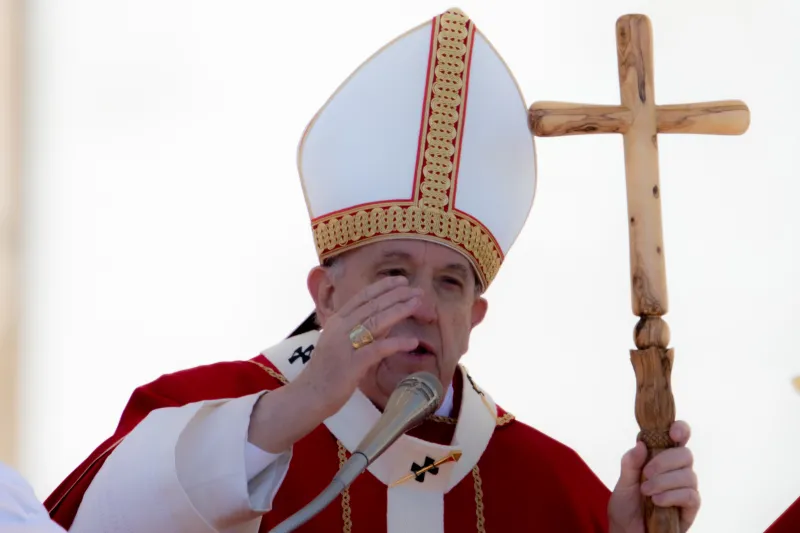
Pope Francis on Palm Sunday 2022 in St. Peter’s Square. | Daniel Ibanez/CNA
Vatican City, Apr 21, 2022 / 06:40 am (CNA).
Pope Francis has joined the head of the United Nations and the leader of the Ukrainian Greek Catholic Church in a call for a four-day truce in Ukraine for the Triduum and Easter.
The Eastern Orthodox churches and the Ukrainian Greek Catholic Church follow the Julian calendar, meaning they will celebrate Easter on April 24 this year.
The appeal for an Easter truce was launched on April 19 by Antonio Guterres, secretary general of the UN, in agreement with Major Archbishop Sviatoslav Shevchuk.
“Easter is a season for renewal, resurrection and hope. It is a time for reflection on the meaning of suffering, sacrifice, death — and rebirth. It is meant to be a moment of unity,” Guterres said at UN headquarters in New York
“This year, Holy Week is being observed under the cloud of a war that represents the total negation of the Easter message,” he said, calling for a four-day pause on fighting, beginning on Holy Thursday, April 21, to allow for the opening of humanitarian corridors and the safe delivery of aid.
The Vatican announced on April 21 that Pope Francis had joined the UN chief’s appeal, after the pope had called for an Easter truce in Ukraine during Palm Sunday Mass on April 10.
“In the knowledge that nothing is impossible for God, they invoke the Lord so that the population trapped in war zones may be evacuated and peace may soon be restored, and they ask those in charge of the Nations to listen to the people’s cry for peace,” a Vatican press release said.
At the end of Mass on Palm Sunday 2022, Pope Francis urged the laying down of weapons for an “Easter truce.”
Before an estimated 65,000 people in St. Peter’s Square, Pope Francis said that “nothing is impossible for God.”
“He can even bring an end to a war whose end is not in sight, a war that daily places before our eyes heinous massacres and atrocious cruelty committed against defenseless civilians. Let us pray about this.”
If you value the news and views Catholic World Report provides, please consider donating to support our efforts. Your contribution will help us continue to make CWR available to all readers worldwide for free, without a subscription. Thank you for your generosity!
Click here for more information on donating to CWR. Click here to sign up for our newsletter.
Pope Leo XIV urges Catholics to listen more closely to God and others — and to “disarm” their language by fasting from words that wound — in his message for Lent 2026. […]
Vatican City, Jul 3, 2020 / 05:30 am (CNA).- The president of the European bishops’ commission has promised persecuted Christians in Nigeria that he will advocate for increased support from the European Union.
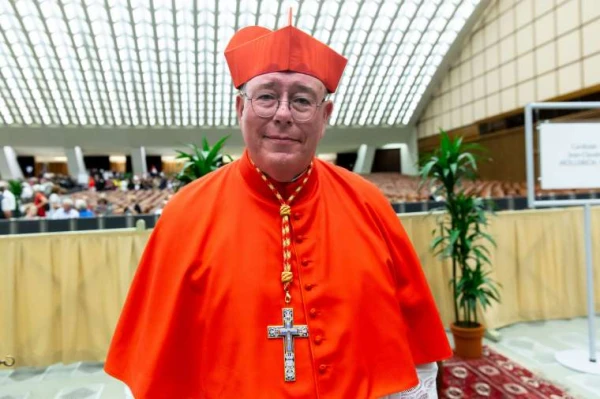
Cardinal Jean-Claude Hollerich, who leads the Commission of the Bishops’ Conferences of the European Union (COMECE), wrote a letter to the Nigerian bishops stating that the commission will advocate for EU assistance and cooperation with the Nigerian authorities to combat violence and persecution.
The cardinal expressed solidarity with Nigerian Christian communities, who, he wrote, are “living a situation of continuous attacks by terrorists, insurgents and militias, that in some cases reaches levels of genuine criminal persecution,” according to a European commission statement July 2.
An estimated 6,000 Nigerian Christians have been killed since 2015, mostly by Boko Haram and militant Fulani herders, the European commission reported.
More than 600 Christians have been killed so far in 2020, according to a International Society for Civil Liberties and the Rule of Law (Intersociety) report on May 15. Christians have been beheaded and set on fire, farms set ablaze, and priests and seminarians have been targeted for kidnapping and ransom.
A Boko Haram attack on a village in the northeastern Nigerian state of Borno left at least 81 people dead June 9. The attack was the latest in an ongoing Islamist group against the country’s Christian population. Earlier in June a Christian pastor and his pregnant wife were killed on their farm in the northeastern region of the country.
In January, militants kidnapped four Catholic seminarians from Good Shepherd Seminary in Kaduna, killing one of them, Michael Nnadi. On March 1, Nigerian priest Fr. David Echioda was kidnapped by gunmen after offering Sunday Mass, but was released days afterward.
The European bishops’ conferences commission has been vocal in calling on EU member states to “increase their efforts in order to stop the violence in Nigeria, bring criminals to justice, support the victims and promote dialogue and peace,” according to the COMECE statement.
In May 2020, the bishops “urged the international community to use diplomatic, political and financial instruments to assist Nigerian authorities to stop the violence, bringing the criminals to justice, supporting the victims and fully including Christians (47% of the national population) in all state structures and levels of administrations — including the police and armed forces.”
Leaders within the United States have also called for further support of Nigeria’s Christians. On June 25, former Rep. Frank Wolf said that the U.S. should send a special envoy to Nigeria to coordinate the protection of the Christian population and prevent further destabilization of the area.
In February, U.S. Ambassador-at-Large for Religious Freedom Sam Brownback told CNA that Nigeria was one of the countries of highest concern when it came to violations of religious freedom.
Brownback said he was concerned that the situation in Nigeria would spread to nearby countries if nothing was done to crack down on religious persecution.
“There’s a lot of people getting killed in Nigeria, and we’re afraid it is going to spread a great deal in that region,” he told CNA. “It is one that’s really popped up on my radar screens — in the last couple of years, but particularly this past year.”
Cardinal Hollerich said that he was particularly concerned for the people who are forced from their homes by the increased violence in Nigeria. He said it was important that Europe welcomes and protects them.
“My thoughts and my heart are with the many young people who are forced to leave the country because of violence and lack of socio-economic prospects,” Hollerich said.
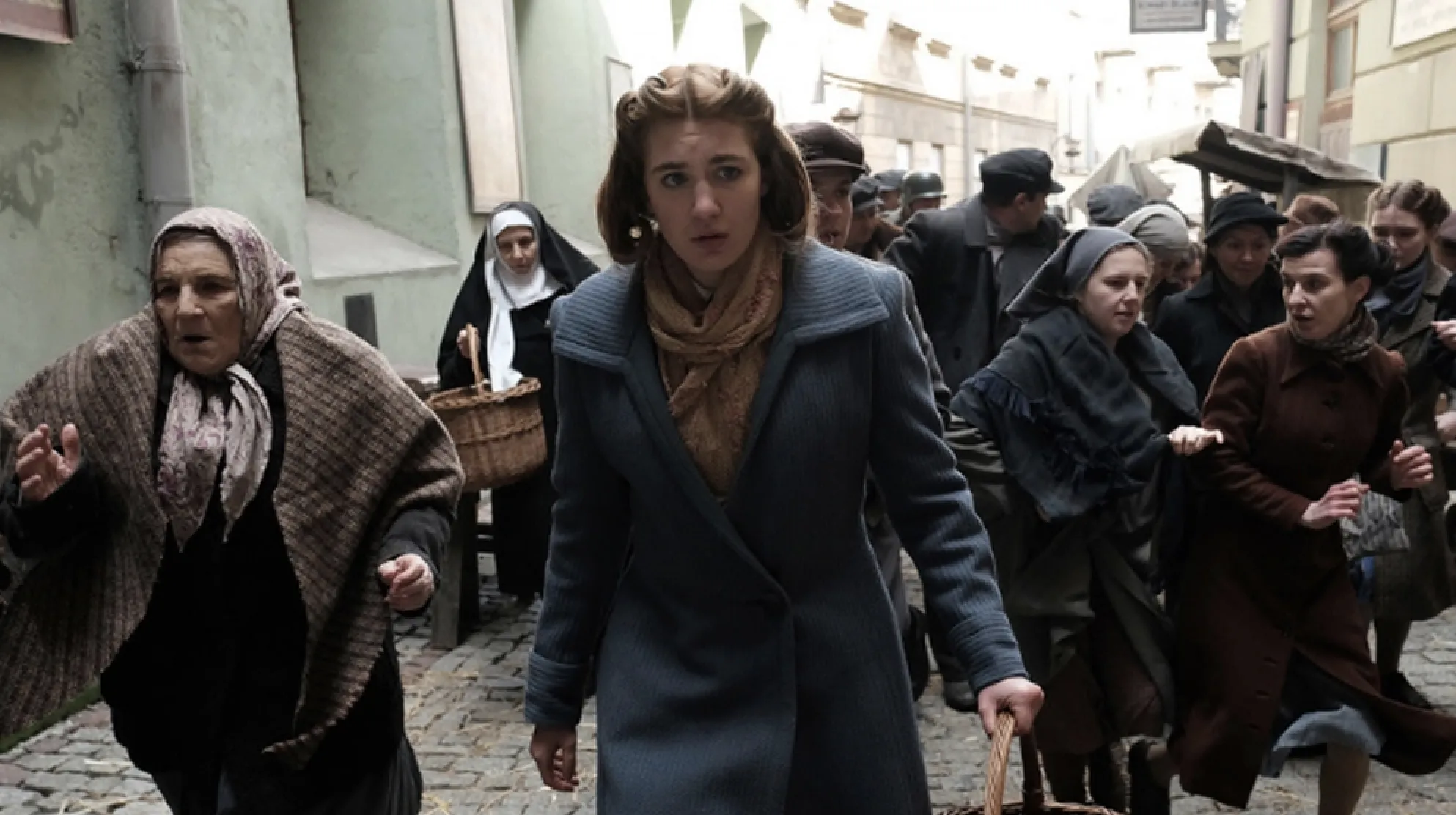
Sophie Nélisse portrays Irena Gut Opdyke in the new film “Irena’s Vow.” / Credit: Quiver Distribution
CNA Staff, Apr 12, 2024 / 16:00 pm (CNA).
A new film depicting the incredible true story of Irena Gut Opdyke, a Polish Catholic nurse who risked her own life to hide Jews persecuted by Nazi Germany during World War II, debuts in theaters across the country April 15-16.
“Irena’s Vow” is told through the eyes of strong-willed 19-year-old Irena Gut. When Gut is promoted to be the housekeeper in the home of a highly respected Nazi officer after learning that the Jewish ghetto is about to be liquidated, she makes it her mission to help the Jewish workers.
Gut decides to shelter them in the safest place she can think of — the basement of the German major’s house. Over the next two years, she uses her creativity and quick thinking to keep her friends safe until she is able to help them escape.
Actress Sophie Nélisse portrays Gut in the film. She and Jeannie Smith, Irena’s real-life daughter, spoke to CNA about what they hope viewers will take away from the film and what it’s like for Smith to share and watch her mother’s story on the big screen.
Sophie Nélisse portrays Irena Gut Opdyke in new film “Irena’s Vow.” Credit: Quiver Distribution
“I immediately fell in love with Irena’s story because I felt it was just so relevant to this day, and I think there’s so much to learn from her story and a tale that brings a lot of hope, I find, despite all the horrific events,” Nélisse said.
As a Catholic, Smith shared that her mother’s faith “100% played a role” in the work she did to save the lives of Jews.
“She was raised that people mattered and that the differences in people did not matter,” she said. “They were all human beings and part of one human family and stood under God created by him.”
Smith added that Gut had “childlike trust.”
“[God] would open a path and she would walk in it and then it was up to him to take care of her, and her job was just to do what she was supposed to do — to follow. She kept that her whole life. It just was part of her. It wasn’t even something she had to think about,” Smith said.
Gut had no intention of ever sharing her story when she came to the United States, Smith explained. It wasn’t until she crossed paths with a “Holocaust denier” that she opened up about her experience.
“She was faced with a Holocaust denier, over the phone, a young man who was just doing a report in school about the propaganda of it all,” Smith recalled. “That’s when she realized that if she didn’t start talking, history could easily repeat itself.”
From then on, her mother slowly began talking, but it was evident to Smith “how hard it was for her, especially that first time, and I stayed away from the subject.”
“It wasn’t until I went with her to a school — I was almost 20, [and] I took her to a school so she could talk to kids — that I not only heard her story but saw the saw amazing reaction … and I thought, ‘Man, this story is powerful.’”
Gut received several recognitions for the work she did to protect Jews during the Holocaust, including being honored as a Righteous Among the Nations by the Israeli Holocaust Commission. This title is given to non-Jews who risked their lives to help Jewish people during WWII. She also received a Medal of Honor in a ceremony at Jerusalem’s Yad Vashem Holocaust Memorial, and her story is part of a permanent exhibit in the United States Holocaust Memorial Museum in Washington, D.C., among other recognitions.
One that particularly meant a lot to Gut was the papal blessing she received in 1995 from Pope John Paul II for her sacrifice. Smith explained that her mother had a very painful experience when she went to confession, after enduring sexual abuse and being forced to have sexual relations with the German major.
Unable to confess to her usual priest one day, Gut went to a young priest who Smith said was “more anti-Semitic and told her she didn’t have a part in the Catholic Church, which broke her heart.”
“So [there was] this papal blessing where Pope John Paul II, the Polish pope, sent a delegation from the Vatican, and we had a ceremony in a Jewish synagogue in Irvine, California,” she said. “So the mixture was amazing, and it was just coming home for her. It meant a lot.”
Nélisse pointed out that Irena Gut’s life can inspire everyone.
“I think we as individuals think that we can’t really make a difference or that we’re too small to really have an impact, and I think that she’s the perfect example that — I mean, she obviously did heroic things — [but] by doing tiny things that seem so simple, it could be smiling to someone or helping them with a bag or complimenting them, it does have a ripple effect,” Nélisse said.
Smith added that she has heard from kids who were thinking about taking their lives by suicide, but one day someone sat with them at lunch and that changed their minds. She hopes that her mother’s story reminds people that “we are all able to do amazing things.”
“People will call my mom a hero or somebody who’s special, and she wouldn’t have liked that and I don’t either, because you label somebody that way and it gives them permission to do things that you can’t, [but] the bottom line is we are all able to do amazing things,” she said.





Leave a Reply