No Picture
News Briefs

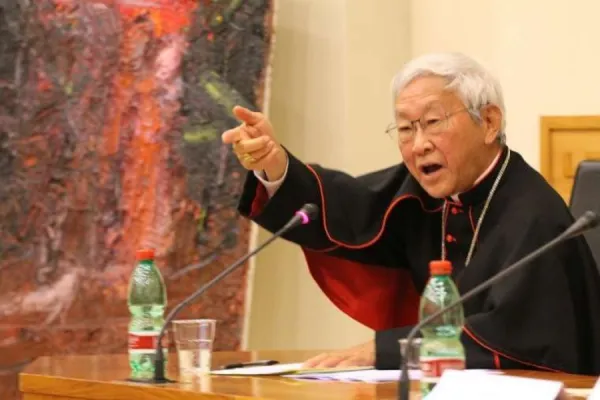
Zen challenges Parolin over China deal claims

October 7, 2020 CNA Daily News 2

CNA Staff, Oct 7, 2020 / 06:00 pm (CNA).- Cardinal Joseph Zen has rejected claims that the 2018 Vatican-China deal was approved in draft form by Pope Benedict XVI, and accused Vatican Secretary of State Cardinal Pietro Parolin of “manipulating” Pope Francis on the Church’s engagement with China.

In an essay published on his blog Oct. 7, Cardinal Zen, the emeritus Bishop of Hong Kong, offered an extended and personal critique of an Oct. 3 speech given by Parolin on the history and future of the Church’s missionary activity in China.

“I read the speech given by Cardinal Parolin,” Zen said. “It’s sickening!” 

“As [Parolin] is not stupid and ignorant,” Zen said he was left to conclude that Parolin “told a series of lies with eyes open.”

“The most repugnant thing is the insult to the venerable Benedict XVI by saying that he approved at the time the agreement signed by the Holy See two years ago, knowing that our sweetest, most gentle Benedict certainly will not come out to deny it,” Zen said. 

The Vatican-China agreement on the ordination of bishops, ratified in September 2018, is seen by the Vatican as an effort to help unify the underground Catholic Church in China–which has always remained in communion with Rome–with the state-sanctioned Chinese Patriotic Catholic Association. Following the agreement, seven illicitly ordained bishops of the CPCA were brought into full communion with Rome. 

Cardinal Parolin said in his Oct. 3 speech that the pastoral goal of the agreement was to free up local churches to “dedicate themselves to the mission of proclaiming the Gospel.”

During his speech on Oct. 3 in Milan, Cardinal Parolin reiterated the Vatican’s commitment to a provisional renewal of the agreement, which expires on Oct. 22. 

“For the dialogue to bear more consistent fruit it is necessary to continue it,” the Secretary of State said at an event marking the 150th anniversary of the presence of the Pontifical Institute for Foreign Missions (PIME) in China.

In his Oct. 3 speech on the subject, Parolin cited Pope Benedict XVI in his discussion of the Church’s missionary efforts in China. Pope Benedict, who had quoted his own predecessor, St. John Paul II said in 2007: “It is no mystery to anyone that the Holy See, in the name of the entire Catholic Church and – I believe – for the benefit of all humanity, he hopes to open a space for dialogue with the authorities of the People’s Republic of China, in which, once past misunderstandings have been overcome, we can work together for the good of the Chinese people and for peace in the world.”

Parolin also cited Cardinal Giovanni Battista Re, the dean of the College of Cardinals and former prefect of the Congregation for Bishops, who said in March according to Parolin that “Pope Benedict XVI [approved] the draft agreement on the appointment of bishops in China, which it was only possible to sign in 2018.”

Cardinal Zen disputed Re’s alleged remarks, calling it “very ridiculous and humiliating” for Re “to be ‘used’ once again to support the falsehoods of the Most Eminent Secretary.”

He accused Cardinal Parolin of “lying” about Pope Benedict’s approval of a draft agreement with China, and of manipulating Pope Francis on the agreement.

“Parolin knows he is lying, he knows that I know he is a liar, he knows that I will tell everyone that he is a liar, so in addition to being cheeky, he is also bold,” Cardinal Zen said.

Christians in China have continued to be persecuted and harassed by authorities, Zen said, “despite the agreement.” 

Yet, “it seems that in order to save the agreement, the Holy See is closing both eyes on all the injustices that the Communist Party inflicts on the Chinese people,” he said. 

In his Oct. 3 speech, Parolin said he had seen signs that the agreement was helping unify underground Catholics with members of the CPCA, and would “definitely” help the Church avoid illicit consecrations of bishops in the future. 

There have been “misunderstandings” over the agreement, he said, acknowledging that while there are still “many other problems” that Catholics in China face, they cannot all be addressed at once. 

“[W]e know that the road to full normalization will still be a long one, as Benedict XVI predicted in 2007,” Parolin said.

However, Parolin emphasized that the agreement “concerns exclusively the appointment of bishops,” and the Vatican has noted that no further illicit consecrations have taken place since the deal was signed in 2018. 

Zen dismissed that as a worthwhile achievement.

“All legitimate bishops, but in a Church that is objectively schismatic, is that good? Is it progress? Is this the beginning of what kind of journey?”

The Vatican-China agreement gave CCP officials a say in the ordination of bishops, but also allowed for the enforcement of “Sinicization” in Church matters, Zen said. 

The policy of “sinicization”, announced by Chinese president Xi Jinping in 2015, aims to enforce Chinese and Communist identity on all religious practice in the country. It has included instructing churches to remove images of the Ten Commandments and replace them with sayings of Chairman Mao and Xi.

Parolin has previously said that “inculturation is an essential condition for a sound proclamation of the Gospel which, in order to bear fruit, requires, on the one hand, safeguarding its authentic purity and integrity and, on the other, presenting it according to the particular experience of each people and culture.”

“These two terms, ‘inculturation’ and ‘sinicization,’ refer to each other without confusion and without opposition,” Parolin said in 2019.

 One Chinese bishop, Bishop John Fang Xingyao of Linyi in the province of Shandong, said in November of 2019 that “[l]ove for the homeland must be greater than the love for the Church and the law of the country is above canon law.”

The Chinese Communist Party’s policy of “Sinicization” of religion “is not what we mean by inculturation, it is the religion of the Communist Party,” Zen wrote Tuesday, where “the first divinity is the country, the party, the party leader.”

“How can the Most Eminent say that all this has nothing to do with the agreement? Can life be cut into pieces?” Zen asked. 

The cardinal also accused Cardinal Parolin of manipulating Pope Francis on the agreement. 

“I will be asked: Do you say that Parolin manipulates the Holy Father? Yes, I don’t know why the Pope allows himself to be manipulated, but I have evidence to believe so and this makes it even less painful and repugnant to criticize the Holy See,” he said. 

Cardinal Zen told CNA last month that the Church’s silence on the mass detention and abuses of the Uyghurs in Xinjiang, supposedly as a result of negotiations to renew the 2018 agreement, “will damage the work of evangelization” there in the future. 

Pope Francis has remained silent on what some human rights groups have called “genocide” of Uyghurs in China’s northwest.

“The resounding silence will damage the work of evangelization,” Zen told CNA in an interview last month. 

“Tomorrow when people will gather to plan the new China, the Catholic Church may not be welcome.”


[…]

No Picture
News Briefs

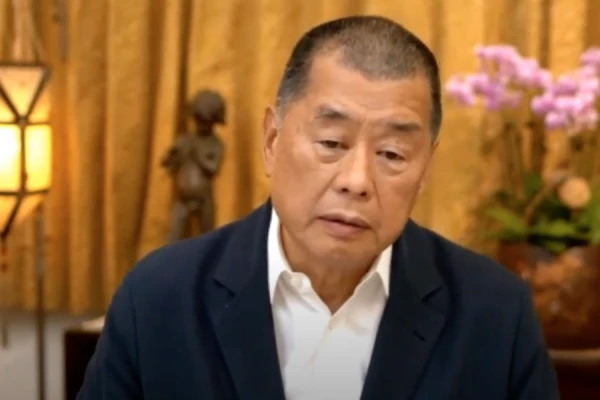
Catholic Hong Kong activist Jimmy Lai: ‘The Lord is suffering with me’

October 7, 2020 CNA Daily News 0

CNA Staff, Oct 7, 2020 / 04:45 pm (CNA).-  

A recently arrested Hong Kong entrepreneur and media executive said this week that he plans to stay in Hong Kong to face criminal charges stemming from his support for democracy on the island territory. The executive, Jimmy Lai, said that the Chinese Communist Party wants to supplant religion with government control.

“When you lift yourself above your own self-interest, you find the meaning of life. You find you’re doing the right thing, which is so wonderful. It changed my life into a different thing,” Jimmy Lai said in an Oct. 5 interview.

The interview was conducted by Fran Maier, a senior fellow at the Ethics and Public Policy Network and senior research associate at the University of Notre Dame. It was produced and released by the Napa Institute, of which Maier is a board member.

Lai, a Catholic, said he has supported the Hong Kong pro-democracy movement for the past 30 years, because of “the Lord’s teaching that your life is not about yourself.”

“The way I look at it, if I suffer for the right cause, it only defines the person I am becoming. It can only be good for me to become a better person. If you believe in the Lord, if you believe that all suffering has a reason, and the Lord is suffering with me…I’m at peace with it.”

A band of nearly 200 police officers arrested Lai on Aug. 10, along with at least nine others connected to Apple Daily, the newspaper Lai founded in 1995, as part of an apparent crackdown on civil liberties in the island territory.

Apple Daily has distinguished itself over the years as a strongly pro-democracy publication critical of the Chinese government in Beijing.

Lai is out on bail, but faces charges under Hong Kong’s new national security law, which took effect July 1, when it was imposed on the territory by the Chinese Communist Party, bypassing the Hong Kong legislature.

Under the new law, a person who is convicted of secession, subversion, terrorism or collusion with foreign forces will receive a minimum of 10 years in prison, with the possibility of a life sentence.

Lai came to Hong Kong at age 12 as a stowaway, penniless, from mainland China. His mother spent the early years of Lai’s life in a labor camp. In Hong Kong, Lai saw a need for affordable, quality clothing for middle-class people, and founded a chain of clothing stores called Giordano’s— a venture which would make him rich, and allow him to launch pro-democracy magazines and newspapers in Hong Kong and Taiwan.

Lai is a British citizen, but he said he does not plan to leave Hong Kong. He said his family is very supportive of his decision to stay, but he fears for their safety.

“If I go away, I not only give up my destiny, I give up God, I give up my religion, I give up what I believe in,” he said. 

“I am what I am. I am what I believe. I cannot change it. And if I can’t change it, I have to accept my fate with praise.”

Lai said his wife has always been a pious Catholic, and even before his conversion he always went to church with her. But in 1997, he realized that he needed the protection and help of a higher power. He was baptized and received into the Church by Cardinal Joseph Zen, bishop emeritus of Hong Kong.

Hong Kong has historically enjoyed freedom of religion, unlike mainland China, where religious believers of all stripes endure persecution. The Catholic Church in China has since 1951 been split between the so-called underground church, which is persecuted and loyal to Rome, and the state-sanctioned Chinese Patriotic Church.

Lai said China needs moral leadership from the Vatican, but he expressed disappointment in the Vatican’s negotiations with CCP, particularly the Sept. 2018 agreement between the Vatican and the CCP on the appointment of bishops, which the two parties are expected to renew later this month.

Cardinal Zen recently traveled to the Vatican to ask Pope Francis not to renew the Vatican-China deal, but Pope Francis did not grant Zen an audience.

The Vatican’s power is moral and virtuous rather than temporal, Lai said. The Vatican should uphold moral values when they need it the most, he added.

When the pope and the Vatican remain silent on the CCP’s actions, “that is very disappointing, very damaging, for a world that looks up to the Vatican for their moral leadership.”

Lai said in his opinion, the West erroneously thinks of China that “the richer they become, the more they will be like us.”

But values are important, Lai said, and the CCP’s behavior is threatening Christian values, extending their influence into international spheres like Hollywood and professional sports.

The COVID-19 pandemic, Lai said, is a “Pearl Harbor event” for the world, which ought to shake the world out of complacency.

“We should look at the facts. We should look at what they have done to the world, how they deal with the world,” Lai said. 

“The issue we are facing now is: China is going to be the most powerful, economically, in the world. Now is the time for us to change China’s attitude…otherwise they will change us to theirs.”

Morality and values are where the CCP are most vulnerable, Lai said, because the CCP does not just want to eliminate God, they want to “be” God.

Chinese President Xi Jinping wants to be respected as all-powerful, and that is why the CCP seeks to control religion, he said.

That the CCP wants to supplant religion is a “moral perversion,” Lai said, aiming to see people “suffer for [Jinping’s] sins.”

“Once you don’t have a religion, you can easily be dictated by their order,” he said.

Catholics have been strongly involved in pro-democracy protests in Hong Kong, which came to a head during summer 2019.

“Our instinct urges us to stand up to injustice, to evil. I think this is just an instinct. Being a Catholic, you have the instinct to stand up [to] what is wrong, because that’s the way we walk in the way of the Lord,” Lai observed.

In Hong Kong and in mainland China, Christians are looking to the Vatican for moral leadership, Lai said.

“The Vatican can only depend on its virtue and moral power to convert the Chinese people from the dictatorship of atheism. Chinese people are looking for faith, in addition to their material life. Where they lack is not material, because China has certainly improved people’s wealth and livelihood in the last 40 years. The greater material success they have, the more of a void they feel in their heart,” Lai said.

The moral vacuum in China is an opportunity for Catholicism to fill in, Lai said, to teach people that “life is more than just bread.”

Chinese people, he said, “want religion, the more they want virtue and morals, to live a meaningful life— which the Vatican is not giving them. Which the Vatican is taking away from them when they align with the CCP, who has repressed them in their spiritual pursuit. This is really ridiculous. This is something very disappointing.”

Hong Kong is a “special administrative region” of China, meaning it has its own government but remains under Chinese control. It was a British colony until 1997, when it was returned to China under a “one country, two systems” principle, which allowed for its own legislature and economic system.

Hong Kong’s openness to the outside world, and transparency in business and banking regulation, in contrast to mainland China, has made it a center of global business, banking, and finance.

Pro-democracy protests in Hong Kong— in which many Christians and Catholics participated— successfully rebuffed the legislature’s efforts last year to pass a controversial bill that would have allowed mainland China to extradite alleged criminals from Hong Kong.

With the passage of the new security laws, the Communist Chinese government seized more power to suppress the protests in Hong Kong, which it sees as a direct challenge to its power.

Similar security rules have been proposed before; in 2003, the Communist government attempted to use Hong Kong’s own legislative and executive councils to pass the anti-sedition measures, but massive protests led lawmakers to abandon the proposal.

On May 27, the US Department of State announced that, in light of China’s actions, it no longer recognizes Hong Kong as politically autonomous from China— a designation the region has enjoyed under US law since 1992.


[…]

No Picture
News Briefs

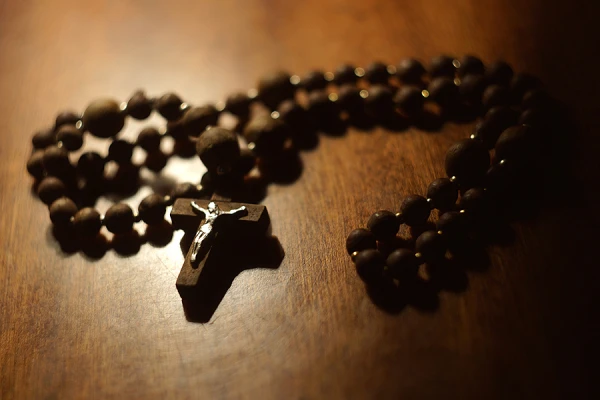
In virtual rosary, US bishops ask Mary to intercede for America

October 7, 2020 CNA Daily News 1

Denver Newsroom, Oct 7, 2020 / 04:09 pm (CNA).- Archbishop Jose Gomez of Los Angeles, president of the U.S. Conference of Catholic Bishops (USCCB), led a ‘virtual rosary’ Wednesday with several other bishops, asking Mary to intercede for the United States.

Twelve U.S. bishops prayed the glorious mysteries on Oct. 7, the feast of Our Lady of the Rosary, live on the USCCB’s Facebook and YouTube pages.

The bishops called on Mary to intercede for the country, particularly in the face of current events including the COVID-19 pandemic, violent riots and unrest, and the upcoming presidential election. In the video, Bishop Gregory Mansour of Brooklyn offered some of the bishops’ intentions and ended the rosary by singing a small Marian hymn.

“We pray, oh Lord … keep away from the earth and its people the devastation of wrath, dangers, dissension, war, famine, and epidemics. Have compassion on us, heal the sick, help the poor, save the oppressed, grant rest to the faithful…who have left us and gone to you,” he said.

Speaking from the Los Angeles Cathedral of Our Lady of the Angels, Gomez began the rosary by stressing the importance of joining in prayer together. He expressed hope that the Blessed Mother would help America fulfill its mission of offering “equality, liberty, and justice for all.”

“Welcome brothers and sisters,” he said. “This is truly a historic moment. Today, we are gathered as one people of faith to pray for our nation.”

“We are the missionaries of this time and place, called to bring the good news to the people of our country today. So we offer this rosary for America. We ask Mary to look upon our nation with her mother’s eyes. We ask her to intercede for this great nation,” he said. “We pray that America might fulfill the beautiful vision of our missionaries and founders, as a land where all men and women are treated as children of God with equality, liberty, and justice for all.”

The opening prayers of the rosary were then led by Bishop Michael Burbidge of Arlington, Bishop William Joensen of Des Moines, and Bishop Thomas Daly of Spokane.

Decades were led by Bishop Alfred Schlert of Allentown, Bishop Shelton Fabre of Houma-Thibodaux, Bishop Daniel Flores of Brownsville, Bishop Felipe de Jesús Estévez of St. Augustine, and Auxiliary Bishop Robert Reed of Boston. The third decade was prayed in Spanish.

The Glory Be and Fatima Prayer at the end of each decade were led by students from Saint Andrew’s Catholic School in Pasadena, Calif., and lay parishioners from Santa Barbara, Los Angeles, and Washington D.C.

Prior to the rosary, Bishop Flores reflected on the third glorious mystery, The Descent of the Holy Spirit. He told Angelus News that U.S. Catholics today should invoke the guidance of the Holy Spirit, especially for difficult decisions in the voting booth this November.

“Elections can get very contentious, but I think as Catholics, we have to try to keep our focus on our unity, our discernment and praying for the common good of everybody,” he said.

Archbishop Gomez earlier this year led the bishops of the United States in reconsecrating the nation to Mary.

Gomez reflected on the Franciscan missionaries who evangelized California, including St. Junipero Serra, and their devotion to the Blessed Virgin Mary. During the live rosary, he said the mission of these past holy men and women lives on in the Catholics of today.

“Our Cathedral in Los Angeles sits above the busy US 101 freeway. Two hundred and fifty years ago this freeway was a walking path known as El Camino Real, the King’s highway. St. Junipero Serra and his fellow missionaries walked this path praying the good news of Jesus Christ to the people of our country. Today, their mission to America continues in you and me in our families and in our ministries, in our work in society.”

Following the rosary, the archbishop thanked the participants for joining in prayer. He encouraged Catholics to share the message of the rosary on social media and voiced hope that they might “be inspired to be missionary disciples, bringing the gospel to America.”

“Now it is time for us to put our prayer into action,” he said. “As the missionaries blazed the trails of this country, let us light up the digital highways with signs of our faith in Jesus. Let us post our prayer intentions and images of our rosaries everywhere today on social media, let’s claim these digital highways for Jesus and Mary.”


[…]

No Picture
News Briefs

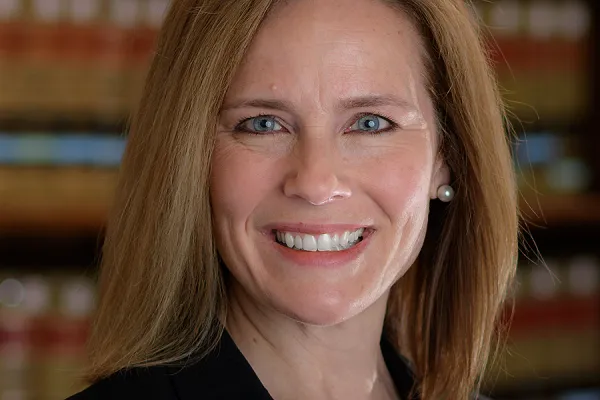
Democratic US Senator opposes Amy Coney Barrett confirmation over IVF

October 7, 2020 CNA Daily News 0

CNA Staff, Oct 7, 2020 / 02:01 pm (CNA).- A US Senator on Friday sent a letter to her colleagues urging them to vote against the confirmation of Amy Coney Barrett to the Supreme Court because of her association with a group that holds in vitro fertilization to be morally illicit.

“Barrett’s willingness to associate her name with such an organization is disqualifying and, frankly, insulting to every parent, hopeful parent or would-be parent who has struggled to start a family. Formally signing on to the message of an organization with these radical views goes beyond other nominees and demonstrates a lack of judgment, an absence of due diligence and a derision toward families like mine who were only able to have children with the help of methods and assistance that Judge Barrett personally disapproves of,” Sen. Tammy Duckworth (D-Ill.) wrote Oct. 2.

In 2006 Barrett signed an ad placed by St. Joseph County Right to Life in the South Bend Tribune. The signatories said they “oppose abortion on demand and defend the right to life from fertilization to natural death.”

Duckworth asserted that because of this, Barrett “likely doesn’t believe my little Maile and my growing Abigail should have ever been born in the first place.”

Both Duckworth’s children were conceived through IVF.

The senator wrote: “I urge you to fully consider the message a vote in favor of a Supreme Court nominee who appears to believe that my daughters shouldn’t even exist sends not only to me as a mother and as your colleague, but to parents-to-be around this country struggling with infertility and whose dreams may only be achieved through IVF or other technologies.”

She said that Barrett’s “willingness to associate her name” with St. Joseph County Right to Life “is disqualifying and, frankly, insulting to every parent, hopeful parent or would-be parent who has struggled to start a family.”

“Formally signing on to the message of an organization with these radical views goes beyond other nominees and demonstrates a lack of judgment, an absence of due diligence and a derision toward families like mine who were only able to have children with the help of methods and assistance that Judge Barrett personally disapproves of,” Duckworth continued.

She added that she fears that as a Supreme Court justice, “Barrett would be unable to resist the temptation of overturning decades of judicial precedent in an effort to force every American family to adhere to her individual moral code. I fear that if a case involving ART were to be brought before the bench, families like mine would not be able to trust that her opinions would be based on facts, laws and the Constitution rather than swayed by her personal beliefs.”

The Catholic Church teaches that IVF is morally illicit, and that those conceived through the process are a gift from God.

In Dignitas personae, its 2008 instruction on certain bioethical questions, the Congregation for the Doctrine of the Faith noted that IVF “very frequently involves the deliberate destruction of embryos” and that “all techniques of in vitro fertilization proceed as if the human embryo were simply a mass of cells to be used, selected and discarded.”

“The blithe acceptance of the enormous number of abortions involved in the process of in vitro fertilization vividly illustrates how the replacement of the conjugal act by a technical procedure – in addition to being in contradiction with the respect that is due to procreation as something that cannot be reduced to mere reproduction – leads to a weakening of the respect owed to every human being,” the congregation taught.

“The Church recognizes the legitimacy of the desire for a child and understands the suffering of couples struggling with problems of fertility. Such a desire, however, should not override the dignity of every human life to the point of absolute supremacy. The desire for a child cannot justify the ‘production’ of offspring, just as the desire not to have a child cannot justify the abandonment or destruction of a child once he or she has been conceived.”

The instruction added that “in order to come to the aid of the many infertile couples who want to have children, adoption should be encouraged, promoted and facilitated by appropriate legislation so that the many children who lack parents may receive a home that will contribute to their human development. In addition, research and investment directed at the prevention of sterility deserve encouragement.”

And in Donum vitae, a 1987 instruction on respect for human life in its origin, the congregation affirmed that “although the manner in which human conception is achieved with IVF and [embryo transfer] cannot be approved, every child which comes into the world must in any case be accepted as a living gift of the divine Goodness and must be brought up with love.”

Barrett and her husband have seven children, two of whom were adopted from Haiti.

Barrett was nominated to the Supreme Court Sept. 26.

Her Senate confirmation hearing and a vote on her nomination are expected to take place at the end of October, shortly before the Nov. 3 presidential election.

Barrett previously came to national attention during her 2017 Senate confirmation hearings after she was nominated by the president for the U.S. Court of Appeals. During that process, Sen. Dianne Feinstein (D-CA) stated that “the dogma lives loudly” within Barrett, and “that’s a concern.”

During those hearings Barrett insisted that as a judge, she would honor binding precedents, and would not let her religious beliefs inappropriately alter her judicial decisions.

Asked by Sen. Dick Durbin (D-Ill.) about how she would rule on a case involving same-sex marriage, Barrett stated: “From beginning to end, in every case, my obligation as a judge would be to apply the rule of law, and the case that you mentioned would be applying Obergefell, and I would have no problem adhering to it.”

Criticism of Barrett is part of a “virus” of anti-Catholic “bigotry,” Archbishop Charles Chaput wrote last week at First Things.

“It seems to infect a number of Democratic senators, including Sen. Kamala Harris, Feinstein’s California colleague and vice presidential nominee, who saw looming peril in that dangerous national conspiracy otherwise known as the Knights of Columbus.”

The emeritus Archbishop of Philadelphia warned that public attacks on the Supreme Court nominee’s faith constitute a wider threat to religious liberty.

Archbishop Chaput said that “those who value our First Amendment right to religious freedom should realize that tests about belief are attacks on religious liberty.”

In her letter, Duckworth had written that “while we are each, of course, entitled to our own beliefs about women’s access to constitutionally-protected healthcare choices,” St. Joseph County Right to Life’s views are “radical”.

The archbishop stated that “positioning dissenting Catholics as ‘mainstream Americans’ and believing Catholics as ‘extremists’” is now a “common and thoroughly dishonest culture war technique,” and “a particular affront to the free exercise of religion.”


[…]

No Picture
News Briefs

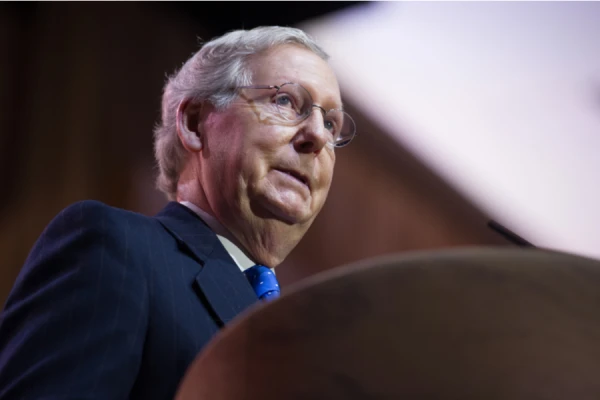
Senators reject claim Amy Coney Barrett ‘too Christian’ for Supreme Court

October 7, 2020 CNA Daily News 0

CNA Staff, Oct 7, 2020 / 12:00 pm (CNA).- Senators on Wednesday decried attacks on Catholic Supreme Court nominee Amy Coney Barrett’s religious beliefs.

“It is the definition of discrimination to assert that Justice Barrett’s particular faith makes her uniquely unqualified for this promotion,” Senate Majority Leader Mitch McConnell (R-Ky.) stated on Wednesday. “Every Supreme Court Justice in history has possessed personal views.”

Responding to media and political criticism that Barrett’s faith-based beliefs rendered her incapable of serving as a justice, McConnell condemned the suggestions “that Judge Barrett is too Christian, or the wrong kind of Christian, to be a good judge.”

McConnell’s remarks came after multiple reports on Tuesday focused on Barrett’s membership in the ecumenical Christian group People of Praise, and suggested that her membership of the group meant she believed that women should be submissive to men.

Barrett currently serves a judge on the Seventh Circuit Court of Appeals and was formerly a professor at the University of Notre Dame Law School. A mother of seven, she is a member of People of Praise, an ecumenical charismatic group founded in the 1970s for Christians to practice their faith in community.

The group has previously been criticized as a “cult” where husbands and wives were previously referred to as “heads” and “handmaidens”–both Scriptural references. Shortly before Barrett was nominated by Trump to serve on the Supreme Court on Sept. 26, People of Praise was hacked, and its membership roles accessed.

Bishop Peter Smith, the auxiliary bishop of Portland and a member of the priestly association Brotherhood of the People of Praise, told CNA that original members started a “covenant,” not an oath, to pray together, tithe, and meet regularly for spiritual, social, and service projects. He added that it is non-partisan, saying that he knew members of the group who were both Republican and Democrat.

On Thursday, The Guardian reported that Barrett, while a law student in the 1990s, resided in the house of the co-founder of People of Praise. The paper called the group “secretive” and one which “has been criticized for dominating the lives of its members and subjugating women.”

“The revelation,” The Guardian added, raises questions about the co-founder’s influence on Barrett’s current beliefs, saying that it “offers new clues about the possible influence of the People of Praise, and one of its leaders, on a woman who may shape the direction of the supreme court for the next 40 to 50 years.”

Late on Tuesday evening, the Washington Post noted Barrett’s position of “handmaiden” in People of Praise, and reported on the group’s promotion of “obedience” and “submission” of wives to husbands. The paper interviewed former members of the group who said that women held lesser positions in the group to men, and that wives were expected to cede decision-making in the home to husbands.

CNA previously spoke with a former member who acknowledged that People of Praise could foster unhealthy behavior without proper supervision, but that “the rank and file People of Praise members are very, very good people, wholeheartedly dedicated to the Lord.” Another critic, philosopher Adrian Reimers, said the group’s theological approach had “serious errors.”

On Thursday, senators and Catholics said the new reports insinuated that Barrett’s Catholic faith was proof she would be influenced by extremist beliefs as a judge.

“Catholic believes Catholic stuff, story at eleven,” Sen. Ben Sasse (R-Neb.) quipped, calling the “conspiracy theory” that Barrett was “controlled” by the group “bigoted and sexist.” 

Senate Majority Leader Mitch McConnell called the “attacks” on Barrett’s faith “a disgrace” and which “insult millions of American believers.”

“The secular left says they’re for progress, but they’ve just wandered back into the embarrassing tropes of the 1960s, when some argued John F. Kennedy would obey the Pope over the national interest,” he said.

Rep. Chuck Fleischmann (R-Tenn.), a Catholic, said that he also “tried to save money on housing in law school,” and decried the “desperate attacks” on Barrett’s faith.

Matthew Franck, a lecturer in politics at Princeton University and senior fellow at the Witherspoon Institute, tweeted that the Post’s “thorough reporting” revealed “that there is nothing much to say about People of Praise except that the members appear to help one another live more virtuous Christian lives.”


[…]