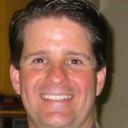
Archbishop-elect Alexander Sample, 52, will be installed as the 11th archbishop of Portland, Oregon on April 2, succeeding the Most Reverend John Vlazny.
Archbishop-elect Sample was ordained a priest for the Diocese of Marquette, located on the upper peninsula of Michigan, in 1990. He was consecrated Marquette’s bishop in 2006. At the time of his episcopal ordination, he was the youngest Catholic bishop in the US, and the first to be born in the 1960s.
Sample was born in Montana and grew up in Las Vegas, Nevada, and attended Catholic schools there. Although he had thought about a vocation to the priesthood while growing up, he initially decided to pursue a career in engineering. He earned his BS and MS degrees in engineering before opting to go to seminary.
As a priest, he served in a variety of diocesan roles, including acting simultaneously as pastor of three small parishes. The Diocese of Marquette serves 50,000 Catholics, and has 55 active diocesan and religious order priests. The Archdiocese of Portland, by contrast, has 415,000 Catholics and 294 priests (including retired priests). It encompasses western Oregon.
Sample is known for his orthodoxy and fondness for a more traditional liturgy. And, according Marquette’s Director of Communications Loreene Koskey, Archbishop-elect Sample is “personable, intelligent, well-spoken, and likes to meet and talk with people.” She added that the promotion of Pope Benedict’s New Evangelization has been a hallmark of Archbishop-elect Sample’s episcopacy.
Sample recently spoke to CWR.

CWR: Were you surprised to discover that you’d been named archbishop of Portland?
Sample: Yes. The appointment of bishops is a process that is carried out in strict confidentiality. I had no idea I was being considered for Portland; the nuncio’s call to me informing me I had hit me out of the blue. It was quite a shock; it seems a little surreal.
It’s going to be a huge change, not only geographically but in terms of added responsibility. But I’m also excited. I’m inspired by challenges.
It is going to be hard to say goodbye to Marquette. It’s my home. I’ve served here 22 years as a priest, and seven as a bishop. I’m not an emotional person, but saying goodbye will be emotional.
CWR: Before your appointment, had you ever been to Portland before?
Sample: My father took me fishing there as a boy. Until my appointment, I had not been back as an adult. It’s funny, my mother and sister and I were thinking last year about going on vacation to Portland and Seattle.
CWR: The Archdiocese of Portland is home to Oregon Catholic Press, which produces missals and liturgical music materials used by two-thirds of our country’s Catholic churches. You have developed an interest in the liturgy—in fact, you’re writing a pastoral letter on the topic. Can you share with us some highlights of that letter?
Sample: Yes. It is on pastoral music, and is just being released. We just hired a new director of sacred music, and this will be his road map. It will be my last contribution to the life of the Church in Marquette.
In this letter I discuss the liturgical movement of the Church, what Vatican II said about liturgical music, documents released on the topic after Vatican II, as well as writings by popes about [liturgical music]. It is not my vision or my ideas; I try to present the Church’s vision.
It is clear that the Council calls for the liturgy to be sung. In recent decades we’ve adopted the practice of singing songs at Mass. We take the Mass, and attach four hymns or songs to it. But this is not the Church’s vision. We need to sing the Mass. It is meant to be sung. The texts of the Mass are meant to be sung.
The Church provides us with chant, which is integral to liturgy, and should inspire the music of the Mass. We need to get away from singing songs at Mass and return to singing the Mass. And Gregorian chant is best suited to the Mass. The new director I hired [in the Diocese of Marquette] will introduce chant. It will be a huge shift for the people.
I mean no criticism of our sacred musicians, who are very dedicated. It will be a shift for them as well.
And, in addition to Latin chant, we also need to introduce chant in English. Although the Second Vatican Council said that chant should be given “pride of place,” one rarely hears it in parishes. Music is an important part of celebrating the Mass. As Pope Benedict has said, if we get the music right, we’ll get the spirit of the Mass right.
CWR: Where have you seen liturgy and liturgical music done well?
Sample: The parishes I’ve visited have all different levels of quality of music. In my formative years, the liturgy at the Church of St. Agnes in St. Paul, Minnesota, led by Msgr. Richard Schuler (1920-2007), was outstanding. More recently, the liturgy and music at the National Shrine of the Immaculate Conception for the March for Life was spectacular.
CWR: You’ve been involved in ordinations for the Fraternity of St. Peter, which celebrates the traditional liturgy of the Roman rite. What do you like about the pre-Vatican II rite of the Mass, and will we be seeing more of it in Portland?
Sample: I appreciate the Tridentine liturgy. I am 100 percent a product of the Second Vatican Council, in that I grew up in its wake, and all my formation was post-Vatican II. Therefore, my fondness for the Tridentine liturgy is not based in nostalgia. Having been exposed to it, I’ve gained a great appreciation for it.
What sparked my interest in it was Pope Benedict’s 2007 motu proprio Summorum Pontificum [granting greater freedom to priests to celebrate the older form of the liturgy]. I thought, “I’m a bishop of the Catholic Church, and it’s my responsibility to know how to celebrate Mass according to both the new and old rites.” I’ve learned the Tridentine liturgy, and have since celebrated three Pontifical High Masses and Masses for the Fraternity of St. Peter and the Institute of Christ the King (in Florence, Italy).
I believe that Pope Benedict wants the Extraordinary Form of the Mass to influence liturgical reform, to lead to a reform of the reform, because in some areas we’ve gotten off track. He wants the pre-conciliar liturgy to help shape the new liturgy and help reconcile us with the past. If the Tridentine Mass was once beautiful, it cannot now be harmful.
The Tridentine Mass certainly has many strengths; for example, it clearly stresses the sacrificial nature of the Mass. It also draws many young people who did not grow up with it. They’re discovering their heritage and tradition. It’s providing them with something they’re not finding in the ordinary form. We need to pay attention to that.
When I arrive in Portland, I’ll find out the status of the Tridentine Mass, and see if there are stable groups who want it. As their archbishop, I’ll do what I can to make it available.
CWR: The Holy Father has encouraged the use of social media to promote the Faith. You tweet, do podcasts of your newspaper columns, and post videos on YouTube. What benefits have you personally seen in using new media to share the Gospel?
Sample: We’re reaching people where they are at. There are difficulties, as social media can be misused or overused, but this is a way people communicate today. This is where they are, and the Church needs to be there, breaking in to that world with the Gospel. I was initially reluctant to get involved with it, but I’ve been amazed to see all the people who are now following me.
Before it was announced that I was going to Portland, I had 1,200 Twitter followers. After the announcement, I had over 2,700. On my Facebook page, 880 people are friends. I use my Facebook page to share thoughts for the day, talk about the lives of the saints, or comment on things going on in the news. I even share some personal things, like some beautiful photos I took while mountain biking.
Social media has given me the opportunity to interact with people. I’m a teacher at heart, and I hope to teach them.
CWR: The Portland archdiocese declared bankruptcy in 2004, the first diocese to do so in the wake of the sex abuse scandals in the Church. Do you see Portland and other American dioceses moving away from this dark period in the Church’s history?
Sample: I’m optimistic. We’re going to have to live in the wake of what happened, and I hope it will lead to a purifying and strengthening of the Church. I was personally involved with meeting with the victims of sexual abuse and priests accused in the Diocese of Marquette. I served as the bishop’s representative. I can say it was heartbreaking.
When I hear people minimize the harm done to victims by saying something like, “That was 25 years ago, why bring it out now?”, I can say that you have no idea until you’ve spoken with these victims. Abuse is awful. What’s saddest is the spiritual damage done. The Church is supposed to be something people can trust, but an incident of abuse can destroy a victim’s faith. That, along with all the other harm done, is tragic.
But, I think we’re doing a good job providing a safe environment for children now. We’re taking steps to prevent abuse from happening again, and being careful to screen men who are candidates for Holy Orders to ensure that they’re healthy.
It is not a great consolation to me that the incidence of sexual abuse by priests is no higher than the general male population. Don’t we expect more from those who represent Christ in the priesthood? It is my hope that the Church going through the scandals will help expose the horrific nature of sexual abuse, bring the issue into the spotlight and create a ripple effect through society so we can eradicate this.
CWR: This year, you attended the March for Life in Washington, DC for the first time. How did it go?
Sample: I was moved beyond description. It was a most formative experience. I attended the Thursday evening vigil Mass in the Basilica, and saw the shrine filled with people, mostly young people. They filled every nook and cranny.
On the day of the march, there were 500,000 or more who took to the streets. We were there for a serious reason, but there was a great spirit among the people. I experienced charity and solidarity as I mingled with the crowd. I met people from all over the country.
Again, I was impressed by all the young people there. I’d say 75 percent were high school and college age. The younger generation gets it; they will lead to a change on this issue. They realize they are of an age when they could have been aborted. They’re going to change the world. They’re on fire.
CWR: You have been quoted as saying you’re ready to go to prison rather than comply with the HHS mandate regarding insurance coverage of contraception, abortion, and sterilization. If this mandate moves ahead as is, is it time for American Catholics to practice some courageous disobedience? [Editor’s note: This interview took place before the release of new proposed regulations regarding religious organizations and the HHS mandate.]
Sample: All the bishops have said that we cannot comply with this mandate. We’ll fight it at all different levels. Now, I don’t think it will come to us going to prison. We’re exploring a variety of different options, and then we’ll make a decision about what we’ll do. But we’ll fight it vigorously.
I take as my model St. Thomas More. He tried to do everything he could to avoid going to the gallows, without violating his conscience. But, when push came to shove, he was willing to die.
CWR: And, it’s important that conscience protection be extended to laymen running businesses as well, not just church-related institutions.
Sample: Yes. We want conscience protection extended to all. We’re not only fighting for Church institutions, but for the businessman or woman who shares our beliefs, yet is being forced to provide these services.
CWR: Fifty years ago, there were Catholic bishops who wouldn’t allow the then-Governor of New York, Nelson Rockefeller, to speak on Church property because of his highly publicized divorce and re-marriage. Fast forward to Fall 2012, the Alfred E. Smith Dinner in New York. A number of political figures at odds with Church teaching shared a friendly stage with Cardinal Timothy Dolan, including President Barack Obama, Governor of New York Andrew Cuomo, and journalist Chris Matthews. Do you think it’s time for bishops to return to a more aggressive challenging of public figures on key moral issues?
Sample: I have no comment on this dinner and Cardinal Dolan, but I do have something to say about the scandal factor. Scandal means that one person’s sin or failure to live up to the Gospel can cause others to stumble. When Catholic politicians fail to live up to the moral teachings of the Church, or fail to promote the true common good rooted in human nature and moral values, they cause others to stumble. People say, “They’re Catholic and they’re going against the Church’s moral teachings. Why can’t I?” That’s scandal.
Catholic politicians have a particular responsibility to uphold the moral teachings which are common to all human beings, fundamental moral principles that guide all human beings. There needs to be a strong challenge to them to live their Catholic faith privately and publicly.
CWR: You’ve put a lot of time and energy into promoting the cause for canonization of Bishop Frederic Baraga, the first bishop of Marquette. What impresses you about Bishop Baraga?
Sample: First off, the cause for canonization of a particular person must be carried forward by the bishop of the diocese in which he or she died. I will do what I can in my remaining time in Marquette, but once I leave, it will be in the hands of my successor. However, I will do all in my power to support and promote the cause of Venerable Frederic.
I admire Bishop Baraga for his incredible zeal as a missionary priest and bishop. I think all priests and bishops need the example of someone like Frederic Baraga. He’s a perfect model for us, and I pray he is beatified. His life is such an inspiration.
I first discovered him when I was driving to visit the vocation director of Marquette, before I became a seminarian. In the town of L’Anse (northwest Michigan) there is a statue of Bishop Baraga holding a cross in one hand and snowshoes in the other. I said a prayer to him, asking him to intercede for me, that my meeting with the vocation director would go well. I admitted to him that I didn’t know too much about him (at that time!).
From that moment on, I’ve had a strong connection to him. When I was named that holy man’s successor, I went to his tomb to pray. I’ve been happy to move his cause along. He’s a powerful figure in the history of our Church, and a role model to us in the New Evangelization.
If you value the news and views Catholic World Report provides, please consider donating to support our efforts. Your contribution will help us continue to make CWR available to all readers worldwide for free, without a subscription. Thank you for your generosity!
Click here for more information on donating to CWR. Click here to sign up for our newsletter.