No Picture
News Briefs

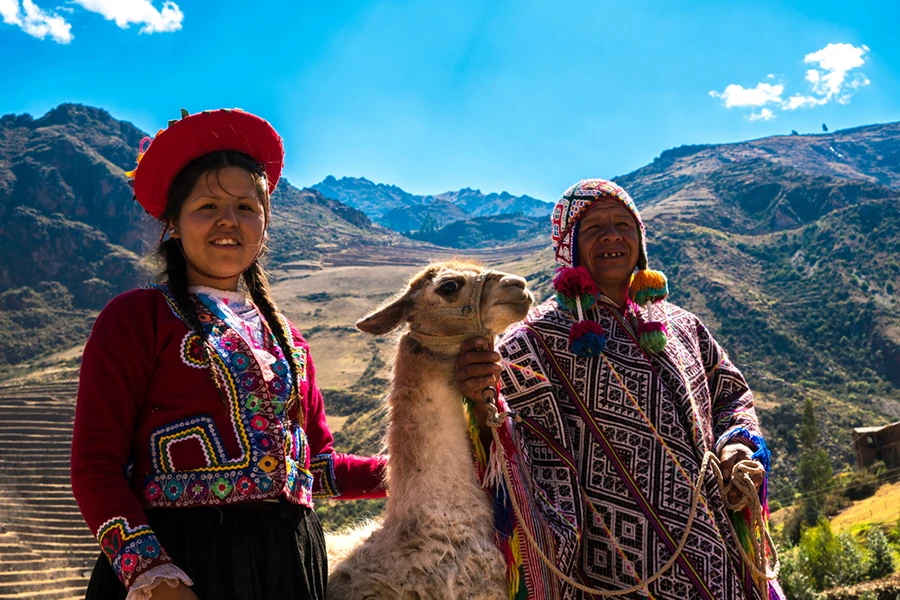
Indigenous Peruvian seminarian eager to see Pope Francis

January 18, 2018 CNA Daily News 0

Lima, Peru, Jan 18, 2018 / 03:36 pm (CNA/EWTN News).- Demetrio Sanchez, a 20-year-old indigenous Peruvian seminarian, is eager to see Pope Francis when he visits Puerto Maldonado on Thursday.

Sanchez is studying to become a priest serving Peru’s outlying indigenous communities.

“I want to be a priest. That’s why I came here to Puerto Maldonado to have an experience of how the priestly vocation is lived out, and to see if I could go on to be a priest, since right now there are no priests [in my village]. That’s why I want to become  a priest,” Sanchez told ACI Prensa, CNA’s Spanish language sister agency.  

Since he began his formation “my life has changed a lot,”  Sanchez added.

It takes Sanchez three days by river and roads to travel from his community of Tangoshiaria to Saint John Marie Vianney Seminary, where he studies.

“It certainly is a long journey, but of course when he was invited to come to the seminary he came with high hopes,” said Fr.  Carlos Alberto Castillo Flores, the seminary’s rector.

Sanchez is motivated by the witness of the life of Bishop David Martinez, the Apostolic Vicar of Puerto Maldonado, “who had worked in his area, where Demetrio is from,” Castillo said.

“Perhaps motivated by his example and seeing the need for priests–there are no priests now in his community–he felt inspired to come here to the seminary and hopes to become a priest, God willing, in the future,” he said.

Sanchez told ACI Prensa that priests “come to preach the Word of God  or evangelize, teach that we are all children of God, as Christians.” In addition, they support the needy and show “how to live in the family,” he added

Sanchez studies at a minor seminary, where students study philosophy before beginning theology at a major seminary.  The minor seminary is “basically to instill in them the desire to embrace priestly life,” Castillo explained.  

Sanchez does not hide his enthusiasm for the Pope’s visit to Puerto Maldonado on Jan. 19.

“I really want to see the pope,” he said, since “a pope is a holy father, a messenger who seeks Christian unity, he’s a teacher. That’s why I want to see a pope, who is the head of the Church.”

Castillo has praised Sanchez’ pastoral initiative. When he was on on vacation “he held a Liturgy of the Word, there in his community (…) and he came back here with great enthusiasm saying: ‘Father, I called together my community. My community participated in Liturgy of the Word.’ This was in his own dialect, Ashaninka-Matsigenka, and he’s very motivated.”

Pope Francis is visiting Peru from Jan. 18-21. Thursday he will travel to the Apostolic Vicariate of Puerto Maldonado, where Sanchez studies.

There are about 332,000 indigenous Peruvians living in the country’s Amazon region, of which 29,000 are within the Apostolic Vicariate of Puerto Maldonado.


This article was originally published by our sister agency, ACI Prensa. It has been translated and adapted by CNA.


[…]

No Picture
News Briefs

Venezuelan bishops accused of “hate crimes”

January 17, 2018 CNA Daily News 0

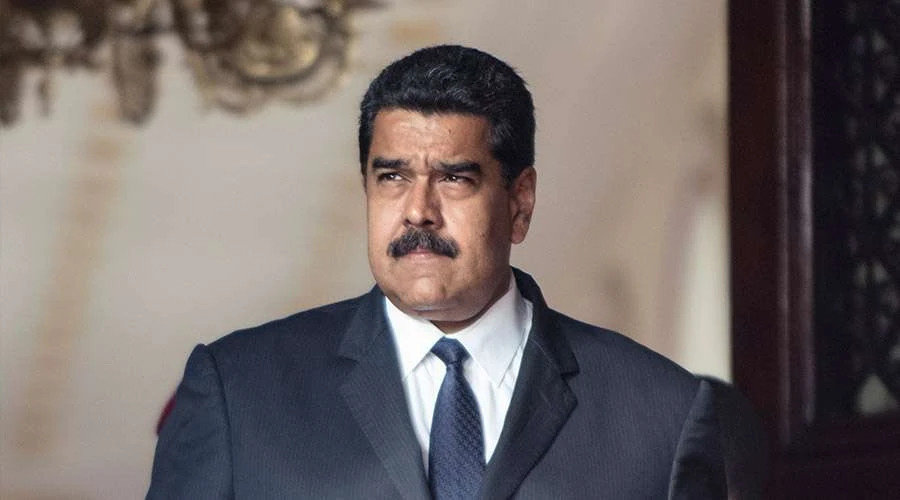
Caracas, Venezuela, Jan 18, 2018 / 12:00 am (CNA).- The President of Venezuela, Nicolas Maduro, called for an investigation of two bishops accused of committing “hate crimes” in homilies they gave on the Feast of the Divine Shepherdess, Jan. 14, a popular Marian feast day in the country.

On Monday, the Venezuelan president gave a speech before the Constitutional Assembly asking the Supreme Court of Justice, the Comptroller’s Office and the Public Prosecutor’s Office to investigate the Archbishop of Barquisimeto, Antonio López Castillo; and the Bishop of San Felipe, Víctor Hugo Basabe.

Venezuela’s El Nacional reports that the bishops “cried out for the end of hunger and corruption” in their homilies. Bishop Basabe made reference to a “corrupt plague” causing starvation in the country, and Archbishop Castillo prayed the country would be saved from corruption, according to the report.

In his speech, Maduro said that “a devil comes in a cassock to call for violent confrontations, to call for civil war…and I thank the people of the state of Lara who alerted me to this filth, because I really don’t listen to [the bishops]. We don’t listen to those bandits.”

Maduro’s allegations came just days after the Venezuelan bishops’ conference called for international monitors to oversee the country’s 2018 presidential elections, calling the Constitutional Assembly controlled by Maduro “unconstitutional and illegitimate.”

Archbishop Castillo told reporters Tuesday that he had received a phone call of support from Pope Francis, according to a report from El Impulso.

“We received Pope Francis’ message and he supports us as well as the people of Venezuela,” he said.

Bishop Basabe responded to Maduro’s accusations through a letter obtained by ACI Prensa–CNA’s Spanish language sister agency. Basabe stated that his “conscience in no way reproaches him” because his “only crime seems to be serving the truth.”

“Mr. Maduro has put in my mouth words I never said. How sad it is  that a national public official would so scandalously lie in front of the whole country on National Teacher’s Day. What’s worse is he accuses me committing a crime while he commits one himself,” the bishop said.

“I knew that my words would upset those who deep down in their consciences know they are responsible for the tragedy that this people whom I love is going through,” Basabe added.

“Here I am in my own church with my only weapons: my faith in Christ and the certainty that my life is in his hands. [My fate] is up to those who will not be pardoned by conscience or history,” he concluded.

Bishop Mario Moronta Rodriguez, vice-president of the Venezuelan bishops’ conference, also repudiated Maduro’s accusations. On Jan. 16, he appeared on the television program Circuito Éxitos, arguing that the accusations made against Lopez and Castillo are accusations “against the entire episcopate and the entire Catholic Church.”

“What they did was to simply make a statement reflecting everything we have been saying for a long time and it touches on a wound or sore,” he added.

Finally, he said that “when the bishops are called ‘devils in a cassock,’ [Maduro] is also inciting hatred.”

“There are a lot of people going hungry. If that’s calling for hatred then the dramatic nature of that law has to be changed,” he concluded.

In a Jan 16 press release, the Venezuelan bishops’ conference expressed their solidarity with Lopez and Basabe, and said that President Maduro, “totally twisted the message” given by both of them, “with the purpose of claiming the bishops were committing a crime.”

“The truth about what is happening in the country was evidenced in the homilies given that day. The gestures of the thousands of parishioners present at the Mass on Venezuela Avenue showed they agreed with what they were hearing,” the statement added.

Venezuela’s hate crime law “criminalizes any demonstrations” against the government, the bishops noted.

“We exhort all the parishioners of the Archdiocese of Barquisimeto and the Diocese of San Felipe to care for your pastors, to be alert to any move against them, which could attack their human dignity,” the statement added.

This article was originally published by our sister agency, ACI Prensa. It has been translated and adapted by CNA

[…]

No Picture
News Briefs

Christ statue in Peru suffers smoke damage

January 17, 2018 CNA Daily News 0

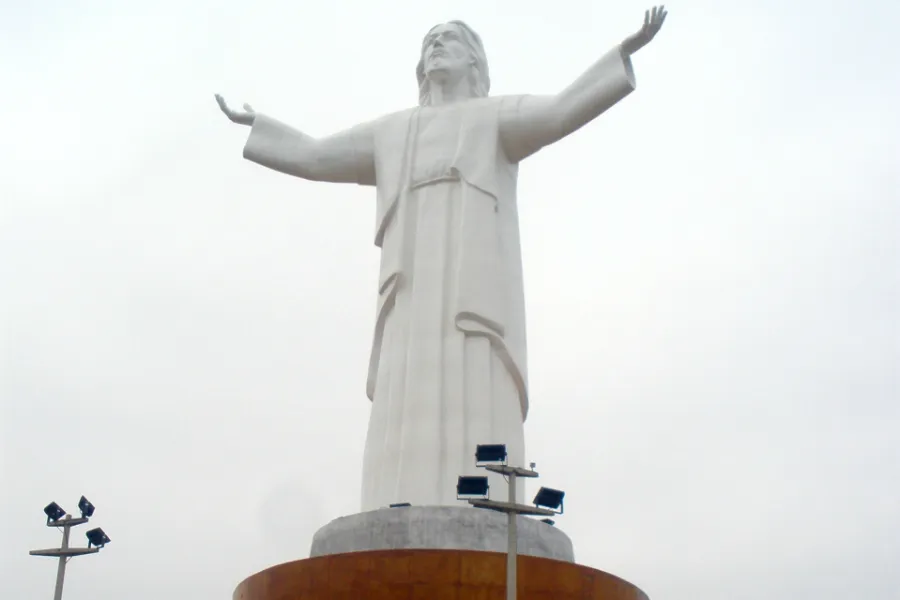
Lima, Peru, Jan 17, 2018 / 04:38 pm (ACI Prensa).- Last weekend, just days before Pope Francis’ visit to Peru, a fire was set that damaged part of Cristo del Pacifico, a 120 foot tall statue located in Lima, the nation’s capital.

According to RPP News, five fire department units responded and put out the fire Jan. 13, which caused noticeable smoke damage to the back part the the statue.

<blockquote class=”twitter-tweet” data-lang=”en”><p lang=”es” dir=”ltr”>Incendiaron el Cristo del Pacífico o “Cristo de lo Robado”, no sufrió daños de consideración. <a href=”https://t.co/85fqMbN0nf”>pic.twitter.com/85fqMbN0nf</a></p>&mdash; Mona Paredes (@monaparedes) <a href=”https://twitter.com/monaparedes/status/952148963485978624?ref_src=twsrc%5Etfw”>January 13, 2018</a></blockquote>
<script async src=”https://platform.twitter.com/widgets.js” charset=”utf-8″></script>

“So far the motive leading to the incident is unknown; but the theory has come up that this may have been done  because of Pope Francis’s upcoming visit,” RPP stated.

Cristo del Pacifico is a 70 feet tall sculpture set on a 50 foot base and can be seen from several areas of the capital. It was dedicated June 29, 2011.


This article was originally published by our sister agency, ACI Prensa. It has been translated and adapted by CNA.

[…]

No Picture
News Briefs

Peace and progress start with education, Francis says at Chilean university

January 17, 2018 CNA Daily News 0

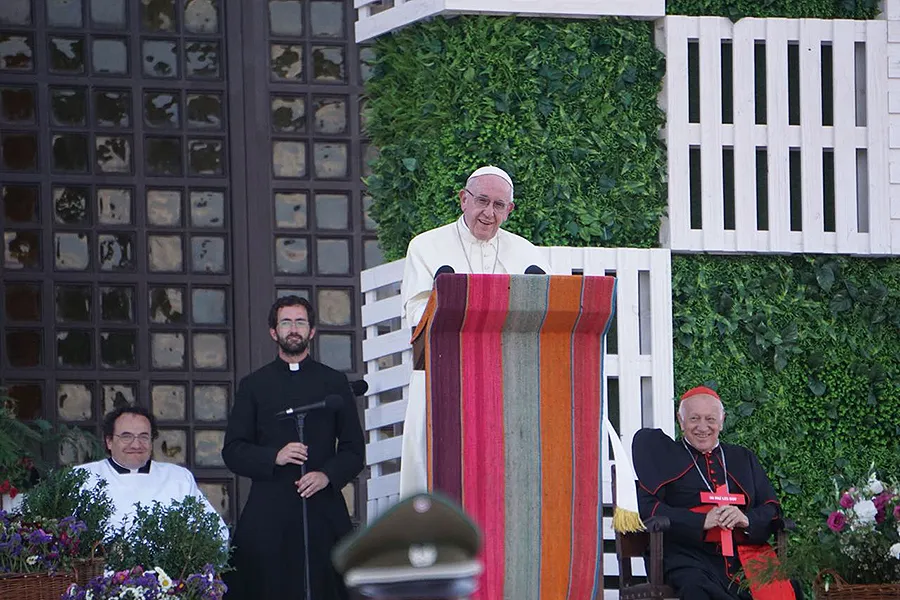
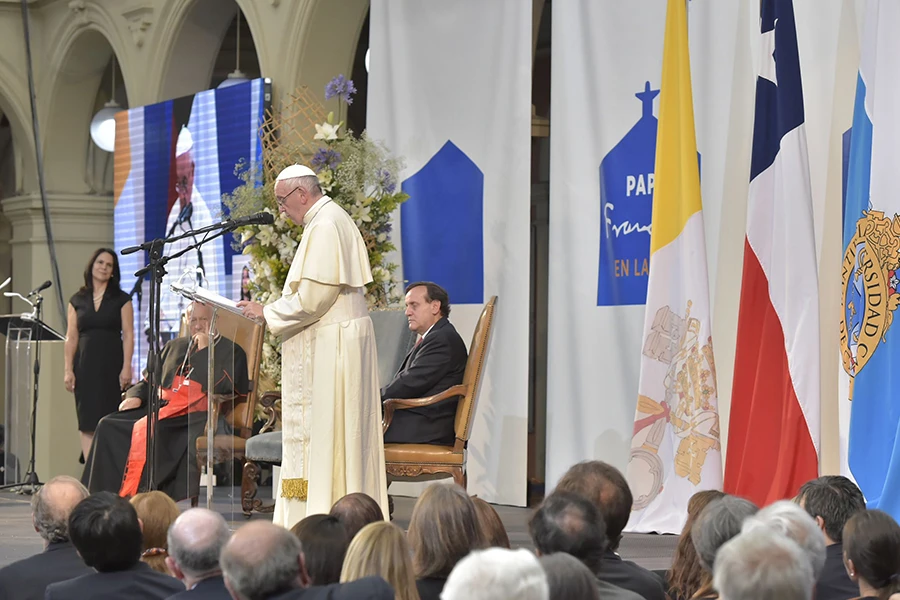
Santiago, Chile, Jan 17, 2018 / 03:31 pm (CNA/EWTN News).- Speaking to Chilean university students and academics Wednesday, Pope Francis said Catholic educational institutions play a prophetic role in helping future generations tackle problems with an integrated, inclusive approach.

“In our day, the mission entrusted to you is prophetic,” the Pope said Jan. 17 to a crowd of  some 2,400 students and academics at the Pontifical Catholic University of Chile in Santiago. “You are challenged to generate processes that enlighten contemporary culture by proposing a renewed humanism that eschews every form of reductionism.”

This prophetic role on the part of Catholic universities is a key motive in seeking out “ever new spaces for dialogue rather than confrontation,” he said.

These spaces, he added, must be occasions “of encounter rather than division, paths of friendly disagreement that allow for respectful differences between persons joined in a sincere effort to advance as a community towards a renewed national coexistence.”

The meeting marks the last event for the day, and is part of his Jan. 15-18 visit to Chile, after which he will visit Peru Jan. 18-21.

In his speech, the Pope said Chilean Saint Alberto Hurtado, SJ, who studied at the university, is a prime example of how “intelligence, academic excellence and professionalism, when joined to faith, justice and charity, far from weakening, attain a prophetic power capable of opening horizons and pointing the way, especially for those on the margins of society.”

He then noted how the rector of the university, Dr Ignacio Sánchez, had said there are “important challenges” in Chile which deal with “peaceful coexistence as a nation and the ability to progress as a community.”

On the topic of peaceful coexistence as a nation, Pope Francis said even speaking of challenges is a sign that certain situations “need to be rethought.”

“The accelerated pace and a sense of disorientation before new processes and changes in our societies call for a serene but urgent reflection that is neither naïve nor utopian, much less arbitrary,” he said.

Peace as a nation is possible to the extent that educational processes are transformative, inclusive, and favor coexistence, the Pope maintained.

This doesn’t mean simply attaching values to educational work, but rather implies means “establishing a dynamic of coexistence internal to the very system of education itself. It is not so much a question of content but of teaching how to think and reason in an integrated way.”

For this “mental formation” to happen, Francis said an “integrating literacy” is needed which can help students process the rapid changes happening in society.

This literacy, he said, must integrate know how to integrate and harmonize the various “languages” which “constitute us as persons”: the “intellect (the head), affections (the heart) and activity (the hands).”

Following this approach will allow students to grow not only on a personal level, but also at the level of society, he said, which is important since “we urgently need to create spaces where fragmentation is not the guiding principle, even for thinking. To do this, it is necessary to teach how to reflect on what we are feeling and doing; to feel what we are thinking and doing; to do what we are thinking and feeling. An interplay of capacities at the service of the person and society.”

The Pope noted the importance of the unity of knowledge against the fragmentation of fields, saying, “The ‘divorce’ of fields of learning from languages, and illiteracy with regard to integrating the distinct dimensions of life, bring only fragmentation and social breakdown.”

He noted that in our “liquid” society, borrowing a phrase from the late Polish sociologist and philosopher Zygmunt Bauman, “those points of reference that people use to build themselves individually and socially are disappearing.”

“It seems that the new meeting place of today is the ‘cloud’, which is characterized by instability since everything evaporates and thus loses consistency,” he said.

The Pope said that “This lack of consistency may be one of the reasons for the loss of a consciousness of the importance of public life, which requires a minimum ability to transcend private interests (living longer and better) in order to build upon foundations that reveal that crucial dimension of our life which is ‘us’.”

“Without that consciousness, but especially without that feeling and consequently without that experience, it is very difficult to build the nation. As a result, the only thing that appears to be important and valid is what pertains to the individual, and all else becomes irrelevant. A culture of this sort has lost its memory, lost the bonds that support it and make its life possible,” he said.

“Without the ‘us’ of a people, of a family and of a nation, but also the ‘us’ of the future, of our children and of tomorrow, without the ‘us’ of a city that transcends ‘me’ and is richer than individual interests, life will be not only increasingly fragmented, but also more conflictual and violent.”

“The university, in this context, is challenged to generate within its own precincts new processes that can overcome every fragmentation of knowledge and stimulate a true universitas.”

On progressing as a community, the Pope pointed to the university’s chaplaincy program, which he said is a sign of “a young, lively Church that ‘goes forth’.”

This same mentality has to be present in universities, he said, noting that classic forms of research are now “experiencing certain limits,” which means modern-day culture requires new forms that are more inclusive “of all those who make up social and hence educational realities.”

A great challenge for the university’s community, then, “is to not isolate itself from modes of knowledge, or, for that matter, to develop a body of knowledge with minimal concern about those for whom it is intended.”

Rather, “it is vital that the acquisition of knowledge lead to an interplay between the university classroom and the wisdom of the peoples who make up this richly blessed land,” Francis said, adding that education has to extend beyond the classroom and to “be continually challenged to participation.”

Francis then pointed to the need for an education that emphasizes both quality and integration, saying the service that universities offer must always aim for excellence when it comes to national coexistence.

“In this way, we could say that the university becomes a laboratory for the future of the country, insofar as it succeeds in embodying the life and progress of the people, and can overcome every antagonistic and elitist approach to learning.”

The Pope warned against a kind of knowledge that seeks to subject nature to its own “designs and desires,” citing a warning against this from the 20th century kabbalist Gershom Scholem. He said that “to reduce creation to certain interpretative models that deprive it of the very Mystery that has moved whole generations to seek what is just, good, beautiful and true” will “will always be a subtle temptation in every academic setting.”

“Whenever a ‘professor’, by virtue of his wisdom, becomes a ‘teacher’, he is then capable of awakening wonderment in our students,” Pope Francis said. “Wonderment at the world and at an entire universe waiting to be discovered!”

The mission entrusted to the university, then, is prophetic, he said, and closed his speech asking the Holy Spirit to guide the steps of everyone present, so that the university is able continue “to bear fruit for the good of the Chilean people and for the glory of God.”

[…]

No Picture
News Briefs

Faith is an adventure, Pope Francis tells Chilean youth

January 17, 2018 CNA Daily News 0

Santiago, Chile, Jan 17, 2018 / 02:21 pm (CNA/EWTN News).- In a meeting with youth during his second full day in Chile, Pope Francis said that faith is a grand adventure, one that gives young people the inspiration to overcome difficulties and dream big.

“I know that the hearts of young Chileans dream, and that they dream big dreams, for these lands have given rise to experiences that spread and multiplied across the different countries of our continent,” he said.

“Who inspired those dreams? It was young people like yourselves, who were inspired to experience the adventure of faith,” the Pope said Jan. 17 at the Basilica of Our Lady of Carmel in Maipú, a suburb of Santiago, Chile.

“For faith excites in young people feelings of adventure, an adventure that beckons them to traverse unbelievable landscapes, rough and tough terrain,” he said, but added that young people like adventures and challenges.

Pope Francis spoke to youth during an encounter at the National Shrine of Maipú, which includes a basilica dedicated to Our Lady of Mount Carmel, the Patroness and Queen of Chile. The meeting took place as part of the Pope’s Jan. 15-22 apostolic visit to Chile and Peru.

Among those present was a group who took part in a 10-day missionary project earlier this month, in anticipation of Francis’ visit. The project included more than 2,500 college students, who spread out to 90 rural communities across Chile to share their faith, lead youth activities, and build chapels.

During the encounter, students presented the Pope with a flag signed by those who took part in the mission projects, as well as a scale model of a rural chapel, representing the evangelization of the peripheries of Chile.

Pope Francis said that the National Shrine where the gathering with youth took place “is a home to both heaven and earth. A home for Chile, a home for you, dear young people, where Our Lady of Carmel waits for you and welcomes you with an open heart.”

Just like she has accompanied the nation and its people over these last 200 years, she wants to accompany you and the dreams that God has placed in your hearts, he said. “Dreams of freedom, dreams of joy, dreams of a better future.”

Francis told a story about a young man who once told him about how unhappy it made him when his cell phone battery died, or when he couldn’t connect to the internet. The young man said it was because when this happens it makes him feel “shut off from the world, stuck.”

The same thing can happen in our faith: “After a while on the journey or after an initial spurt, there are moments when, without even realizing it, our ‘bandwidth’ begins to fade and we lose our connection, our power,” Pope Francis said.

“Then we become unhappy and we lose our faith, we feel depressed and listless, and we start to view everything in a bad light.”

Jesus is our internet “connection,” he continued. Without a good relationship with Jesus, we can become frustrated and annoyed, even starting to believe that nothing really matters or that nothing we do makes a difference.

“It worries me that, once they have lost their ‘connection,’ many people think they have nothing to offer; they feel lost. Never think that you have nothing to offer or that nobody cares about you. Never!” Francis emphasized.

Referencing the Chilean St. Alberto Hurtado, he said that the saint can be a good guide for young people on how to set their hearts ablaze “with the fire that keeps joy alive” – which is Jesus.

St. Alberto’s “password” for achieving happiness was to ask the question: “What would Christ do in my place?” Francis said, asking youth to type that phrase into their phones to remember to ask it on a regular basis.

He advised them to ask themselves “at school, at university, when outdoors, when at home, among friends, at work, when taunted: ‘What would Christ do in my place?’ When you go dancing, when you are playing or watching sports: ‘What would Christ do in my place?’”

The only way to commit something to heart, like a password, is by using it over and over, day after day, the Pope said. Therefore, “wherever you are, with whomever you are with, and whenever you get together,” ask yourself: “What would Jesus do?”

“The time will come when you know it by heart, and the day will come when, without realizing it, your heart will beat like Jesus’ heart.”

“Dear friends, be courageous, go out straightaway to meet your friends, people you don’t know, or those having troubles,” he encouraged.

“Go out with the only promise we have: that wherever you are…you will always be ‘connected’; there will always be a ‘power source.’ We will never be alone. We will always enjoy the company of Jesus, his Mother and a community.”


[…]

No Picture
News Briefs

Pope Francis meets with sex abuse victims in Chile

January 16, 2018 CNA Daily News 0

Santiago, Chile, Jan 16, 2018 / 08:13 pm (CNA/EWTN News).- Pope Francis met privately Tuesday with 6 victims of sexual abuse committed by priests in Chile, the papal spokesman has reported. The meeting had not been previously announced as a part of the Pope’s schedule.

“Today after lunch, the Holy Father met with a small group of victims of sexual abuse committed by priests, at the Apostolic Nunciature in Santiago. The meeting was strictly private, and there was no one else present: only the Pope and the victims. In this way, the were able to share their sufferings with Pope Francis, who listened to them, and prayed and cried with them,” reported Greg Burke, director of the Vatican’s press office.

At a press conference from Santiago, Burke told reporters that the meeting lasted half an hour.

The Pope’s visit to Chile has been marked by protests, including some from groups who allege a bishop appointed by the Pope covered up acts of sexual abuse committed by an influential Chilean priest.

Earlier Tuesday, during a speech to Chile’s civic authorities and diplomats, the Pontiff expressed his sorrow for the cases of abuses against minors.

“I can not help but express the pain and shame I feel at the irreparable damage caused to children by Church’s ministers. I join with my brothers in the episcopate, knowing that it is a matter of justice to ask for forgiveness, and to support the victims with all our strength. At the same time we must work so that it does not happen again,” he said at the event.

Later, in the afternoon, the Pontiff conveyed solidarity with priests and religious who, he said, suffer insults and misunderstandings because of the abuses committed by some ministers of the Church.

“I know that at times you have been insulted in the metro or walking on the street, and that by going around in clerical attire in many places you pay a heavy price. For this reason, I suggest that we ask God to grant us the clear-sightedness to call reality by its name, the strength to seek forgiveness and the ability to listen to what he tells us,” the Pope said.

This article was originally published by our sister agency, ACI Prensa. It has been translated and adapted by CNA.


[…]

No Picture
News Briefs

Pope Francis to Chile’s bishops: ‘the mission belongs to the entire Church’

January 16, 2018 CNA Daily News 0

Santiago, Chile, Jan 16, 2018 / 02:52 pm (CNA/EWTN News).- Pope Francis reminded the Chilean bishops of the importance of living out their priestly fatherhood united in mission with their people in his final address on Tuesday, the first full day of his apostolic trip to Chile and Peru.

“Stay close to your priests, like Saint Joseph, with a fatherhood that helps them to grow and to develop the charisms that the Holy Spirit has wished to pour out,” the Pope said Jan. 16 in the sacristy of the Santiago Metropolitan Cathedral.

He began his address by greeting Archbishop Bernardino Piñera Carvallo, who at 102 is the oldest bishop in the world. He is Archbishop Emeritus of La Serena and has been retired since 1990. Piñera was ordained a priest in 1947. He was consecrated a bishop in 1958, and attended the Second Vatican Council. The Pope called him a “marvellous living memory.”

In his address, Pope Francis stressed the importance of unity, especially at a time when secular individualism leaves many feeling isolated and alone: “One of the problems facing our societies today is the sense of being orphaned, the feeling of not belonging to anyone. This ‘post-modern’ feeling can seep into us and into our clergy. We begin to think that we belong to no one; we forget that we are part of God’s holy and faithful people.”

Pope Francis warned the bishops that they are not immune to this individualistic postmodern temptation, particularly in the form of clericalism, the narrow view of the Church as only “an elite of consecrated men and women, priests and bishops.”

“The mission belongs to the entire Church, and not to the individual priest or bishop,” said Pope Francis, stressing that clericalism poses the risk of stifling “the initiatives that the Spirit may be awakening in our midst.”

The Pope emphasized that seminaries must prepare future priests to avoid clericalism and for the challenges of postmodern secularism, saying, “Tomorrow’s priests must be trained with a view to the future, since their ministry will be carried out in a secularized world. This in turn demands that we pastors discern how best to prepare them for carrying out their mission in these concrete circumstances and not in our ‘ideal worlds or situations’.”

The mission of today’s seminarians is to be “carried out in fraternal unity with the whole People of God,” he said. “Side by side, supporting and encouraging the laity in a climate of discernment and synodality, two of the essential features of the priest of tomorrow. Let us say no to clericalism and to ideal worlds that are only part of our thinking, but touch the life of no one.”

He added that the bishops must “beg and implore” from the Holy Spirit “the gift of dreaming and working for a missionary and prophetic option capable of transforming everything, so that our customs, ways of doing things, times and schedules, language and ecclesial structures can be suitably channelled for the evangelization of Chile rather than for ecclesiastical self-preservation. Let us not be afraid to strip ourselves of everything that separates us from the missionary mandate.”

With this address to bishops, Pope Francis ended the public portion of the first full day of his Jan. 15-22 apostolic trip to Chile and Peru.

He had earlier met also with Chile’s civil leaders, whom he asked forgiveness on behalf of the Church for the sexual abuse scandals among the country’s clerics; female prisoners; priests and religious; and the country’s bishops.

The Pope will spend two more days in Chile visiting Santiago, Temuco, and Iquique before he heads off to Peru.

[…]